DbcultAccessing Vault...
5.7/10
Senior Film Conservator
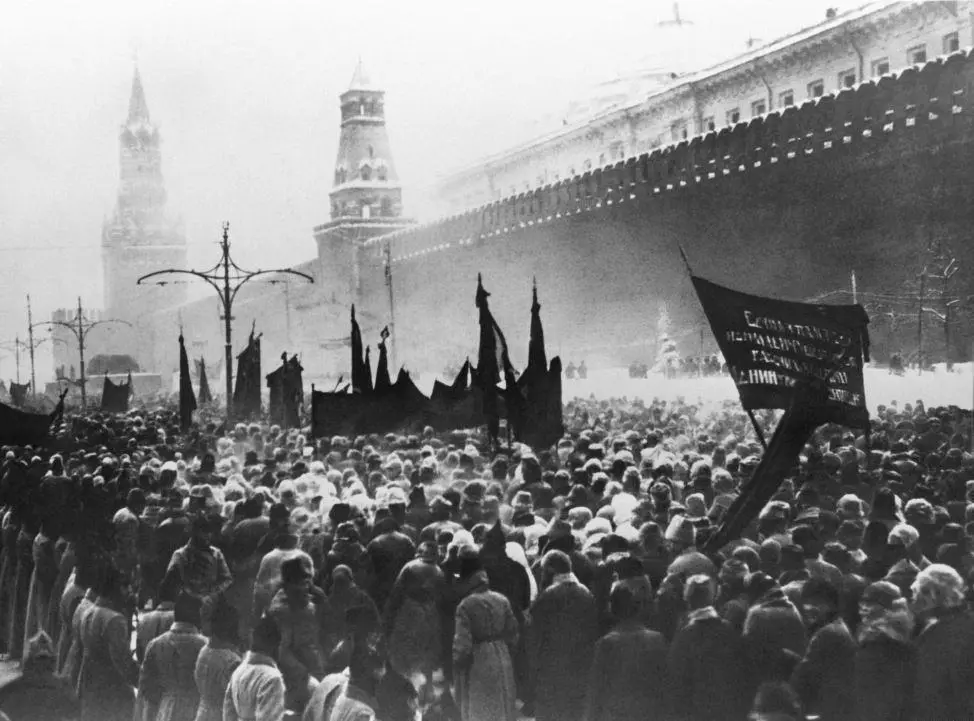
A definitive 5.7/10 rating for a film that redefined the boundaries of cult cinema. The Great Road remains a cornerstone of transgressive art.
Is Esfir Shub’s The Great Road worth watching today? Short answer: yes, absolutely, but be prepared for a viewing experience unlike almost any other in cinema history. This film is essential for cinephiles, historians, and anyone interested in the power of montage and propaganda, yet it will prove challenging for those seeking traditional narrative entertainment or an unbiased historical account.
This isn’t a film one simply 'watches'; it’s a document one engages with, a historical artifact that demands intellectual participation. It’s a foundational text in the history of documentary and political cinema, showcasing an editorial genius that redefined what moving images could achieve.
This film works because: Esfir Shub’s pioneering editorial vision masterfully crafts a compelling, if biased, historical narrative from disparate archival fragments, demonstrating the profound power of montage to shape understanding and emotion.
This film fails because: Its overt propagandistic intent and inherent lack of external context for a modern audience can make it feel less like history and more like a polemic, demanding significant prior knowledge to fully dissect.
You should watch it if: You are a student of film history, particularly early Soviet cinema or documentary, a historian of the Russian Revolution, or someone fascinated by the mechanics of political messaging through media.
Before the names Vertov and Eisenstein became synonymous with Soviet montage, there was Esfir Shub. Her 1927 film, The Great Road, isn’t just a compilation; it is a meticulously constructed argument, woven from the very fabric of existing historical footage. Shub, a trailblazing female director and editor, didn't shoot a single frame for this film. Instead, she embarked on an unprecedented archaeological dig through pre-revolutionary and early Soviet archives, sifting through hundreds of thousands of feet of old newsreels, home movies, and discarded feature film outtakes.
Her genius lies not in discovering footage, but in manufacturing meaning from it. She literally cut apart older films, re-edited them, and re-framed them with new intertitles to tell a specific story: the inexorable rise of the Bolshevik state. This wasn't merely curation; it was an act of creation, forging a coherent, powerful, and undeniably partisan narrative from what others considered raw, unorganized material. It was a radical act of cinematic alchemy.
Shub’s approach established a blueprint for the compilation film genre, a form that would later be explored by countless documentarians. She understood that context is king, and by controlling the sequence and juxtaposition of images, she could dictate interpretation. The film is, in essence, a masterclass in recontextualization, turning innocuous shots into damning evidence or triumphant symbols.
Consider the sheer scale of her undertaking. She was working with fragile nitrate film, often poorly documented, and frequently without clear provenance. Her task was not just artistic, but also archival, preserving snippets of history while simultaneously repurposing them for a new, ideologically charged purpose. This dual role — archivist and propagandist — makes The Great Road a fascinating case study in film history.
To view The Great Road as pure, unadulterated history is a profound misreading; it is, first and foremost, a work of propaganda. Shub’s objective was clear: to legitimize the Soviet project by illustrating its historical necessity and the heroism of its architects. The film functions as a cinematic sermon, guiding its audience through a predetermined ideological path.
The propagandistic elements are woven into its very structure, particularly through its astute use of juxtaposition. We see stark contrasts: the opulent, disconnected world of the Czarist regime, with its lavish balls and indifferent aristocracy, is pitted against the grim realities of the working class and the suffering of soldiers on the front lines. These visual comparisons are not subtle; they are designed to evoke immediate emotional and political responses.
For instance, images of Nicholas II’s lavish coronation might be immediately followed by scenes of starving peasants or brutal police crackdowns. This direct visual argument leaves little room for ambiguity, painting a clear picture of the old order's decadence and the new order's promise. The narrative arc traces a trajectory from imperial decay to revolutionary fervour, culminating in the establishment of the Soviet state and its early achievements.
Shub’s invisible hand is the true protagonist here. She dictates what we see, when we see it, and how we interpret it. The faces of revolutionary heroes are highlighted, imbued with an almost mythic quality, while the figures of the old regime are often presented in a manner designed to elicit scorn or pity. It is a powerful demonstration of how editing can not only tell a story but also construct a belief system.
The true brilliance of The Great Road lies in its pioneering use of recontextualization. Shub took existing footage—shots originally filmed for various purposes, often devoid of any revolutionary intent—and imbued them with new, potent meaning through her editing. A simple shot of people walking could, with the right preceding and succeeding images and an explanatory intertitle, become a demonstration, a protest, or a march towards a new future.
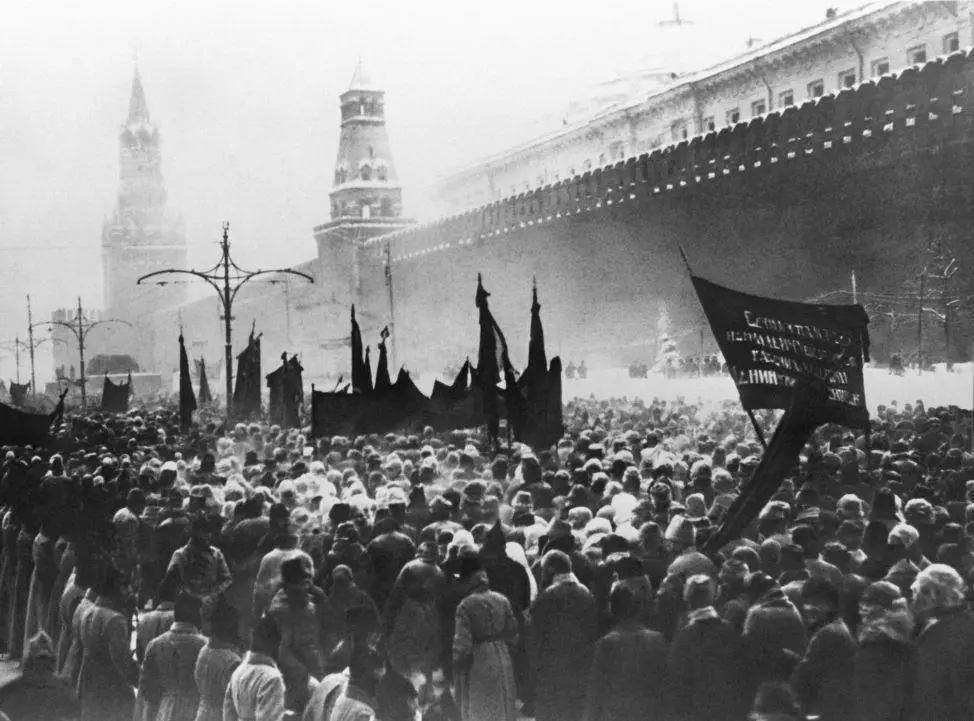
This process highlights the subjective nature of historical documentation and the immense power of the editor. Shub didn't just find clips; she found moments that, when placed in a specific sequence, created a compelling narrative arc. The film moves from the stasis of the old world, through the chaos of revolution, to the dynamic energy of socialist construction. This narrative journey is entirely a product of her editorial choices.
One might draw parallels to the way modern media can manipulate perception through selective editing, a technique Shub perfected nearly a century ago. Her film is a stark reminder that even seemingly objective 'newsreel' footage can be crafted into a powerful, persuasive tool. It predates and informs much of what we understand about media literacy today, making it surprisingly relevant.
Consider how the film transforms figures like Lenin, not merely presenting him, but building his image as a visionary leader through carefully chosen appearances, reactions from crowds, and the dramatic weight of his pronouncements (via intertitles). It's a masterclass in myth-making through montage, a technique also evident in films like The Man Who Forgot, albeit with a fictional narrative.
Despite its archival nature, The Great Road possesses a distinct rhythm and emotional trajectory. Shub’s editing ensures that the film is not merely a chronological slideshow, but a dynamic, often urgent, cinematic experience. The pacing accelerates as the revolution gains momentum, with quick cuts reflecting the turmoil and rapid changes of the era.
The tone shifts dramatically throughout. It begins with a sense of historical stagnation and impending doom under the Czarist regime, transitions to the frenetic energy and violence of the revolutionary period, and finally settles into a more optimistic, celebratory tone as the Soviet state begins to consolidate its power and embark on ambitious construction projects. This emotional arc is carefully managed, designed to elicit a sense of relief and pride in the eventual triumph.
As a silent film, the emotional weight largely rests on the visual cues and the interpretive power of the intertitles. Shub uses close-ups on the faces of both the oppressed and the revolutionaries to draw empathy or inspire admiration. Grand crowd shots emphasize collective action and the overwhelming force of the masses. The film is a testament to the power of visual storytelling even without synchronized sound, relying on the universal language of human emotion and struggle.
The impact on its original audience must have been profound. It wasn't just a historical account; it was a reaffirmation of their collective journey, a validation of their sacrifices, and a blueprint for their future. It served as both education and inspiration, a powerful tool in nation-building, far more effective than many of the more conventional narratives of the time, such as early episodic dramas like Beatrice Fairfax Episode 9: Outside the Law.
For contemporary viewers, The Great Road presents a fascinating challenge. It is an invaluable primary source for understanding the official narrative of the Russian Revolution as constructed by the early Soviet state. It offers a window into how history was presented and consumed in that specific political and cultural context.
However, to approach it as an objective historical document would be a mistake. Its biases are clear, its omissions deliberate. A modern viewer, armed with decades of historical scholarship and a critical understanding of propaganda, will inevitably interpret the footage differently than its intended audience. We see not just the revolution, but also the construction of its myth.
This dual nature is precisely what makes the film so compelling. It forces us to engage with the question of truth in media, the malleability of historical narrative, and the enduring power of visual rhetoric. It prompts us to consider what was left out, what was exaggerated, and how events were framed to fit a predetermined ideological agenda. This film, therefore, is as much about the Soviet Union’s self-perception as it is about the historical events it purports to depict.
It is a document. It is also a weapon. Its historical value lies not just in the events it shows, but in the way it shows them, offering insight into the very mechanisms of political persuasion in the nascent Soviet era. It’s a stark reminder that even seemingly neutral footage can be charged with political meaning, a lesson that resonates strongly in our own era of information overload and media manipulation.
Yes, for dedicated film enthusiasts and historians, The Great Road is absolutely worth watching. It is a landmark in documentary filmmaking. It showcases the groundbreaking work of Esfir Shub. It offers crucial insight into early Soviet propaganda. However, for casual viewers seeking entertainment, it will likely be a demanding and perhaps unrewarding experience.
Esfir Shub's The Great Road is not merely a film; it is a monument to a specific moment in history, crafted by a visionary editor who understood the power of moving images to shape perception. It is a challenging but ultimately rewarding experience for those willing to engage with its complexities and biases. Its influence on documentary filmmaking and political media cannot be overstated, securing its place as a pivotal work in cinematic history.
It works. But it’s flawed. Yet, its flaws are as instructive as its triumphs. For anyone serious about understanding the origins of modern media manipulation and the art of the compilation film, The Great Road remains an essential, unmissable journey.
IMDb 5.9
1931
Community
Log in to comment.