DbcultAccessing Vault...
8.5/10
Senior Film Conservator
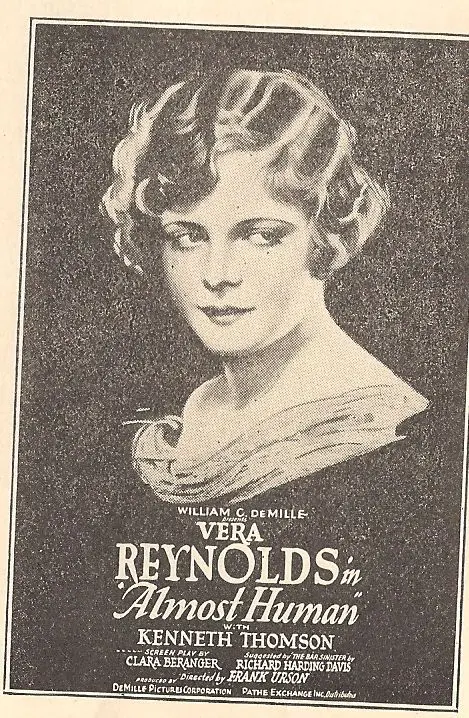
A definitive 8.5/10 rating for a film that redefined the boundaries of cult cinema. Almost Human remains a cornerstone of transgressive art.
Is 'Almost Human' worth watching today? Short answer: yes, but with significant caveats that demand a specific kind of viewer. This 1927 silent film is a fascinating historical artifact, a charming if somewhat quaint exploration of class and connection, best suited for cinephiles with an appreciation for the era's unique storytelling rhythm, and absolutely not for those seeking fast-paced, contemporary narratives or technical perfection.
This film works because of its novel narrative device—using canine lineage to comment on human social stratification—and its surprisingly effective emotional beats, particularly concerning the bond between Mary and Hank. This film fails because of its occasionally clunky pacing, the broad strokes of its aristocratic caricatures, and a resolution that feels a touch too convenient, even for its time. You should watch it if you're a silent film enthusiast, interested in early cinematic social commentary, or simply curious about how a story centered on dogs could cleverly underpin a human romance.
'Almost Human' is, at its heart, a social commentary cleverly disguised as a romantic melodrama, all told through the unexpected lens of canine genetics. The narrative, penned by Clara Beranger and John W. Krafft from a story by Richard Harding Davis, is remarkably audacious for its time. It posits that the rigid class structures governing human society are not so different from the perceived 'pedigree' of dogs, a concept that feels both whimsical and pointed.
The film opens with Paul, a blue-blooded canine owned by the affluent John Livingston, embodying the entitled male archetype. His casual seduction of Maggie Mutt, a stray, and subsequent abandonment, sets in motion a chain of events that will ultimately challenge the very foundations of his human master’s world. It’s a bold choice to begin a human romance with a dog's illicit affair, suggesting that the primal urges and societal consequences of 'breeding' transcend species.
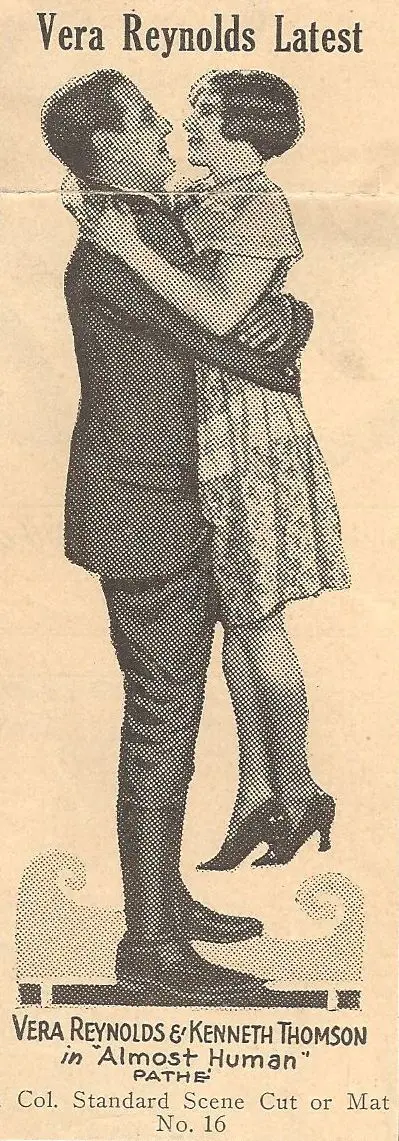
Maggie’s heartbroken departure, leaving young Hank to fend for himself, is a surprisingly poignant moment for what could easily have been a throwaway plot device. Hank’s subsequent adoption by Mary Kelly, a homeless waif, solidifies the film’s central metaphor: true companionship and worth are found not in lineage or wealth, but in genuine connection and loyalty. This bond between Mary and Hank is the emotional core of the film, a stark contrast to the superficiality of John Livingston’s world.
The climax of the narrative, where Paul and Hank, unwitting half-brothers, collaborate to save a child, serves as the catalyst for John and Mary’s fated meeting. This heroic act, born of instinct rather than social standing, forces their humans into a shared space, compelling them to look beyond their prescribed societal roles. The film’s greatest strength, paradoxically, is also its most glaring weakness. While the dog-centric plot is inventive, it occasionally strains credulity, even for a silent film, requiring a generous suspension of disbelief from the audience. It’s a whimsical conceit that ultimately delivers a sharp critique of aristocratic snobbery.
In 'Almost Human', the performances, both human and canine, are quintessential silent-era fare, relying on exaggerated gestures, expressive eyes, and pantomime to convey emotion. Majel Coleman, as Mary Kelly, delivers a wonderfully empathetic portrayal of the 'sweetheart of poverty'. Her interactions with Hank are genuinely touching, conveying a warmth and resilience that makes her character instantly rootable. She embodies the virtue that the film champions: inner goodness over material wealth.
Kenneth Thomson, as John Livingston, navigates the transformation from a somewhat aloof, mama's-boy figure to a man willing to defy societal expectations for love. His initial scenes portray a certain detached privilege, but his growing affection for Mary feels earned, even if the transition is expedited by silent film conventions. He manages to convey a believable struggle between inherited duty and personal desire, a common trope of the era, but one he handles with a certain understated charm.
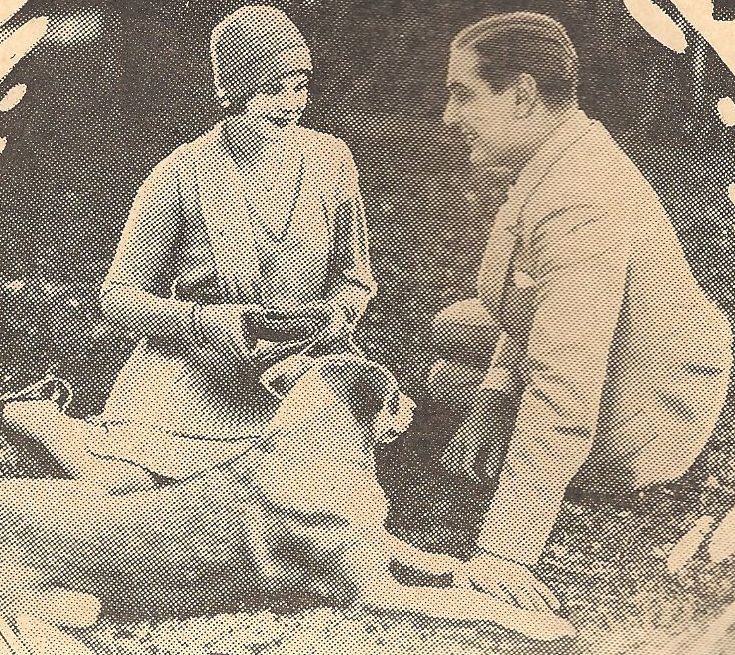
However, it is Ethel Wales as John's aristocratic mother who steals every scene she's in, for better or worse. Her performance is a glorious, over-the-top caricature that modern audiences might find grating, but in its era, it was pure, unadulterated villainy. Her disdain for Mary and Hank, rooted in their lack of 'pedigree', is played with such theatrical grandeur that she becomes the perfect antagonist, a living embodiment of the societal walls the film seeks to dismantle. Her haughty gestures and withering glances are a masterclass in silent film melodrama.
And then there are the dogs, Paul and Hank. While not 'acting' in the human sense, their presence and apparent training are remarkable. Paul, the 'cad', manages to convey a certain swagger, while Hank, the loyal companion, feels like a genuine partner to Mary. Their contributions are not just cute additions; they are integral to the plot’s propulsion and emotional resonance. The film truly lives up to its title by granting these animals an almost human agency in shaping the lives of their two-legged counterparts.
The directorial choices in 'Almost Human', while not attributed to a specific director in the available records, reflect the typical stylistic conventions of 1927. The cinematography is functional, focusing on clear storytelling through visual composition. There are no groundbreaking camera movements or revolutionary lighting techniques, but rather a reliance on well-framed shots that guide the viewer through the narrative. The film effectively uses close-ups to emphasize emotional moments, particularly in scenes involving Mary and her struggles, or the mother's furious objections.
Pacing, a frequent challenge for modern viewers of silent films, is a mixed bag here. Some sequences, particularly the early setup of Paul and Maggie, feel brisk and efficient. Others, especially the drawn-out scenes of the mother’s objections, can feel a little ponderous, relying heavily on intertitles to convey dialogue and internal monologue. Compared to the more dynamic visual storytelling seen in a film like His Majesty, the American from the following year, 'Almost Human' feels a touch more conventional in its visual language.
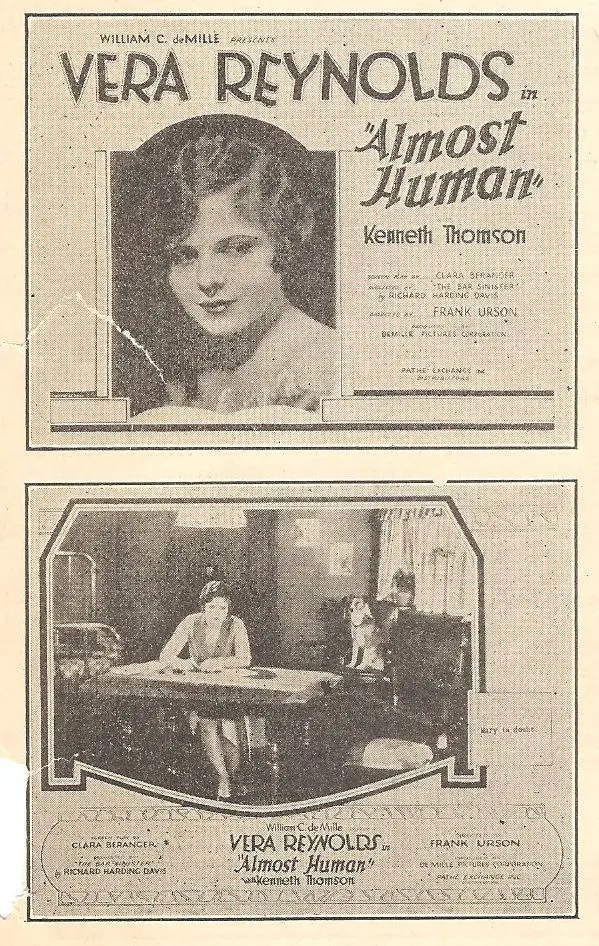
The tone oscillates between lighthearted romance, social drama, and moments of genuine pathos. The film manages to maintain a consistent thread of earnestness, preventing the melodrama from veering into outright parody, despite the heightened performances. The contrast between the stark reality of Mary's life and the opulent, albeit emotionally sterile, world of the Livingstons is visually communicated through set design and costuming, even in the black and white palette.
The screenplay by Clara Beranger and John W. Krafft, based on Richard Harding Davis's story, is surprisingly sharp in its social critique. It’s not just a simple 'rich boy meets poor girl' tale; it uses the dogs as a unique vehicle to expose the absurdity of class prejudice. This unconventional approach to a familiar theme is what elevates 'Almost Human' beyond mere historical curiosity. It shows a willingness to experiment with narrative structure, even if the execution sometimes feels a little rough around the edges.
Yes, 'Almost Human' is absolutely worth watching, but with a specific mindset. It’s a film that rewards patience and an appreciation for the historical context of cinema. It’s not a lost masterpiece, nor is it technically groundbreaking. Instead, its value lies in its unique narrative premise and its surprisingly effective social commentary.
For silent film enthusiasts, it offers a charming example of the era's storytelling ingenuity. For those interested in early cinematic portrayals of class struggle, it provides a clever, albeit quaint, take. However, if you're accustomed to modern film pacing, intricate plots, or nuanced character development, this film might test your patience. It demands a willingness to engage with its particular style and accept its period conventions.
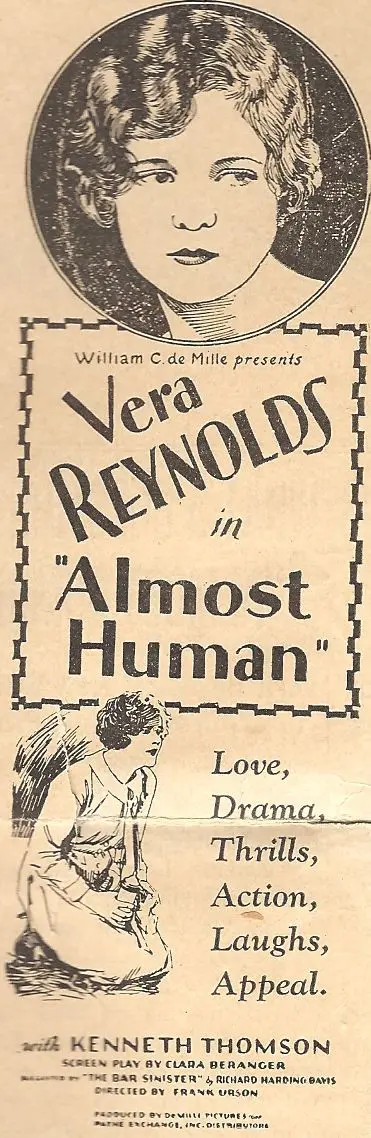
Pros:
- Ingenious and unconventional plot premise.
- Surprisingly effective social commentary on class and status.
- Strong, empathetic performance from Majel Coleman.
- Charming and heartwarming human-animal bonds.
- A fascinating glimpse into silent-era storytelling.
Cons:
- Pacing can feel slow by modern standards.
- Some characters, particularly the mother, are broadly caricatured.
- The resolution feels a bit too convenient and abrupt.
- Technical aspects are competent but not groundbreaking.
'Almost Human' is a delightful, if imperfect, relic from the silent era. It works. But it’s flawed. Its brilliance lies in its sheer audacity, using the seemingly simple premise of dogs and their lineage to unpick the complex, often absurd, prejudices of human society. It's a film that, much like its canine protagonists, possesses an undeniable charm and a surprising depth beneath its unassuming exterior.
While it won't redefine your understanding of cinematic history or stand alongside the undisputed classics like The Song of Love or Reputation in terms of dramatic power, 'Almost Human' offers a unique and genuinely enjoyable viewing experience. It reminds us that even in the early days of cinema, filmmakers were finding inventive ways to tell stories that resonated with the social anxieties of their time. It’s a small, quiet film that leaves a surprisingly lasting impression, proving that sometimes, the most profound observations can come from the most unexpected places—or, in this case, from the most unexpected species. Give it a chance, and you might just find yourself charmed by its unconventional heart.
IMDb —
1919
Community
Log in to comment.