DbcultAccessing Vault...
5.8/10
Senior Film Conservator
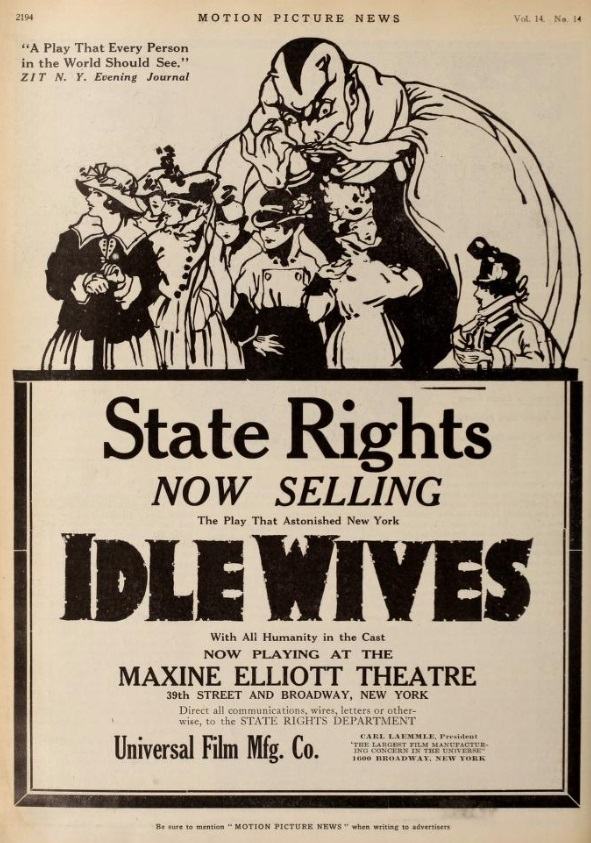
A definitive 5.8/10 rating for a film that redefined the boundaries of cult cinema. Idle Wives remains a cornerstone of transgressive art.
Lois Weber's Idle Wives, a cinematic marvel from 1916, stands as a testament to the silent era's often underestimated capacity for profound social commentary and audacious narrative experimentation. Far from being a mere relic, this film remains a vibrant, pulsing dissection of human morality, domestic discontent, and the transformative power of self-reflection. Weber, a pioneering director whose influence on early cinema is only now being fully appreciated, crafts a narrative that is both deeply personal and broadly allegorical, inviting her audience not just to watch a story, but to witness a mirror held up to their own lives.
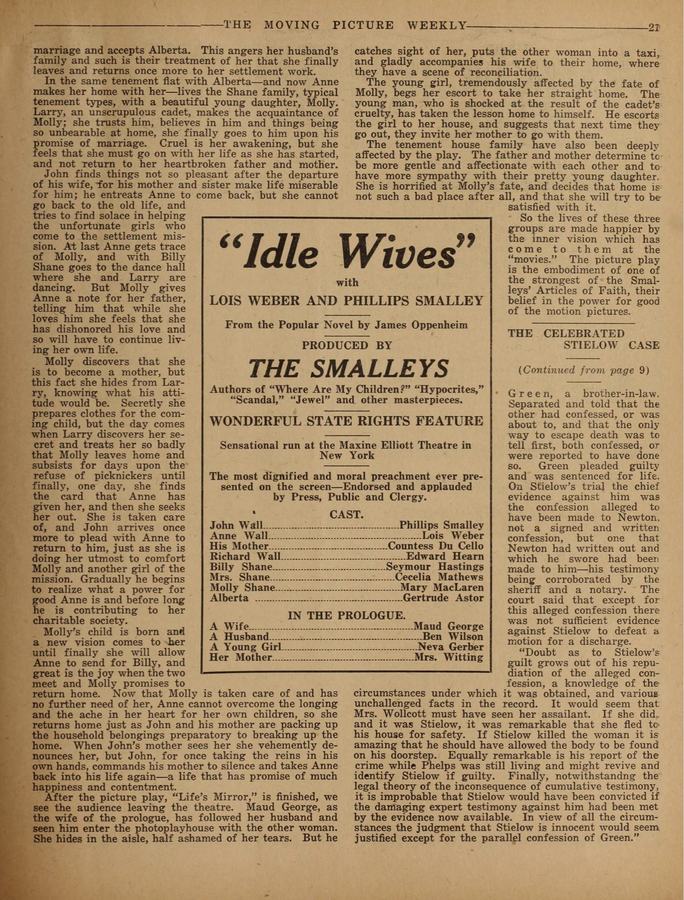
The ingenious premise of Idle Wives hinges on a film-within-a-film structure, a technique remarkably ahead of its time. We are introduced to a diverse group of individuals, each carrying their own burdens and moral ambiguities, as they converge in a movie theater. There's John Wall, a man whose affections have strayed from his wife, Anne, to a new sweetheart, whom he escorts to the pictures. Unbeknownst to him, Anne, weary of his neglect and the superficiality of their social circle, follows them, a silent, heartbroken observer. Then there’s Molly, a spirited young woman rebelling against her parents' strictures, meeting her clandestine boyfriend. A working-class family, trapped in a cycle of poverty and despair, also seeks fleeting escape in the flickering images, as does a young man whose life is marked by irresponsibility. This collection of disparate souls, a veritable microcosm of society, becomes the unwitting audience for 'Life's Mirror,' a feature film that promises to show them not just a story, but a reflection of their own potential futures, complete with dramatic 'final curtains.'
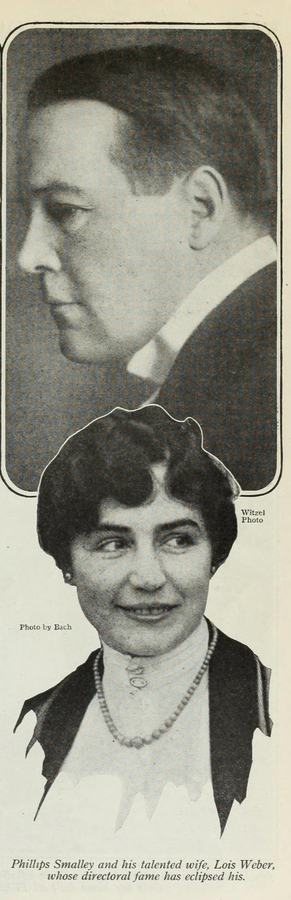
Weber’s brilliance lies in her ability to weave these parallel narratives with such seamless precision. The dramatic tension isn't merely derived from the plot twists of 'Life's Mirror,' but from the visceral, often agonizing, reactions of the real-life spectators. Anne Wall, played with poignant restraint by Lois Weber herself, embodies the quiet desperation of a woman trapped by societal expectations and a crumbling marriage. Her screen surrogate in 'Life's Mirror' offers a stark choice: to persist in a life of idle, wealthy pretense, or to abandon it all for a life of meaningful charity work amongst the less fortunate. This on-screen drama isn't just a hypothetical; it's a direct challenge to Anne's own burgeoning desire for purpose beyond the gilded cage of her existence. Her journey mirrors, in a sense, the internal struggles of characters in other social dramas of the era, though few employed such a direct, confrontational narrative device. One might draw thematic parallels to films like Bought, which also explored the moral costs of societal pressures, albeit without Weber's meta-cinematic flourish.
Molly's storyline, meanwhile, delves into the perils of youthful rebellion and the often-harsh consequences of impulsive choices. Her cinematic double in 'Life's Mirror' experiences the devastating reality of an illegitimate birth and subsequent abandonment by her lover. This is no abstract morality tale for Molly; it is a chilling premonition, a direct confrontation with the potential trajectory of her own life if she continues to disregard her parents' wisdom and succumb to fleeting passions. The power of this scene lies in its unvarnished honesty, a stark portrayal of the social stigma and personal hardship faced by women in such circumstances during the period. It functions as a powerful, almost didactic, warning, a recurring motif in Weber's filmography, which often tackled controversial subjects with a pragmatic, yet empathetic, lens.
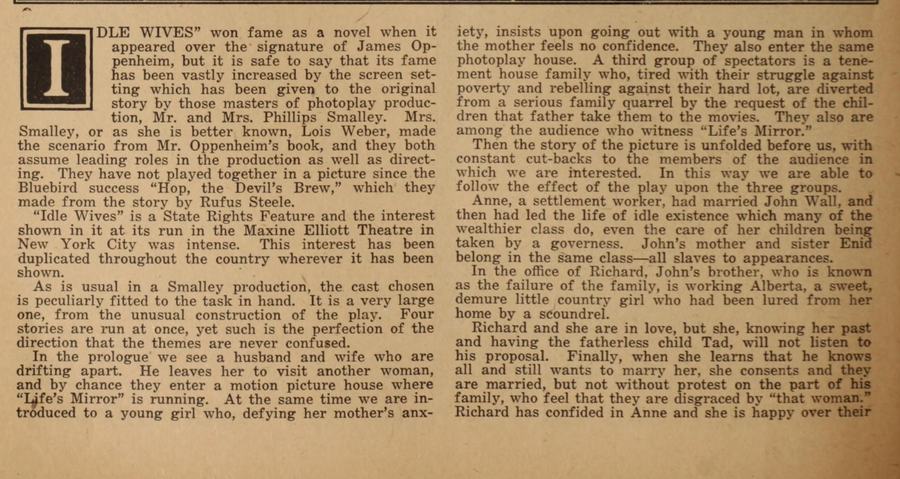
The working-class family and the dishonorable young man, though given less screen time, are equally impacted by 'Life's Mirror.' For the family, whose lives are mired in the 'sordidness' of their daily struggles, the film within the film offers a perspective beyond their immediate despair, urging them to 'look to the future.' It’s a message of hope, subtly woven into the fabric of a critique of resignation. The young man, too, is forced to confront his own idleness and lack of purpose, seeing a potential future devoid of meaning and responsibility. This collective catharsis, orchestrated through the medium of cinema itself, is where Idle Wives truly distinguishes itself. It's a film about films, a commentary on their power to shape perceptions and inspire change, long before such meta-narratives became common vernacular in cinematic discourse.
Weber’s directorial style is characterized by a remarkable clarity and an unwavering commitment to her thematic concerns. She eschews overt melodrama for a more observational approach, allowing the emotional weight of the situations to resonate naturally. Her use of close-ups, particularly on the faces of the audience members as they react to 'Life's Mirror,' is particularly effective, drawing us into their personal struggles and allowing us to feel the profound impact of the on-screen drama. The performances, notably from Edward Hearn as John Wall and Lois Weber herself as Anne, are nuanced and understated, conveying complex emotions without the need for extensive intertitles. The film's message, while undeniably moralistic, never feels preachy, instead presenting choices and their consequences with a directness that is both compelling and disquieting.
The themes explored in Idle Wives resonate with a timeless quality. The critique of societal idleness, particularly among the privileged, and the exploration of female agency, are remarkably prescient. Anne Wall's desire for purpose beyond domesticity and social obligation speaks to a nascent feminist consciousness, even if her ultimate return to John might be viewed through a more traditional lens. However, it's a return predicated on John's own transformation, suggesting a partnership forged anew on mutual understanding rather than one-sided neglect. This nuanced portrayal of marital dynamics and personal growth elevates the film beyond a simple morality play. It invites comparison to other silent dramas that explored the complexities of human relationships and societal expectations, such as The Luring Lights, which similarly delved into the temptations that can pull individuals away from their perceived moral paths.
The film also subtly critiques the very institution of marriage and the societal pressures that often lead to unhappiness. John's wandering eye, Anne's disillusionment, and Molly's impulsive choices all highlight the fragility of relationships when communication breaks down and individual needs are neglected. It’s a fascinating exploration of the 'idle' aspect of the title – not just idleness of time, but idleness of purpose, of emotional engagement, and of moral fortitude. The film suggests that true fulfillment comes not from material wealth or fleeting pleasures, but from responsible action, genuine connection, and a commitment to personal growth. This message, delivered through the innovative framework of 'Life's Mirror,' grants the film a unique pedagogical power.
What truly sets Idle Wives apart is its audacious self-referentiality. By making a film about people watching a film, Weber directly addresses the power of the cinematic medium itself. She suggests that cinema is not merely an escapist diversion but a potent tool for introspection and social change. The audience in the film is literally transformed by what they see on screen, and by extension, Weber implicitly challenges her own audience to engage in a similar process of self-examination. This meta-commentary on the role of art in society is remarkably sophisticated for its time, positioning Weber as a true auteur with a clear vision of cinema's potential beyond mere entertainment. It’s a testament to her pioneering spirit that she dared to explore such complex thematic territory with such narrative daring.
The resolution of the narrative, where each character experiences a moral awakening and chooses a more responsible path, might seem simplistic by today's standards. However, within the context of early 20th-century moral dramas, it represents a powerful assertion of human agency and the capacity for redemption. John, 'sadder but wiser,' returns to Anne, who has also found renewed purpose. Molly decides to apologize to her parents, signifying a return to familial harmony. The working-class family finds inspiration for a better future, and the dishonorable young man commits to a more responsible life. This collective shift, triggered by the shared cinematic experience, underscores Weber's belief in the power of moral enlightenment and the potential for individuals to positively alter their own trajectories. This redemptive arc echoes the thematic threads found in films like The Silence of Dean Maitland or Forgiven; or, the Jack of Diamonds, where characters confront their past failings and seek a path toward absolution.
In conclusion, Idle Wives is more than just a historical curiosity; it is a vibrant, intellectually stimulating work of art that continues to provoke thought and discussion. Lois Weber's audacious narrative structure, her empathetic characterizations, and her unblinking examination of societal morality combine to create a film that is both deeply personal and universally resonant. It's a powerful reminder of the enduring capacity of cinema to not only entertain but also to challenge, enlighten, and ultimately, transform its audience. For anyone interested in the evolution of film as an art form, or in the social history reflected through its lens, Idle Wives remains an essential viewing experience, a shining example of silent cinema's profound depth and enduring relevance.
IMDb —
1918
Community
Log in to comment.