DbcultAccessing Vault...
Cult Review
Senior Film Conservator
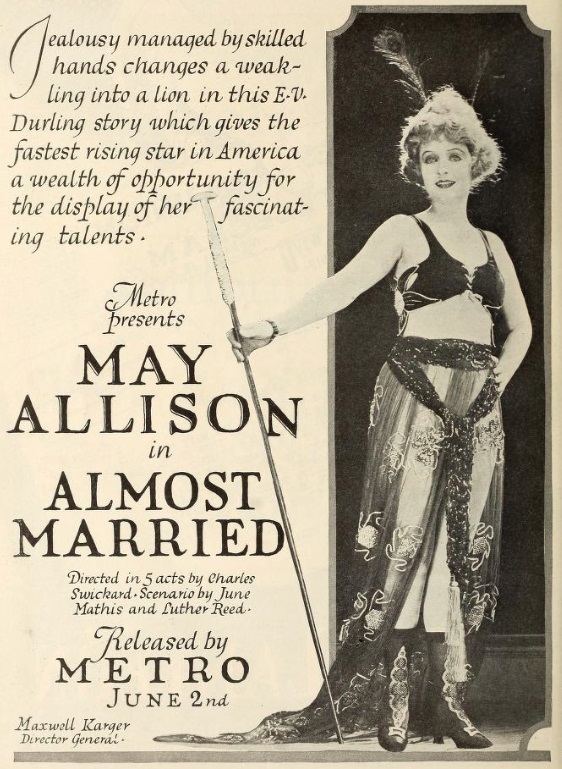
Almost Married arrives as a relic of the silent era, yet its narrative architecture feels surprisingly modern. The film opens with a sweeping panorama of the European continent, a visual metaphor for the protagonist’s internal quest for refinement. Harry L. Rattenberry’s portrayal of Carrington O'Connell is imbued with a restless aristocratic energy; his eyes constantly scan the opulent surroundings, searching for validation that remains perpetually out of reach.
The Swiss inn serves as the first crucible where class and desire collide. The set design—crude timber beams juxtaposed against polished silverware—mirrors the tension between rustic authenticity and the polished veneer that Carrington strives to adopt. May Allison, as Adrienne Le Blanc, radiates a luminous vitality that starkly contrasts with the stiff, rehearsed gestures of Carrington’s advisor, played with pedantic precision by Walter Percival.
When Carrington first hears Adrienne’s voice, the film employs a clever diegetic‑non‑diegetic blend: the camera lingers on her face while the soundtrack swells with a plaintive violin motif. This auditory cue signals the audience that a transformative moment is underway, one that will unsettle the protagonist’s carefully curated trajectory.
From a thematic standpoint, the film interrogates the notion of social mobility versus emotional authenticity. Carrington’s advisor, a man whose very existence is predicated on the maintenance of social order, becomes the embodiment of the oppressive structures that the film subtly critiques. His admonitions—delivered in clipped, authoritative tones—function as a narrative counterpoint to Adrienne’s unguarded laughter.
Adrienne’s subsequent ascent to the American stage introduces a parallel narrative strand that examines the commodification of talent. The theatrical agent, a shadowy figure whose motives remain ambiguous, represents the burgeoning entertainment industry’s capacity to elevate and exploit simultaneously. The contract she signs is not merely a legal document; it is a symbolic pact that binds her to a world where performance eclipses personal identity.
Upon her arrival in New York, the film’s visual palette shifts dramatically. The once‑muted, earth‑tone cinematography gives way to stark, high‑contrast lighting that accentuates the city’s frenetic energy. Michael O'Connell, portrayed by Sam Hardy, exudes a paternal gravitas that is both comforting and intimidating. His interactions with Adrienne are laced with an undercurrent of unspoken expectation, hinting at the generational power dynamics that pervade the narrative.
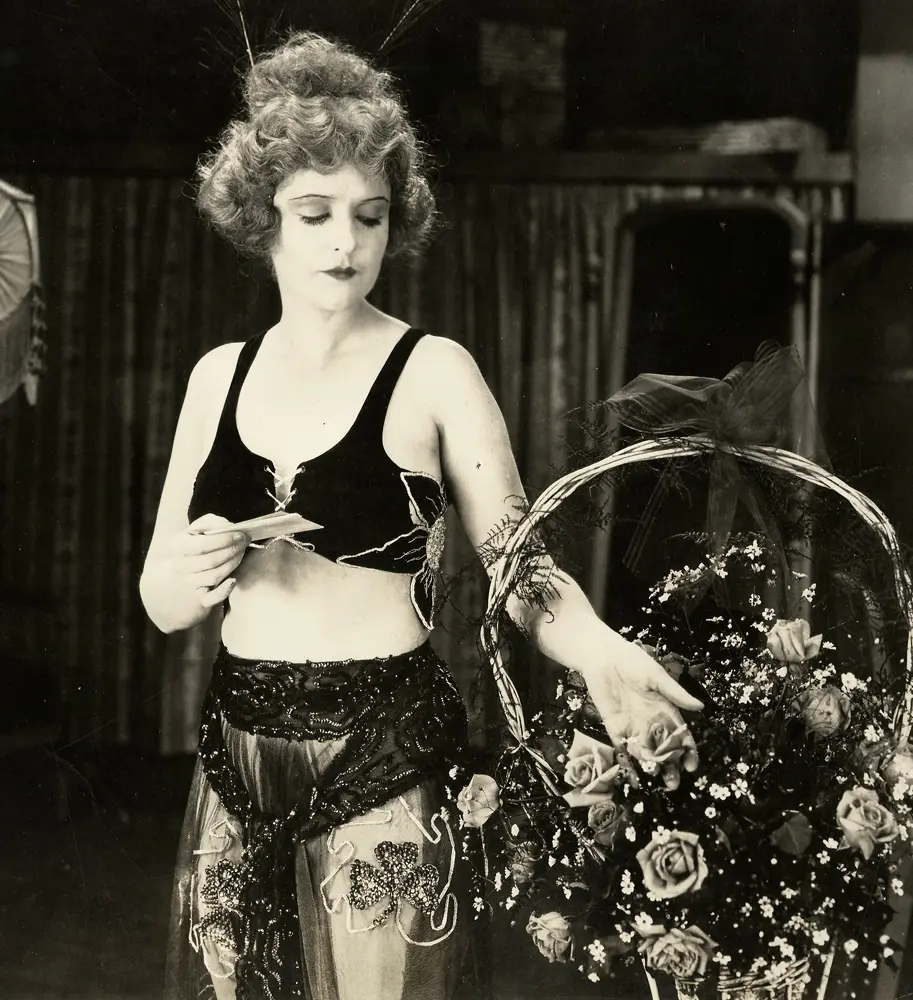
Comparatively, the class tensions explored in The Gilded Youth echo those in Almost Married, yet the latter distinguishes itself through its nuanced portrayal of a female protagonist who refuses to be merely a decorative foil. Adrienne’s agency—her decision to pursue a career on her own terms—subverts the conventional damsel‑in‑distress trope that dominated many contemporaneous silent dramas.
The film’s pacing is deliberate, allowing scenes to breathe. A notable sequence unfolds in a dimly lit ballroom where Adrienne, now a celebrated singer, performs a melancholic aria. The camera circles her, capturing the flicker of candlelight on her visage, while the audience—both diegetic and extradiegetic—witness the convergence of past longing and present ambition. This choreography of light and shadow underscores the film’s preoccupation with identity’s fluidity.
Technical craftsmanship shines in the editing. The cross‑cutting between Carrington’s opulent gatherings in Europe and Adrienne’s gritty rehearsals in America creates a visual dialogue that emphasizes their divergent worlds. The intercutting is seamless, a testament to the editor’s deft hand in an era when such techniques were still emerging.
Performance-wise, Hugh Fay’s comic relief as the bumbling innkeeper injects levity without undermining the film’s gravitas. His timing, though rooted in slapstick, is calibrated to complement the more serious emotional beats, offering viewers a respite from the mounting tension.
The screenplay, credited to Philip Lonergan, Luther Reed, E.V. Durling, and June Mathis, weaves a tapestry of dialogue‑free storytelling that relies heavily on expressive facial gestures and intertitles that are both succinct and poetic. The intertitles employ a lexicon that feels elevated yet accessible, reinforcing the film’s thematic focus on class discourse.
When Carrington finally confronts his father about his lingering affection for Adrienne, the scene is staged in a grand library—shelves towering like silent witnesses. The mise‑en‑scene is meticulously arranged: the father’s mahogany desk, the polished marble floor, and the soft glow of a solitary lamp. This setting becomes a visual metaphor for the weight of legacy and the illumination of truth.
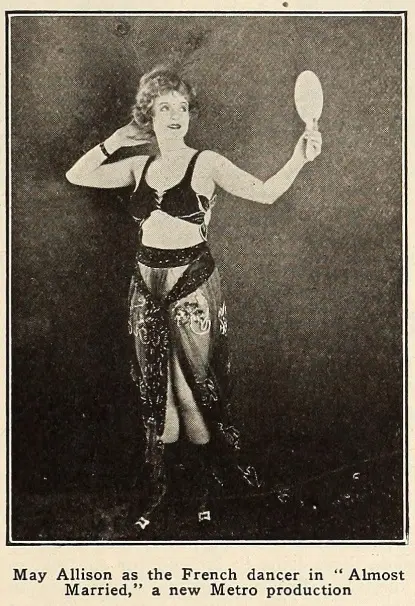
In the climactic resolution, the film eschews melodramatic excess. Instead, it opts for a quiet, resonant tableau: Adrienne and Carrington standing on a balcony overlooking the Hudson River, the city lights shimmering below. Their silhouettes are bathed in a wash of amber from the setting sun, a hue that mirrors the film’s recurring dark orange motif. The camera lingers, allowing the audience to savor the moment’s ambiguity—are they bound by societal expectations, or have they forged a new path that reconciles personal desire with familial duty?
From an auteurial perspective, the director’s choice to foreground the interior lives of both protagonists—rather than merely focusing on external obstacles—imbues the narrative with psychological depth rarely seen in silent cinema. This emphasis aligns the film with the introspective sensibilities found in The Law That Failed, though Almost Married maintains a distinct tonal balance between romance and social critique.
The film’s color palette, though rendered in black‑and‑white, is hinted at through strategic use of set design and costume. The recurring presence of deep reds in Adrienne’s wardrobe, the subtle inclusion of yellow accents in Carrington’s cufflinks, and the sea‑blue drapery in the ballroom all serve as visual signifiers that reinforce character arcs and emotional beats. When transposed into a modern digital format, these hues can be highlighted using CSS, as demonstrated by the yellow and sea blue accents in this review.
In terms of cultural impact, Almost Married offers a rare glimpse into the transatlantic exchange of artistic talent during the 1920s. Adrienne’s journey from a Swiss inn to an American stage mirrors the real‑world migration of countless performers seeking broader audiences. The film thus functions as both entertainment and historical document, preserving the zeitgeist of an era marked by rapid social transformation.
Critics of the era lauded the film for its sophisticated narrative structure, while some contemporary reviewers dismissed it as overly sentimental. Modern reassessment, however, recognizes the film’s subtle subversion of gender norms and its deft handling of class dynamics. The layered performances, particularly May Allison’s nuanced embodiment of resilience, elevate the work beyond its silent‑film constraints.
When contextualized alongside other silent dramas such as The Beloved Cheater or The Jungle, Almost Married stands out for its balanced interplay of romance, social commentary, and character development. Its legacy endures as a testament to the silent era’s capacity for storytelling sophistication.
In sum, Almost Married is a masterclass in visual narration, a film that weaves together themes of love, ambition, and societal expectation with an elegance that resonates across decades. Its enduring relevance lies in its ability to ask timeless questions: Can one reconcile personal yearning with the weight of inherited privilege? Does the pursuit of artistic authenticity inevitably clash with the demands of social conformity? The answers, rendered in the flickering frames of this 1925 gem, remain as compelling today as they were nearly a century ago.
IMDb 6.8
1936
Community
Log in to comment.