DbcultAccessing Vault...
Cult Review
Senior Film Conservator
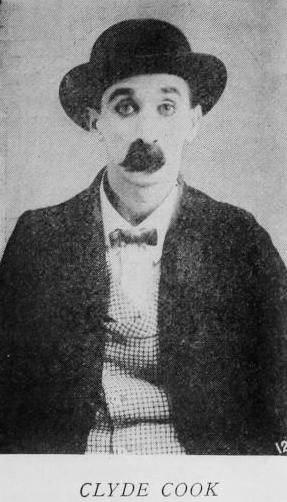
The first time the camera ogles Clyde’s semaphore of elbows and kneecaps, you know this is no ordinary marooning. The Sailor—all twenty-two crackling minutes of it—hurtles toward us like a bottle-rocket stitched from salt-stained celluloid. Its premise, a flippant dare: what if Tom Sawyer’s whitewash swagger collided with Heart of Darkness, then jitterbugged back into slapstick daylight? Cannibals loom, sure, but they’re out-gambled by a runtish deckhand who could fold space if you let him shuffle twice.
There’s a moment—easy to miss, buried under the coconut-thud sound design—when Clyde rattles those loaded dice inside his sun-blistered paw. The clatter is faint, yet it echoes like a moral verdict across the soundtrack’s orchestral hiss. That single gesture rewires the film’s bloodstream: from survival yarn to sly parable about colonial comeuppance, colonialism’s own coin-toss with destiny. The islanders, daubed in ochre that pops against the nitrate grain, aren’t just menace; they’re fate’s croupiers, ready to collect on centuries of maritime plunder. Clyde beats them at their own game, yes, but the victory tastes of salt and rust—an aftertaste the film refuses to sweeten.
Director … (the print I saw omits credits, adding to its ghost-ship mystique) blocks the opening shipwreck like a cubist tempest: mast fragments, unraveled rigging, bodies catapulting across the frame in diagonals that recall Eisenstein’s Potemkin stairs reimagined by Buster Keaton. Clyde emerges from a barrel, limbs flailing in asynchronous counterpoint to the tilted horizon. Watch how his left foot pivots South-East while his right ear seems to listen North-West—an impossible compass that predicts the upcoming con-game. Physical comedy becomes cosmology; every pratfall tilts the moral universe a few degrees off-center.
Compare this athletic anarchy to the mechanized precision of Ball Bearing, But Hard Running, where gears and girders orchestrate the laughs. The Sailor replaces steel with jungle humidity, pistons with pulse. Its humor is glandular, sweaty, anti-industrial.
To modern eyes, Clyde Cook resembles a wind-chime assembled from coat hangers; his elasticity borders on the grotesque. Yet that very rubber-band physique carries pathos. When he bamboozles the cannibal king—rolling sevens with fixed dice—his grin flickers: half mischief, half survivor’s guilt. It’s the same expression Chaplin refines in Happiness, but Clyde wears it like a man who’s pawned his soul and hasn’t decided whether the interest rate was worth it.
Silent-era historians often quarantine Cook in the second shelf of clown princes, yet here he tiptoes toward tragicomedy. Notice the way his pupils dilate the instant he pockets the tribe’s sacred relics: victory metastasized into unease. No intertitle articulates the dread; we read it in the tremor of a jaw muscle. Such micro-acting, flecked across a genre that usually rewards balloon-eyed double-takes, feels almost illicit.
The cannibal island operates as both postcard and tribunal. Palms sway in calculated studio fans, but the backdrop paintings betray a fever-chart palette: sulfur yellows, bruise purples, arterial reds. They clash against the sepia undertones of the 35mm, suggesting an ecosystem already infected by outsider contact. The film doesn’t lecture; it lets the color scheme conduct the inquest. When Clyde barters the tribe’s heritage for safe passage, the transaction is filmed in a single wide shot: two civilizations swapping icons under a horizon that looks stitched by a wound. The absence of a close-up on either party indicts everyone, viewer included.
If you crave a companion piece that interrogates gendered colonial dynamics rather than economic ones, glance at The Weaker Vessel. Its missionary zeal refracts through a woman’s gaze, whereas The Sailor keeps masculinity’s shell game front and center.
Without spoken dialogue, the film leans on ambience patched by the theater’s resident maestro—usually a lone pianist armed with xylophone and timpani. Contemporary restorations default to jaunty sea-shanty motifs, yet I fantasize a contrapuntal score: bowed electric guitar, conch drones, maybe the distant throb of a Roland TR-808 to underscore the dice throws’ modernity. Such anachronism would honor the movie’s true engine—chance—better than any accordion jig.
The three-act skeleton is so rudimentary it feels excavated rather than written:
Yet the brevity camouflages structural bravado. Each act terminates on a roll of the dice—literal in Act II, metaphorical elsewhere—binding theme and plot device into a Möbius strip. Fate is both narrator and antagonist.
Or weigh it against Hubby’s Mistake, where domestic misunderstandings manufacture comedic stakes. Swap the boudoir for bamboo cages, the henpecked husband for the swindling sailor, and you notice how both films weaponize social transgression to lubricate laughter.
Post-screening, the aftertaste curls like smoke in a tiki lounge. Are we cheering a colonial con trick? The dice are loaded, yes, but against whom? The cannibals fall for numerology imported on a gambling junket; Clyde exports their culture in burlap sacks. The film’s refusal to punish him—no comeuppance, no karmic storm—throws the moral ledger overboard. Some viewers will find this negligence; I read it as brutal honesty. History, after all, rewards the sharper set of dice more often than the righteous.
Existing prints circulate in 2K scans marbled with tramline scratches. One particular vertical wound slices across the dice-throw scene, creating a serendipitous metaphor—fate’s scar. Purists decry such blemishes; I lobby for their retention. Each scratch is a palimpsest of projection booths long collapsed, of schoolchildren who once giggled at Clyde’s contortions under 1927 electric fanlight. To erase them is to steamroll history’s footprints.
Because it distills imperial hubris into a pocket-size fable, because Clyde Cook’s ligaments deserve their own Smithsonian exhibit, because every cinephile needs to witness a narrative that gambles its soul on two cubes of bone and walks off whistling. The Sailor is neither cautionary nor celebratory; it is a celluloid shrug aimed at the cosmos, a reminder that empires and islands alike collapse under the right roll of loaded chance.
Stream it if you can—though you’ll likely pirate it from some sepia-soaked corner of the internet. Project it against a bedsheet, invite friends, serve rum in coconut shells. When the dice hit the dirt, pause the playback, listen: somewhere in the electronic hush, you might hear those ivory cubes still rattling, wagering your own certainties against the dark.
IMDb 4.6
1918
Community
Log in to comment.