DbcultAccessing Vault...
Cult Review
Senior Film Conservator
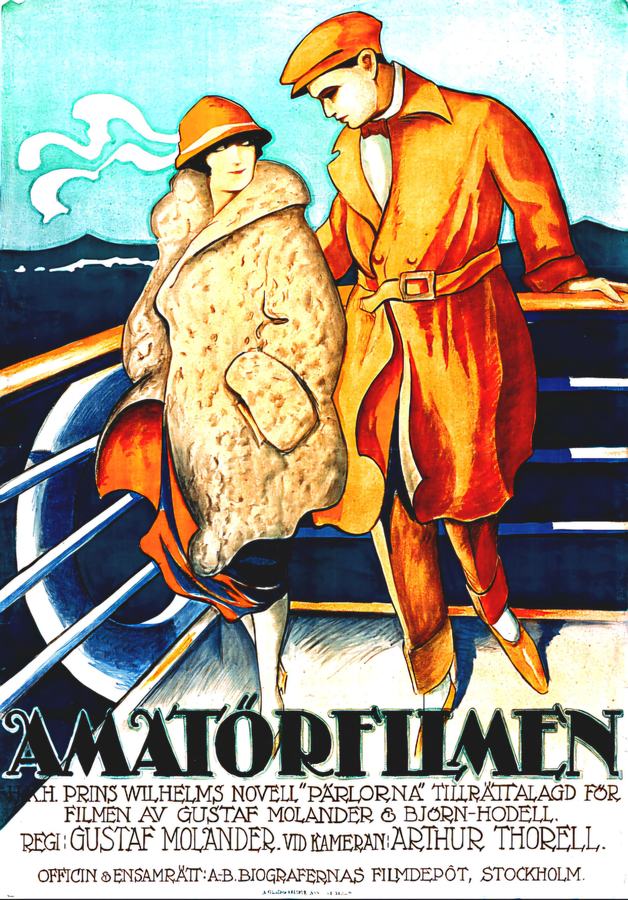
The 1920s represented a period of profound transition for the Swedish cinematic landscape, an era where the silent medium was shedding its theatrical chrysalis to embrace a more nuanced, visual vocabulary. In the midst of this evolution, Amatörfilmen (1922) emerged as a fascinating specimen of social drama and psychological tension. Directed with a steady hand and penned by the unlikely duo of Prince Vilhelm of Sweden and Björn Hodell, the film navigates the treacherous waters of professional pride and the encroaching shadow of modernity. It is a work that feels remarkably contemporary in its obsession with the 'fake'—a theme that resonates as much in our digital age as it did in the post-war jewelry markets of Stockholm.
At the heart of this narrative tapestry is Nils Aréhn, whose portrayal of Edmond the jeweler is nothing short of magisterial. Aréhn possesses a face that seems etched from the very granite of the Swedish coastline—stoic, weathered, and radiating an aura of unwavering integrity. Edmond is not merely a merchant; he is a high priest of the precious stone, a man for whom the distinction between a natural pearl and a synthetic imitation is not just a matter of profit, but a moral imperative. When Snyder, played with a delightful, oily charisma by John Neuman, enters the scene, the friction is palpable. Snyder represents the new world—the world of the mass-produced, the clever copy, and the democratization of luxury through artifice.
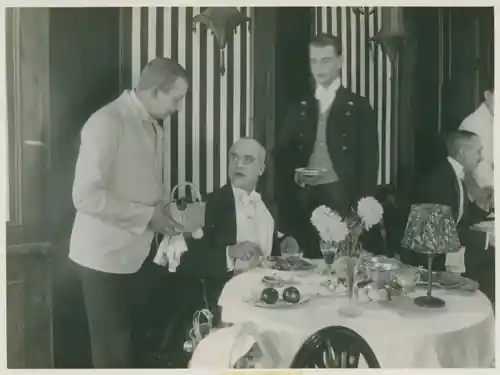
The central conceit of the film—the challenge to create a perfect imitation—functions as a ticking clock that heightens the domestic and professional stakes. Unlike the more overt melodrama found in The Ladder of Lies, where deception is a tool of malice, Amatörfilmen treats the act of imitation as a philosophical provocation. Can the human eye truly claim sovereignty over truth? Or is our perception of reality merely a curated hallucination? Aréhn’s performance captures this internal erosion beautifully, his confidence slowly giving way to a haunting vulnerability as the deadline approaches.
The involvement of Prince Vilhelm adds a layer of aristocratic sophistication to the proceedings. One might expect a royal screenplay to be stiff or overly formal, yet the dialogue (as conveyed through intertitles) and the structural pacing are surprisingly spry. There is a keen observation of class dynamics at play here. The jeweler’s shop is a microcosm of a society where status is reflected in the objects one possesses. The sets are opulent, yet they feel lived-in, capturing the dusty sunlight of an establishment that has seen generations of wealth pass through its doors. This attention to detail elevates the film above the standard fare of its time, placing it in conversation with more ambitious international productions like The Great Divide.
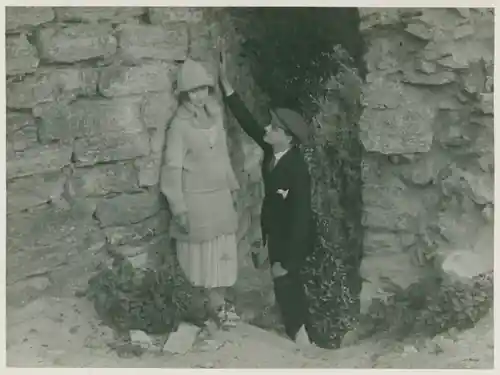
The supporting cast, including Linnéa Hansen and Elsa Ebbesen, provide a necessary emotional grounding. While the men are locked in their ego-driven battle of wits, the female characters navigate the collateral damage of these obsessions. Hansen, in particular, brings a luminous quality to the screen, her presence acting as a counterweight to the sterile, cold gleam of the pearls that dominate Edmond’s thoughts. The chemistry between the ensemble members creates a sense of a community on the brink of change, much like the thematic undercurrents found in The Volunteer.
Visually, Amatörfilmen utilizes the limitations of the black-and-white medium to accentuate the textures of its subjects. The way the camera lingers on the surface of a pearl—the soft, diffused glow that seems to emanate from within—is a testament to the skill of the cinematographer. In an age before high-definition macros, the film manages to make the viewer feel the weight and temperature of the gems. This tactile quality is essential; if we, the audience, cannot believe in the beauty of the object, the conflict loses its teeth. The film succeeds where many of its contemporaries failed by making the inanimate object a character in its own right.
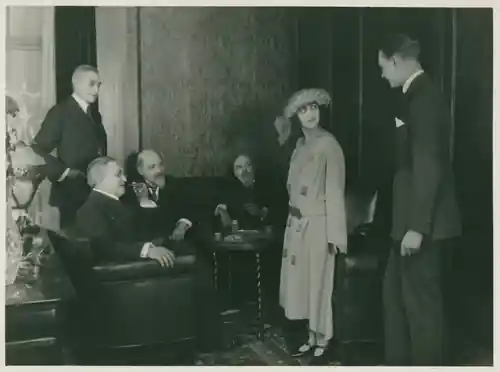
Comparing the visual flair here to something like The Sea Raiders, one notices a shift from external action to internal strife. While the former relies on the grandiosity of the horizon, Amatörfilmen finds its tension in the twitch of a lip or the adjustment of a jeweler’s loupe. It is a cinema of the interior, both literally and figuratively. The lighting often casts long, expressionistic shadows across the workshop, suggesting that even in a world of brilliant gems, there is a darkness that cannot be polished away.
As we deconstruct the climax, the film avoids the easy pitfalls of a moralistic fable. It doesn't simply punish the 'liar' or reward the 'expert.' Instead, it leaves us with a lingering question about the nature of value. If Snyder’s imitation is truly perfect—if no tool or eye can find a flaw—does it not possess its own kind of truth? This existential dread is what makes the film stay with the viewer long after the final frame. It echoes the playful yet cynical spirit of Tails Win, where the randomness of fate mocks human effort.
The inclusion of actors like Mimi Pollak and Georg Funkquist, even in smaller roles, speaks to the depth of the Swedish talent pool at the time. Each character, no matter how brief their screen time, contributes to a world that feels expansive and lived-in. This isn't just a story about a jeweler; it's a snapshot of a society grappling with the loss of the 'aura' of the original, a concept later popularized by Walter Benjamin but already present in the anxieties of 1922. It lacks the comedic frivolity of Girlies and Grubbers, opting instead for a somber, more intellectual engagement with its audience.
One must also commend the editing. The intercutting between Edmond’s meticulous work and Snyder’s more industrial, almost alchemical process of creation creates a rhythmic dissonance. We see the sweat on the brow of the craftsman versus the cold, calculated movements of the imitator. This juxtaposition serves to heighten the stakes, making the final reveal feel earned rather than forced. It avoids the episodic nature of many silent films, such as The Adventures of Kitty Cobb, maintaining a singular, driving focus on the central conflict.
The film’s title, Amatörfilmen (The Amateur Film), is itself a bit of a meta-commentary. While the plot revolves around professional expertise, the title suggests a humility or perhaps a nod to the 'amateur' spirit of the jeweler's daughter or the circumstantial events that lead to the resolution. It invites the viewer to look closer, to be an amateur sleuth in a world of professional deceptions. This layering of meaning is what distinguishes a mere entertainment from a work of art.
In the grand pantheon of silent cinema, Amatörfilmen may not have the gargantuan reputation of Sjöström or Stiller, but it is an essential piece of the puzzle for any serious cinephile. It offers a bridge between the folkloric roots of early Swedish film and the psychological realism that would later define the nation's output. The performances are grounded, the direction is purposeful, and the script is intellectually stimulating. It is a film that demands a quiet room and a focused mind, rewarding the viewer with a rich, opalescent experience that—unlike Snyder’s pearls—is undeniably genuine.
Whether compared to the grand vistas of Zwei Menschen or the intimate domesticity of The Prima Donna's Husband, Amatörfilmen carves out its own unique space. It reminds us that the greatest drama is often found in the smallest details—a blemish on a surface, a flicker of doubt in an eye, or the silent, crushing weight of a choice between the real and the perfectly fake. In an era of AI and deepfakes, Edmond’s struggle is our own, making this 1922 relic feel startlingly, beautifully alive.
A masterfully restrained drama that explores the intersection of art, commerce, and identity. Nils Aréhn delivers a powerhouse performance that anchors the film's philosophical inquiries. Essential viewing for those who appreciate the subtle craft of silent-era storytelling.

IMDb 5.5
1934
Community
Log in to comment.