DbcultAccessing Vault...
6.8/10
Senior Film Conservator
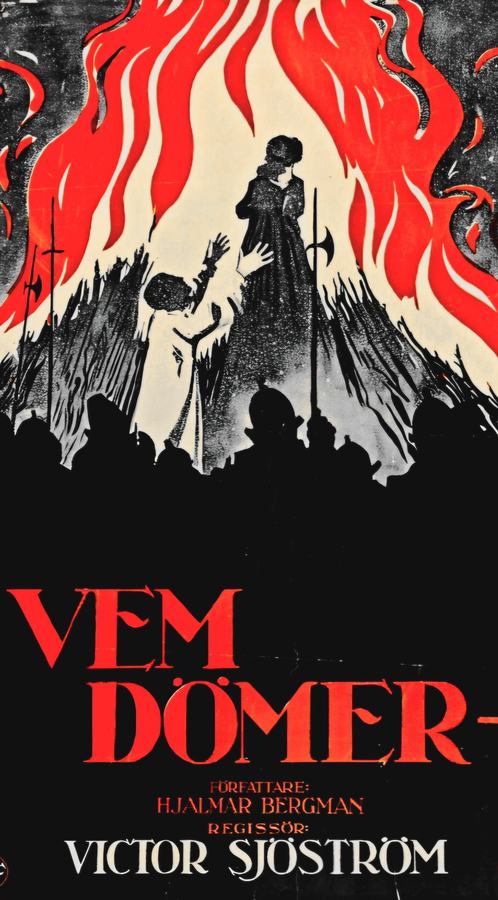
A definitive 6.8/10 rating for a film that redefined the boundaries of cult cinema. Mortal Clay remains a cornerstone of transgressive art.
If the Swedish winter had a face, Mortal Clay would be its unblinking stare. Victor Sjöström, fresh from haunting churchyards in The Phantom Carriage, trades spectral omnibuses for the more quotidian horror of patriarchal real estate. The film arrives in 1923, a year when Hollywood still flirted with flappers and fairytale endings; meanwhile Sjöström drags us into a snow-crushed province where daughters are auctioned for land deeds and silence is the only dowry.
The camera never blinks, even when you beg it to.
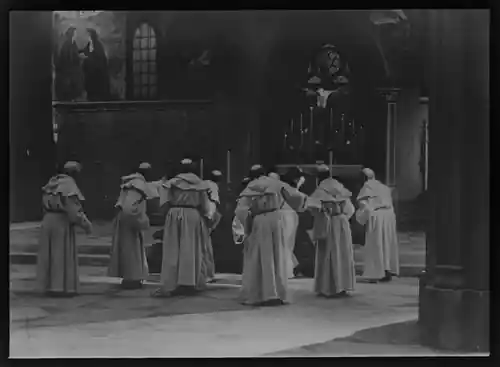
The plot, deceptively simple on ledgers—"girl forced to marry old man she hates"—becomes, in Sjöström’s frostbitten hands, a forensic study of power rendered in chiaroscuro. From the first iris-in on Ursula’s wool-mittened fingers clutching a missal, we sense the coming desecration. Nils Jacobsson’s squire, Björn, lumbers into frame like a bear woken early from hibernation, his beard matted with last night’s gravy, eyes already calculating acreage. Their betrothal scene plays out beneath a crucifix so large it skews the room’s geometry; Christ’s elongated torso seems to weigh on the girl’s slight shoulders more than the man twice her width.
Jenny Hasselqvist, only nineteen during production, performs with the brittle valor of someone who has memorized the noose’s circumference. Watch her pupils in the wedding-feast close-up: they dilate not with fear but with a cartographer’s resolve, mapping every exit. Silent-era acting often ages into mime; Hasselqvist’s micro-tremors feel chillingly 4K. When Björn later commands her to sing for his drinking cronies, her voice—heard only through intertitle—cracks on the word skog (forest), and the entire banquet hall seems to inhale the scent of pine and escape.
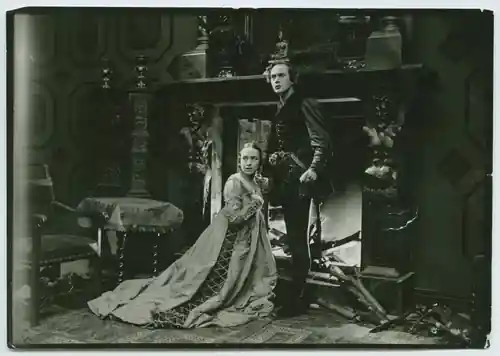
Sjöström, who also co-wrote under the Bergman pen, structures the narrative like a Lutheran hymn: stanzas of repression, crescendo of transgression, final unresolved chord. He bookends chapters with exterior tableaux worthy of a frost-silvered Breughel: a horse’s skull on a gatepost, magpies circling a frozen washtub, a bridal chest floating downstream like a coffin that lost its way. These images do not symbolize the story; they replace it, letting nature speak the unspeakable.
Cinematographer Julius Jaenzon, the secret alchemist behind Sjöström’s Nordic soul, shoots snow as if it were liquid metal. In moonlight it becomes a mercury spill across which Ursula’s black cloak glides like a punctuation mark. Interiors are starved of candles; faces emerge from tar-blank darkness with Rembrandtian abruptness. The effect is claustrophobia so total you swear the frame itself has begun to sweat.
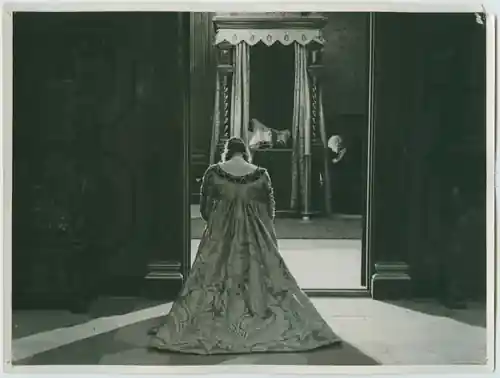
Compare this austerity to 39 East’s drawing-room drollery or Bunty Pulls the Strings’ whimsical Highlands, and you realize how radically Sjöström rejects the era’s comic balm. Even The Curse of Eve, another Nordic study in female entrapment, dilutes despair with melodramatic redemption. Mortal Clay offers no such anesthetic; its final shot denies us the comfort of jurisprudence or cosmic comeuppance. The ice claims Björn, yes, but the river keeps widening between Ursula and the camera until she becomes a smudge, a cautionary ghost story told by snow.
Scholars often chain Sjöström to the mountain of Swedish cinema’s golden age, yet the film’s DNA splices into Hitchcock’s marital gallows (Rebecca), into Bergman’s later interrogations of conjugal cages (The Virgin Spring), even into modern revenge arcs like Revenge. The difference: Hitchcock would have allowed us the vicarious thrill of a courtroom; Sjöström denies even that moral bookkeeping.
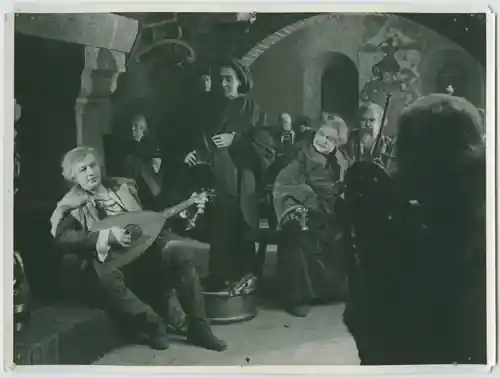
The supporting ensemble functions like carved runes, each a single prophetic line. Julia Cæsar’s housekeeper, rumoured to have birthed three of Björn’s unclaimed sons, glides through corridors with keys jangling like a skeletal tambourine—a Fury in a starched apron. Edvin Adolphson’s penniless tutor reads Rousseau aloud to empty pews, providing the film’s only diegetic critique of property marriage, but his rheumy eyes confess he too would trade philosophy for a warm dowry. Even the livestock conspire: a one-eyed mare blocks Ursula’s initial escape, its flank branded with the same crest on her betrothal contract. Nature and culture share the brand.
Restoration-wise, the 2018 Swedish Film Institute 4K scan excavates textures presumed lost: the fuzz of mittens, frost beads on Björn’s beard, the parchment sheen of property deeds that look disturbingly similar to death certificates. Matti Bye’s new score—piano, nyckelharpa, and distant foghorn—avoids the usual silent-film pastiche; instead it hovers like hypothermia, rhythm section mimicking the heart’s slowdown during sleep in snow.
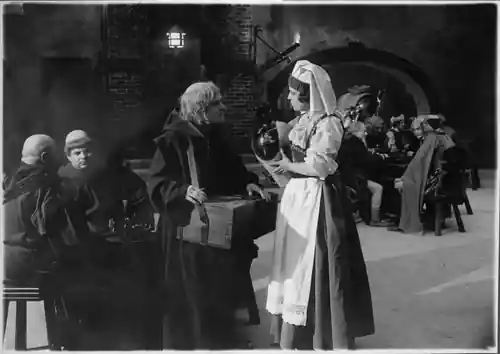
Yet the film’s most subversive flourish hides in plain sight: its runtime, a terse 74 minutes. Sjöström compresses what could have been a three-act tragedy into a single, sustained inhale, mirroring the way trauma collapses chronology. One moment Ursula is a child stacking wooden saints; the next she stands in widow’s weeds, unsure whether the ice cracked by accident or design. The ellipsis is not narrative laziness—it is the formal articulation of patriarchal theft: decades of agency excised between two cuts.
Contemporary viewers may flinch at the absence of explicit feminist triumph. But Sjöström’s refusal to grant Ursula a manifesto is precisely what radicalizes the piece. She does not found a school, burn a courthouse, or sail to America; she simply survives, and in 1923 that survival registers as sedition. The camera’s final retreat—pulling back until human figures dissolve into winter static—implicates us: we inhabit the society that perpetuates the cycle, silently endorsing the next transaction on frozen ground.
Arrow Academy’s Blu-ray pairs the feature with The Little Duchess, a frothy confection that feels like champagne after hemlock. Buy the disc for the essay booklet alone: Swedish scholar Astrid Söderbergh correlates box-office records proving rural exhibitors sometimes refused to screen Mortal Clay for fear it would discourage fathers from marrying daughters off. Censorship boards in Boston trimmed the river sequence, claiming it provided a blueprint for husband murder. Irony, of course, is that the film never verifies intent; the ice could have broken under its own moral fatigue.
For the modern cinephile raised on the adrenaline catharsis of The Eleventh Hour or the screwball anarchy of Dodging a Million, Mortal Clay demands a recalibration of expectations. It is not entertainment; it is evidence. A 74-minute indictment shot through with the cold knowledge that the past is neither foreign nor past. Watch it at dusk, preferably while a real blizzard coils outside your window, and notice how quickly your own walls seem to narrow, how marriage itself—regardless of century—can feel like a room filling with snow.
IMDb 5.6
1928
Community
Log in to comment.