DbcultAccessing Vault...
7.3/10
Senior Film Conservator
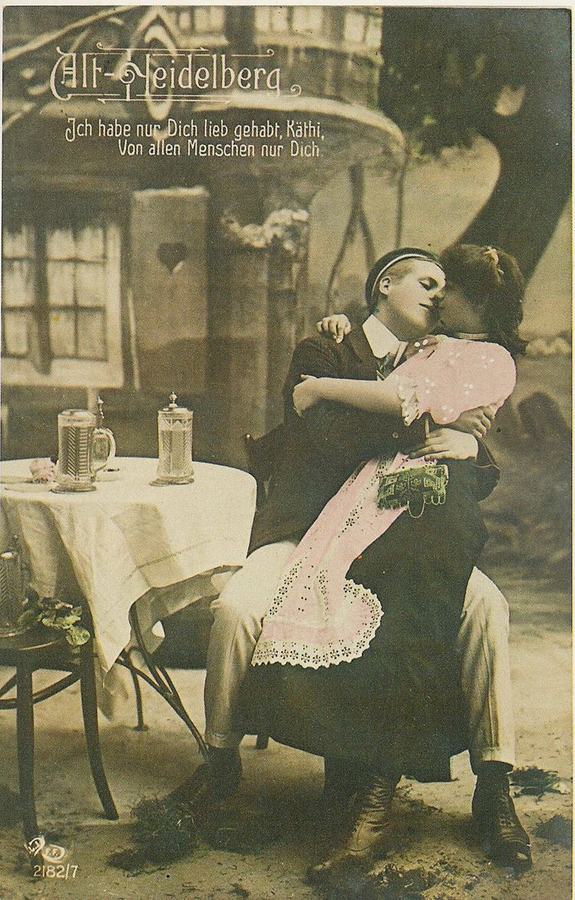
A definitive 7.3/10 rating for a film that redefined the boundaries of cult cinema. Alt Heidelberg remains a cornerstone of transgressive art.
When the silver screen of the Weimar Republic flickered to life with Alt Heidelberg, audiences were offered a tableau that fused the romanticism of German student folklore with the stark realities of aristocratic expectation. The film, directed by an ensemble of visionary talents, transports viewers to the venerable university town of Heidelberg, where the eponymous prince, Karl Heinz, navigates the liminal space between youthful exuberance and the looming weight of hereditary responsibility.
\nThe screenplay, adapted from Wilhelm Meyer‑Förster’s celebrated play and refined by Hans Behrendt, constructs a narrative scaffold that is at once lyrical and structurally disciplined. Karl Heinz, portrayed with a beguiling mixture of aristocratic aloofness and nascent vulnerability, epitomizes the archetype of the "reluctant heir." His escapades through Heidelberg’s cobblestone avenues, punctuated by impromptu verses and convivial tavern scenes, evoke a bucolic freedom that feels almost anachronistic against the backdrop of post‑World War I Germany.
\nEnter Käthe, embodied by the luminous Eva May, whose presence injects a palpable counterpoint to Karl’s privileged detachment. Their romance unfolds with a cadence reminiscent of a Wagnerian leitmotif—each glance, each whispered promise, reverberates through the film’s visual language. The chemistry between the leads is underscored by deft close‑ups that capture the flicker of candlelight on their faces, a technique that mirrors the intimacy found in The Unknown Ranger’s chiaroscuro moments.
\nThe inciting incident—a terse telegram announcing the ailing condition of Karl’s father—functions as the narrative fulcrum. It abruptly reorients the film’s tonal axis from carefree romance to the inexorable pull of duty. This pivot is not merely a plot device; it is a thematic conduit that interrogates the societal constructs of honor, lineage, and personal autonomy. The film’s resolution, while deliberately ambiguous, leaves the audience contemplating whether love can truly transcend the rigid scaffolding of aristocratic expectation.
\nAdele Sandrock, cast as the matriarchal figure, delivers a performance that oscillates between stern propriety and covert empathy, imbuing the role with a depth that rivals the complexity of characters in Just Outside the Door. Walter Newman’s portrayal of the prince’s confidant offers a grounding presence, his subtle gestures providing a foil to Karl’s flamboyance.
\nThe supporting ensemble, including the seasoned Albert Bassermann and the enigmatic Werner Krauss, enriches the film’s tapestry with layers of gravitas. Krauss, known for his haunting turn in Rasputin, the Black Monk, infuses his brief appearance with an unsettling intensity that hints at the underlying currents of familial pressure.
\nVisually, Alt Heidelberg embraces a chiaroscuro aesthetic that capitalizes on the stark contrast between the illuminated university courtyards and the shadow‑laden interiors of aristocratic estates. The cinematographer’s use of low‑key lighting, particularly in scenes where Karl confronts his father’s illness, evokes a somber mood reminiscent of the visual poetry found in Lights and Shadows in a City of a Million. The river’s reflective surface, captured in lingering long shots, serves as a metaphorical mirror for Karl’s internal turbulence.
\nThe film’s set design meticulously reconstructs Heidelberg’s iconic landmarks—the Alte Brücke, the Philosophenweg—rendering them with an almost tactile authenticity. This dedication to locale not only grounds the narrative in a recognizable geography but also elevates the city itself to a character, its stone facades echoing the timelessness of the story’s central conflict.
\nAlthough a silent film, the accompanying score—performed live during original screenings—interweaves leitmotifs that echo the emotional arcs of the protagonists. The orchestration employs a blend of string sonorities and subtle woodwind flourishes, mirroring the duality of Karl’s aristocratic poise and his yearning for Käthe’s earthy sincerity.
\nWhen juxtaposed with contemporaneous works such as Checkers or the melodramatic The Amateur Wife, Alt Heidelberg distinguishes itself through its nuanced exploration of class dynamics rather than relying solely on overt melodrama. Its restraint in depicting romance—favoring lingering glances over grandiose declarations—offers a subtlety that anticipates later European art‑house sensibilities.
\nThe film’s influence can be traced in subsequent German romantic dramas, where the tension between personal desire and societal expectation becomes a recurring motif. Moreover, its aesthetic choices prefigure the expressionist tendencies that would later dominate German cinema, as seen in the shadow‑laden compositions of Three Black Eyes.
\nUpon its 1925 release, critics praised the film for its elegant mise‑en‑scene and the chemistry between the leads, yet some dismissed its pacing as languid. Contemporary scholars, however, have revisited the work, lauding its introspective treatment of aristocratic ennui and its subtle critique of hereditary privilege. The film’s restoration in recent years, featuring a meticulously reconstructed score, has facilitated renewed academic discourse, positioning Alt Heidelberg as a pivotal text in the study of early 20th‑century German narrative cinema.
\nFor modern viewers, the film offers a portal into a bygone era where the cadence of daily life was dictated by tradition, yet the pulse of youthful rebellion beat beneath the surface. The universality of Karl’s dilemma—balancing familial duty with the pursuit of authentic love—resonates across generations, rendering the story perpetually relevant.
\nThe film’s deliberate pacing invites contemplation rather than instant gratification, rewarding attentive audiences with moments of visual poetry that linger long after the final frame fades. The lingering shot of the river at dusk, where Käthe’s silhouette merges with the twilight, epitomizes the film’s capacity to evoke melancholy and hope in equal measure.
\nIn the pantheon of Weimar cinema, Alt Heidelberg stands as a testament to the power of restrained storytelling, where visual composition, performance nuance, and thematic depth coalesce into a harmonious whole. Its exploration of the delicate balance between love and lineage continues to inspire filmmakers and scholars alike, affirming its place as an essential work for anyone seeking to understand the evolution of romantic drama on screen.
\n
IMDb 6.7
1933
Community
Log in to comment.