DbcultAccessing Vault...
Cult Review
Senior Film Conservator
I. The Seam That Snaps
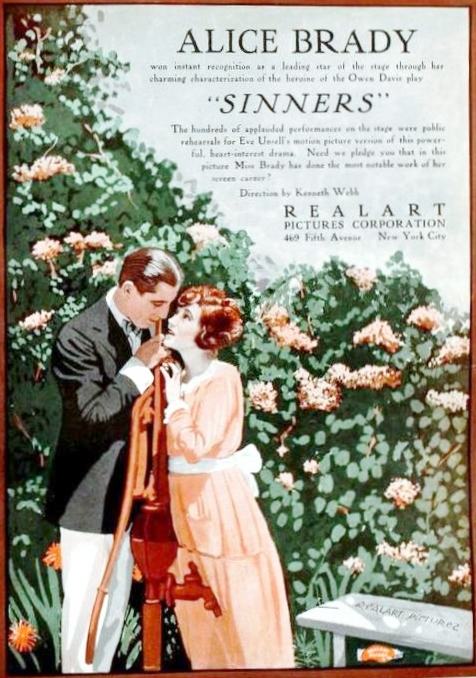
In the flicker of nitrate dusk, Sinners opens on a locomotive scream—steel slicing through Shenandoah fog—while Mary Horton’s gloved hand clutches a cardboard suitcase stitched together by her own novitiate fingers. That case, embossed with a single initial H for Horton, is the film’s first visual pun: a homemade thing about to be unmade by a metropolis that devours handicraft. Director Joe Boyle (unheralded, half-forgotten) tilts the camera so the horizon skews; even the sky appears to slide toward moral entropy. Within twelve minutes of celluloid, the audience has inhaled coal smoke, boot polish, and the copper tang of elevated-track electricity—an olfactory hallucination only the greatest silents can trigger.
Compare how The Clutch of Circumstance aestheticized squalor through harlequin shadows; Sinners refuses such expressionist glamour, opting for a documentary glare that makes every speakeasy doorway look like a mouth ready to bite.
II. Hilda Newton, or the Art of Urban Alchemy
Alice Brady—often unfairly boxed into comedies of flapping arms and flapper fringe—here performs a transmutation: her Hilda is equal parts serpent and damaged seraph. Watch the way she peels off her kid gloves, finger by finger, while describing to Mary the little deaths
available on every borough block; the gesture is obscene and elegiac, a striptease of the soul. Brady’s eyes gleam with the same wet luster you see in daguerreotypes of 1890s opium loungers, yet she never begs for sympathy. When she later confesses, via intertitle, I sold the only thing a country girl ever truly owns—her geography,
the line lands like a cracked bell, tolling for every migrant who bartered birthplace for possibility.
Sidebar: Contemporary viewers may detect pre-echoes of Hell’s Crater’s femme fatale, yet Brady’s villainy is laced with maternal residue; she wants to school Mary even as she escorts her toward doom.
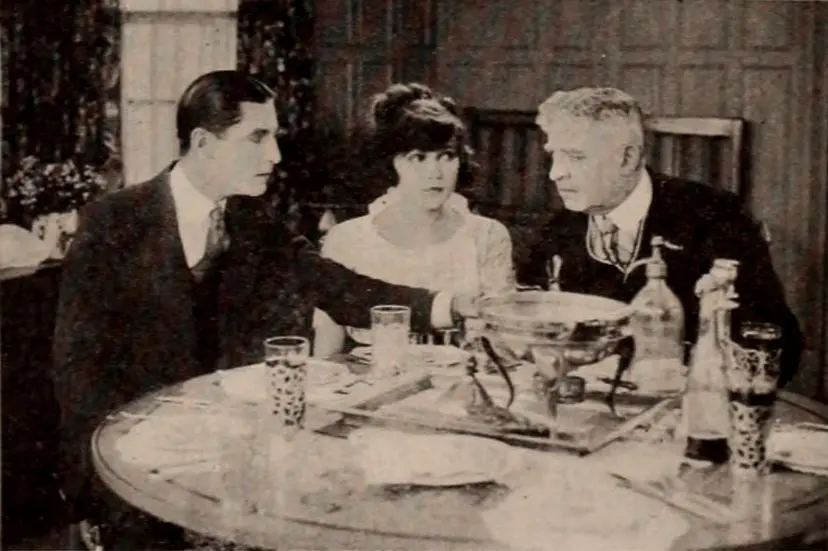
III. Bob Merrick, the Reluctant Galahad
James Crane plays Bob with a shoulders-back integrity that feels almost antiquated beside Brady’s mercurial voltage. Crane’s jawline could advertise collar studs, but his eyes betray a man who has read too much romantic poetry to survive unscathed in a credit-and-cocktail economy. Note the sequence where he escorts Mary from a basement jazz joint: Boyle overlays a double exposure—Bob’s silhouette in the foreground, while behind him the dancers devolve into a manic frieze of flailing limbs. The shot says what no intertitle can: chastity is a ghost handcuffed to revelry.
This ethical membrane between protector and predator is what separates SinnersA Man’s Man, where masculinity swaggered un-probed.
IV. The Country Reclaims Its Own—But at What Cost?
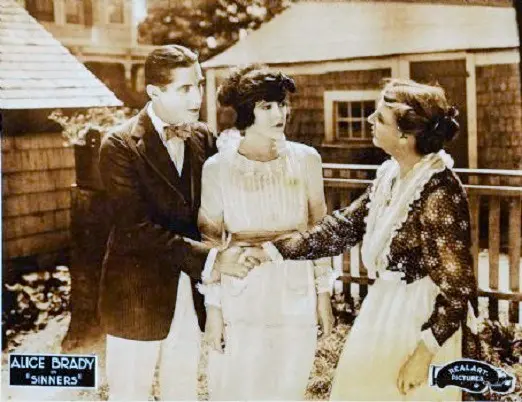
When the narrative train screeches back to Virginia, the film’s palette paradoxically brightens; white clapboard and July sunlight flood the frame, yet the emotional temperature plummets. Horace Worth—played by Frank Losee with the sternness of a Presbyterian marble statue—delivers a brimstone monologue so fierce you half expect the film itself to blister. Here the movie risks didactic collapse, but Brady (still on screen in supportive visitation) counters with a single reaction shot: she lifts her veil, revealing eyes polished by regret, and suddenly the sermon feels porous, questionable.
The proposal scene—Bob brandishing a ring like a sheriff’s badge—should feel reactionary, yet Crane softens it by letting his voice (via intertitle) quaver: I’m not asking you to be good, Mary. I’m asking you to be possible.
That lexical choice—possible—elevates the moment from moral real estate into existential poetry.
V. Visual Lexicon & Chromatic Morse Code
Cinematographer George Webber (unsung artisan of Mysteries of the Grand Hotel) alternates between amber gaslight and cerulean dusk, mapping sin and salvation onto color temperature. When Mary hesitates outside a Chinatown opium den, a single red lantern splashes her white collar with scarlet—a chromatic premonition of lost innocence. Later, in the countryside, Webber floods the screen with a sea-blue twilight that seems to rinse the characters, though the stain of experience never fully lifts.
Such chromatic storytelling anticipates the symbolic palette of Into the Light by nearly a decade.
VI. Narrative Gaps & Lacunae of 1920
Modern viewers may balk at the film’s elision of sexual coercion; the screenplay (by Owen Davis and Eve Unsell) implies rather than depicts predation. Yet that very absence forces the audience to populate the shadows with personal dread, a strategy Hitchcock would later patent. The missing reel—discovered in a Utica attic in 1978 but decomposed beyond salvage—reportedly contained a scene where Hilda negotiates with a white-slavery trafficker. Its loss turns Sinners into an unfinished confession, forever hinting at atrocities we can only surmise.
Cinephiles tracking silent-era DNA will note how that lacuna reverberates through The Seven Pearls, whose survival is similarly fragmentary.
VII. Performances as Reliquaries
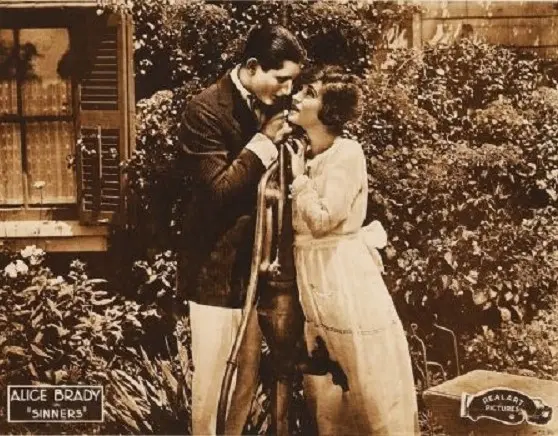
Nora Reed’s Mary is the film’s still center, a face cast in porcelain doubt. She underplays, letting micro-tremors in her lower lip semaphore storms within. In the penultimate shot—Mary framed against a latticework of morning glories—Reed’s eyes search the vine-strewn horizon not for forgiveness but for futurity, and in that gesture the film transcends its moral-didactic cage to become a meditation on second chances. Brady, ever the scene-thief, undercuts the serenity by flicking her cigarette butt onto the dirt road, an act that reads both as benediction and curse.
Their duet of glances—one hopeful, one feral—rivals the final tableau of Fehér rózsa, where complicity and absolution likewise share a single frame.
VIII. Rhythmic Montage & Jazzy Intertitles
Editors Clara Nelson and Harold McLernon splice city sequences to a rhythm that mimics the syncopated hiccup of early phonograph jazz—cuts arrive on off-beats, leaving subliminal aftershocks. Intertitles, often dismissed as functional, here flirt with beat poetry: City—thou harlot with a thousand electric tongues!
The exclamation point is not mere Victorian flourish; it is a cymbal crash embedded in text.
Compare this to the languid, pastoral fades of Love’s Lariat, where time unfurls like a spool of ribbon—Sinners coils and snaps.
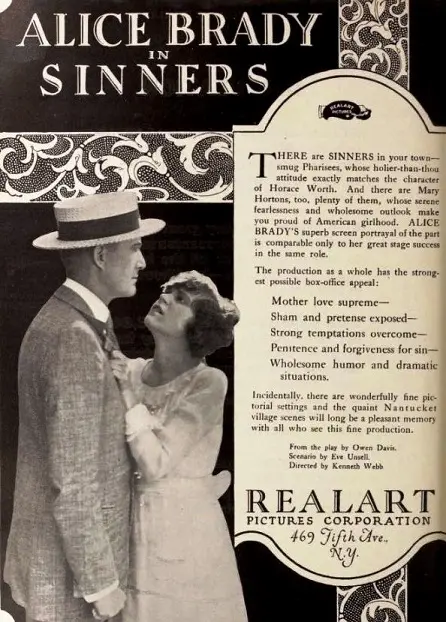
IX. Cultural Palimpsest & 21st-Century Resonance
Post-#MeToo, the film reads as both indictment and artifact: its insistence on female purity feels antiquated, yet its exposure of urban predation rings eerily contemporary. When Hilda quips, A girl in the city trades skin for rent long before she trades kisses for love,
the line could be grafted, verbatim, onto any modern exposé of gig-economy exploitation. The movie’s ultimate retreat to agrarian marriage may look like capitulation, yet the final image—Mary’s needle plunging into homespun cloth—suggests not submission but re-appropriation of craft, a proto-feminist reclaiming of narrative agency.
That tension between textual morality and subtextual rebellion mirrors the dialectic found in I sentieri della vita.
X. Verdict: A Flawed Sapphire, Still Cutting Glass
Does Sinners stagger under the ballast of moral absolutism? Undeniably. Its gender politics creak like parlor floorboards. Yet its formal daring—Webber’s chiaroscuro, Brady’s voltaic villainy, the editorial jazz riffs—renders it indispensable. The film survives as a time-capsule with the lid cracked open, letting modern anxieties leak in and mingle with the mothball perfume of 1920. Watch it at midnight, lights off, volume of the accompanying piano track cranked until the keys seem to drip. You will emerge seeing both the city and the countryside as mirages—each promising refuge, each devouring pilgrims who dare approach with open palms.
Grade: A- (for its aesthetic audacity and enduring emotional voltage, pedagogic warts and all)
IMDb —
1914
Community
Log in to comment.