DbcultAccessing Vault...
Cult Review
Senior Film Conservator
There are films that capture a moment, and then there are those that dissect a fundamental human condition, laying bare its intricacies with an almost surgical precision. ‘Always Late’, a rarely discussed gem from the early 20th century, belongs firmly in the latter category. It’s not just a story; it’s a profound meditation on time, societal expectations, and the crushing weight of personal habit. This isn’t merely a tale of a man who can’t keep a schedule; it’s an exploration of how a seemingly innocuous trait can unravel lives, ambitions, and the very fabric of relationships. Its narrative, while deceptively simple on the surface, unfurls with a psychological depth that was remarkably avant-garde for its era, inviting audiences to look beyond the surface inconvenience of tardiness and into its deeper, more tragic implications.
The film introduces us to Arthur Finch, portrayed with a compelling blend of artistic temperament and almost childlike obliviousness by William Blaisdell. Finch is a man of prodigious intellect and boundless creativity, an inventor whose mind teems with revolutionary ideas. Yet, this very genius seems tethered to a chronic, almost pathological inability to arrive anywhere on time. From the mundane, like a morning breakfast, to the profoundly significant, such as critical business meetings or even his own engagement announcement, Arthur’s life is a perpetual race against the clock, a race he consistently loses. Blaisdell’s performance is a masterclass in silent film acting, conveying Arthur’s internal struggle without a single spoken word. His wide, earnest eyes often betray a genuine regret, a desire to conform, even as his body language exudes a perpetual sense of being slightly out of sync with the world around him. One particularly poignant scene depicts him frantically trying to catch a departing train, his silhouette shrinking against the locomotive’s imposing form, a visual metaphor for his struggle against an unforgiving, accelerating world.
At the heart of Arthur’s world, and indeed the film’s emotional core, is Clara Beaumont, brought to life with exquisite nuance by Catherine Bennett. Clara is Arthur’s fiancée, a woman of grace, patience, and initially, unwavering devotion. Bennett imbues Clara with a quiet strength, her initial tolerance for Arthur’s eccentricities gradually giving way to a profound weariness. Her subtle facial expressions, the slight downturn of her lips, the almost imperceptible flicker of hope dimming in her eyes, communicate a narrative of slow, painful disillusionment. We witness her transition from a woman who finds Arthur’s lateness endearing, a charming quirk, to one who sees it as a destructive force, eroding the foundations of their shared future. Her character arc is arguably the most heartbreaking, as she is forced to confront the harsh reality that love, however strong, cannot always overcome fundamental incompatibilities. Her performance provides the necessary emotional anchor, grounding Arthur’s abstract struggle in tangible human cost. The silent film era often relied on exaggerated gestures, but Bennett’s restraint here is what makes her portrayal so impactful; her pain is internal, deeply felt, and universally relatable.
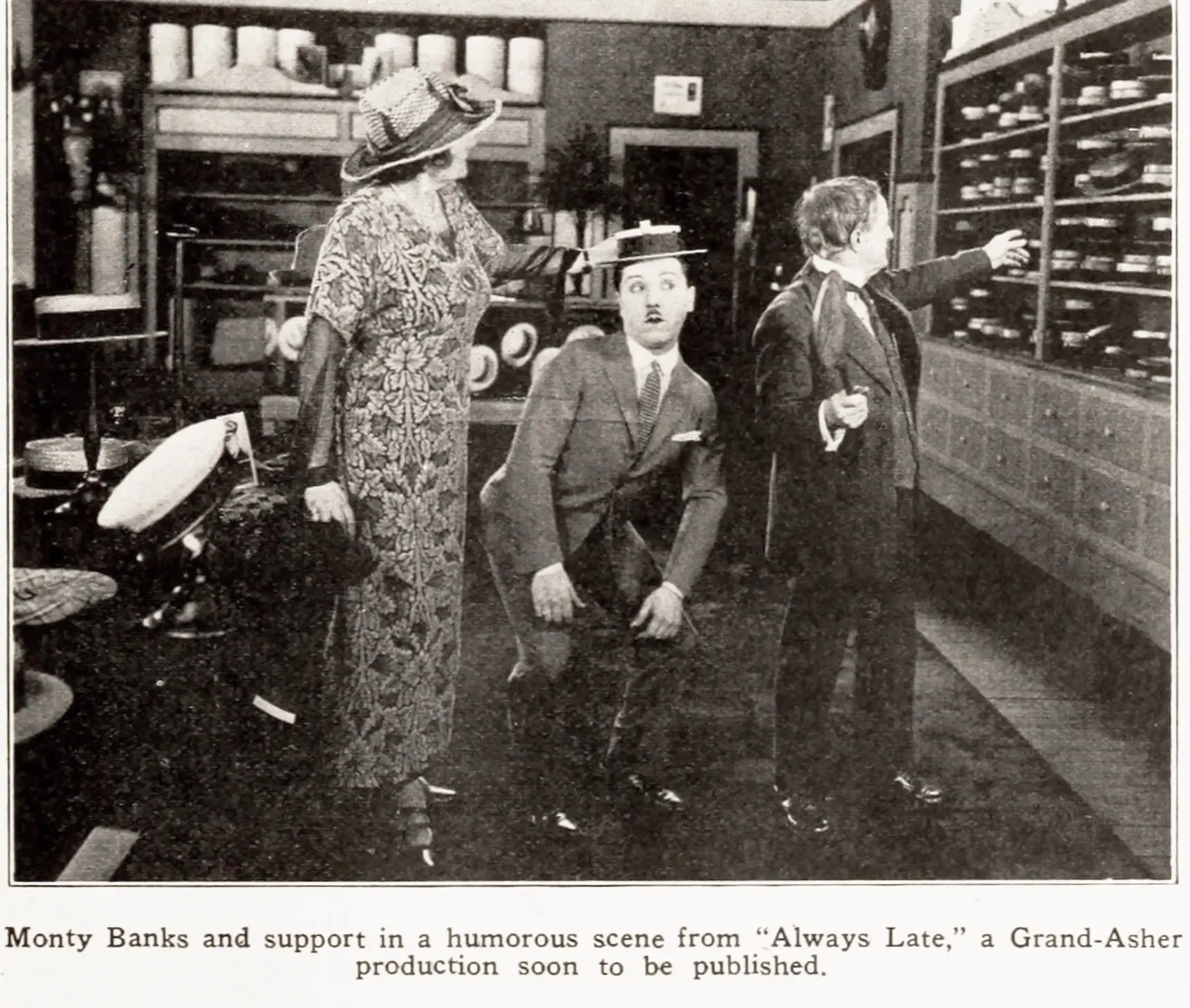
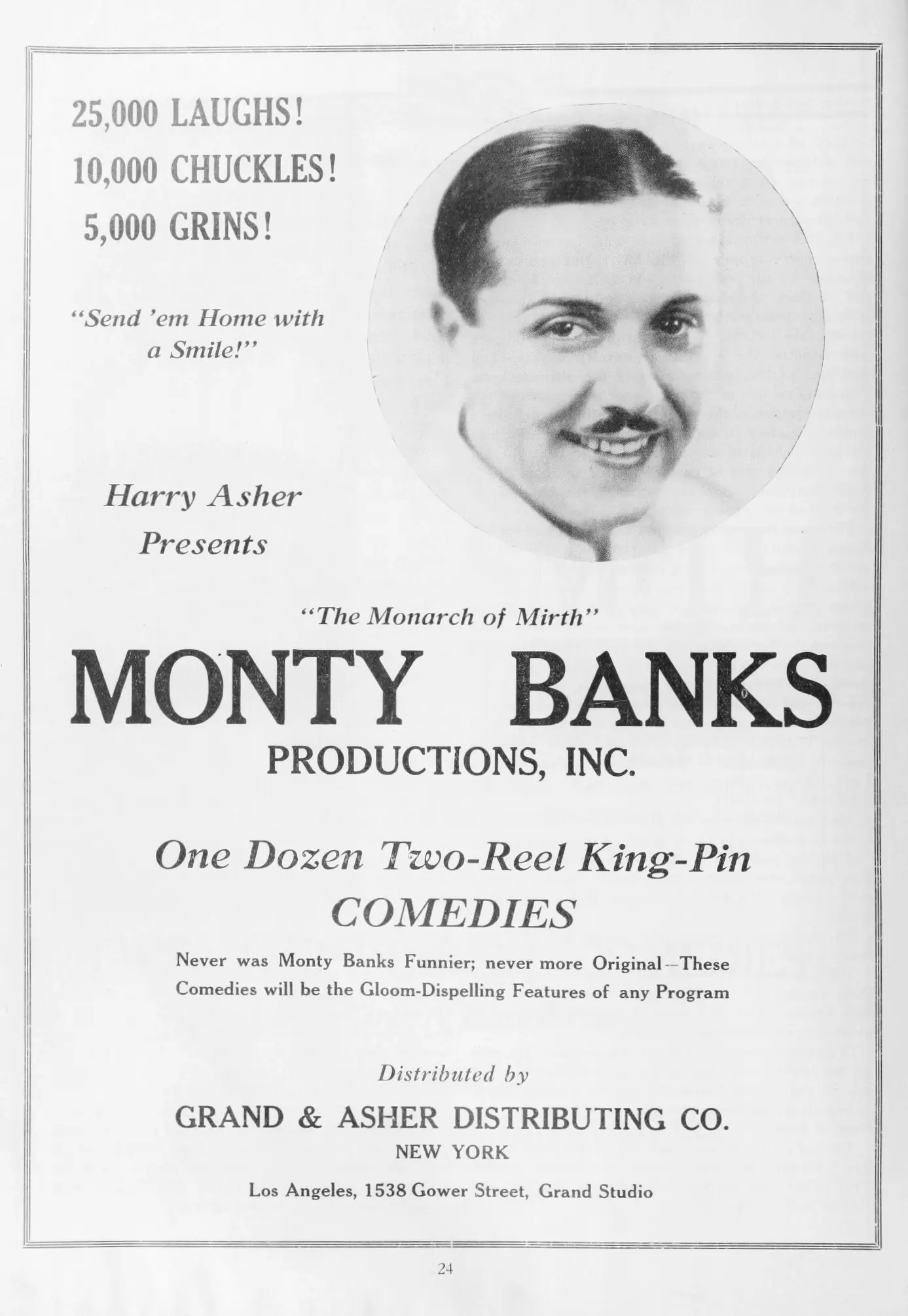
The narrative gains an additional layer of complexity with the introduction of Reginald “Reggie” Thorne, played by the ever-charismatic Monty Banks. Reggie represents the antithesis of Arthur: punctilious, socially adept, and effortlessly charming. He is a rival, not necessarily malicious, but rather a man who operates within the established norms that Arthur constantly defies. Banks, known for his comedic timing, here delivers a performance tinged with a subtle, almost predatory elegance. His Reggie is a man who understands the rules of society and plays them to his advantage, making Arthur’s flaws all the more glaring. Reggie’s presence creates a powerful dramatic tension, not just as a potential suitor for Clara, but as a living embodiment of the world Arthur struggles to inhabit. The film masterfully uses Reggie not just as a plot device, but as a mirror reflecting Arthur’s inadequacies, forcing both the character and the audience to ponder the true value of conformity versus unique genius. Is it better to be a functional cog in a well-oiled machine, or a brilliant, but perpetually misaligned, anomaly?
The thematic richness of ‘Always Late’ extends beyond mere character studies. It functions as a powerful social commentary on the industrial age’s burgeoning obsession with time and efficiency. In an era increasingly defined by factory whistles, train schedules, and strict work hours, Arthur Finch becomes a symbol of resistance, perhaps unwitting, against this new temporal tyranny. His lateness isn’t just a personal failing; it’s a philosophical stance, a rejection of the clockwork universe. The film subtly questions whether society’s demand for punctuality stifles creativity or if it is a necessary framework for progress. This echoes themes found in other contemporary works grappling with modernity, such as Fritz Lang’s ‘Alraune und der Golem’, which also explored the tensions between human nature and manufactured order, albeit through a more fantastical lens. Here, the 'monster' is not a creature of clay, but the relentless ticking of the clock itself.
Cinematically, the film employs a visual language that enhances its thematic concerns. The frequent use of close-ups on clocks, watches, and the frantic movements of people rushing past Arthur, create a sense of overwhelming pressure. The editing, at times, becomes almost frenetic during Arthur’s desperate attempts to catch up, mirroring his internal chaos. Conversely, scenes with Clara often feature longer takes and more static compositions, emphasizing her grounded nature and the stillness of her growing despair. The contrast is stark and effective, guiding the audience’s emotional response without relying on intertitles for every nuance. The cinematography, though simple by today’s standards, masterfully uses light and shadow to evoke mood, casting Arthur’s moments of solitude in deep, melancholic tones and highlighting Clara’s initial brightness with a softer, more hopeful glow that slowly fades as the narrative progresses. The visual storytelling here is potent, relying on expressive performances and clever framing to convey complex emotions.
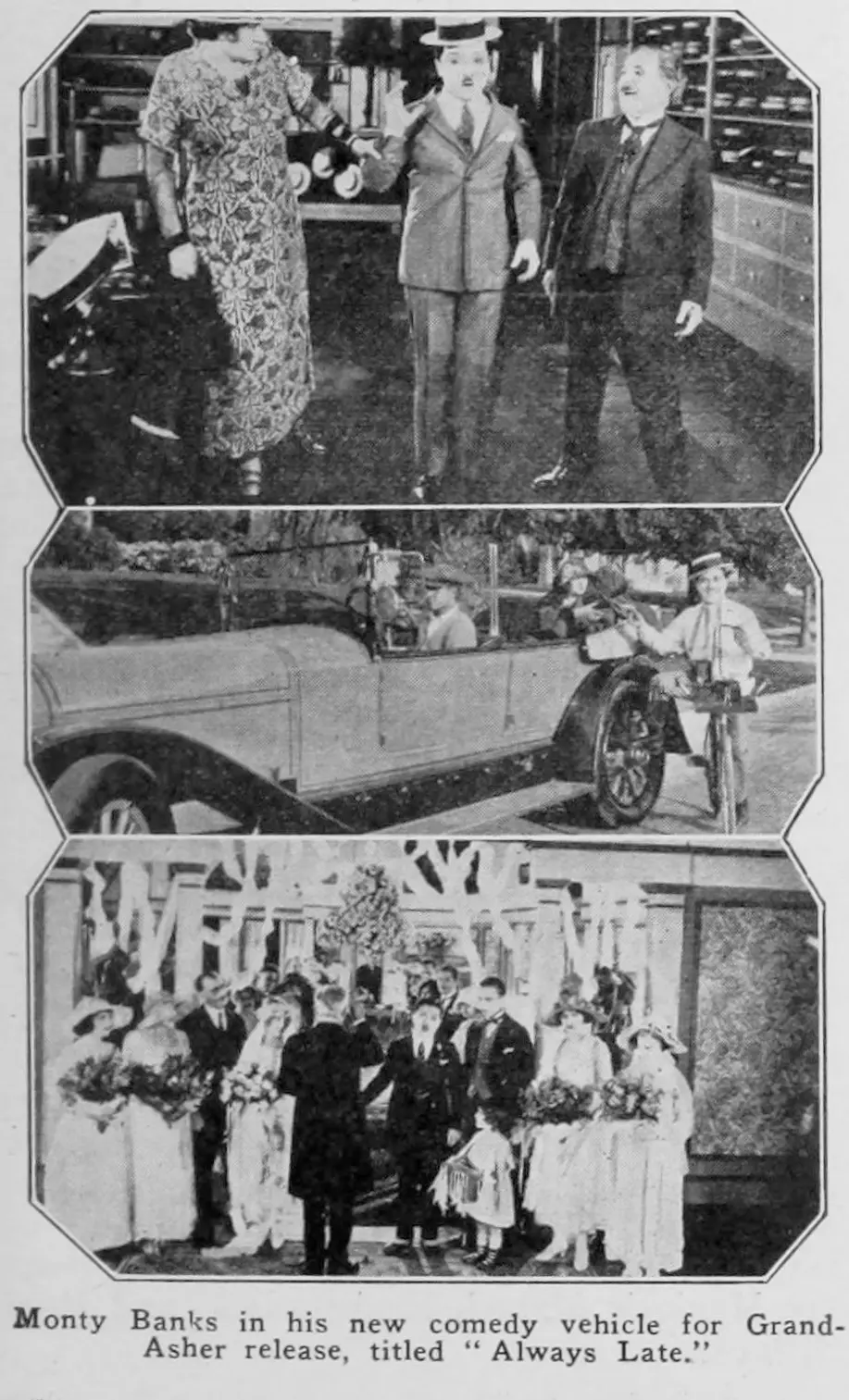
One of the film’s most striking achievements is its avoidance of a simplistic resolution. There is no magical cure for Arthur’s lateness, no sudden epiphany that transforms him into a punctual paragon. The climax of the film, involving a crucial invention presentation and a desperate personal plea, sees Arthur’s chronic tardiness culminate in a devastating, perhaps irreversible, consequence. This refusal to offer a convenient happy ending elevates ‘Always Late’ from a mere melodrama to a work of profound artistic integrity. It challenges the audience to confront the uncomfortable truth that some personal flaws, however seemingly innocuous, can have catastrophic repercussions, and that not all love can conquer all. In this regard, it shares a certain tragic resonance with films like ‘Broken Blossoms’, which similarly explored the devastating impact of societal pressures and personal failings on innocent lives, even if the nature of the tragedy differs. Both films dare to leave their audiences with a lingering sense of melancholy, a testament to their enduring power.
The performances across the board are commendable. William Blaisdell, as mentioned, carries the film’s central burden with remarkable skill. His portrayal of Arthur is not one-dimensional; he’s not simply a clown or a villain. He’s a deeply flawed, yet fundamentally good-hearted individual whose internal clock simply refuses to align with the external world. This complexity prevents the audience from simply dismissing him, instead fostering a complicated empathy. Catherine Bennett’s Clara is the emotional anchor, her quiet suffering a powerful counterpoint to Arthur’s chaotic existence. She embodies the often-unseen toll that one person’s habits can take on another. Monty Banks, while playing a character who could easily be a caricatured rival, instead delivers a performance that makes Reggie a plausible, even sympathetic, alternative, highlighting the genuine dilemma Clara faces. The chemistry between Bennett and Blaisdell, particularly in their scenes of growing estrangement, is palpable, making their eventual separation all the more heartbreaking.
Beyond its central narrative, ‘Always Late’ also offers a fascinating glimpse into the social mores and anxieties of its time. The emphasis on punctuality, the societal pressure to conform to schedules, and the subtle judgment passed upon those who deviate, are all meticulously observed. It’s a film that speaks to the emerging industrial urban landscape, where time was becoming increasingly commodified and personal freedom was often measured against the demands of efficiency. One could draw parallels to the observational style of documentaries like ‘Kino-pravda no. 15’, not in its form, but in its keen eye for capturing the spirit of an era, albeit through a fictionalized lens. While ‘Kino-pravda no. 15’ aimed for raw reality, ‘Always Late’ crafts a poignant drama that nonetheless illuminates the societal undercurrents of its period.
The film’s enduring power lies in its universality. While the specific societal pressures of the early 20th century might have evolved, the struggle with personal habits, the impact of our actions on loved ones, and the relentless march of time remain timeless concerns. ‘Always Late’ is not just a historical artifact; it’s a mirror reflecting aspects of the human condition that transcend generations. It prompts us to consider our own relationship with time, with expectations, and with the subtle ways our quirks can shape our destiny and the destinies of those we hold dear. It is a quiet masterpiece, a poignant reminder that the greatest dramas often unfold not in grand gestures, but in the small, repeated failures that slowly, inexorably, redefine a life. Its legacy is one of understated brilliance, a film that deserves to be rediscovered and appreciated for its profound insights into the human heart and the unforgiving nature of the clock’s steady beat.
IMDb —
1931
Community
Log in to comment.