
DbcultAccessing Vault...
Cult Review
Senior Film Conservator
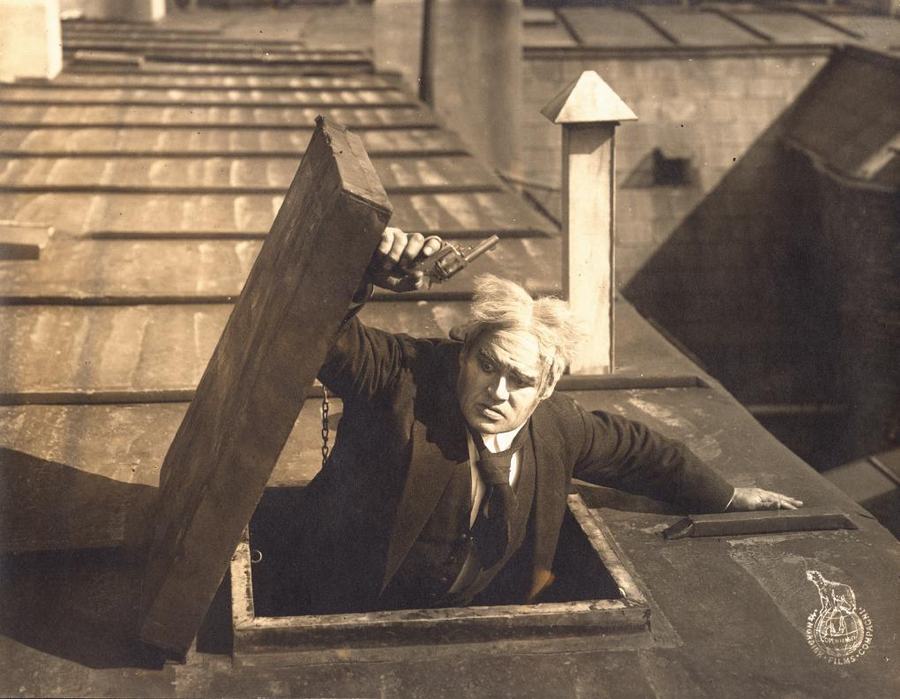
Carl Theodor Dreyer's early cinematic endeavors, often overshadowed by his later, more acclaimed masterpieces, nevertheless offer a profound glimpse into the nascent stages of a singular artistic vision. Among these formative works, "Den hvide djævel" (The White Devil) emerges as a particularly compelling, if somber, exploration of moral compromise, societal hypocrisy, and the corrosive power of unchecked ambition. Drawing inspiration from the keen sociological observations often found in Honoré de Balzac's sprawling human comedy, and infused with Dreyer's nascent psychological intensity, the film constructs a meticulously detailed narrative of a brilliant young doctor's descent into a moral quagmire, orchestrated by the very forces he initially sought to combat.
The film introduces us to Dr. Erik Holm, portrayed with a captivating blend of earnestness and youthful vulnerability by Carlo Wieth. Erik arrives in a provincial town, his medical bag brimming with textbooks and his heart overflowing with an almost naive idealism, eager to apply his modern knowledge for the betterment of humanity. He's a man on a mission, and his initial interactions paint him as a beacon of hope, a stark contrast to the often grim realities of early 20th-century industrial life. This initial purity is crucial, setting the stage for the tragic arc that unfolds. It's a testament to Wieth's subtle performance that Erik’s transformation feels organic, not merely a plot device, but a slow, agonizing erosion of character.
The town itself is a character, a microcosm of societal stratification, where the burgeoning prosperity of industry casts long, ominous shadows over the lives of the working class. At its apex sits Mr. Nordberg, the industrial titan, brought to life with chilling composure by Svend Kornbeck. Nordberg is not a cartoonish villain; rather, he embodies the insidious nature of systemic corruption, cloaked in a veneer of respectability and civic philanthropy. He is the quintessential 'white devil' – outwardly benevolent, a pillar of the community, yet inwardly ruthless, driven by an insatiable hunger for profit. His charisma is a trap, his generosity a calculated investment in influence. Kornbeck's portrayal avoids melodrama, opting instead for a quiet menace that makes Nordberg all the more terrifying.
Erik's introduction to Nordberg's inner circle is facilitated by his burgeoning romance with Else, Nordberg's daughter, played with delicate grace by Gerd Egede-Nissen. Else is the film's moral compass, her inherent goodness and burgeoning awareness of her father's machinations providing a crucial counterpoint to the escalating corruption. Her love for Erik is genuine, a pure flame that struggles to survive in the polluted air of her father's influence. Egede-Nissen conveys a profound inner conflict, her expressive eyes mirroring the growing dread and disillusionment she experiences as the truth about her father, and eventually Erik, begins to surface. Their romance is not merely a subplot; it's the emotional core, the stakes of Erik’s moral battle writ large.
The true architect of Erik's downfall, however, is not just Nordberg, but his cunning associate, Mr. Brandt, portrayed with a sinister elegance by Moritz Bielawski. Brandt is the film's Mephistopheles, a cynical pragmatist who understands the levers of power and human weakness. He doesn't overtly tempt Erik with grand promises but rather subtly nudges him, offering 'practical' solutions to 'ethical' dilemmas, framing moral compromises as necessary steps for success. Bielawski's performance is a masterclass in understated villainy, his knowing glances and sly smiles conveying more menace than any overt act. He represents the intellectual justification for corruption, the voice that tells Erik that the ends justify the means, especially when those ends involve prestige and the hand of the woman he loves. This dynamic echoes the intricate moral quandaries presented in films like The Vital Question, where characters grapple with choices that define their very souls amidst societal pressures.
As Nordberg's industrial empire thrives, its darker side manifests in the form of illegal waste dumping, a silent poison seeping into the town's water and air, triggering a mysterious epidemic among the poorer populace. Erik, initially, is too engrossed in his burgeoning career and his love for Else to notice, or perhaps, too willing to believe Nordberg's placating assurances. The intertitles, often sparse yet impactful in Dreyer's style, convey the growing unease and the subtle shifts in Erik’s demeanor, from confident healer to increasingly troubled accomplice. The film's visual language, even in its silent form, is remarkably adept at conveying psychological states; close-ups on Erik's furrowed brow or Else's worried gaze speak volumes. The contrast between the opulent interiors of Nordberg's mansion and the squalor of the factory workers' homes is stark, a visual indictment of the era's social injustices.
Johannes Ring, as the old, wise physician, serves as a poignant voice of conscience, a Cassandra figure whose warnings are tragically unheeded. His character embodies the fading ethics of a bygone era, his earnest pleas drowned out by the clamor of 'progress' and the seductive logic of profit. His scenes, though brief, are impactful, highlighting the moral decay that has taken root. Gerda Christophersen, likely in a role as a desperate villager or a victim of the epidemic, provides the human face of Nordberg's cruelty, her suffering a stark reminder of the real-world consequences of unchecked corporate greed. Her portrayal adds a raw, visceral layer to the film's critique of industrial exploitation.
The narrative builds with an almost unbearable tension, as the epidemic intensifies and the truth becomes increasingly difficult to suppress. Else's growing suspicion, her quiet investigations, and her desperate attempts to open Erik’s eyes are pivotal. Her character embodies the moral awakening that society itself needs, a clear-eyed perspective amidst the fog of self-interest. The turning point for Erik is a devastating personal tragedy – perhaps the death of a child he had tenderly cared for, or the dramatic exposure of Nordberg's full treachery through irrefutable evidence brought forth by a desperate, wronged individual. This moment shatters Erik's illusions, forcing him to confront the monstrous nature of his complicity and the horrifying reality of the 'white devil' he had unknowingly served.
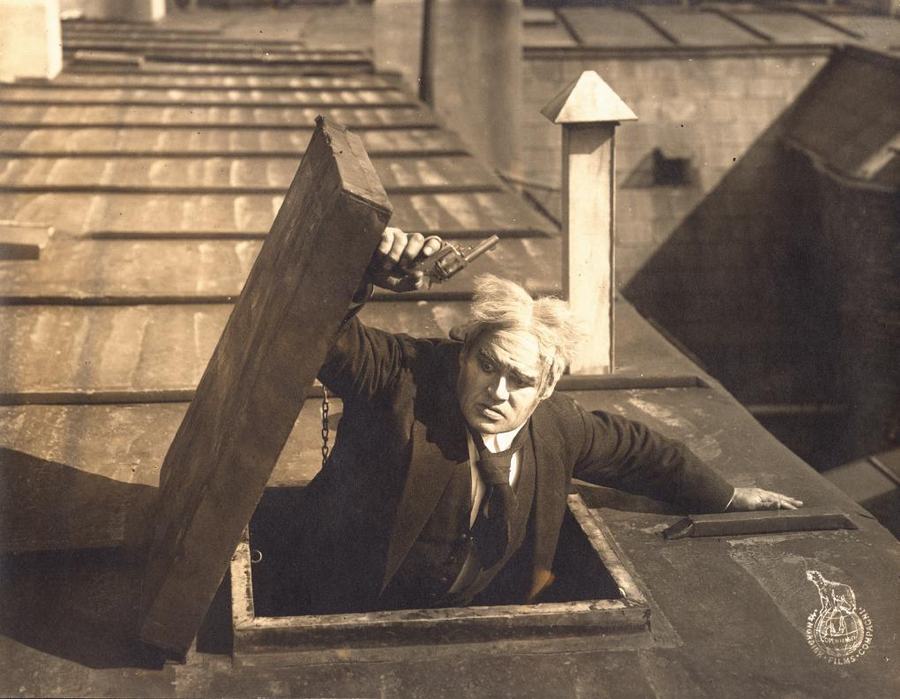
The climax of "Den hvide djævel" is a masterclass in silent film drama, a raw, emotional confrontation between Erik and Nordberg. It’s not a battle of physical strength, but a harrowing clash of wills and ideologies. Erik, stripped of his illusions, is a man reborn, albeit one scarred by his journey into moral darkness. He must make an agonizing choice: to protect his love for Else and his own compromised future, or to expose the truth and seek justice, knowing full well the devastating personal cost. Carl Schenstrøm, in what could be a role as a sympathetic but ultimately powerless town official or a factory worker caught in the crossfire, further emphasizes the systemic nature of the corruption, showing how individuals, even those with good intentions, can be rendered impotent by powerful forces. This struggle for integrity against overwhelming odds resonates with the stark choices faced by characters in films like Honor's Altar, where personal sacrifice is often the price of moral redemption.
Dreyer's direction, even in this early work, showcases his distinctive style: a meticulous attention to detail, a preference for long takes that allow emotions to simmer, and a profound understanding of the human face as a canvas for inner turmoil. The cinematography, though characteristic of the era, employs stark contrasts of light and shadow, particularly in the factory scenes and the dark alleys where the waste is dumped, subtly reinforcing the film's thematic duality of outward appearance versus hidden corruption. The pacing, deliberate and measured, allows the psychological tension to build organically, making the eventual revelations all the more impactful. One can see nascent elements of the profound psychological realism that would define his later career.
"Den hvide djævel" is more than just a melodrama; it's a potent social commentary. It critiques the burgeoning industrial age's disregard for human life in the pursuit of profit, the insidious nature of power, and the ease with which individuals can be corrupted when their idealism is challenged by the allure of success. The 'white devil' itself is a multifaceted concept: it is Nordberg, yes, but it is also the systemic corruption he embodies, the societal pressures that compel Erik to compromise, and perhaps even the hidden darkness within Erik's own ambition. This complex exploration of evil, not as a monstrous entity but as a subtle, pervasive force, is remarkably sophisticated for its time. The film's examination of societal hypocrisy, for instance, finds a somber kinship with the stark realities depicted in Everywoman's Husband, where moral facades crumble under scrutiny.
The film's enduring relevance lies in its timeless themes. The struggle between personal ethics and professional advancement, the environmental consequences of industrialization, and the accountability of powerful figures remain pressing concerns today. While the specific context of early 20th-century Danish industry may seem distant, the moral dilemmas faced by Erik Holm are universal. His journey from idealistic youth to disillusioned man, forced to confront his own complicity, is a powerful cautionary tale. It also serves as a fascinating precursor to Dreyer's later, more overt explorations of faith, suffering, and redemption, demonstrating that even in his earliest works, he was grappling with the profound questions of human existence and morality.
Comparing it to other works of the era, one can see "Den hvide djævel" standing out for its psychological depth. Unlike the often more straightforward melodramas like Alexandra or the adventurous spirit of Jack Spurlock, Prodigal, Dreyer's film delves into the inner workings of its characters' minds, making their moral struggles palpably real. The film’s nuanced portrayal of corruption, where the villain isn't a mere caricature but a product of systemic forces, elevates it beyond simple good-versus-evil narratives. This complex characterization and thematic richness align it more with the intricate social commentaries found in the works of Balzac, truly bringing his literary spirit to the silent screen.
The performances are uniformly strong, a testament to the talent of the ensemble cast and Dreyer's ability to elicit profound emotional truth without dialogue. Carlo Wieth's expressive face conveys Erik's idealism, his gradual bewilderment, and ultimately, his agonizing realization. Svend Kornbeck's Nordberg is chilling in his quiet malevolence, while Moritz Bielawski's Brandt is a master of subtle manipulation. Gerd Egede-Nissen provides the necessary emotional anchor, her character's journey of discovery mirroring the audience's own. Even minor roles, such as Johannes Ring's portrayal of the wise old doctor, are etched with memorable gravitas, contributing significantly to the film's moral landscape. The collective power of these silent performances creates a symphony of human emotion that transcends the limitations of the medium, making the film a compelling watch even for modern audiences.
In retrospect, "Den hvide djævel" stands as a crucial piece in the mosaic of Carl Theodor Dreyer's filmography. It may not possess the legendary status of a "Passion of Joan of Arc" or a "Vampyr," but it clearly demonstrates the nascent genius of a filmmaker who would go on to define cinematic artistry. The film's bold narrative choices, its unflinching gaze at human weakness, and its powerful social critique mark it as a work far ahead of its time. It is a film that challenges viewers to look beyond superficial appearances, to question authority, and to recognize the insidious nature of evil when it presents itself in a respectable guise. Its exploration of moral dilemmas and personal accountability resonates with the internal struggles depicted in A Child of God, highlighting the universal nature of such human conflicts.
The enduring power of "Den hvide djævel" lies in its ability to provoke thought and introspection. It forces us to consider the choices we make, the compromises we accept, and the often-subtle ways in which our ideals can be eroded. It is a testament to the power of silent cinema to convey profound, complex narratives without uttering a single word, relying instead on the artistry of its performers, the ingenuity of its direction, and the timeless resonance of its themes. For anyone interested in the evolution of cinema, in the early works of a master director, or simply in a gripping story of moral struggle, "Den hvide djævel" is an essential, albeit somber, viewing experience. It reminds us that sometimes, the most dangerous devils are not those in red cloaks, but those cloaked in white, walking among us with polite smiles and insidious intentions.
The film's impact on subsequent Danish cinema, and indeed on the broader landscape of European silent film, is undeniable, even if often understated. It pushed boundaries in character development and thematic depth, moving beyond mere spectacle to explore the darker recesses of the human psyche. One could argue its influence can be seen in the more introspective and psychologically driven narratives that followed, providing a blueprint for how cinema could tackle complex moral and social issues with gravitas. Like The Woman in the Case, which similarly dissected human motivations and societal judgment, "Den hvide djævel" contributes to a growing body of work that proved silent film was capable of intellectual and emotional nuance far beyond simple entertainment. It remains a stark, powerful reminder of the early 20th century's moral landscape and a crucial entry in the canon of a cinematic giant.