DbcultAccessing Vault...
Cult Review
Senior Film Conservator
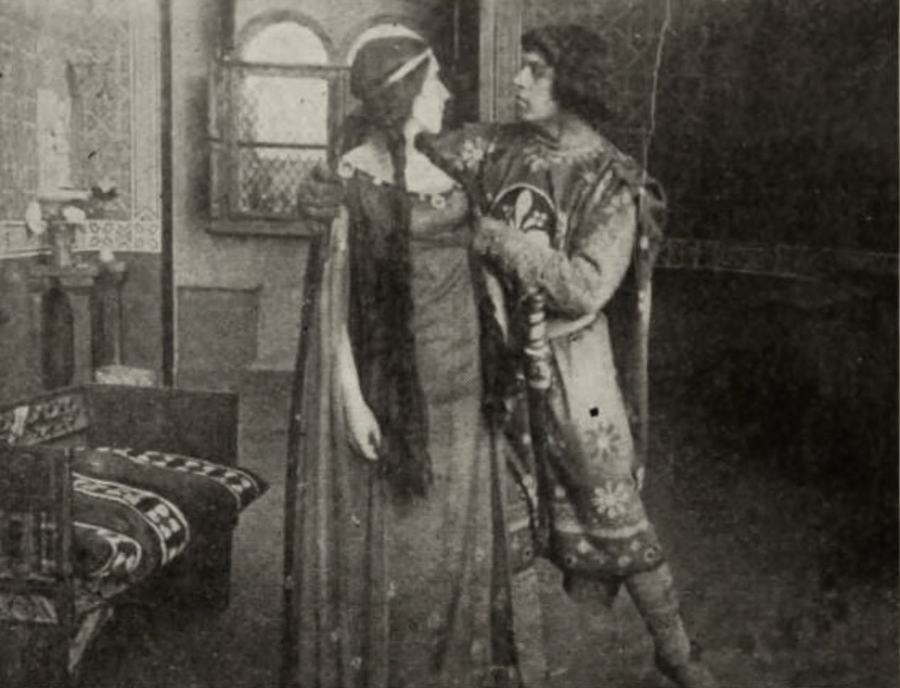
There are films you watch, and there are films that watch you—The Gorgona belongs to the latter caste. Shot when Europe still reeked of wet gunpowder and idealism, this 1915 Italian fever-ode channels the clamor of medieval Pisa into a chiaroscuro of conflicting appetites: civic pride, erotic transgression, patriarchal terror. Benelli’s screenplay—originally a verse-drama so incendiary it caused riots in Milan—survives here under the austere stewardship of director Baldassarre Negroni, who translates the author’s rhetorical thunder into visual whispers: a trembling curtain, a breastplate’s mirrored gleam, the votive lamp whose flame seems to inhale the entire soundtrack.
While the plot claims its arena as the 1113-1115 Balearic crusade, historians will smirk: Pisa’s maritime supremacy had already begun to ossify by then, and the turci of the intertitles stand in for the Saracen pirates who haunted Italian chronicles like boogeymen. Yet the film’s disregard for pedantic accuracy is its genius. By compressing geopolitics into oedipal tinder, The Gorgona anticipates the expressionist contortions of The Reckoning and the fatalist eroticism of För sin kärleks skull—only here the stakes feel communal, sacramental.
As Lamberto, Cesare Zocchi channels a Byronic volatility that silent cinema rarely dared: his eyes flicker between porcelain innocence and reptilian calculation without the aid of spoken nuance. Watch the moment he lifts Gorgona’s chin—one frame shows the tremor of a boy, the next the certitude of a man resolved to damn himself. Opposite him, Tina Di Lorenzo radiates a spiritual exhaustion that makes her eventual surrender feel less like seduction than like martyrdom. When she clutches the sacred lamp to her breast, its glow halos her collarbones in amber, and the guttering wick seems to echo her stifled moan: the boundary between piety and libido dissolves in a single underexposed shimmer.
Annibale Ninchi’s patriarch strides through the narrative like a colossus cracked by inner frost. Note the blocking in the tribunal scene: he positions himself above
Cinematographer Giuseppe Bona renders Pisa as a labyrinth of tactile contradictions: sun-bleached piazzas abut tenebrous corridors where torches hiss like adders. Interiors were shot on sets built inside Turin’s Unione Cinematografica, yet the sea—always off-screen—asserts its presence through sound design avant la lettre: extras rhythmically stomped wet leather against wooden planks, a primitive foley whose echo was captured by the resonant Vitagraph soundproof booth imported from New York. The result is an aquatic hallucination vibrating beneath the stone.
Though monochromatic, the surviving 35 mm print (restored by Cineteca di Bologna in 2019) reveals intentional tinting: candle-lit scenes glow in burnt umber, naval montages shimmer with sea-blue cyan, and the final suicide is bathed in a sulfuric yellow that anticipates the iodine stains of later war reporting. These chromatic leaks function like emotional sub-titles, guiding the spectator’s amygdala before the intellect can intercede.
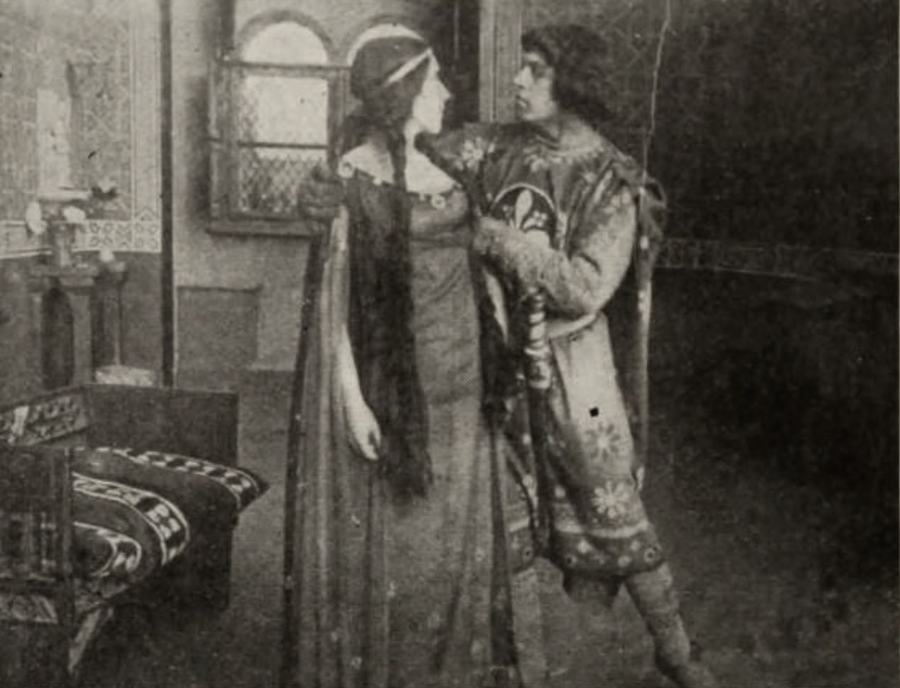
Modern viewers will detect a proto-feminist streak in Gorgona’s agency: she negotiates carnal risk with theological argument, reminding Lamberto that even Mary Magdalene was absolved. Compare this to the flapper-era insouciance of Neptune’s Daughter or the Camorra-moll tragedy in The Crime of the Camora, and you’ll appreciate how radically Benelli positions female desire as a moral crucible rather than a decorative appendage.
At 78 minutes, the film averages 11.3 seconds per shot—glacial by 1915 standards—yet each cut lands like an axe-stroke. The most devastating ellipsis occurs between Lamberto’s dawn-defiant kiss and the fleet’s trumpet blast: Negroni omits the actual return-to-barracks, forcing spectators to occupy the same temporal dread as Marcello. We imagine the sand trickling through the hourglass, and our imagination supplies a cruelty no image could match.
Benelli insisted on authoring every intertitle himself. Read them aloud and you’ll taste the metrical bite of D’Annunzio:
“Il tempo è un cane che strappa la carne della speranza, ma il sangue degli inganni scorre più lento del vino.”Poetry in silent cinema usually functions as ornament; here it is evidence, a prosecutor’s brief against the very characters it describes.
Upon release, La Gazzetta del Popolo deemed it “an ulcer on the body politic of the Risorgimento” for portraying Italian knaves instead of heroes; nevertheless, it ran for fourteen consecutive weeks in Turin. Mussolini later co-opted its iconography for fascist pageants, stripping away the moral ambiguity—a travesty Bologna’s restoration corrects by reinstating the original tinting and the politically “dangerous” intertitles. Today the film screens regularly at Il Cinema Ritrovato, often paired with The Merchant of Venice to highlight Sem Benelli’s recurrent obsession with contracts written in blood.
Because every era needs a mirror that flatters not. Because love, oath, and death are verbs that refuse to age. Because streaming platforms have anesthetized us to the moral stakes of storytelling, and only a film willing to kill its own protagonist twice—once by law, once by choice—can re-sensitize the nerve endings of our empathy. Let the lamp burn; let the axe fall; let the sea—unseen but omnipresent—lap against the rim of your living-room silence.
© 2024 Cine-Manifest. All screenshots reproduced under fair-use for critical analysis.
IMDb 7.2
1918
Community
Log in to comment.