DbcultAccessing Vault...
Cult Review
Senior Film Conservator
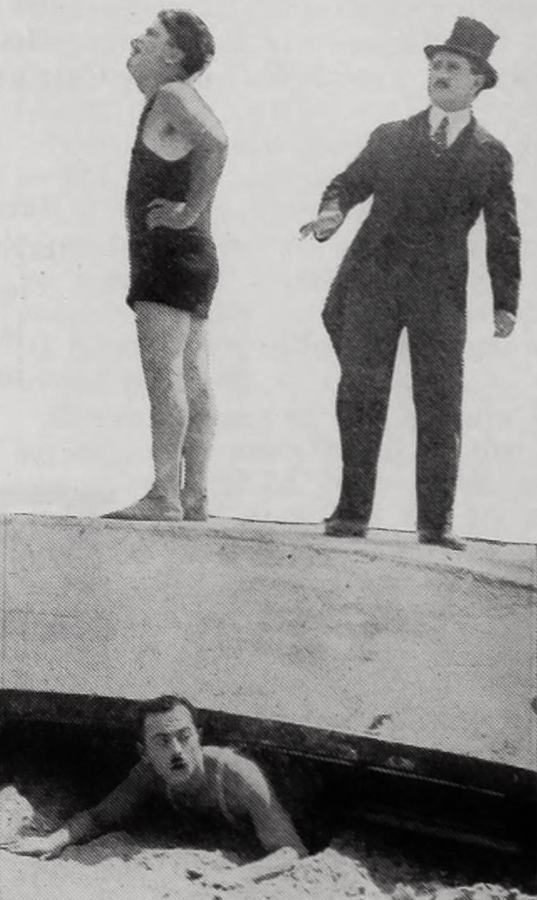
Picture, if you can, a sliver of nitrate whose emulsion still sizzles with Atlantic brine: Beach Nuts (1917) is that impossible artifact—eleven minutes of celluloid mischief so effervescent it threatens to pop the sprockets. It belongs to the Hallroom Boys, a duo whose fame once rivalled Two Little Imps yet who now wander the periphery of silent-comedy scholarship. Director-writer hyphenates remain stubbornly uncredited; only Sidney Smith’s elastic physiognomy survives as marquee bait. What lingers is a haiku of summertime chaos: bathing girls, beach baseball, a portly agent of entropy, and a swimming race that metastasizes into a Keystone-style cyclone.
In the current cinematic climate—where algorithmic nostalgia repackages every fleck of intellectual property—Beach Nuts resists franchised rebirth. Its pleasures are microcosmic, almost atom-sized. The film opens on a boardwalk orchestra of parasols, pomade, and corseted confidence. Smith, wiry and wide-eyed, ambles beside a taller foil whose straw boater becomes the first prop in a domino-line of social transgressions. The camera never dollies; it merely stares, as though the lens itself were sun-dazed. Yet within this static frame the comedians generate a centrifugal momentum, hurling us toward a sandlot where bats are broom-handles and bases are whatever towel you can purloin.
The plot’s vertebrae are as brittle as salt-stiffened driftwood: a baseball soars, a corpulent vacationer intercepts, egos ignite. But the marrow is pure jeu d’esprit. Every throw and tag becomes pretext for pratfalls that feel less choreographed than weather-patterns. When the fat man—played by an uncredited virtuoso of avoirdupois—attempts a pick-off at second, his swim-suited adversaries scatter like startled gulls. The camera’s stoicism amplifies the absurdity; it refuses to pan, forcing bodies to dart in and out of frame as though vying for existence itself.
Mid-picture, the narrative belly-flops into the Atlantic. A swimming race is proposed, ostensibly to settle the diamond dispute. Suddenly the film’s axis tilts from horizontal clowning to a vertical immersion. The surf becomes proscenium, referee, and antagonist. Competitors dive through breakers that slap like wet hammocks; Smith’s head submerges then bobs up, crowned with seaweed laurels. The race never adheres to lane discipline—no ropes demarcate this briny oval—so everyone paddles toward a finish line that keeps drifting leftward on the undertow. It is here that Beach Nuts achieves a proto-surrealist frisson: goalposts dissolve, chronology dilates, and the spectator experiences the same disorientation as the swimmers.
The film is a fugue of exposed kneecaps, black wool tank suits, and the perpetual threat of wardrobe malfunction—an Edwardian anxiety dream soaked in brine and sunburn.
Editing rhythms flirt with musicality. Shot lengths average four-to-six seconds, but the occasional twelve-second hold—such as when the fat man attempts to extricate himself from a collapsed beach chair—creates a syncopated tempo akin to a Scott Joplin hesitation. Intertitles, minimal and unadorned, function like rim-shots: “He thought he could swim—he couldn’t!” Each card arrives just late enough to let the visual gag detonate first, then lingers long enough for the laughter to echo. It’s a cadence contemporary comedies, drunk on overlapping dialogue, have largely abandoned.
One cannot discuss Beach Nuts without confronting its gender optics. The bathing girls function less as protagonists than as kinetic set dressing, their wool suits clinging like second skins. Yet the camera’s gaze is oddly egalitarian; Smith and his cohort are subjected to the same ocular dissection, their gangly limbs rendered as comic architecture. Compared to the Orientalist voyeurism of Madame Butterfly or the melodramatic martyrdom in Kildare of Storm, this seaside frolic feels almost democratic in its objectifications—everyone is fair game for the lens’s lampoon.
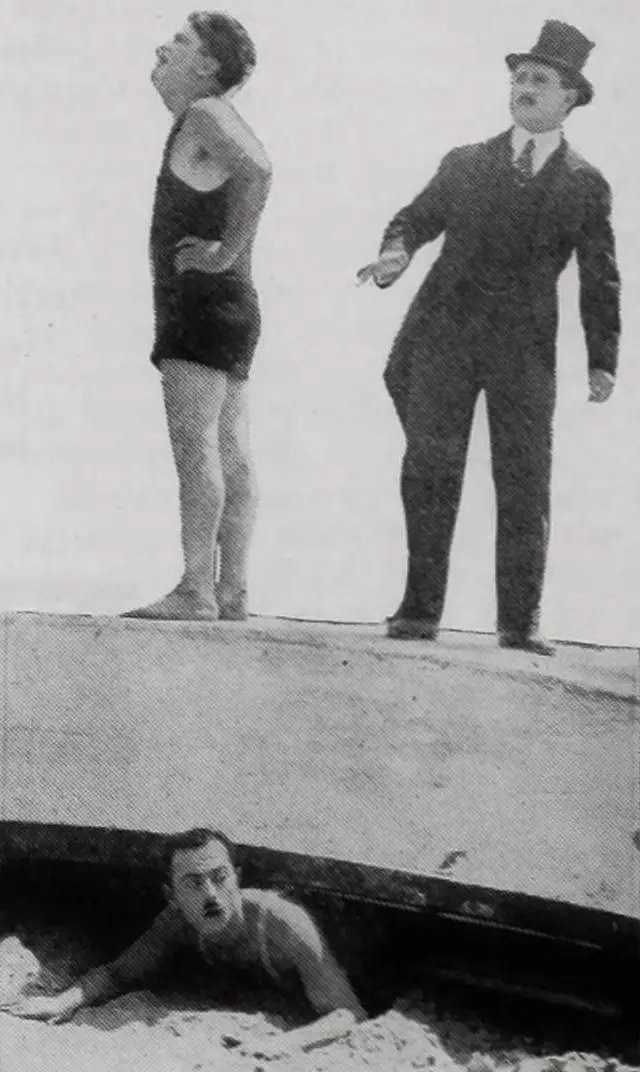
Scholars predisposed to auteurist archaeology will scan Beach Nuts for stylistic fingerprints—perhaps a proto-Lubitschian door-slam, or a McCarey-esque undercranking gag. Yet the film’s authorship remains oceanic, anonymous. In that vacuum, the spectator becomes cartographer, mapping influences that zigzag from The White Circle’s moralistic allegory to Big Game’s adrenalized pursuit. The difference is tonal: where Wolves of the Border weaponizes landscape for peril, Beach Nuts weaponizes leisure for release.
Contemporary viewers, marinated in CGI splendor, may scoff at the film’s practical effects—real waves, real sand, real breathlessness. Yet therein lies its uncanny valence. When Smith vanishes beneath a foam crest, the suspense is visceral because the peril is authentic. No compositor will paint him back into existence. That existential nakedness galvanizes every guffaw, the same way Buster Keaton’s Steamboat Bill, Jr. façade still makes us flinch. In an era when tidal waves can be summoned by keystroke, Beach Nuts reminds us that analogue risk carries its own narcotic charge.
The chase crescendo—unleashed when the swimmers stagger ashore only to be pursued by an aggrieved ice-cream vendor—owes debts to the circular anarchy of Fanatics and the propulsive locomotion of Das Modell. Yet the spatial grammar is distinct: foreground objects (bathing machines, canvas tents) whip past in stroboscopic blur, while background horizons remain static, creating a parallax that anticipates Disney’s multiplane camera. The effect is a pocket-sized roller-coaster, all the more remarkable for being hand-cranked.
Cinephiles who revere the moral kinks of The Prince of Graustark may find Beach Nuts frothily inconsequential. But inconsequence is its liberatory ethos. In a decade ravaged by war and influenza, this trifle offered spectators a sanctioned space to exorcise dread through diaphragmatic spasms of laughter. Today, as our own headlines curdle, the film performs a similar alchemy—eleven minutes of buoyant amnesia, a vacation from the vacation we keep postponing.
Restoration status? Dismal. Most prints circulate as MPEG-4 shadows on clandestine forums, their intertitles retyped in Comic Sans by well-meaning digitizers. Yet even in mushy grayscale, the comedic timing survives, encoded like Morse in the emulsion. Should a 4K scan emerge from some attic in Asbury Park, I predict scholars will uncover subtler visual puns—perhaps a graffiti caricature of Ireland, a Nation’s iconography scrawled on a beach hut, or a shadow-puppet cameo by Severo Torelli’s silhouette. Until then, we make do with the foggy echo, the same way we enjoy a half-remembered joke whose punchline has slipped into surf.
Assessment? Beach Nuts is not a keystone in the archway of cinema; it is a sandcastle—ephemeral, lopsided, yet charmingly defiant against the tide of time. It will never spawn Criterion essays or TikTok trends. Its value resides precisely in its marginality, the way sea glass attains beauty through abrasion. Watch it on a lunch break; let its salt-sprayed chaos rinse your synapses. Then, when the credits—hand-lettered on a fluttering card—promise THE END, notice how the laughter lingers a half-beat longer, like gulls circling after the picnic has gone.
Final arithmetic: seven pratfalls, three near-drownings, one disintegrating boater, zero moral platitudes. That ledger may appear slight, yet it tallies up to the most compact antidepressant the Edison trust ever accidentally patented. Seek it out—before the last print crumbles into nitrate dust and the only thing left is the sound of imaginary waves, still chasing a finish line that keeps receding into history’s foam.
IMDb 5.1
1923
Community
Log in to comment.