DbcultAccessing Vault...
5.6/10
Senior Film Conservator
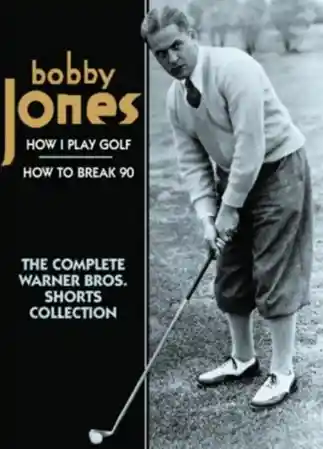
A definitive 5.6/10 rating for a film that redefined the boundaries of cult cinema. How I Play Golf, by Bobby Jones No. 6: 'the Big Irons' remains a cornerstone of transgressive art.
Okay, so if your idea of a good movie involves explosions or deep existential dread, then How I Play Golf, by Bobby Jones No. 6: 'the Big Irons' probably isn't for you. This is a short, old instructional film. But if you have even a *slight* soft spot for vintage sports, or just appreciate a quaint, low-stakes slice of celluloid, it’s got a real quiet charm. Don't expect any thrilling plot twists, just a gentle peek into a bygone era of golf.
The setup here is actually pretty relatable, even today. Guy Kibbee plays this businessman, clearly itching to escape his desk. You see him pacing, doing little phantom swings right there in his office suit. It's a universal feeling, that pull to just ditch work for a bit. 🏌️♂️
He gets to the golf course, all happy and ready to swing, and *boom*! Alan Mowbray, his boss, is right there on the fairway. The look on Kibbee’s face is just priceless. It’s a definite “oh, crumbs” moment, perfectly captured without a single word. You can almost feel the awkwardness radiating off the screen.
That’s when Bobby Jones himself steps in, all calm and collected. He’s not just showing off; he’s genuinely trying to teach something important about those longer iron shots. The explanation he gives, even with the limited sound and simple visuals, is surprisingly clear. He really breaks it down.
He talks about the “big irons”—the one, two, and three irons. Makes you wonder how many folks today even keep those in their bag, right? Most of us are reaching for a hybrid. It's a neat little historical detail.
The way they cut between Jones explaining things and then demonstrating them feels very much like a proto-tutorial video. It’s surprisingly effective for its time. You get to see his grip, his stance, and that smooth, effortless swing.
There’s this one shot where the golf ball just *sails* off his club. You don't get the satisfying thwack, of course, but you can absolutely *feel* the power and precision. It’s a very satisfying visual, even in black and white.
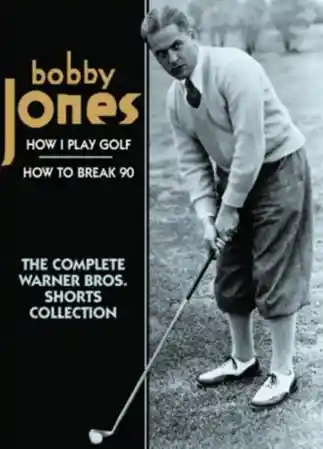
The golf course itself looks so incredibly quiet. No crowds, just these three guys and a caddy. It’s a stark contrast to how busy courses are today. You can almost imagine the gentle breeze and the smell of fresh-cut grass.
Harold Goodwin, the caddy, just stands there for most of it, looking a bit bored. Like he’s seen a thousand of these lessons. His expression is a whole mood. It’s one of those small, easily overlooked details that just makes it feel a bit more real.
And the fashion! Those high-waisted trousers and flat caps. It’s a whole vibe. You can tell this film is nearly a century old just from the clothes alone. The golf clubs themselves look a bit different too, of course, but the core mechanics Jones teaches feel pretty timeless.
The other actors trying to hit the ball, especially Kibbee, look so wonderfully awkward compared to Jones. It’s a nice touch that highlights just how professional Jones really was. They’re clearly not pros, and it’s endearing.
It’s less about a grand cinematic experience and more like peeking into a *very specific* slice of history. The silence, broken only by a sparse score, really lets you focus on the movement. No fancy camera angles needed; the simplicity works.
So yeah, a short, sweet, and surprisingly educational look at golf from nearly a century ago. It’s a cool curiosity, especially for film buffs who appreciate the mundane made memorable. Not exactly a thrilling adventure, but charming in its own quiet way. 🕰️
Community
Log in to comment.