DbcultAccessing Vault...
Cult Review
Senior Film Conservator
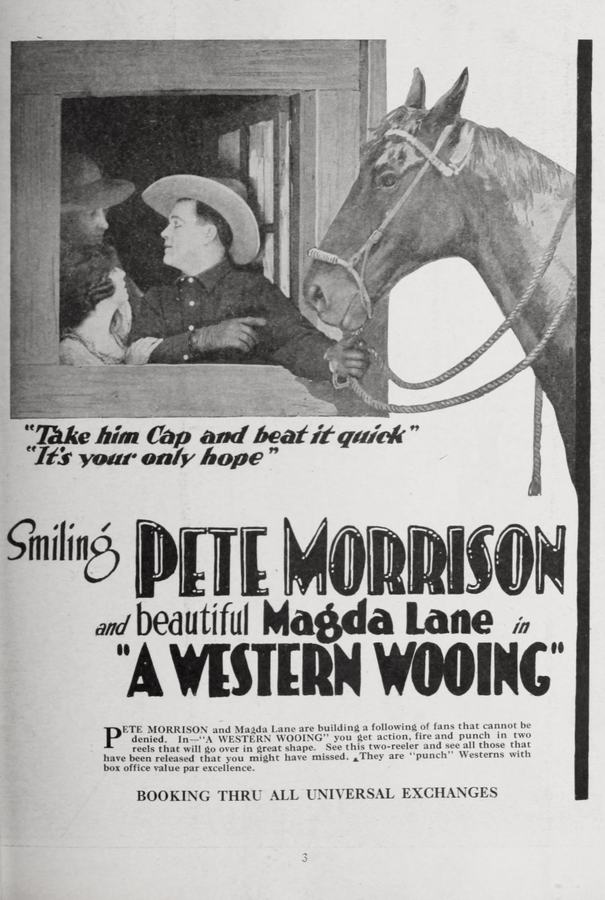
Stepping back into the annals of cinematic history, one occasionally unearths a gem whose luminescence, though perhaps dimmed by the passage of decades, still possesses the power to enthrall. Such is the case with A Western Wooing, a captivating silent era Western that, despite its vintage, speaks with surprising clarity to themes as old as humanity itself: love, loyalty, and the relentless pursuit of justice on an untamed frontier. Directed by the seasoned hands of its era, and penned by the prolific duo Harvey Gates and Anthony Coldeway, this film is more than a mere historical curiosity; it is a vibrant tapestry woven with the threads of nascent American myth-making, brought to life by a cast whose expressive prowess transcended the lack of spoken dialogue.
At its heart, A Western Wooing presents a quintessential narrative arc, yet one imbued with a nuanced emotional depth that elevates it beyond simplistic genre fare. We are introduced to Silent Jim, portrayed with a compelling blend of rugged stoicism and underlying tenderness by Pete Morrison. Jim is a man deeply connected to his land, his ranch a testament to hard work and unwavering principle, nestled precariously close to a vital water source – a detail that becomes the linchpin of the ensuing conflict. His quiet world is profoundly stirred by the arrival of Mary (Magda Lane), the new schoolmarm, a beacon of grace and intellect in the dusty, rough-hewn settlement. Lane imbues Mary with an inner strength and spirited independence that makes her far more than a mere damsel in distress; she is an active participant in her own destiny, a compelling figure who commands respect.
The burgeoning, unspoken affection between Jim and Mary forms the tender core of the narrative, a delicate bloom constantly threatened by the thorny ambitions of Baron Thorne (Fred Montague). Montague, a master of villainous portrayals in the silent era, crafts Thorne not as a cartoonish antagonist, but as a chillingly plausible embodiment of unchecked greed. His desire for Jim’s water rights is inextricably linked to his covetous gaze upon Mary, creating a dual threat that tightens the narrative's tension. Slim Allen, as Thorne's nefarious henchman, provides the muscle and menace, a stark contrast to the film's more honorable figures. The plot, while adhering to many Western tropes, avoids predictability through its meticulous character development and the genuine emotional stakes established early on. The pacing is a careful crescendo, beginning with idyllic introductions, slowly building the sinister undercurrents of Thorne's machinations, and exploding into a series of climactic confrontations that are both thrilling and emotionally resonant. One might draw a parallel to the escalating tensions found in a film like The She Devil, where personal desires clash violently with societal norms, though A Western Wooing retains a more overt moral clarity.
In the silent era, an actor's face, posture, and gesture were their most potent tools, and the cast of A Western Wooing wields them with remarkable skill. Pete Morrison, a veritable icon of early Westerns, delivers a performance that justifies his stature. His 'Silent Jim' is a marvel of understated power. Morrison conveys Jim's deep affection for Mary through subtle glances and protective stances, his frustration with Thorne through clenched jaws and narrowed eyes, and his unwavering courage through his resolute bearing. There is an authenticity to his portrayal that transcends the theatricality often associated with silent film acting; he feels like a man forged by the very landscape he inhabits.
Magda Lane, as Mary, is equally compelling. She brings a luminous intelligence to the schoolmarm, resisting the temptation to render her as a passive object of desire. Mary possesses agency; her decisions and reactions drive significant plot points, making her a formidable counterpart to Jim. Her expressions shift seamlessly from gentle warmth to defiant resolve, particularly in her interactions with Thorne. The chemistry between Morrison and Lane is palpable, a silent dialogue of mutual respect and growing admiration that forms the beating heart of the film's 'wooing' aspect.
Fred Montague, as Baron Thorne, is a masterclass in villainy. His presence alone injects a palpable sense of dread. Montague’s Thorne is not merely evil; he is calculating, urbane in his malevolence, a snake in the prairie grass. His polite menace is far more unsettling than any overt bluster. Slim Allen, as his brute enforcer, provides a necessary physical threat, a stark, unthinking instrument of Thorne's will. And Bert Appling, often a stalwart in supporting roles, likely provides the film's crucial moments of levity or loyal companionship, grounding the high drama with relatable human elements. The collective strength of these performances ensures that even without spoken words, the narrative's emotional currents flow strongly, much like the relentless struggle for survival depicted in The Strength of Donald McKenzie, where character resilience is paramount.
The aesthetic quality of A Western Wooing, even viewed through the lens of modern restoration, speaks to a sophisticated understanding of visual storytelling. The direction, likely a collaborative effort given the era’s production methods, demonstrates a keen eye for composition, utilizing the vastness of the Western landscape not merely as a backdrop, but as a character in itself. The sweeping vistas emphasize the isolation and challenges faced by the pioneers, while tighter shots on faces amplify emotional intensity. The use of natural light, a hallmark of early cinema, lends an authentic texture to every scene, from sun-drenched plains to shadowy interiors. One can almost feel the dust, smell the sagebrush, and sense the heat of the sun.
The cinematography, while perhaps not as overtly experimental as some European contemporaries or later Hollywood epics like Quo Vadis?, is remarkably effective in conveying mood and narrative progression. The camera often serves as an objective observer, allowing the action to unfold naturally, yet at crucial moments, it draws the viewer into the characters' subjective experiences. The sequences involving conflict — a chase, a struggle for the water rights, or a confrontation — are choreographed with a dynamic energy that prevents them from feeling static. The intertitles, rather than merely stating facts, are often crafted with a poetic flair, enhancing the emotional resonance and providing necessary exposition without disrupting the visual flow. This seamless integration of visual and textual elements is a testament to the era's mastery of silent film conventions.
Beyond its surface narrative of romance and conflict, A Western Wooing delves into profound thematic territory. The film is, at its core, an exploration of the American ideal of self-reliance and the struggle to forge a life in a land both bountiful and brutal. Jim's connection to his ranch and his water rights symbolizes the pioneering spirit – the belief that honest labor and steadfastness will yield prosperity. Thorne, conversely, represents the insidious encroachment of rapacious capitalism and disregard for community, a theme that resonates even today. The tension between these two forces is a microcosm of the larger societal shifts occurring in America at the time.
The 'wooing' of the title extends beyond Jim's pursuit of Mary; it encompasses the wooing of the land itself, the arduous process of taming it and making it yield. Mary, as the schoolmarm, embodies the civilizing influence, bringing education and refinement to a wild expanse, mirroring the efforts to establish law and order where only raw power once reigned. Her presence signifies hope for a more settled future. The film subtly argues that true progress on the frontier is not achieved through coercion and greed, but through integrity, community, and genuine affection. This thematic depth allows it to stand alongside other character-driven dramas of the era, offering a nuanced view of human nature, much like the intricate relationships explored in The Bride of Hate, albeit with a distinctly Western flavor.
While perhaps not as widely known as some of the monumental epics of its time, A Western Wooing holds its own as a compelling example of early American cinema. It showcases the foundational elements that would define the Western genre for decades to come: the noble hero, the virtuous heroine, the dastardly villain, and the high stakes of survival and love. Its enduring appeal lies in its ability to tell a universal story within a distinctly American context. The film's narrative clarity and strong characterizations allow it to transcend the limitations of silent film, communicating directly to the audience's emotions.
When considering its peers, A Western Wooing stands as a robust entry. It shares the narrative drive and moral clarity of films like At Piney Ridge, focusing on community and individual struggles. Its romantic core, while set against a rugged backdrop, possesses a tenderness reminiscent of the more dramatic elements found in Forget-Me-Not, proving that poignant emotional narratives were not exclusive to domestic dramas. The film's exploration of justice and retribution, though less overtly political, can be seen as a simpler precursor to the intricate social commentaries found in later, more complex works such as Broken Barriers. Indeed, the film's strength lies in its unpretentious commitment to storytelling, a quality that makes it accessible and enjoyable even to modern audiences.
The contributions of writers Harvey Gates and Anthony Coldeway are evident in the taut construction of the plot and the well-defined character arcs. Their understanding of the Western idiom, combined with a knack for crafting engaging dramatic situations, is a significant factor in the film's success. This is a film that, like many of its era, was instrumental in shaping the cinematic language of the Western, establishing conventions that would be revisited and reinterpreted for generations. It contributes to the rich tapestry of early American narratives, much like the cultural significance of Tepeyac to Mexican cinema, or the historical scope of Bismarck in European film.
In conclusion, A Western Wooing is far more than a relic; it is a vibrant, engaging piece of cinematic artistry that continues to resonate. Its unvarnished depiction of frontier life, coupled with a compelling romance and a clear moral compass, makes it a rewarding viewing experience. Pete Morrison and Magda Lane deliver performances that are both era-appropriate and surprisingly timeless in their emotional impact. The film serves as a powerful reminder of the foundational narratives that built American cinema, demonstrating that even without the aid of spoken dialogue or elaborate special effects, a well-told story, anchored by strong characters and universal themes, can achieve a profound and lasting effect. For those interested in the origins of the Western genre, the nuances of silent film acting, or simply a heartfelt tale of love and perseverance against formidable odds, A Western Wooing offers an intimate, captivating glimpse into a bygone era, proving that some stories, like true love, are eternal.
IMDb 6.5
1935
Community
Log in to comment.