DbcultAccessing Vault...
Cult Review
Senior Film Conservator
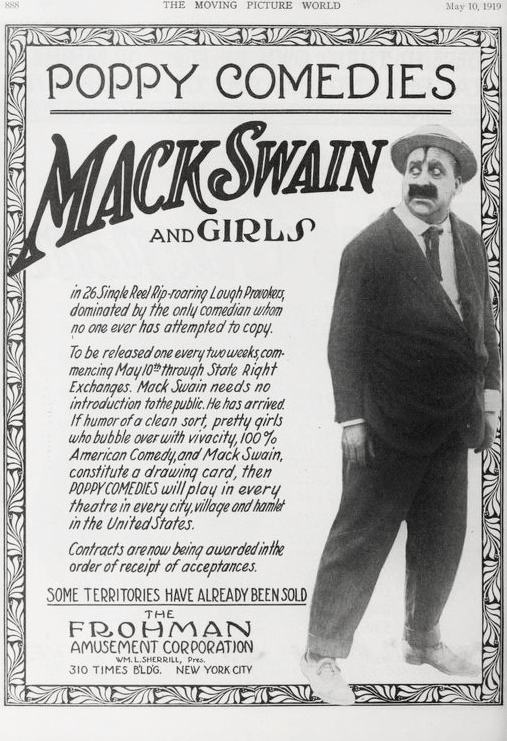
Step into the kinetic, often exasperating, universe of early cinema, and you’ll occasionally unearth a gem that, despite its brevity and historical distance, speaks volumes about the human condition with an almost startling clarity. Such is the case with Ambrose's Visit, a silent era short that, beneath its layers of slapstick and exaggerated pantomime, delivers a remarkably incisive commentary on familial obligation and the sheer tyranny of unwelcome hospitality. This isn't just a relic; it's a vibrant, living testament to the power of visual storytelling, demonstrating how a simple premise, when executed with precision and a keen understanding of character, can transcend its temporal confines to resonate with audiences across generations.
At its core, the narrative is deceptively straightforward: Ambrose, portrayed by the inimitable Mack Swain, a titan of early screen comedy whose imposing stature and expressive face made him a master of the exasperated everyman, reluctantly agrees to a sojourn at his mother-in-law’s rural abode. What begins as a polite, if somewhat trepidatious, gesture of familial goodwill rapidly descends into an ordeal of Homeric proportions. Swain's Ambrose is not merely a character; he's a vessel for universal frustrations, his initial polite demeanor slowly eroding under the relentless onslaught of domestic demands. The film captures this metamorphosis with a nuanced understanding of comedic timing, each forced smile and weary sigh contributing to a cumulative effect of profound weariness.
The brilliance of Ambrose's Visit lies in its meticulous depiction of the escalating absurdity. From the moment he crosses the threshold, Ambrose is plunged into a whirlwind of tasks, each more trivial and energy-sapping than the last. There's no respite, no moment of quiet repose; the film becomes a relentless ballet of chores. He’s hauling water, chopping wood, tending to livestock – the specific duties are almost secondary to the sheer, unyielding volume of them. The camera, in its static, observational stance typical of the era, becomes an impartial witness to this domestic servitude, allowing Swain's physical comedy to speak volumes. His slumped shoulders, his exasperated glances towards an unseen clock, his increasingly clumsy attempts to fulfill demands – these are not merely gags; they are the eloquent articulations of a spirit slowly being crushed under the weight of an ungrateful household. It’s a masterclass in non-verbal communication, a quality for which silent cinema is often celebrated, yet rarely executed with such potent effect.
The film deftly explores the psychological toll exacted by this relentless imposition. Ambrose isn't just physically tired; he’s mentally exhausted, his polite facade cracking under the strain. The mother-in-law, though never explicitly malicious, embodies a kind of unwitting domestic tyranny, her expectations boundless, her empathy seemingly non-existent. This dynamic creates a subtle tension, a slow-burn comedic horror, as the audience anticipates Ambrose's inevitable breaking point. The humor isn't just in the pratfalls, but in the recognition of a shared human experience: the struggle to maintain decorum in the face of overwhelming annoyance, the silent battles waged within the confines of polite society. The film’s uncredited writers, likely working within the collaborative studio system of the early 20th century, understood implicitly that the most profound comedies often stem from the most relatable anxieties, transforming mundane annoyances into cinematic spectacle.
The crescendo of Ambrose's ordeal arrives with the evening meal, a moment anticipated by any weary traveler as a reward for their labors. Here, Ambrose's Visit delivers its most biting satirical stroke. The meal, far from being a hearty country repast, is described as “scant” – an understatement that barely scratches the surface of its meager reality. It’s a final, profound indignity, a symbolic slap in the face after a day of ceaseless toil. The visual contrast between Ambrose’s gargantuan appetite, built from hours of unrewarding physical exertion, and the pitiful portions placed before him, is a stroke of comedic genius. This isn't just about hunger; it’s about the fundamental disrespect, the profound lack of recognition for his efforts. The sparse table, perhaps a single potato or a sliver of meat, becomes the ultimate symbol of his exploitation, the final straw that shatters his resolve and compels him to make a decisive, albeit abrupt, exit. This scene, more than any other, encapsulates the film’s central theme: the breaking point when civility gives way to self-preservation, when the illusion of pleasantry can no longer mask the reality of exploitation.
In terms of cinematic craft, even without explicit directorial credits, the film exhibits a shrewd understanding of pacing and visual narrative. The sequential nature of the tasks, the gradual build-up of Ambrose's frustration, and the climactic meal are all orchestrated with a precision that belies the rudimentary technology of the era. The use of medium shots and wider frames allows Mack Swain's full body language to convey the story, a testament to the era's reliance on physical performance over dialogue. The film doesn't waste a single frame; every gesture, every reaction shot, contributes to the overall comedic and emotional impact. It's a masterclass in economy, proving that compelling storytelling doesn't require elaborate sets or complex plots, but rather an astute observation of human behavior and a talent for visual translation.
The underlying social commentary in Ambrose's Visit is surprisingly robust for a silent comedy. It subtly critiques the rigid social expectations of the time, particularly the implicit demands placed upon guests and family members. It juxtaposes the idealized image of rural tranquility with the harsh reality of its ceaseless labor, and the presumed warmth of familial bonds with the cold indifference of exploitation. Ambrose's flight back to the city can be interpreted not just as an escape from drudgery, but as a reaffirmation of urban autonomy, a preference for the anonymity and transactional nature of city life over the suffocating, unreciprocated demands of the countryside. This tension between urban freedom and rural obligation is a recurring motif in early cinema, often played for laughs, but here imbued with a genuine sense of weary resignation.
When considering films that explore the suffocating nature of domestic environments and the yearning for personal liberation, one might draw an unexpected, yet illuminating, parallel to Henrik Ibsen's A Doll's House (1918). While vastly different in tone and genre – one a stark social drama, the other a broad comedy – both narratives hinge on a protagonist's realization of their entrapment within a prescribed domestic role and their subsequent, decisive break for freedom. Nora Helmer’s dramatic exit from her marital home, though spurred by profound societal and personal revelations, echoes Ambrose's less dramatic, but equally resolute, retreat from his mother-in-law's house. Both characters, in their own ways, are seeking an escape from a situation where their individuality is diminished, and their efforts are either unappreciated or exploited. Ambrose's plight, stripped of its dramatic gravitas, is a comedic mirror to Nora's profound awakening, highlighting the universal human desire for agency and respect within the domestic sphere.
Furthermore, the relentless, unrewarding labor imposed upon Ambrose bears a striking, albeit darkly humorous, resemblance to the grim realities depicted in films like Life in a Western Penitentiary. While the latter plunges into the harsh, brutal world of incarceration and forced labor, the feeling of being perpetually overworked, of having one's efforts ceaselessly demanded without adequate compensation or even basic comfort, connects these disparate narratives. Ambrose’s day becomes a comedic parallel to a prisoner's sentence, a period of involuntary servitude where the individual's will is subjugated to the demands of an external authority. The film, through its comedic lens, manages to tap into that primal human aversion to exploitation, making Ambrose's eventual rebellion not just funny, but deeply satisfying. It's a testament to the film's nuanced touch that it can evoke such serious undertones within a framework of lighthearted entertainment.
The film also stands as a significant, if minor, entry in the broader tapestry of silent comedy, a genre that flourished through its ability to communicate across linguistic barriers purely through visual cues. Mack Swain, alongside contemporaries like Fatty Arbuckle and Charlie Chaplin, perfected the art of the physical gag, the exaggerated facial expression, and the balletic choreography of comedic action. Ambrose's Visit, while not as grand in scale as some of the feature-length comedies that would follow, nonetheless demonstrates the foundational principles of this art form: clear character motivation, escalating conflict, and a satisfying resolution, all conveyed without a single spoken word. It’s a reminder of the ingenuity and creative resourcefulness that defined cinema's nascent years, where storytellers had to invent a new language for the screen.
The identity of the writers for Ambrose's Visit remains uncredited, a common occurrence in the early days of film production where collaborative efforts often superseded individual recognition. This lack of specific attribution, however, does not diminish the effectiveness of the screenplay's structure or its character development. Indeed, it underscores the collective genius that often propelled early cinematic output, where ideas were rapidly developed and executed by teams of creative individuals. The narrative arc, though simple, is impeccably constructed, demonstrating a clear understanding of comedic escalation and resolution. It’s a testament to the craftsmen and women of the era, who, often anonymously, laid the groundwork for the sophisticated storytelling techniques we recognize today.
Ultimately, Ambrose's Visit endures not merely as a historical curiosity but as a timeless piece of comedic art. Its central premise – the dread of unwelcome obligations, the tyranny of expectation, and the sweet release of escape – is as relevant today as it was over a century ago. Mack Swain's performance is a masterclass in silent comedic acting, his every gesture and expression a narrative in itself. The film serves as a potent reminder of cinema's enduring power to reflect and exaggerate the everyday absurdities of life, offering both laughter and a quiet recognition of shared human struggles. It’s a delightful, insightful, and surprisingly resonant exploration of boundaries, both personal and social, and a charming example of how early filmmakers, with seemingly limited tools, managed to capture the essence of the human spirit in motion.
In its brief runtime, Ambrose's Visit delivers an experience far richer than its humble origins might suggest. It’s a film that invites us to laugh at Ambrose's predicament, but also to empathize deeply with his silent suffering, making his eventual, emphatic departure a moment of profound, liberating satisfaction. It’s a small, perfect capsule of early comedic genius, deserving of its continued appreciation and study for its enduring charm and its surprisingly perceptive social commentary. The film is a subtle yet forceful declaration of independence from the shackles of unwanted hospitality, a comedic triumph that resonates with anyone who has ever felt the urge to make a hasty retreat from an overwhelming situation. It is, in essence, a universal saga of an ill-fated houseguest, told with an economy of means and a wealth of expressive power.
IMDb —
1919
Community
Log in to comment.