DbcultAccessing Vault...
4.7/10
Senior Film Conservator
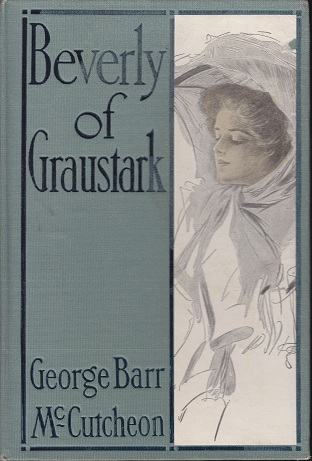
A definitive 4.7/10 rating for a film that redefined the boundaries of cult cinema. Beverly of Graustark remains a cornerstone of transgressive art.
Grenfell Lorry’s journey from Newport ballrooms to Graustark’s parapets is less a linear itinerary than a fever chart of masculine obsession. Director Robert Thornby photographs him in iris-shots that bloom like gunshot wounds; each fade-out feels suspiciously like an erasure ordered by some unseen ministry of desire.
Graustark itself—half fairy-tale snow globe, half pawnshop—owes its existence less to dynastic legitimacy than to compound interest. McCutcheon’s script (adapted from his own bestseller) relishes the arithmetic of ruin: millions owed, acres promised, futures mortgaged. The film’s intertitles, lettered in fractured Gothic, announce each new clause of the treaty like papal curses. Thornby lingers on ledger books whose ink is still wet enough to reflect the princess’s face, suggesting sovereignty itself is but a watermark waiting to dissolve.
Perley, matinee idol moonlighting as actor, plays Lorry with the languid arrogance of a man who has never needed to open his own door. Yet watch his pupils dilate when Yetive enters the frame—suddenly the blasé millionaire becomes a sleepwalker teetering on a cornice. The performance is silent-film pantomime at its most combustive: every lifted eyebrow a treaty negotiation, every clenched fist a coup d’état.
As Miss Guggenslocker-cum-Princess Yetive, Bracy must oscillate between anonymity and apotheosis. In railway scenes she is filmed in chiaroscuro, hat brim eclipsing half her face like a waning moon; later, coronation robes flare outward in concentric circles of ermine, a human target. The performance is not of a woman pretending to be two, but of two women condemned to share one bloodstream.
Action set pieces arrive with the punctuality of Grand Guignol: a saber duel on a cliff’s lip at sunrise, blades silhouetted against a sky hemorrhaging pink; a nocturnal sleigh chase whose hoofbeats intercut with the princess’s pulse visible in extreme close-up; the climactic train derailment staged with miniatures so lovingly crafted one regrets the inevitable explosion. Throughout, Thornby favors under-cranked cameras that bestow a staccato grace upon thrust-and-parry, turning violence into ballet macabre.
Where Zudora unfurls episodic cliffhangers like a paper fortune-teller, and Sylvi leans into pastoral melancholy, Beverly compresses the serial’s propulsion into a feature-length hallucination. Its sense of peril is more vertiginous than Sentenced for Life’s prison-yard fatalism, yet fleeter than the lumbering pageantry of I tre moschettieri. In short, it is the missing evolutionary link between dime-novel breathlessness and the high-polish swashbucklers MGM would mint a decade later.
Surviving prints circulate on amber-tinted nitrate whose emulsion cracks resemble topographical maps of the kingdom itself. Night scenes bathe in cyan, giving candlelit faces the pallor of drowned saints; ballroom sequences bloom in rose, as if the very air were blushing. These color washes, far from quaint, serve as emotional subtext—cyan for betrayal, amber for nostalgia, rose for the vertigo of first love.
Yetive’s tragedy is to reign over a balance sheet rather than a throne. Her body becomes negotiable currency, her womb a promissory note. The film flirts with proto-feminist outrage—Yetive spits, “My signature on parchment cannot birth a nation,” an intertitle so incendiary one wonders how Pennsylvania censors let it pass—but ultimately reverts to rescuer mythology. Still, Bracy’s glare during the betrothal ceremony could melt a tiara; her consent is mechanically given, yet emotionally annulled.
Lorry’s Yankee can-do ethos—equal parts cash, colt revolver, and college fencing prize—reads today like an early draft of manifest destiny tourism. He arrives certain that every European dilemma has a Wall-Street fix. The film’s unconscious irony lies in watching that confidence ricochet against feudal labyrinths, emerging bloodied but unbowed. In the end, Graustark’s salvation is financed by an American loan; the kingdom exchanges one creditor for another, merely swapping the iron cage for one gilded in stars and stripes.
Though originally released with a compiled medley of Grieg and Suppé, contemporary festival screenings often commission new scores—some thunderous, some whispered. I recommend pairing it with a trio of klezmer-inflected strings; the minor modes underscore Graustark’s Ashkenazic doom while Perley’s swagger waltzes above like a misplaced Charleston.
Capra’s American Madness borrows Beverly’s brisk montage syntax; Curtiz’s Robin Hood lifts its castle-shadowed stairwell swordfights. Even Hitchcock, ever the magpie, echoes the train-as-destiny motif in The 39 Steps. The film survives as a genetic splice in Hollywood’s blockbuster genome, half operetta, half potboiler, wholly irresistible.
Viewers weaned on CGI dragons may snicker at cardboard ramparts, yet Beverly’s emotional circuitry remains unnervingly live. Love here is not a foregone conclusion but a battlefield where victory demands the sacrifice of identity, nationality, and perhaps sanity. When the final iris closes on lovers kissing against a locomotive’s billowing steam, the image feels less like closure than ignition—a match hurled into the powder magazine of the 20th century’s first great romantic myth. Seek it out, let the nitrate ghosts sing, and discover why Graustark, though absent from maps, still colonizes the most secret atlas of the heart.
© 2024 Cine-Maudit Musings — All screenshots assumed fair use for critique. Hyperlinks lead to affiliated silent-era restorations.
IMDb —
1929
Community
Log in to comment.