DbcultAccessing Vault...
6.3/10
Senior Film Conservator
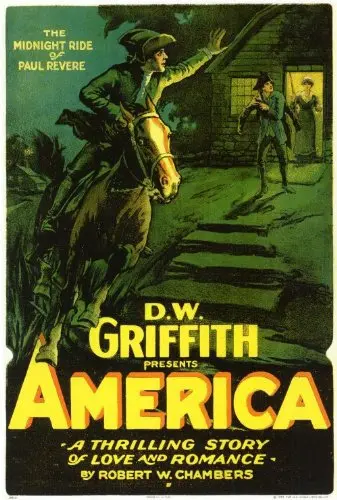
A definitive 6.3/10 rating for a film that redefined the boundaries of cult cinema. America remains a cornerstone of transgressive art.
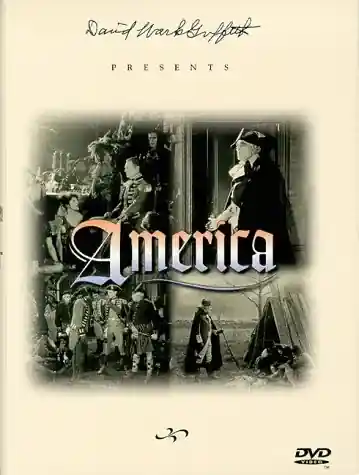
Stepping back into the annals of cinematic history, D.W. Griffith's 1924 epic, America, emerges not merely as a film, but as a monumental historical artifact in its own right. Released at a pivotal moment in American self-reflection, this silent masterpiece endeavors to encapsulate the very essence of the nation's birth trauma: the American Revolutionary War. It’s an ambitious undertaking, even for a visionary like Griffith, whose previous works had already etched his name into the firmament of filmmaking. The film is a sprawling tapestry, intricately woven with threads of personal drama, grand-scale conflict, and fervent patriotism, all striving to deliver a definitive cinematic statement on the founding of the United States. To truly appreciate America, one must approach it not just as a narrative, but as a grand historical spectacle, a silent symphony of sacrifice and nascent liberty.
The narrative core of America, penned by Robert W. Chambers, centers on the Montague family, staunch Loyalists from the South, and the Holdens, a family of Patriots from Lexington. This fundamental division immediately establishes a thematic tension that resonates throughout the film. It's a testament to Griffith's directorial prowess that he manages to imbue such a broad historical sweep with deeply personal stakes. The film’s greatest strength lies in its ability to humanize the colossal events of the war, illustrating how the grand ideological battles translated into devastating personal choices and profound suffering for ordinary people. We witness the brutal realities of conflict, from the strategic maneuvers of generals to the desperate struggles of individual soldiers and the profound anxieties of families left behind. The sense of an entire nation in flux, teetering on the precipice of an uncertain future, is palpable.
Griffith, ever the showman, doesn’t shy away from depicting the visceral brutality of war. Battle sequences are staged with an impressive scale for the era, employing hundreds of extras and meticulous period details. From the chaotic skirmishes at Lexington and Concord to the desperate defense of fortified positions, the film captures the frenetic energy and terrifying unpredictability of combat. Yet, it’s not just the physical toll that Griffith emphasizes; the emotional and psychological scars are equally prominent. The film explores the profound moral dilemmas faced by those caught between two worlds, whether by birthright or by circumstance. This nuanced approach prevents the film from devolving into a simplistic good-versus-evil narrative, instead portraying the complex tapestry of allegiances and motivations that defined the Revolutionary era.
In the silent era, actors bore the immense responsibility of conveying intricate emotions and character developments solely through pantomime, facial expressions, and body language. The cast of America rises to this challenge with remarkable skill. Carol Dempster, a frequent collaborator with Griffith, portrays Nancy Montague with a delicate balance of vulnerability and spirited resilience. Her journey from naive Southern belle to a woman hardened by the ravages of war is compelling. Neil Hamilton, as the earnest Patriot Captain Nathan Holden, embodies the quintessential American hero – brave, principled, and unwavering in his conviction. Their burgeoning romance, complicated by the war and their differing loyalties, forms a poignant emotional anchor amidst the grander historical narrative.
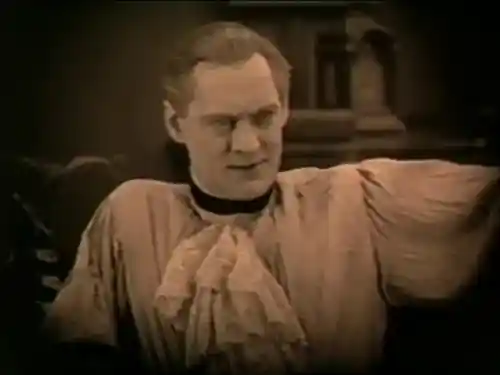
Perhaps the most memorable performance, however, comes from Lionel Barrymore as Captain Walter Butler, the insidious Tory leader. Barrymore’s portrayal is a masterclass in silent film villainy, exuding a chilling blend of aristocratic arrogance and ruthless cruelty. His sneering expressions and menacing gestures perfectly capture the malevolence of a character driven by self-interest and a desire for power, making him a truly formidable antagonist. Other notable performances include Lucille La Verne as the formidable Mrs. Montague, whose staunch Loyalist beliefs provide a powerful counterpoint to the revolutionary fervor, and Louis Wolheim, whose presence adds a rugged authenticity to the military scenes. The ensemble cast, including figures like Daniel Carney, John Dunton, Erville Alderson, Edwin Holland, and a host of others like Riley Hatch and Downing Clarke, collectively contribute to the rich texture of the film, each playing their part in painting a vivid picture of a populace in turmoil.
D.W. Griffith’s directorial fingerprint is indelible throughout America. His groundbreaking use of cross-cutting, which he had perfected in earlier works, is employed here to heighten tension, particularly during battle sequences and moments of impending crisis. The seamless interweaving of multiple storylines and perspectives, from the macro-level of military strategy to the micro-level of individual heroism, demonstrates his mastery of narrative structure. The cinematography is often breathtaking, capturing the vastness of the American landscape – from rolling hills to dense forests – which serves as both a backdrop and an active participant in the unfolding drama. Griffith's eye for composition ensures that every frame is meticulously crafted, whether it's a sweeping panoramic shot of marching armies or an intimate close-up revealing a character's inner turmoil.
He understood the power of visual metaphor, often using natural elements to reflect the emotional state of his characters or the broader conflict. The film’s innovative use of lighting and shadow also adds depth and atmosphere, creating a sense of foreboding or hope as the narrative demands. For a film produced in the silent era, the sheer technical ambition is astounding. Griffith's commitment to realism, within the constraints of early filmmaking, is evident in the detailed period costumes, props, and sets. He wasn't just telling a story; he was attempting to recreate a pivotal historical moment, to immerse his audience in a past that still resonated profoundly in the present.
At its heart, America is a profound meditation on the ideals of liberty and the immense sacrifices required to achieve it. The film explores the complex interplay between individual freedom and collective identity, questioning what it means to be 'American' during a period when that identity was still being forged in the crucible of war. It delves into the agonizing choices faced by those whose loyalties were divided, whether by family ties, economic interests, or deeply held convictions. The Montague family, representing the Loyalist perspective, is not simply caricatured; their concerns and fears are given a degree of understanding, even as their ultimate defeat is presented as inevitable in the march of progress.
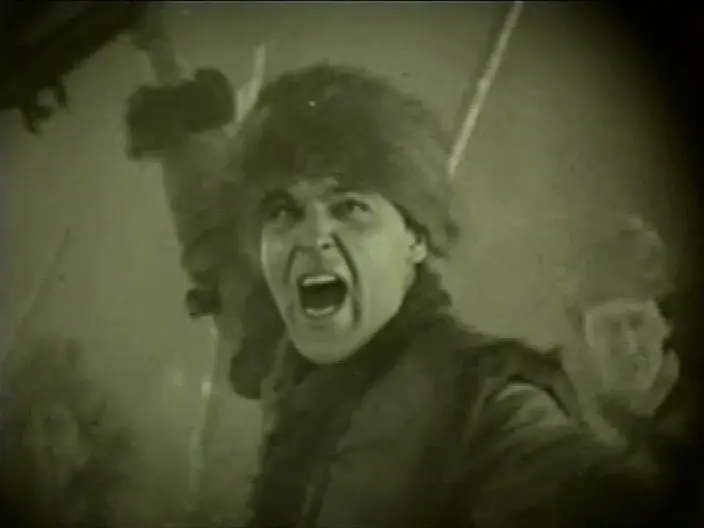
The romantic subplot between Nancy Montague and Nathan Holden serves as a microcosm of the larger conflict, representing the hope for unity and reconciliation amidst the bitter divisions. Their love story, fraught with peril and ideological clashes, symbolizes the potential for a new national identity to emerge from the ashes of civil strife. This emotional core elevates the film beyond a mere historical reenactment, transforming it into a timeless narrative about human connection, resilience, and the enduring power of love to transcend even the most formidable barriers. The film poses questions about the price of freedom, the nature of patriotism, and the difficult process of forging a unified nation from disparate elements.
Released in 1924, America arrived at a time when the nation was still grappling with its identity, having recently emerged from the First World War and facing rapid social and technological change. Griffith’s film offered a powerful, nostalgic look back at a foundational moment, reminding audiences of the sacrifices made to secure the freedoms they enjoyed. It served as both an educational tool and a source of national pride, reinforcing a particular narrative of American heroism and exceptionalism. While contemporary historians might quibble with certain historical liberties or simplifications, the film's intent was clearly to inspire and unite.
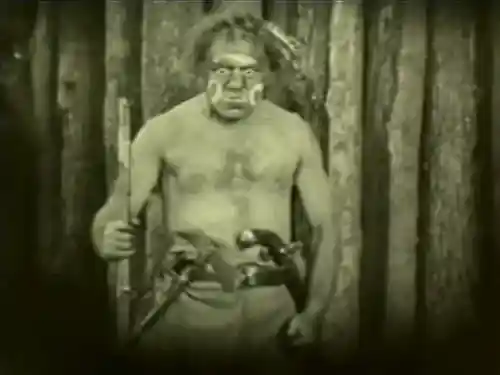
Its legacy, like much of Griffith's work, is complex. While acclaimed for its technical brilliance and narrative scope, it also reflects some of the prevailing attitudes of its time. However, its importance in the development of cinematic storytelling is undeniable. America showcased the silent film's capacity for epic storytelling, demonstrating how historical events could be brought to life on an unprecedented scale. It influenced countless subsequent historical dramas and war films, solidifying many of the narrative and visual conventions that would become staples of the genre. The film remains a crucial touchstone for understanding the evolution of American cinema and its relationship with national identity.
Watching America today requires a certain willingness to engage with the conventions of silent cinema. The reliance on intertitles to convey dialogue and exposition, the often exaggerated acting styles, and the absence of synchronized sound can initially feel alien to modern viewers accustomed to sophisticated sound design and naturalistic performances. Yet, for those willing to immerse themselves, the rewards are immense. The film’s visual storytelling is incredibly powerful, capable of conveying profound emotion and grand spectacle without a single spoken word. The carefully constructed musical score, whether original or a modern reconstruction, plays a vital role in guiding the audience's emotional journey, elevating the drama and intensity of each scene.
What truly resonates is the enduring relevance of its themes. The struggle for freedom, the pain of civil conflict, the quest for justice, and the complexities of human loyalty are timeless concerns. While the historical specifics belong to a particular era, the emotional core of America transcends its period setting. It offers a valuable window into how a nation chose to narrate its own founding myths through the nascent art form of cinema. It’s a reminder of the power of film not just as entertainment, but as a cultural mirror, reflecting and shaping national consciousness. Its meticulous attention to historical detail, combined with Griffith's innate understanding of human drama, makes it a compelling watch, allowing us to connect with the past on a deeply personal level.
In conclusion, America stands as a towering achievement in early American cinema, a testament to D.W. Griffith's unparalleled ambition and visionary filmmaking. It is a film that demands patience and an open mind from contemporary audiences, but richly rewards those who invest in its silent grandeur. It's not just a historical drama; it's a foundational text in the cinematic exploration of American identity, a sprawling epic that captures the pain, the passion, and the ultimate triumph of a nation struggling to be born. From the iconic performances of Lionel Barrymore and Carol Dempster to the breathtaking battle sequences and the deeply human story of a family caught in the maelstrom of war, America continues to resonate as a powerful and essential piece of film history. Its legacy is etched not only in the annals of cinema but also in the very fabric of how America has chosen to remember its own dramatic genesis. For anyone interested in the origins of epic filmmaking or the cinematic portrayal of one of history's most pivotal conflicts, America is an indispensable viewing experience, a silent roar from the past that still echoes with profound significance today.
IMDb —
1923
Community
Log in to comment.