DbcultAccessing Vault...
Cult Review
Senior Film Conservator
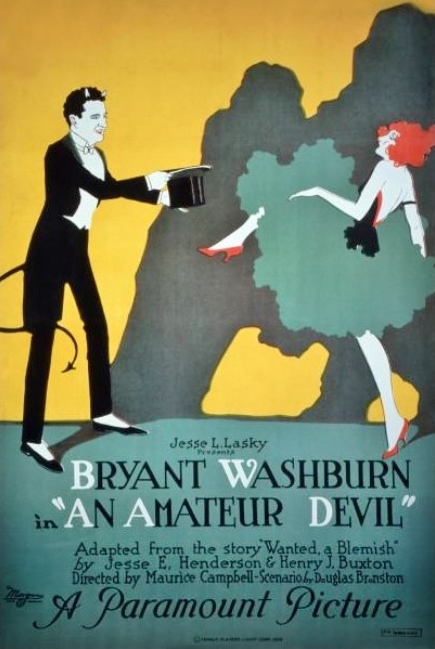
A porcelain man learns that mud refuses to stick when the world insists you’re marble.
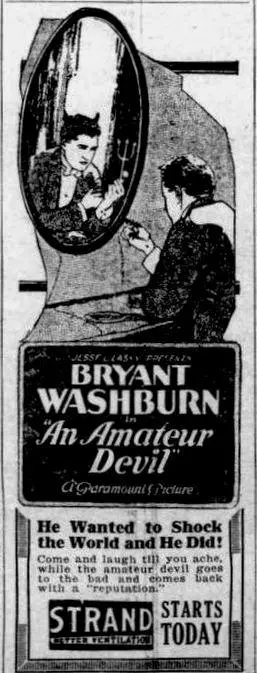
There is a moment—roughly two reels into An Amateur Devil—when Carver Endicott, neck still scented with Parisian verbena, stands ankle-deep in pig slop while dawn ignites the horizon like a careless match. The shot is held an extra beat, long enough for the muck to glisten like obsidian around his polished spats. It is the film’s manifesto in miniature: degradation as a privileged man’s prank, yet the universe keeps fluffing his pillows.
Henry J. Buxton and Jessie Henderson’s screenplay, adapted from Douglas Bronston’s magazine serial, skewers the 1920s cult of personality with scalpel precision. Their Carver is no blustering sensualist à la When a Man Loves, nor a back-alway rogue like the conmen in Empty Pockets. He is, instead, a man allergic to banality, terrified that the gravest sin is not cruelty but dullness. The fiancée’s rejection—delivered in a salon where chandeliers drip like stalactites—lands harder than any slap. She desires “a man who sweats for his bread,” a line that drips with both emancipatory proto-feminism and upper-class romanticism of toil.
Director Charles Wingate, whose career never again scaled such heights, photographs privilege with the same devotional care he lavishes on barns and scullery floors. The early interiors bloom with ivory tones—lampshades, gloves, piano keys—until the palette fractures into ochre once Carver hits the country. Note how cinematographer Graham Pettie (also playing the wry butler) frames our protagonist against vertical lines: first the striped wallpaper of his ancestral manor, then the jail-bar slats of a hayloft. The visual grammar insists imprisonment is a matter of geometry, not class.
Yet for every pastoral sequence there is a symmetrical retort. The hotel scenes—shot on cramped sets that feel like terrariums—swarm with mirrored reflections and revolving doors, suggesting society as endless echo chamber. When Carver, clad in busboy whites, spills soup on a dowager’s sable, the camera dollies back to reveal a phalanx of onlookers forming a perfect proscenium arch. Shame, the film whispers, is theater; only the audience can grant it power.
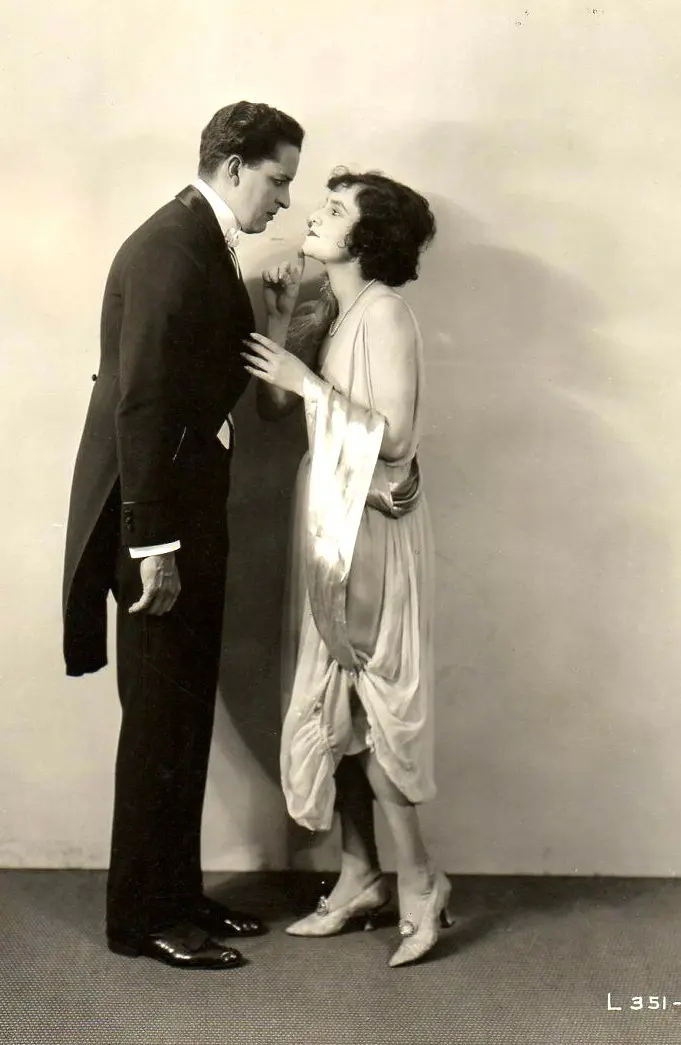
Norris Johnson, matinee-idol handsome but with the haunted eyes of a man who suspects he might be hollow, gives Carver a mincing gait that gradually unkinks. Watch his hands: in early scenes they flutter like captive doves; by the final reel they dangle at his sides, half-clenched, as though ashamed of their former delicacy. It is a performance calibrated in millimeters, a feat of restraint beside the broad histrionics common to 1923.
Ann May, as the actress Lola Delorme, arrives midway to inject gin-and-bitters mischief. She swans through speakeasy tables with a cigarette holder angled like a conductor’s baton, every exhale a dismissal of respectability. May’s comic timing is so fluid she can let a feather boa slip from one shoulder and make the gesture feel like a manifesto. Their duet—an attempted seduction in a backstage corridor—plays out entirely in silhouette, the only illumination a malfunctioning neon sign that flickers between magenta and bruise-blue. It is eroticism by strobe, and it out-steams many a modern love scene.
Original prints shipped with a cue sheet recommending Agitato No. 3 for farm sequences and Andante Patetico for moral epiphany. Contemporary festival showings often commission new scores; the Alloy Orchestra’s 2019 rendition overlaid typewriter clacks during newspaper-montage passages—a wink at the Fourth Estate that feels indispensable once heard. Silence, paradoxically, becomes the loudest character: when Carver’s front-page exploits unfurl onscreen, the absence of diegetic noise amplifies the rustle of turning pages in the dark auditorium, as though each spectator were complicit in the myth-making.
While Carver’s buffoonery commands the marquee, the women orbit like satellites of grievance. His fiancée, Marion Hallowell (Christine Mayo), pivots from flapper ennui to calculated affection once risk has been neutered from her beau. Buxton’s script grants her the single most acidic intertitle: “I wanted a man forged in fire, not one who warms his slippers before it.” The line detonated a minor scandal upon release; Variety’s review fretted it would “teach impressionable girls to demand cosmic temperatures from mere mortals.”
Meanwhile, Anna Dodge’s Aunt Sophronia, a dowager who collects charity causes like porcelain figurines, embodies benevolent tyranny. She bankrolls Carver’s agrarian exile, convinced manual labor will solder moral fiber. Watch how Dodge lets a smile collapse into a rictus when newspapers hail the boy as “the Patroon of the Plow.” Her philanthropy curdles into brand management; even altruism, the film snickers, is narcissism in a different hat.
Critics often pair An Amateur Devil with One Night for their shared hotel chaos, yet its true spiritual cousin is Christus, whose messianic protagonist also discovers that public perception calcifies into legend whether he wants it or not. Where the latter film treats sanctity as inescapable halo, Wingate’s satire treats notoriety as Teflon: mud slides off the celebrity surface and lands on the observer.
Conversely, The Flame of the Yukon offers frontier redemption through rugged individualism; Carver’s frozen north is the gossip column, a tundra where reputation is the only ore worth mining. Both films end with their heroes seemingly tamed by domesticity, yet Amateur Devil’s closing image—Carver straightening his tie while Marion inspects her ring finger—carries a metallic aftertaste: the betrothal feels less like embrace than mutual acquiescence to marketing.
For decades the film slumbered in a Russian archive, mislabeled as All Men Are Devils. A 4K restoration premiered at Pordenone 2017, revealing textures previously smothered: the houndstooth of Carver’s hacking jacket, the opalescent powder on Lola’s clavicles. The nitrate deterioration in reel four—an amber waterfall across the right quadrant—was left intact, a reminder that history itself bruises. Streaming rights currently reside with Kino Lorber; Blu-ray boasts a commentary by film historian Macarthur Rye, who traces every art-direction doodle to Wiener Werkstätte influences.
Replace telegrams with tweets and barns with Brooklyn co-working lofts; the plot could stalk any present-day influencer craving cancellation. Carver’s panic at being “liked” for the wrong reasons anticipates the algorithmic hellscape where sincerity is indistinguishable from brand positioning. Even the film’s racial blind spots—Black characters appear only as jacketed porters—mirror today’s glossy magazine spreads that preach diversity while relegating minorities to sidebar optics.
At brisk 67 minutes, An Amateur Devil is the rare silent comedy whose pace feels caffeinated rather than quaint. It lampoons the leisure class without the Marxian moralism of The Stepping Stone, and it unmasks media hagiography decades before Citizen Kane. Seek it for the guffaws; revisit it for the chill that arrives when you recognize your own avatar in Carver’s futile mud-wrestle with indifference.
Rating: 9/10 — A champagne-cork satire that ricochets through a century without losing fizz.
IMDb 6.2
1920
Community
Log in to comment.