DbcultAccessing Vault...
Cult Review
Senior Film Conservator
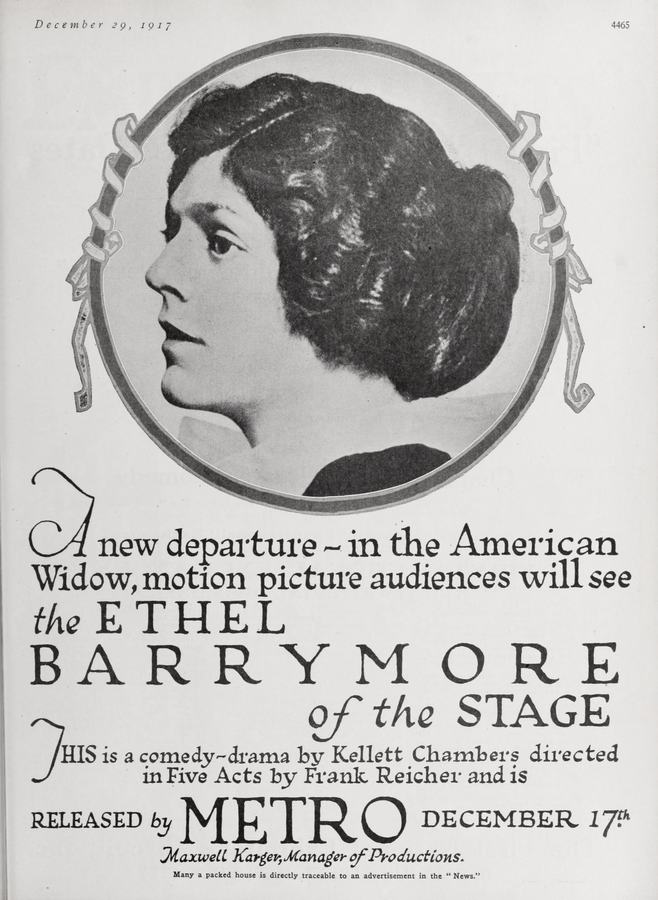
Picture, if you can, a Manhattan that still believes itself an island of marble mansions rather than steel monoliths—where a woman’s net worth is clipped to her husband’s lapel like a boutonnière. Into this fossilized Eden glides Elizabeth Carter, draped in sable veils that flutter like flags of surrender at half-mast. She is the earliest iteration of the “poor little rich widow,” a trope later varnished by Madame X and hacked apart by The Curse of Greed. Yet here she is, incarnated by Ethel Barrymore with the regal languor of a monarch who has misplaced both crown and kingdom and now must buy them back with guile.
The inciting parchment—slipped under her Louis XVI escritoire by the serpentine attorney Augustus Tucker—reads like a ransom note from the afterlife. Marry an American, and the Carter millions remain yours; reach across the Atlantic for a coronet, and every stock certificate, deed, and diamond tiara veers to Pitney Carter, a nephew whose romantic résumé consists of stammered sonnets outside Elizabeth’s boudoir. It is a narrative hinge so brazenly mercenary that Shakespeare himself might have rejected it for excess cynicism, yet the film sells it with poker-faced conviction.
“A codicil is just a will in evening dress,” Tucker purrs, “and every bit as deadly after midnight.”
Elizabeth’s solution? A marriage of inconvenience: purchase a groom the way one might purchase a seat on the stock exchange. Enter Jasper Mallory—a name that sounds like a minor poet who owes rent to Edgar Allan Poe. He is played by Irving Cummings with the rumpled magnetism of a man who has mistaken hunger for inspiration and whose plays read like Ibsen filtered through a Bowery beer hall. Fifty thousand dollars—enough to bankroll his newest manuscript—buys his signature on a marriage certificate and, ostensibly, his silence in the wings while Elizabeth engineers Act II: a divorce staged with Albani’s histrionic assistance.
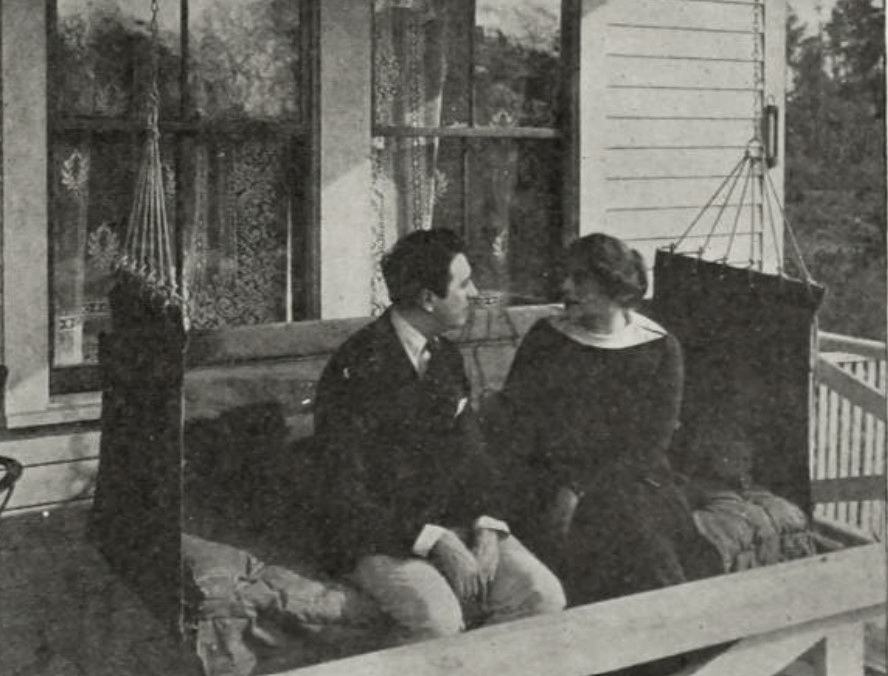
Mme. Albani—a tempestuous relic of continental stages—arrives trailing ostrich feathers and the faint whiff of absinthe. She is Elizabeth’s confederate in a plot that requires Jasper to be caught in flagrante delicto, a tableau vivant of adultery that will satisfy the era’s stringent divorce courts. The scheme is so cynically mechanical it could be a Ford assembly line of the heart: insert evidence, crank lever, release single woman. Yet the film complicates the machinery by letting us glimpse Albani’s own rusted yearning for relevance; she is an actress asked to perform authentic intimacy in a life that has become nothing but matinée façades.
Meanwhile Jasper, suddenly flush with Elizabeth’s cash, discovers that Broadway audiences—those fickle, coughing, peanut-munching masses—will pay to see their own neuroses reflected under gaslight. His play, a brittle comedy of marital misalliance, becomes the season’s sleeper triumph, catapulting the contract groom from garret to gossip pages. Success drapes him in a new aura: the playwright as auteur, the husband as commodity now flipped for cultural capital. Elizabeth’s plan to discard him suddenly looks less like taking out the trash and more like tossing away a Picasso because the frame is ugly.
Barrymore excels in the micro-epiphanies: a half-second hesitation before signing the divorce writ, a flicker of terror when Jasper recites his own dialogue back to her with more tenderness than any vow. The film’s most arresting visual occurs at a fundraising soirée for Polish refugees—yes, 1915 New York cared about such things—where Elizabeth watches Jasper auction his signed manuscript for war relief. The camera, static yet surgical, frames her against a tapestry of Marie-Antoinette-era courtiers, as though to underline the anachronism of her transactional worldview.
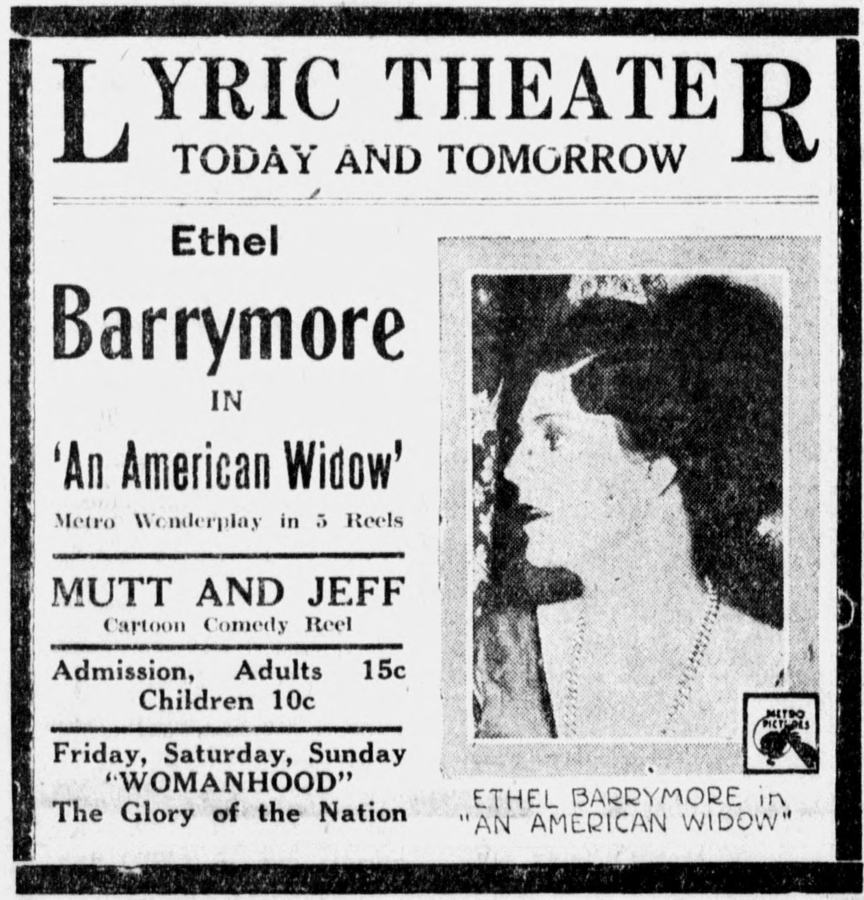
It is here that the screenplay—credited to Henry K. Chambers and Albert S. Le Vino—drops its emotional depth charge. Jasper refuses to play the scapegoat; he will not allow Albani to fabricate trysts, because “theater, even bad theater, has rules.” The line, delivered with Cummings’ exhausted sincerity, detonates Elizabeth’s assumptions. Love, she realizes, cannot be optioned like railroad stock; it vests only when both partners risk total bankruptcy of the ego.
Modern viewers steeped in Warning! The S.O.S. Call of Humanity or Zelyonyy Pauk will recognize Tucker’s forgery as an ancestor of today’s falsified news cycles. The difference? The film treats the revelation not with courtroom fireworks but a hushed confession in a gas-lit library—an anti-climax that feels almost European in its refusal to moralize. Tucker’s motive is less villainy than paternalistic pimping: he believes Pitney’s boyish ardor will stabilize Elizabeth’s fortune and, not incidentally, his own sinecure as family lawyer.
Just as Elizabeth jettisons her schemes and admits her love for Jasper, the narrative delivers a coup de grâce worthy of Oscar Wilde’s Lady Windermere: Mme. Albani and the Earl of Dettminster have eloped to Southampton. The telegram—its paper still damp from the rain—reads like a divine punchline. The aristocratic safety net vanishes; the British coronet that promised social absolution now graces the head of a woman whose greatest role has become herself.
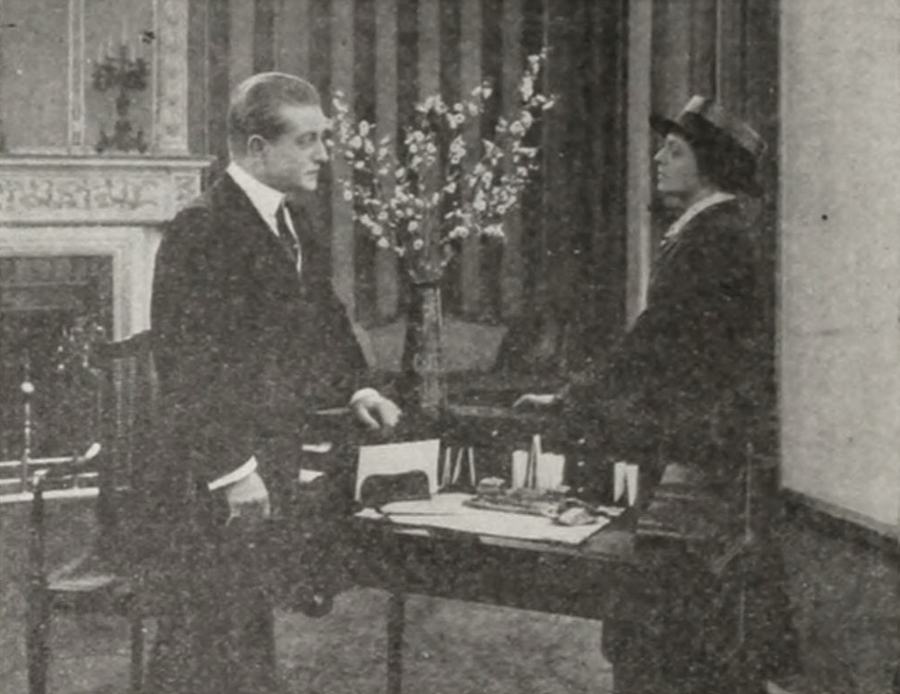
Elizabeth and Jasper, stripped of external leverage, face one another across an empire-style settee, the fortune between them now ethically fungible. Their final embrace is filmed in medium shot, neither cloying close-up nor distant tableau—just two adults acknowledging that love is the only asset that appreciates when shared.
Surviving prints—rescued from a decommissioned Vermont church in 1978—display the amber patina typical of early Hydrox stock. Yet beneath the discoloration one discerns meticulous set design: Elizabeth’s boudoir wallpaper replicates Les Parisiennes by William Morris, while Jasper’s garret features a poster of La Dame aux Camélias—a meta-nod to Madame X’s own matriarchal tragedies. Director Arthur Lewis favors axial cuts rather than cross-cuts, a restraint that anticipates the tableau style of later Scandinavian auteurs.
Though no original cue sheets survive, the 1999 Pordenone restoration commissioned a score drawing on Chaminade’s Scarf Dance and Joplin’s Bethena Waltz. The juxtaposition—European salon against African-American syncopation—mirrors the film’s own tension between Old-World titles and New-World cash. Exhibition reports from 1915 note that some theaters interpolated Daly’s hit “My Own United States” during Jasper’s first-night triumph, an act of jingoistic irony given the plot’s anti-xenophobic twist.
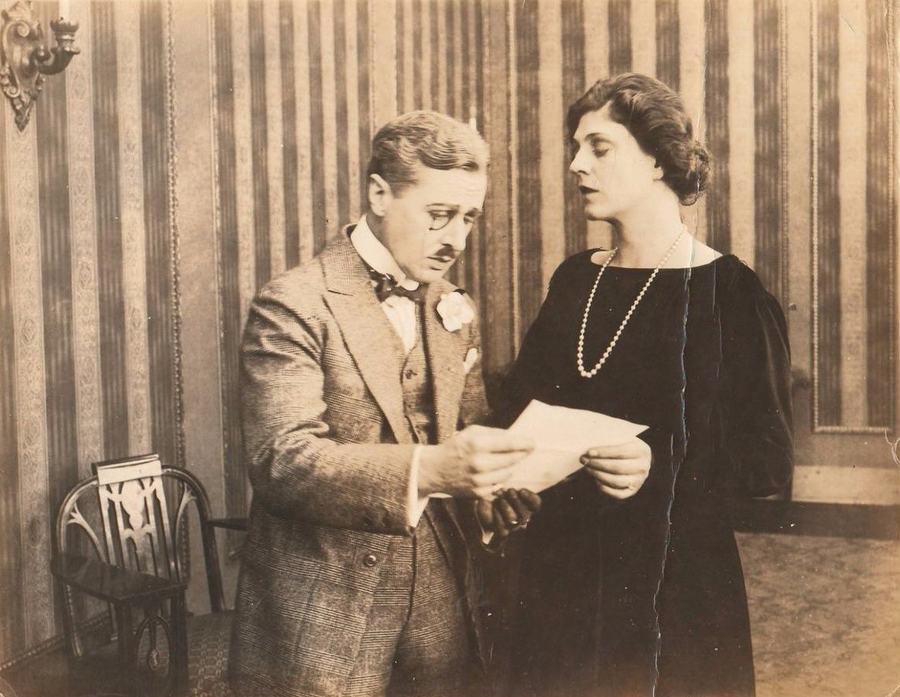
Elizabeth’s machinations expose the era’s patriarchal Catch-22: a woman needs marriage to secure capital, yet marriage itself endangers her capital. The film’s resolution—choosing a partner who respects her fiscal autonomy—anticipates the companionate marriage debates of the 1920s. Compare this to The Suburban, where the heroine’s real-estate speculations are punished by social ostracism; Widow instead rewards its heroine for rejecting asset-aligned matrimony.
Despite its present obscurity, echoes ripple through Just Out of College (gold-digging collegians) and even the later The Trail of the Lonesome Pine, where contractual love founders on authentic emotion. The trope of the fake marriage that accidentally catalyzes real desire becomes a screwball staple—yet here it is played in a melancholic key, closer to Henry James than to Howard Hawks.
Modern streamers hunting pre-Code frisson will find An American Widow surprisingly risqué: a woman who buys a husband, contemplates adultery as performance, and still garners narrative absolution. In 1915, such plotlines danced on the cusp of the Haysian abyss that would soon sanitize American screens.
Watch An American Widow for the same reason one visits a dim parlor to hear a last-century gramophone: not for pristine audio fidelity but for the crackle that reminds us every era wrestled with money, desire, and the perilous alchemy of turning one into the other. The film survives as a brittle nitrate love-letter to audiences who know that trust, once forged, is worth more than any codicil—inked or imagined.
—archive projectionist & reluctant romantic, Clara V.
IMDb —
1921
Community
Log in to comment.