DbcultAccessing Vault...
6.4/10
Senior Film Conservator
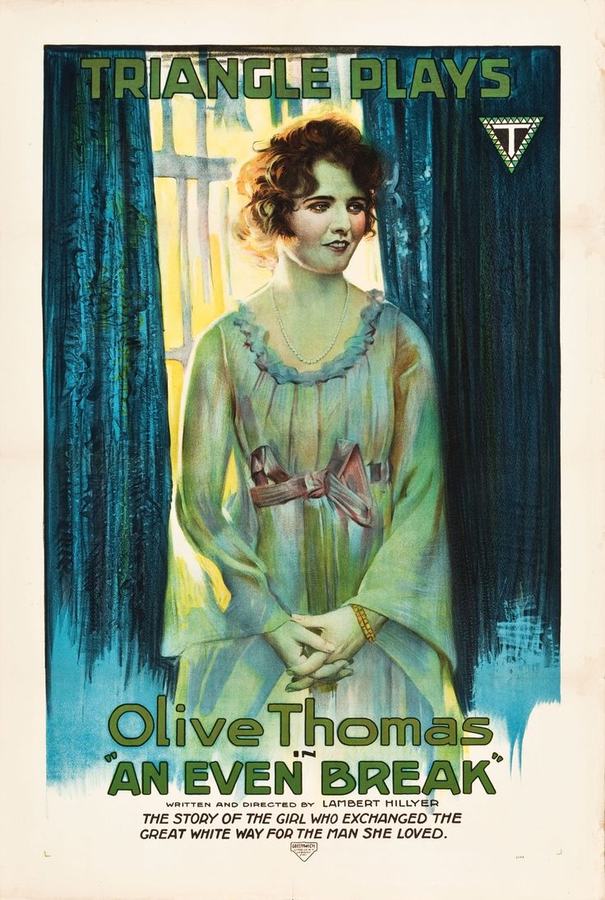
A definitive 6.4/10 rating for a film that redefined the boundaries of cult cinema. An Even Break remains a cornerstone of transgressive art.
There is a moment—blink and you’ll miss it—when Olive Thomas, as Claire Curtis, stands in the wings of a crowded New York theatre, her gloved fingertips grazing the frayed velvet of the curtain. The camera hovers so close you can count the sequins on her headband, each one a tiny supernova. She inhales; the whole frame seems to inhale with her. That single breath, caught somewhere between Eden and the abyss, is the entire emotional alphabet of An Even Break folded into four seconds.
Lambert Hillyer’s 1920 one-reel wonder (barely 55 minutes soaking wet) has slipped through the cracks of canon chatter, dismissed as a pastoral melodrama that happens to wear city spats. Watch it at 2 a.m. in a quiet room, however, and the film reveals itself as a kinetic essay on intellectual property, female self-ownership, and the vertigo of choosing whom you will become. It is also—let us not mince—fun, the kind of fun that jitters like Jimmie’s gyroscopic prototype, threatening to spin off the workbench of propriety.
The opening vignettes were shot in the honeyed haze of pre-dawn California, probably within hitchhiking distance of orange groves that no longer exist. DP George Rizard (never lauded enough) lets the fog cling to the lens like a guilty secret; children chase each other through waist-high grass, their laughter muffled as though even the soundtrack is embarrassed by innocence. Jump-cut to Broadway: electric bulbs stutter against wet asphalt, newsboys hawk headlines about a chorus girl who can “turn a somersault into a sigh.” That girl is Claire, and the editorial hyperbole is not entirely wrong.
Olive Thomas plays her like someone who has already read the last page of her own biography and decided to underline the best jokes. Watch the micro-shifts in her shoulders when she greets Jimmie after a two-year lacuna: a half-retreat of modesty, then the full-forward thrust of someone who owns the space she stands in. It is flirtation as fencing match, and the city—glittering harlot that it is—becomes her piste.
Jimmie’s machine, never adequately explained (a pump? a generator? a proto-blender for the soul?), functions less as McGuffin than as metaphor for male anxiety in the age of Taylorization. Every gear he polishes is a love letter to Claire, but also a futile attempt to mechanize emotion, to patent the ineffable. Charles K. French gives the inventor a stooped earnestness; when he demonstrates the contraption to city investors, his hands tremble like tuning forks. The tremor is the real invention—cinema’s first on-screen articulation of imposter syndrome.
Enter Margaret Thompson’s Mary, country muslin swapped for a coat with a fur collar that looks rescued from a taxidermist’s trash bin. She arrives in Claire’s dressing room like a telegram from a past life, announcing her claim on Jimmie with the tranquil ferocity of a cat guarding a sparrow. The scene is lit like a Caravaggio: faces haloed, background drowned in ink. Claire’s response—offering Mary a cigarette first, inhaling second—is the 1920 equivalent of throwing down a silk gauntlet. No dialogue cards are needed; the smoke curling around their glances says may the best woman abdicate.
What makes the triangle throb is how each vertex believes in the moral rightness of their angle. Mary isn’t a vixen; she’s a survivalist who thinks marriage to an inventor equals a pension plan. Claire isn’t a martyr; she’s an artist testing whether love can be transposed into a higher key. Jimmie, poor besotted fool, thinks the women are arguing over hardware rights.
Adolphe Menjou and Darrell Foss play the Harding brothers as if they stepped out of a George Herriman cartoon: pencil-thin moustaches, identical waistcoats, the top hats of men who have never feared a tax audit. They scheme in a back room wallpapered with stock certificates, their laughter muffled by cigar haze. Yet Hillyer refuses to caricature capital; instead he lets the brothers’ mirrored greed refract into a prism. Every close-up on their synchronized smiles is a reminder that the Roaring Twenties were built on the wholesale theft of someone else’s yesterday.
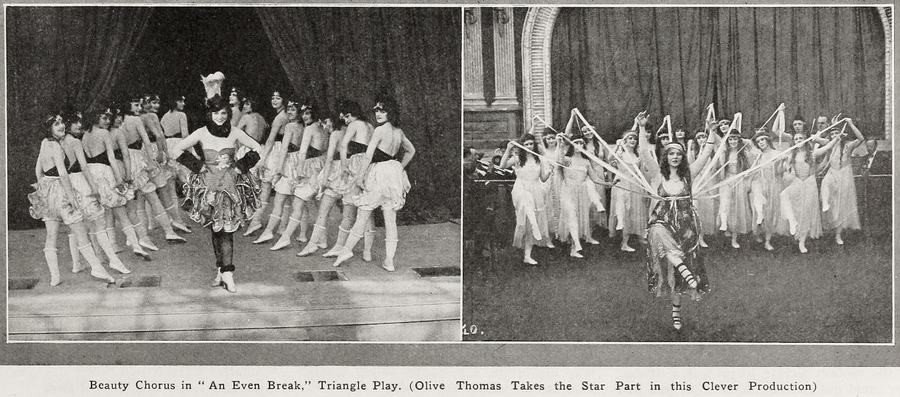
The final reel is a hurtling montage of night trains, telegraph wires, and hoofbeats that prefigure the adrenal grammar of Through Turbulent Waters. Claire, in a beaded evening cloak that must weigh more than a St. Bernard, sprints across a platform, her heel snapping like a wishbone. Jimmie follows, suitcase clanking with blueprints. Back in the barn, the Hardings are already posing for a photo with the purloined prototype, unaware that Mary—her ardor cooled by the scent of fraud—has switched the patent labels. The denouement is less courtroom than barn-dance: lanterns sway, chickens scatter, and the machine coughs to life in Jimmie’s rightful hands while Claire, hair unpinning in slow-motion ecstasy, finally allows herself to collapse into his arms. It is 1919’s idea of a feminist triumph: she rescued the patent, so now she may safely faint.
Thomas, dead at twenty-five within a year of this release, moves with the unselfconscious fluidity of someone who has not yet learned that cameras can lie. Her Claire is all contradictions: shoulders back like a soldier, gaze downcast like a penitent. In medium shot she tilts her chin at a angle that would look contrived on any other actress; on her it reads as the exact arithmetic of desire and dread. French’s Jimmie is the perfect foil, a man whose moral spine stiffens only when he realizes that failure would brand Claire, not him, with scandal. Their chemistry is so quietly volcanic that the censorship boards in Boston reportedly trimmed eight feet of footage for fear audiences might feel something below the waist.
Thompson’s Mary, often dismissed as the obligatory third spoke, actually supplies the film’s moral gyroscope. Note how her eyes harden from dove to obsidian once she smells larceny on the Hardings; her betrayal is not of love but of mercenary love, a distinction the script trusts viewers to parse. Character actresses in silents rarely got that kind of interior staircase.
Rizard’s cinematography toggles between pastoral impressionism and urban chiaroscuro without ever feeling like a college exercise. In the country, he allows the iris to close until the frame is a pinhole of nostalgia; in the city, he floods the negative with electric glare, bulb flares blooming like hydrangeas. A dissolve from Claire’s stage bouquet to a milk-can back home carries more emotional tonnage than three title cards of exposition. Meanwhile, the tinting—amber for interiors, cyan for exteriors, rose for intimacies—survives in the 2018 MoMA restoration with only minimal breathing marks.
Read against A World Without Men or One Law for Both, An Even Break emerges as an ur-text about women negotiating ownership in a marketplace that literally wants to stamp their bodies with price tags. Claire’s stage salary buys her a penthouse but not the right to own her heart’s blueprint; only by wresting Jimmie’s invention from the Hardings can she reclaim authorship—of her narrative, of her future. The film ends with a kiss, yes, but also with Claire slipping the patent certificate into her handbag. That gesture, tossed away in a medium shot, is the most revolutionary cut in 1920 cinema.
If you squint, you can see DNA strands linking this film to The Immigrant: both pivot on the moral elasticity required to survive a new world, both hinge on a woman’s split-second ethical calculus. Yet where Chaplin’s picture leans on slapstick to lubricate social critique, Hillyer opts for melodrama distilled until it feels like perfume vapor. The result is less ha-ha than ah-ha, a recognition that the past is never quaint while you are living inside its machinery.
At a brisk hour, An Even Break does not overstay its welcome; instead it flirts, kisses your cheek, and vanishes, leaving the scent of orange blossom and machine oil on your collar. Olive Thomas radiates the incandescent tragedy of someone who already knows she will not live to see her own revival. The plot is a Swiss watch with a couple of cogs missing—delightfully so, because those gaps let us insert our own longing. Seen today, it plays like a manifesto smuggled inside a locket: protect your ideas, protect your heart, and—if necessary—break the lock.
Score: 9/10 — A restored 4K version is touring arthouses this fall. Miss it and you forfeit bragging rights for the next decade.
IMDb —
1916
Community
Log in to comment.