
DbcultAccessing Vault...
7.4/10
Senior Film Conservator
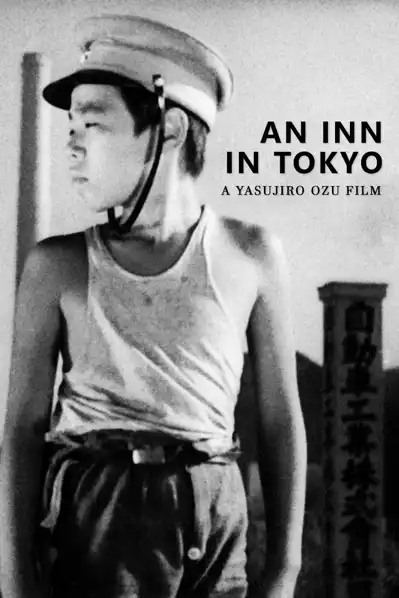
A definitive 7.4/10 rating for a film that redefined the boundaries of cult cinema. An Inn in Tokyo remains a cornerstone of transgressive art.
If you have the patience for black-and-white poverty that doesn't scream for your sympathy, yes. It is a slow burn that feels like a heavy blanket.
You should probably avoid this if you’re looking for a plot that moves. If you need your movies to be loud or clear, you’re going to be bored to tears within twenty minutes.
Kihachi is just a guy. He isn't a hero, and he isn't a villain. He’s just tired. Watching him walk around with those two boys—who are so realistic they’re almost annoying—feels uncomfortably grounded.
There’s this one moment where they’re eating, and the silence is just… thick. It’s not dramatic, it’s just real. It feels like the director just let the camera roll until everyone felt a bit awkward.
You can tell Ozu loves his low camera angles. It makes the adults look like they are perpetually bowing to the floor, even when they’re just standing there. It’s a bit claustrophobic, honestly.
The inn itself feels like it’s made of cardboard and bad luck. You can practically smell the dust. It reminded me a bit of the sparse, desperate energy in The Broken Violin, though this one has way less music and way more staring at walls.
Sometimes the film stops dead to look at a street sign or a passing shadow. I found myself checking my phone, then realizing, wait, this is the point. Life is mostly just waiting for something that doesn't happen.
It’s not as manic as Blue Streak McCoy. Thank god for that.
I don't think it’s a masterpiece. It’s just a very honest look at being broke in a city that doesn't care if you disappear. By the end, I didn't feel inspired, but I did feel like I’d spent an hour sitting on a cold curb in 1935 Tokyo. 🎞️