DbcultAccessing Vault...
Cult Review
Senior Film Conservator
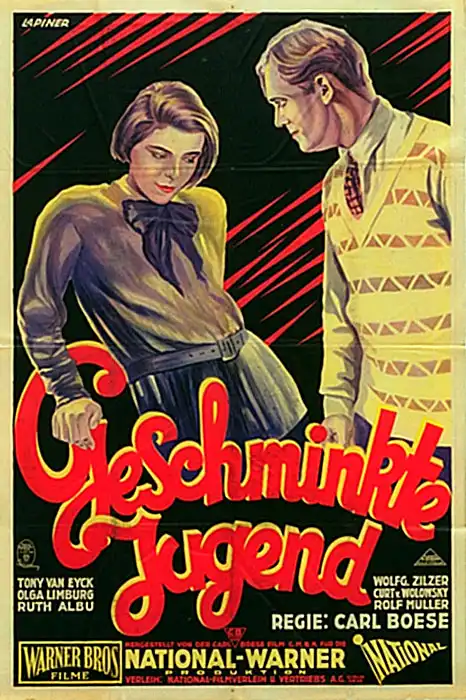
Okay, let's be real. If you're not already a silent film enthusiast, Geschminkte Jugend is probably not your Friday night popcorn flick. It’s a slow burn, definitely. But for those of us who dig into early cinema, or are just curious how 'teen rebellion' looked a hundred years ago, there's something genuinely compelling here. If you need explosions or even just sound, well, maybe skip this one. 🤷♀️
The film really opens up with Margot (Trude Lehmann) living a life where her mom, Mrs. Hiller (Hilde Schewior), is just... *not there*. Or she's there, but she's busy doing her own thing, you know? It's not outright cruel, just this quiet, consistent absence.
I kept thinking about how different this feels from typical stories of 'fallen women' in that era. Margot isn't necessarily *bad*, not exactly. She's just unguided, trying to figure out the world with basically no guardrails.
There's this one scene, her mother is hosting some party, probably a lot of jazz music playing in the background if it weren't silent, and Margot is just sort of _there_, watching. You can almost feel the disinterest from her mother. It's really something.
Trude Lehmann as Margot has this fascinating mix of innocence and a sort of world-weary look already, even at seventeen. Like she's seen too much already, you know? Her expressions sometimes feel a bit much, which is typical for silent film acting, sure. But other times, it just hits you in the gut.
The way they show her 'freedom' is mostly her going out, dancing, maybe with boys. It's not sensationalized, which is kinda surprising for a film of this period. More a statement of fact than a moral warning.
The costumes are quite something. All those flapper-esque dresses! The way the light catches them, it really puts you right in that specific moment in time. 💃
Now, the pacing can be a real drag. Some shots just *linger*. You're sitting there, waiting for the title card to pop up and explain what's going on in someone's head. It tests your patience, for sure.
One moment, Margot just stands by a window, looking out. For a good 15 seconds, maybe more. It's not crucial to the plot, not really, but it just *sits* with you. Like a long, quiet breath.
Philipp Manning as... well, he's probably a disapproving older man, or maybe a potential suitor, he has that classic silent film gravitas. He looks like he's always about to deliver a very important message through mime.
The film doesn't really judge Margot, which is honestly its biggest strength. It just presents her situation. *You* get to decide if her freedom is good or bad, or just how it is.
The title, "Geschminkte Jugend" – "Painted Youth" – it makes you wonder what's being painted over. Or if "painted" just means a modern, made-up youth. It stuck with me.
There's a surprising amount of walking around. Just *walking*. They walk to a cafe, they walk down a street. It adds to the feeling of real life, even if it feels a little slow in parts. 🚶♀️
The way the film just... *ends* feels very abrupt. No big moral lesson hammered home, just a sort of fading out. It feels a bit like a real person's story, not a neatly wrapped movie plot. It doesn't try to be a grand statement, just a snapshot. And sometimes, that's enough.
I kept thinking about how different Margot's choices might have been if her mother, played by Hilde Schewior, had been a bit more involved. Not judging, just observing the missed connection.
IMDb —
1916
Community
Log in to comment.