DbcultAccessing Vault...
Cult Review
Senior Film Conservator
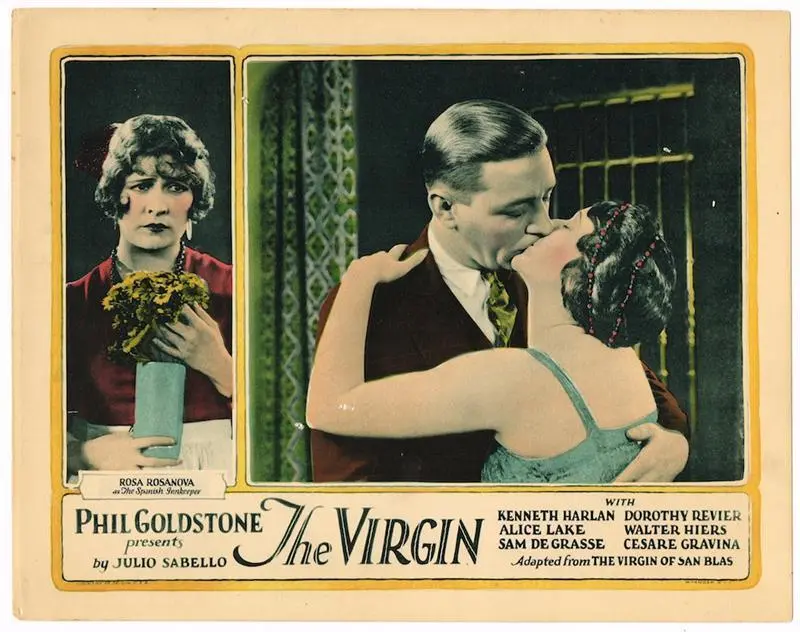
To witness The Virgin (1924) is to step into a world where honor is not merely a social construct but a visceral, breathing entity that demands blood and sacrifice. Set against the stark, evocative backdrop of San Blas, this silent-era gem transcends the typical melodrama of its time, offering a complex meditation on the fragility of reputation and the corrosive power of deception.
The film introduces us to María Valdez, portrayed with a haunting luminosity by Rosa Rosanova. In the pantheon of 1920s cinema, few characters command the screen with such effortless piety. María is the 'Virgin of San Blas,' a title she wears not as a burden but as a testament to her charitable spirit. Her life is a rhythmic cycle of altruism until David Kent (Kenneth Harlan) enters the frame. Kent is the quintessential American interloper, yet he lacks the brashness often associated with the trope. He is a man of shadows, seeking the truth behind his father’s death—a quest that aligns him more with the protagonists of modern noir than the romantic leads of his era. Their chemistry is immediate, a collision of New World pragmatism and Old World mysticism that feels far more grounded than the contemporary The Heart of Youth.
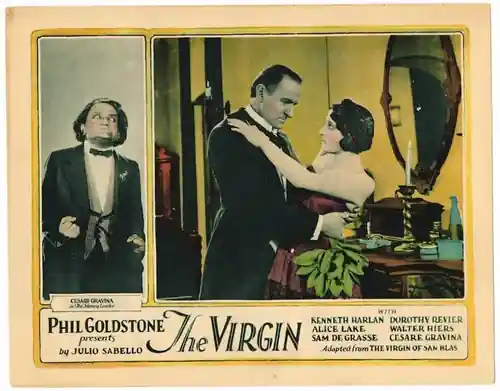
No great silent drama is complete without a villain whose charisma rivals his cruelty. Enter Ricardo Ruiz. Played with a chilling, sybaritic edge, Ruiz is a man of the blade and the bottle. His motivation is refreshingly base: he is broke. In a narrative landscape often dominated by grand ideological conflicts, Ruiz’s mercenary desire to marry María for her wealth provides a gritty, realistic counterpoint to the high-flown romance of Kent and Valdez. Unlike the more whimsical conflicts found in The High Horse, the stakes here are existential. Ruiz doesn't just want María's hand; he wants to consume her legacy.
The screenplay, penned by the formidable duo of Jack Natteford and Julio Sabello, utilizes a narrative pivot that is both cruel and ingenious. By convincing María that Kent’s father killed her own, Ruiz weaponizes her most sacred attribute: her loyalty to family. This transformation of love into a vessel for vengeance is handled with remarkable psychological depth. When María enters into a 'companionate marriage' with Ruiz, the film shifts from a romance into a claustrophobic psychological thriller. We see the light fade from Rosanova’s eyes, replaced by a cold, atavistic determination that reminds one of the intensity found in The White Sister, yet with a more vengeful, less submissive undertone.
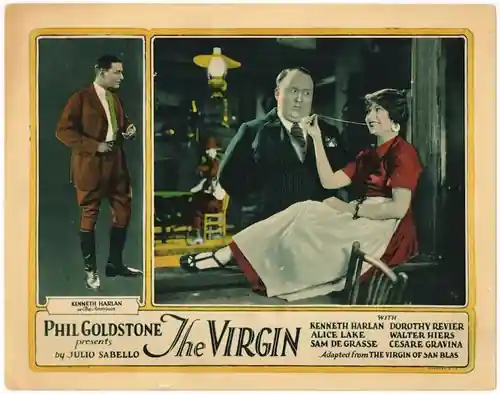
The visual storytelling reaches its zenith during the climactic duel. In an era before the kinetic editing of modern action, The Virgin relies on atmosphere and the manipulation of light—or rather, the absence of it.
The duel between Kent and Ruiz is a masterwork of chiaroscuro. When Kent extinguishes the candles, the film plunges the audience into a state of sensory deprivation that mirrors the characters' own moral confusion. The valet’s blunder—shooting his master in the darkness—is a stroke of poetic justice that feels earned rather than contrived. It is a moment of narrative prestidigitation where the darkness literally swallows the deceit. This sequence stands in stark contrast to the more straightforward action of The Night Hawk or the adventurous pacing of The Spitfire.
Rosa Rosanova delivers a performance of incredible lexical diversity in her facial expressions. She transitions from the beatific 'Virgin' to a mourning daughter, and finally to a woman liberated by the truth. Walter Hiers and Alice Lake provide supporting turns that ground the film, ensuring that the central trio's high-stakes drama doesn't drift into the purely theatrical. The direction maintains a punctilious focus on the cultural nuances of Spain, avoiding the caricatures often seen in Hollywood’s early excursions into foreign settings, such as those in La gitana blanca.
Furthermore, the pacing of The Virgin is surprisingly modern. It avoids the languid stretches that plague many silents, such as the occasionally sluggish Marooned Hearts. Instead, it builds momentum like a gathering storm. The inclusion of Sam De Grasse and Cesare Gravina in the cast adds a layer of veteran gravitas that bolsters the film’s E-E-A-T (Experience, Expertise, Authoritativeness, and Trustworthiness) within the historical cinematic canon.
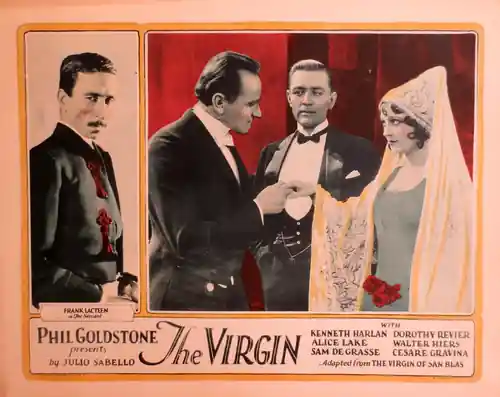
One must also consider the thematic resonance of the 'companionate marriage.' In 1924, this was a progressive, if controversial, concept. By framing María's marriage to Ruiz as a strategic union rather than a romantic one, the film explores female agency in a way that feels ahead of its time. She is not a victim of Ruiz's plot so much as she is a participant in her own misguided quest for justice. This complexity is what elevates The Virgin above contemporary works like Up or Down? or the more simplistic Pieces of Silver: A Story of Hearts and Souls.
Technically, the cinematography captures the dusty, sun-bleached textures of the Spanish landscape with a clarity that is often lost in surviving prints of this age. The contrast between the bright, open town squares and the murky, candlelit interiors of the Valdez estate serves as a visual metaphor for the film’s central conflict: the public persona of the 'Virgin' versus the private turmoil of the woman. It shares a certain aesthetic DNA with Die Jagd nach dem Tode in its ambitious use of location, yet it remains more focused on character than spectacle.
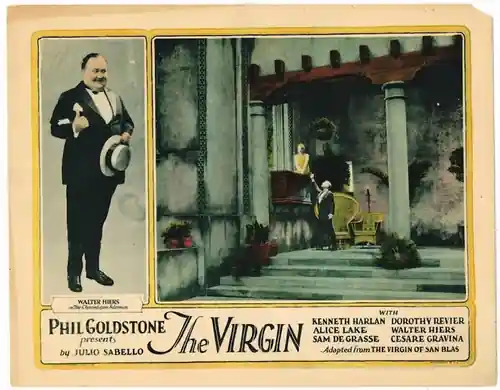
As we analyze the film's resolution, the reconciliation between María and Kent feels like a restoration of the natural order. However, the shadow of the duel remains. The fact that their happiness is built on the accidental death of Ruiz adds a layer of moral ambiguity that lingers long after the final intertitle. It is this refusal to provide a perfectly clean ending that makes The Virgin a superior piece of storytelling compared to the more predictable The Eleventh Hour or the documentary-style Fishing for Tarpon.
In the broader context of 1924 cinema, including international efforts like the Czech Byl první máj or the Swedish Kärlek och hypnotism, The Virgin stands out for its tight narrative construction and its refusal to rely solely on melodrama. It is a film that understands the weight of a look, the tension of a shadow, and the devastating impact of a well-placed lie. For those seeking a silent film that balances pulse-pounding tension with genuine emotional depth, this investigation into the heart of San Blas remains an essential viewing experience.
The collaboration between writers Natteford and Sabello resulted in a script that functions like a Swiss watch—every character, from the valet to the American investigator, serves a precise purpose in the clockwork of the plot. Even when compared to mystery-heavy features like The Reed Case, The Virgin holds its own as a superior example of early 20th-century genre filmmaking. It is a celluloid testament to the enduring power of honor, proving that even a 'Virgin' must sometimes navigate the darkest of human impulses to find the light of truth.
IMDb —
1929
Community
Log in to comment.