DbcultAccessing Vault...
Cult Review
Senior Film Conservator
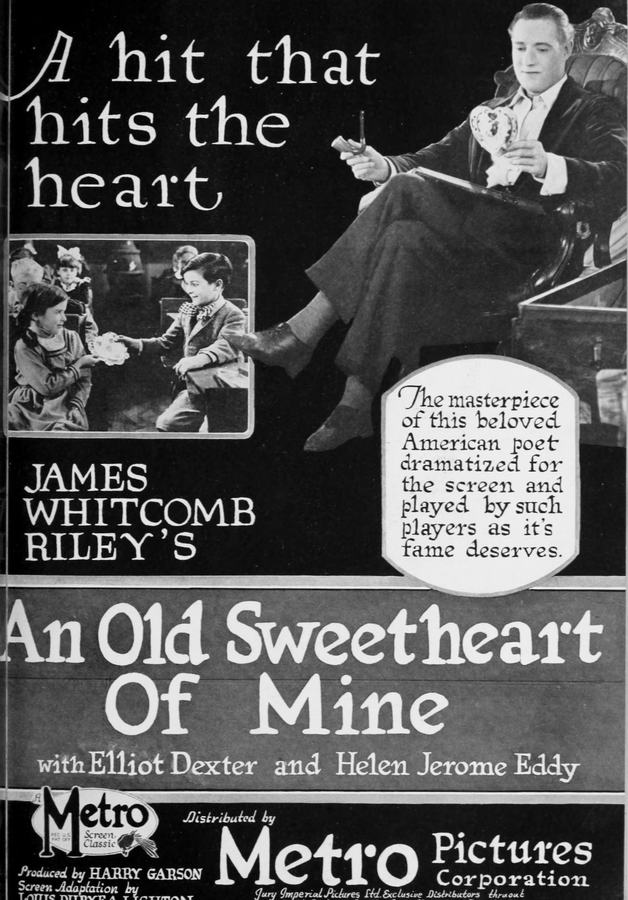
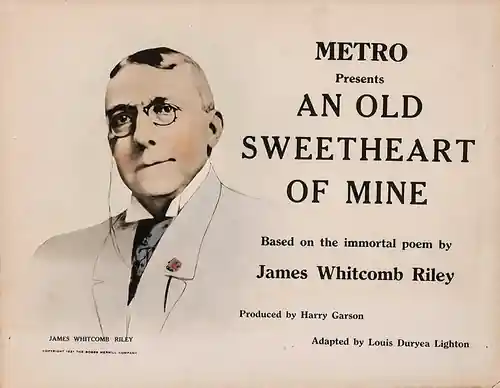
Stepping into the spectral glow of early 20th-century cinema, one encounters An Old Sweetheart of Mine, a cinematic reverie from 1919 that, while perhaps not a titan of its era, offers a profoundly intimate glimpse into the human psyche's relationship with memory and idealized love. This motion picture, inspired by the beloved poem of James Whitcomb Riley, transcends mere narrative to become an almost Proustian exploration of nostalgia, filtered through the lens of silent film's burgeoning artistry. It's a testament to the era's capacity for emotional depth, even without the spoken word, relying instead on the nuanced performances and the evocative power of its visual storytelling.
The film’s architecture is elegantly simple yet surprisingly complex in its psychological underpinnings. We are introduced to John Craig, portrayed with a gentle earnestness by Arthur Hoyt, as he navigates the dusty labyrinth of his attic, a space universally understood as a repository of forgotten treasures and cherished memories. The discovery of an old trunk acts as a narrative portal, a tactile key unlocking the floodgates of his past. This device, while common, is deployed here with a tender touch, immediately establishing a wistful, contemplative mood. The ensuing flashback is not merely a recounting of events, but a subjective reliving, imbued with the heightened emotional resonance that only memory can bestow.
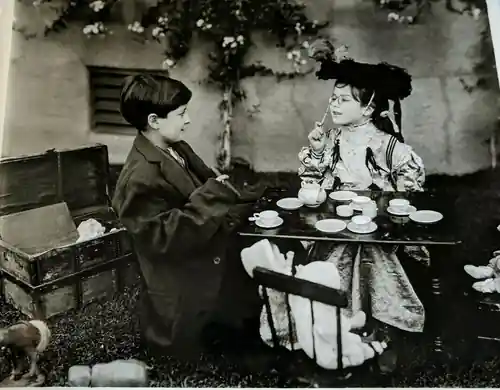
John’s recollections transport us to a halcyon childhood, where his bond with Mary Ellen Anderson, brought to life with captivating grace by Helen Jerome Eddy, begins to form. Their shared innocence, the unspoken promises of youth, are painted with broad, sentimental strokes, yet avoid saccharine excess. It’s in their transition to young adulthood, particularly their collaboration within the bustling environment of a local newspaper, that the film truly begins to articulate its themes beyond simple romance. The newspaper office becomes a crucible for their burgeoning intellects and shared ideals, a place where their partnership extends beyond the personal into the professional. This dynamic is a refreshing departure from some contemporary narratives, like those found in The Mysterious Miss Terry, where female agency, while present, often remained tethered to more conventional romantic pursuits. Here, Mary Ellen's intellect is not just an attractive quality but a pivotal force in the narrative.
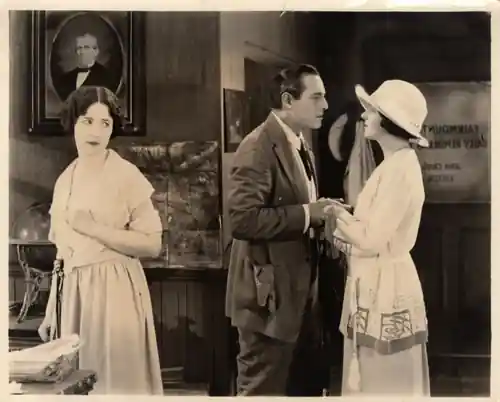
The central conflict arises with the introduction of Stuffy Shade, a character whose very name drips with unsavory intent. Lloyd Whitlock embodies this swindler with a convincing blend of charm and deceit, a familiar archetype in silent cinema, yet one that always serves to heighten the stakes. Shade's scheme to frame John for a fraudulent oil venture is the dramatic engine of the flashback, propelling the narrative from idyllic reminiscence to thrilling suspense. It is here that Mary Ellen's role transcends that of a mere sweetheart. Her astute observations, her unwavering faith in John, and her proactive intervention are not simply supportive gestures; they are the lynchpin that prevents John’s ruin. This portrayal of a woman as an intellectual equal and a decisive problem-solver elevates the film beyond a simple love story, echoing, in a subtle way, the spirit of emancipation seen in more overtly feminist narratives of the time, such as some of the character dynamics in I Don't Want to Be a Man, albeit within a domestic rather than overtly rebellious framework.
The climax of John’s dream-narrative, his triumphant discovery of oil on the very land tainted by Shade's fraud, is the quintessential American success story, a validation of integrity and perseverance. It transforms him into a local hero, a figure of civic pride and personal vindication. This imagined triumph is the peak of his nostalgic journey, a perfect, idealized resolution to the challenges of his youth. The film skillfully builds this arc, allowing the audience to fully invest in John's imagined victory, making the eventual return to reality all the more impactful.
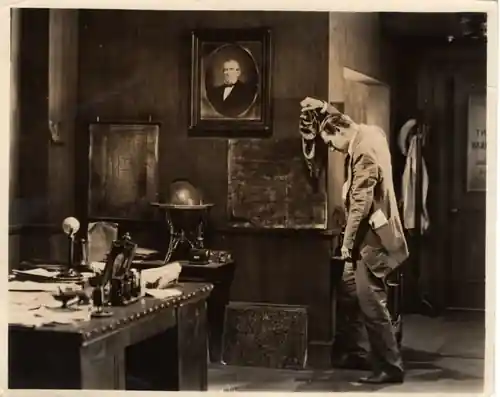
The film’s denouement, the gentle intrusion of John’s real-life wife, Mary Ellen, and their two children into the attic, is a masterstroke of understated emotional power. It’s a moment that, without a single word, articulates the profound difference between the idealized past and the comforting, tangible present. The "old sweetheart" of his memories is not lost; she has merely evolved, matured into the steadfast partner and mother he now shares his life with. This ending avoids the pitfalls of saccharine sentimentality, instead offering a deeply resonant commentary on the nature of love’s enduring forms. It suggests that while the past holds its own unique charm and heroic narratives, the present, with its responsibilities and quiet joys, holds a deeper, more substantial truth.
This interplay between idealized memory and lived reality can be seen as a precursor to more complex psychological dramas, though in a much gentler vein than, say, the fractured realities explored in later films like Shattered. Here, the dream isn't a nightmare, but a cherished, if slightly embellished, memory, and the awakening isn't jarring but warmly reassuring. The film subtly argues that true happiness isn't found in recapturing a bygone era, but in appreciating the continuity of love and family that bridges the gap between then and now.
The cast of An Old Sweetheart of Mine delivers performances that are both emblematic of the silent era and surprisingly nuanced. Helen Jerome Eddy, as Mary Ellen, embodies a quiet strength and intelligence that makes her character far more than a romantic foil. Her expressions convey a depth of emotion that transcends the melodrama often associated with the period, particularly in scenes where she actively works to uncover Stuffy Shade's deceit. Her portrayal lends credibility to Mary Ellen’s pivotal role in John’s redemption. Arthur Hoyt, as John Craig, navigates the character’s journey from youthful idealism to reflective maturity with a believable sincerity. His initial wistfulness in the attic, juxtaposed with his younger, more energetic self in the flashback, showcases a commendable range for the period.
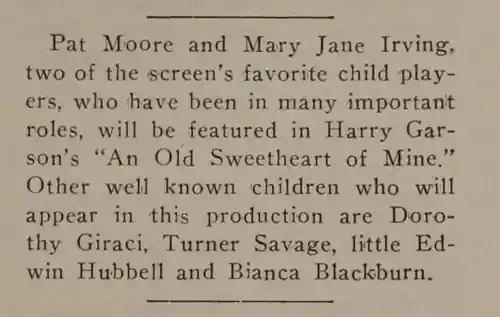
Lloyd Whitlock, as the villainous Stuffy Shade, is a master of understated menace. He avoids cartoonish villainy, instead infusing Shade with a plausible, insidious charm that makes his deception all the more believable. The supporting cast, including Turner Savage, Barbara Worth, and Pat Moore as the younger versions of the protagonists, effectively establish the foundational innocence of their relationship, while Elliott Dexter and Gene Cameron contribute to the film’s rich tapestry of small-town life. Mary Jane Irving, though a minor role, adds to the film's warmth.
The film's genesis in James Whitcomb Riley's poem is palpable throughout. Louis D. Lighton, the screenwriter, meticulously translates the poem's sentimental charm and homespun wisdom into a visual narrative that feels both authentic and deeply rooted in American pastoral tradition. Riley's influence lends a certain lyrical quality to the film, an almost elegiac tone that elevates it beyond a simple story of romance and redemption. It shares a thematic kinship with other adaptations of beloved literary works of the era, such as Mrs. Wiggs of the Cabbage Patch, in its celebration of simple virtues and the enduring spirit
IMDb 5.9
1931
Community
Log in to comment.