DbcultAccessing Vault...
Cult Review
Senior Film Conservator
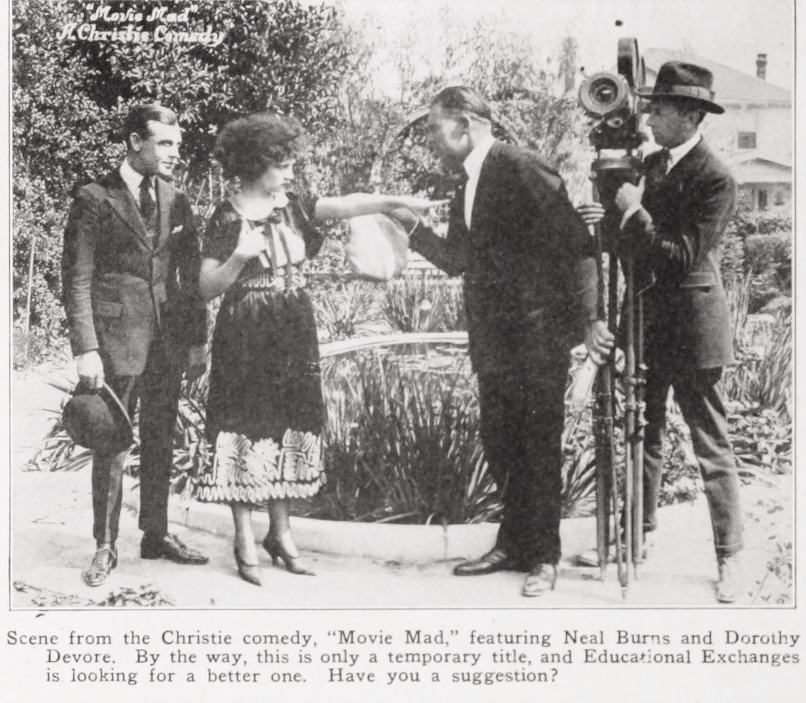
The first image Scott Darling and Frank Roland Conklin hurl at us is a locomotive slicing through wheat—an iron metaphor for the way movies themselves plowed through American innocence in 1921. Movie Mad never shows the train again; it doesn’t need to. The rest of its brisk two-reeler runtime is that train, a hurtling burlesque of star-struck delusion, with Dorothy Devore’s mid-western pilgrim as passenger, coal, and casualty.
Neal Burns, usually the dependable fall-guy in Hal Roach two-shots, here weaponizes his elastic frame as both romantic lead and antagonist. He begins buttoned, spectacled, the human embodiment of double-entry morality. Once Dorothy’s Hollywood fever spikes—she drags him to corner-store fan magazines the way penitents clutch relics—Burns snaps. The decision to impersonate Chaplin is not played as light bulb inspiration but as slow-boil desperation: a bank teller who realizes the only currency Dorothy now values is laughter. He perverts Chaplin’s democratic pathos into private currency, forging iconography the way he might kite a check.
The transformation sequence—shot in a single cramped dressing room—ranks among the most economical in silent comedy. Cinematographer Gino Corrado (also cameoing as a swishy European director) bathes the scene in sodium amber; every smear of burnt-cork eyebrow feels alchemical. A jump cut swaps Neal’s wingtips for size-14 tramp heels, and the camera tilts up like a worshipper. Silent-era viewers would have instantly clocked the risqué homage: here was a nobody usurping the most beloved face on earth, a proto-meme. The gag lands harder now, in an age where identity is a toggle switch.
Once inside the relatives’ Mission Revival manse, the picture detonates into set-piece anarchy. Darling’s script is merciless: vases drop like depth charges, a stuffed grizzly topples and spews sawdust confessional, the prized player-piano performs a berserk William Tell while Neal tap-stumbles across the keys. It’s Artist’s Muddle with the volume cranked to eleven, but laced with something acidic—every laugh is a coin siphoned from Dorothy’s dwindling affection.
Devore, a forgotten sparkle amid Roach’s constellation, gives Dorothy a tremulous arc: from wide-eyed naïf to embarrassed enabler to, finally, sober adult. In a medium that habitually fridged women for laughs, her epiphany feels earned. Watch her eyes during Neal’s arrest: the iris flicker registers not horror but recognition—she sees the farce inside her own worship. Thirty narrative days later, when Neal reappears sans bowler, the film withholds a triumphant embrace. Instead, Dorothy offers a cautious hand and a half-smile; the camera lingers on the gap between them, a sliver of air where illusion used to live.
Direction by Conklin is brisk, almost impatient, as though he’s sprinting to stay ahead of his own cynicism. Yet he sneaks in lyrical pockets: a nocturnal shot of Neal in jail, moonlight slicing the cell into silver ration tickets, recalls the later, graver Hearts in Exile. The tonal whiplash is intentional—slapstick as jailhouse fever dream. Editorial rhythms, meanwhile, predict the Soviet Montage that would arrive within the decade: smash-cuts between Dorothy’s laughter and the judge’s gavel create dialectical thumps.
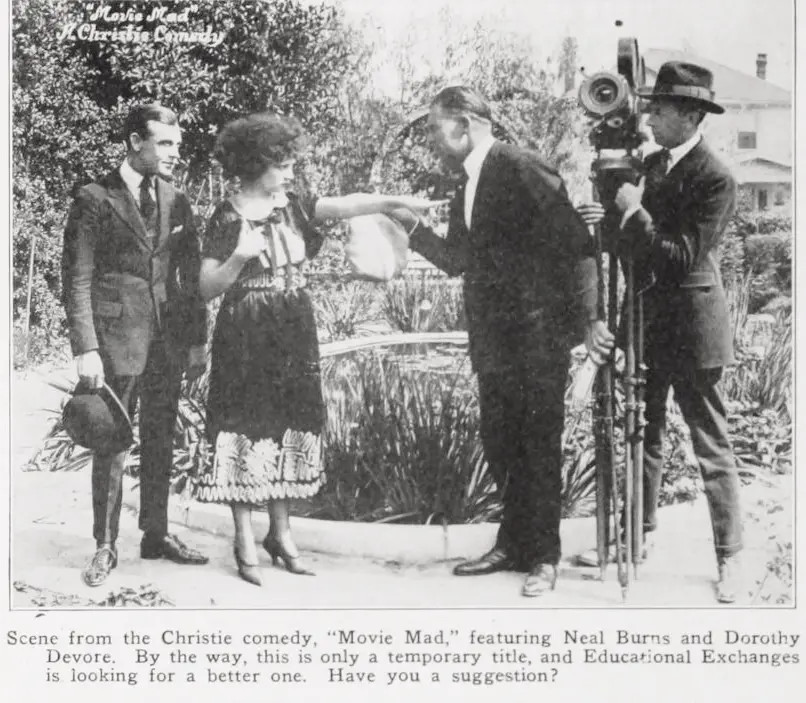
Cinephiles will note the self-reflexive knife-twist: a film mocking fan culture, released at the very moment fan magazines metastasized. In 1921 Hollywood, the real Tramp earned 10,000 fan letters a week; Paramount’s publicity office invented the term “super-star.” Movie Mad arrives like a heckler at the coronation, warning that idols carved in light leave real wounds when they topple.
Compared to globe-trotting spectacles such as Tih Minh or the proto-environmental A Trip Through China, this is chamber cinema—one bungalow, four principals, and a universe of bruised illusions. Yet its intimacy amplifies the satire; you can smell the turpentine on Neal’s fake moustache, hear the off-key piano wires. It’s a negative-space epic: small physical footprint, colossal conceptual crater.
The final shot—Neal’s tentative hand on Dorothy’s shoulder, the Los Angeles sun flattening them into silhouette—feels eerily predictive of Hollywood’s transactional heart: thirty days of penance for a lifetime of bit parts. No wedding veil, no iris-in kiss. Instead, the film ends on a slow fade to white, a visual sneer that anticipates the nihilistic last frames of The Dark Star a decade later.
Restoration-wise, the 2022 4K scan from the Roach archive reveals textures previously muddied: the herringbone of Neal’s thrift-store trousers, the opalescent sheen of Dorothy’s pillbox hat. A new score by Mont Alto Motion Picture Orchestra layers wry xylophone under accordion, a sonic wink that keeps sentiment at arm’s length. If you’ve only squinted at muddy YouTube rips, this iteration will feel like wiping grime off a stained-glass window.
Viewers who savored the class-climbing farce of Breaking Into Society will recognize a darker cousin here. Where that romp rewards social mimicry, Movie Mad punishes it. Both films, though, share a fascination with costume as currency—tailoring as ticket to love, or jail.
Ultimately, the picture’s sting lies in its economy: twenty minutes, zero filler, a moral dispatched like a paper cut. Hollywood would spend the next century selling the same dream Dorothy buys, repackaged in widescreen, technicolor, streaming, VR. Movie Mad is the rare artifact that exposes the grift while it’s still being invented. Watch it, then glance at your algorithmic feed, and feel the century collapse into a single, uncomfortable chuckle.
IMDb —
1918
Community
Log in to comment.