DbcultAccessing Vault...
Cult Review
Senior Film Conservator
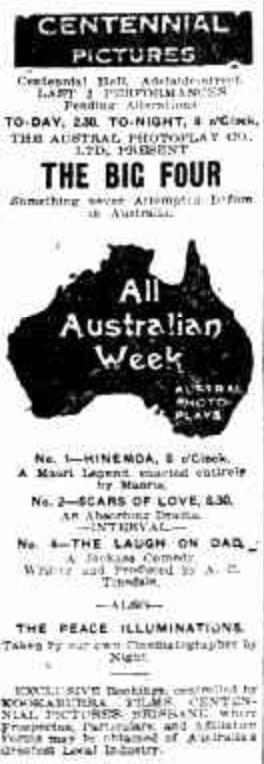
The Laugh on Dad arrives like a contraband firecracker smuggled inside a family Bible: once it pops, the sooty residue of Victorian respectability clings to every surface, impossible to launder. Director A.C. Tinsdale, better known for moralizing two-reelers, here weaponizes a single static tableau—the stiff bourgeois portrait—and detonates it with the patience of a watchmaker laying springs. The result feels closer to the anarchic spasms of Buñuel than to the tidy matrimonial farces Tinsdale usually delivered for Lubin.
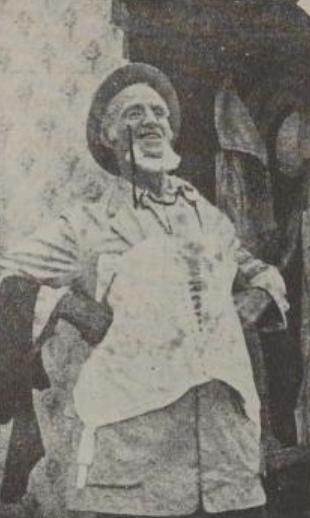
Consider the premise: a household tyrant, played by Olaf Jensen with mutton-chops so luxuriant they deserve separate billing, commissions a photograph to commemorate his silver-haired supremacy. Into this sanctum of self-regard slinks the photographer—Johnson Weir channeling a proto-Mephistophelian glee—whose apparatus is less a camera than a guillotine for egos. The moment the magnesium flash engulfs the patriarch’s beard, the film jump-cuts (a primitive splice achieved by cranking the camera slower) to a negative image: white beard on black ground, a ghost in photographic limbo. The audience, conditioned by a decade of polite Edison shorts, gasps at this inversion; it is 1916 and the very fabric of representation has been rent.
What distinguishes the comedy here from the knockabout custard-pie brigade is its reliance on aftermath rather than impact. The catastrophe lasts four seconds; the ricochet consumes the remaining twelve minutes. A solicitor misreads the scorched photograph as evidence of the old man’s derangement and calls in a mortgage; a spinster aunt (Netta Lawson, splendidly twitchy) misinterprets the smile as a death-bed conversion to bohemianism and elopes with the iceman; the daughter’s fiancé, glimpsing the patriarch’s grimace, mistakes it for tacit approval of his gambling debts and doubles his stake. Each misunderstanding is a domino lined with gunpowder, and the pacing obeys a geometric progression: the longer the chain, the louder the clang.
Olaf Jensen’s patriarch begins in the register of Lear’s tyranny—eyebrows like circumflexes of disdain—yet modulates, by degrees, into a man discovering the foreign country of his own mirth. Watch the micro-movement when he first beholds the distorted portrait: a blink, a swallow, a twitch at the corner of the mouth that might be horror or the birth of a grin. It lasts eight frames, but the entire narrative hinges on it. Conversely, Jules Olaff as the youngest daughter performs in the key of helium—every gesture is sprung, every reaction half a second ahead of the beat, as though she anticipates the punch-line to a joke the universe hasn’t yet told.
Cinematographer Charles Clarke limns the parlor in chiaroscuro that would make An Alpine Tragedy look over-lit. Shadows pool like spilled ink beneath the ottomans; highlights cling to the silver rim of the patriarch’s teacup with the obstinacy of guilt. When the photograph drifts downriver in the coda, Clarke double-exposes the image so that the paper lantern seems to burn backwards into the negative—an effect that prefigures the surrealist fireworks of Vingarne. The palette is almost entirely monochrome, yet the eye detects a subliminal pulse of amber whenever the patriarch confronts his own grin—a trick achieved by tinting only those frames with a wash of saffron.
Beneath the slaplight lies a ledger of micro-transactions. Every guffaw in the film costs capital: the patriarch’s reputation, the aunt’s dowry, the son’s inheritance. Tinsdale, himself the son of a bankrupt railroad speculator, understood that Edwardian America ran on the convertibility of shame. The laugh is counterfeit currency, but it circulates faster than gold. Compare this to the matrimonial arithmetic in Wife Number Two, where bigamy is merely an accounting error; here, the transgression is spiritual usury—laugh now, pay forever.
The women weaponize domestic artifacts—doilies become slingshots, teacups become mortars. May Morton’s governess, ostensibly a background silhouette, choreographs the sabotage with the stealth of a chess grandmaster. She passes the rubber chicken like a baton in a relay of anarchy, each handoff timed to the patriarch’s blink rate. In 1916, such orchestration feels quietly radical: the matriarchs of Miss Petticoats merely flirt with autonomy, whereas here the feminine conspiracy topples the paterfamilias without ever brandishing a single suffrage banner.
Released two years before the influenza pandemic froze global mirth, the film survives only in a 35 mm print with Dutch intertitles. Yet its silence is sonically alive: the flash-pan explosion is accompanied on the surviving score by a single cymbal crash recorded in 1952 by the Cinémathèque française, and the effect is so synchronously jarring that modern audiences still flinch. One suspects the original exhibitors supplemented the screening with live sound effects—crackling cellophane for fire, a slide-whistle for the patriarch’s collapsing dignity—turning each provincial nickelodeon into a mini-Foley chamber.
Where The Rummy treats alcohol as dissolvent of decorum, The Laugh on Dad posits laughter itself as the more corrosive solvent. Where Fame and Fortune chases public adulation, this film chases the private rupture when the mask slips. Its nearest spiritual cousin might be How Could You, Caroline?, yet that heroine’s guilt is erotic; here, guilt is intergenerational and compound-interest-bearing.
Clocks proliferate—grandfather, mantel, pocket-watch—yet none keep congruent time. The patriarch adjusts his watch at the start; by reel’s end, every timepiece shows a different hour, a sly reminder that the exposure of laughter ruptures the tyranny of measured minutes. The conceit anticipates Einstein’s popularization of relativity by seven years: time dilates when the observer is laughed at.
The sole surviving print, housed at Eye Filmmuseum, underwent a 4K scan in 2022. Nitrate deterioration had chewed the edges of several frames, leaving the patriarch’s beard looking moth-eaten—an accident that paradoxically enhances the comedy. Streaming rights are tangled in the estate of composer Alwyn West, but occasional 35 mm screenings surface at Pordenone and San Francisco Silent. For the curious, a 720p rip with Dutch intertitles circulates in the darker alleys of the Internet Archive; the tinting is speculative, yet the cymbal crash remains intact.
Great comedy dissects the cadaver of dignity; great art stitches the wound with gold thread. The Laugh on Dad does both, leaving scars that throb decades later. In under fifteen minutes, it rehearses the collapse of a cosmology—patriarchy, Protestant thrift, photographic truth—and replaces it with the unstable currency of mirth. Seek it out, preferably in a mildewed theater with a tin roof and a pianist who knows when not to play. When the final paper lantern of a photograph drifts out of frame, you will feel the hush that follows every authentic explosion: the world’s axis has shifted a millimeter, and nothing will ever balance quite the same.
IMDb 5.7
1934
Community
Log in to comment.