DbcultAccessing Vault...
Cult Review
Senior Film Conservator
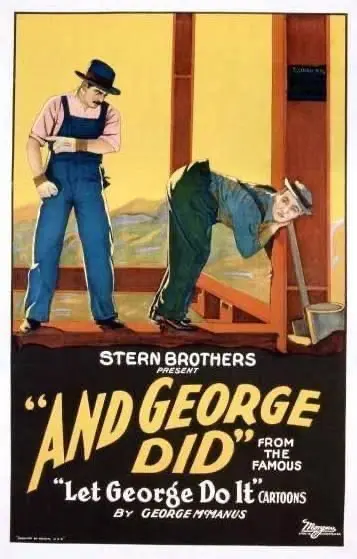
Is "And George Did!" worth watching today? Short answer: yes, but with significant caveats that ground it firmly in its historical context rather than its universal appeal. This brief, silent comedy is a delightful relic for enthusiasts of early cinema, particularly those fascinated by physical comedy and the nascent stages of narrative film. However, it will likely prove a challenging watch for audiences accustomed to modern pacing, intricate plots, or sophisticated character development.
Let's get straight to it:
"And George Did!" operates on a narrative engine so streamlined it borders on minimalist. Its entire premise hinges on a single, universal comedic trigger: a man's indiscretion leading to a desperate, physical reckoning. George, played with an endearing blend of naiveté and panic by Colin Chase, embarks on a casual flirtation with a woman, unaware of the formidable husband waiting in the wings. This initial setup is handled with the efficiency typical of silent shorts, quickly establishing the inciting incident without dwelling on character motivations or complex backstories.
The plot, however, takes an inspired turn when George finds himself employed at a skyscraper construction site, only to discover his new colleague is none other than the very husband he so carelessly offended. This twist elevates the stakes dramatically, transforming a potential street-level confrontation into a dizzying aerial pursuit. The narrative, while simple, is effective in its escalation. It moves from a social faux pas to a life-or-death chase, all within the confines of a few reels. There's no grand mystery here, no intricate character arc; just pure, unadulterated comedic tension built on the twin pillars of mistaken identity and physical peril.
One might argue that the film’s narrative simplicity is both its greatest strength and its most significant limitation. For a modern audience, accustomed to intricate subplots and character-driven drama, the plot might feel thin, almost an excuse for a series of stunts. Yet, within the context of early cinema, this directness was often a virtue, allowing filmmakers to focus on visual storytelling and the raw power of physical performance. The film doesn't waste a single frame on exposition it doesn't need, propelling George from one precarious situation to the next with relentless, almost brutal, efficiency.
Silent film acting is a unique beast, demanding a heightened physicality and exaggerated facial expressions to convey emotion without dialogue. The cast of "And George Did!" rises to this challenge with a commendable energy, even if their performances lean heavily into archetypes. Colin Chase, as the titular George, is the undeniable anchor. His portrayal masterfully blends a charming innocence with a rapidly escalating, wide-eyed terror. One memorable sequence sees George’s initial bravado crumble into genuine panic, his face a canvas of contorted fear as he realizes the magnitude of his predicament, particularly when balancing precariously on an unfinished beam.
Syd Saylor, likely cast as the irate husband, delivers a performance of furious, single-minded vengeance. His physical presence is imposing, his gestures broad and menacing, perfectly embodying the 'tough guy' archetype. Saylor’s ability to project anger and determination through his posture and furious strides is a key driver of the chase's intensity. His beet-red face and clenched fists are almost palpable, even without color or sound.
Madalynne Field, presumably the object of George's affection and the husband's wrath, embodies the silent film ingénue with a mischievous glint. Her initial coy glances and subtle smiles are enough to spark George's interest, providing the catalyst for the entire plot. Dorothy Gulliver, though perhaps in a smaller role, likely contributes to the ensemble's overall comedic timing, perhaps as a shocked bystander or an unwitting accomplice in George's initial flirtation, adding to the bustling energy of the early scenes.
The chemistry, or rather, the conflict, between Chase and Saylor is the film's beating heart. Their chase is not just a series of stunts; it’s a duel of wills expressed entirely through movement. Chase’s agility and Saylor’s relentless pursuit create a dynamic tension that keeps the audience engaged, proving that even without words, a compelling conflict can be powerfully communicated.
The directorial choices in "And George Did!" are surprisingly effective, particularly in their utilization of the skyscraper setting. The director, uncredited in the provided information but deserving of praise for the film's structure, understands the inherent drama and visual spectacle of an active construction site. The camera is often positioned to emphasize the dizzying heights and the perilous drops, making the audience feel the same sense of vertigo that George must be experiencing. Shots looking down from towering beams or across vast, empty spaces between structures are particularly impactful, creating a sense of vulnerability and isolation for our hapless protagonist.
The pacing of the chase sequences is another strong point. The film doesn't linger; once the husband discovers George, the pursuit is almost immediate and unyielding. There's a rapid succession of close calls, near-falls, and inventive evasions that keep the energy high. The editing, while rudimentary by today's standards, is sharp enough to maintain a brisk tempo, cutting between George's desperate scramble and the husband's determined advance. This creates a rhythmic tension that is crucial for a silent comedy relying on physical action.
One unconventional observation is how the film, despite its comedic intent, inadvertently highlights the brutal conditions and dangers faced by construction workers of the era. The perilous stunts, while played for laughs, offer a stark, if stylized, glimpse into a world where safety nets were rare and bravery (or foolhardiness) was commonplace. The director manages to extract both humor and a subtle, almost documentary-like grittiness from the environment, making the skyscraper more than just a backdrop – it becomes a character in itself, a labyrinth of steel and danger.
The cinematography of "And George Did!" is functional and, at times, remarkably inventive for its period. The camera work, while mostly static, makes judicious use of perspective to enhance the feeling of height and danger. Long shots establish the scale of the skyscraper, dwarfing the human figures and emphasizing their precarious positions. Contrast this with tighter shots that capture the fear etched on George's face or the furious determination of the husband, grounding the spectacle in human emotion.
The use of natural light on the construction site adds a layer of authenticity to the visuals. The stark shadows and glinting metal create a harsh, industrial aesthetic that contrasts sharply with the lighthearted premise of a romantic misunderstanding. This visual juxtaposition is surprisingly effective, lending an unexpected weight to the comedic chase. The silent film's reliance on visual storytelling means every gesture, every prop, and every background element must contribute to the narrative. The director and cinematographer clearly understood this, using the raw materials of the construction site – planks, beams, ropes, and cranes – as dynamic elements within the chase choreography.
While special effects are minimal, the practical stunts are genuinely impressive. The actors, or their stunt doubles, are clearly performing at dizzying heights, creating moments of genuine suspense. The visual language is clear: danger is imminent, and the consequences of a misstep are dire. This clarity in visual communication is the hallmark of effective silent cinema, and "And George Did!" executes it with a confident, if unsophisticated, hand. It works. But it’s flawed. The limitations of early film stock and camera technology mean some shots lack the crispness one might desire, but the sheer audacity of the visuals often compensates for any technical shortcomings.
Beyond the slapstick and the stunts, "And George Did!" touches upon a few enduring themes, albeit in a broad comedic strokes. The most obvious is the theme of consequence for indiscretion. George's casual flirtation, a seemingly harmless act, spirals into a desperate fight for survival. It's a comedic morality tale, warning against the dangers of coveting thy neighbor's wife, particularly when that neighbor is employed at your new, highly dangerous workplace. The film, in its own way, explores the public ramifications of private acts.
Another fascinating, if accidental, theme is the urban frontier. The skyscraper under construction represents progress, modernity, and the relentless expansion of the city. Yet, it's also a lawless, dangerous territory where personal vendettas can play out dramatically, far above the bustling streets below. This setting transforms a domestic squabble into an epic struggle, a microcosm of human conflict set against the backdrop of industrial might. The film captures a moment in time when these colossal structures were still relatively new, awe-inspiring, and inherently dangerous, making them perfect playgrounds for cinematic peril.
The film also subtly touches on the fragility of social order. George's actions disrupt the peace, leading to a personal vendetta that overrides professional conduct. The workplace, typically a place of decorum, becomes a battleground. This highlights how easily personal passions can erupt and shatter the veneer of civility, particularly when fueled by primal emotions like jealousy and rage. It's a simple observation, yet one that resonates even today, albeit usually with less literal high-rise chases.
For the casual viewer, "And George Did!" might feel like a quaint historical curiosity. Its silent nature and reliance on broad physical comedy can be jarring. The laughs are there, but they demand a different kind of engagement than contemporary humor. You need to meet it on its own terms.
However, for film historians, students of silent cinema, or anyone with an appreciation for early stunt work, it is absolutely worth seeking out. It offers a clear window into the filmmaking techniques and comedic sensibilities of its era. The high-rise chase is genuinely thrilling and innovative for the time.
It’s a short, punchy experience. It won't demand much of your time, but it will offer a glimpse into the foundational elements of cinematic storytelling. It's a testament to how simple ideas, executed with daring physicality, could captivate audiences long before dialogue or complex visual effects were commonplace.
"And George Did!" is more than just a quaint historical curio; it's a testament to the raw ingenuity and daring spirit of early cinema. While it certainly doesn't boast the narrative sophistication of later films, its unapologetic embrace of physical comedy and its breathtaking use of a real, perilous setting make it a compelling watch for those willing to engage with its particular charms. It’s a film that reminds us that sometimes, the simplest premises, executed with a fearless commitment to spectacle, can leave a lasting impression. It's not a masterpiece, but it's an important piece of the puzzle, a foundational block in the skyscraper of cinematic history. For film buffs, it's essential viewing. For everyone else, it’s a delightful, if demanding, detour into the past. Don't expect a profound emotional journey, but do expect some genuine thrills and a few hearty laughs at George's expense. It’s a bold, brief escapade that proves, even a century later, that sometimes, all you need is a man, a woman, an angry husband, and a very tall building.
IMDb 5.7
1936
Community
Log in to comment.