DbcultAccessing Vault...
Cult Review
Senior Film Conservator
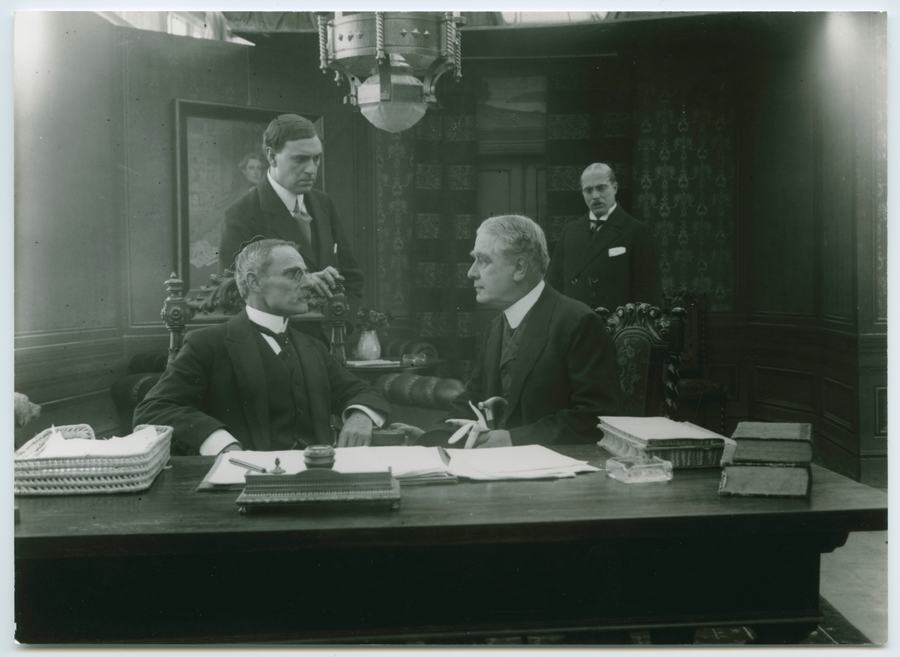
Silent cinema, often dismissed by the uninitiated as a quaint relic, possessed an unparalleled capacity for conveying profound human drama through gesture, expression, and the sheer power of visual narrative. Within this evocative realm, a film like "Politik och brott" (Politics and Crime/Breach) emerges as a fascinating artifact, a testament to the era's sophisticated storytelling. It's a narrative that, even in its outline, pulses with a timeless resonance, weaving together the ruthless ambition of political ascension with the tender, yet perilous, threads of a forbidden romance. The very title, hinting at both the grand machinations of statecraft and the intimate transgressions of the heart, immediately signals a story fraught with tension and moral complexity. This isn't just a period piece; it's a mirror reflecting eternal struggles for power, identity, and love.
At the heart of "Politik och brott" stands William Thompson, portrayed by Bertil Junggren, a character whose backstory alone could fuel a dozen lesser films. His journey from a youth marked by adversity to the editorial pinnacle of the influential Gazette speaks volumes about his character. This isn't merely ambition; it's a tenacious drive, a deep-seated belief in his own merit honed by hardship. He embodies the classic archetype of the self-made man, a figure often celebrated in early 20th-century narratives for their resilience and upward mobility. His elevation to a gubernatorial candidate for the Liberal Party positions him as a champion of progress, a stark contrast perhaps to the established order represented by the incumbent, Mr. Van Wieten. Thompson's past is not just a prologue; it's the very bedrock of his political identity, fueling his rhetoric and shaping his vision for the future. The film, one surmises, would have meticulously depicted the grit and determination required for such an ascent, drawing the audience into his triumphs and tribulations, much like the compelling journey chronicled in My Old Dutch, which also celebrates enduring spirit through life's trials. The narrative here pivots on the idea that a man forged in the crucible of adversity might possess a unique understanding of the common person's plight, making him an appealing, if dangerous, political force.
The opposing force in this political drama is Mr. Van Wieten, played by Albin Lavén, the seasoned governor whose tenure is being challenged. Van Wieten likely represents the established order, perhaps a more conservative or traditional approach to governance. His presence grounds the political conflict, providing a tangible obstacle for Thompson's progressive agenda. The clash between the youthful, reform-minded editor and the experienced, perhaps entrenched, governor offers a classic political dynamic. The silent era, with its reliance on clear visual cues, would have expertly delineated these ideological differences through staging, costuming, and the very demeanor of the actors. The election campaign itself, a backdrop of rallies, speeches (conveyed through intertitles), and newspaper headlines, would have been a vibrant canvas for the narrative, reflecting the burgeoning importance of public opinion and media influence in democratic processes. This kind of political jockeying, while perhaps less overtly dramatic than a military conflict, carries its own high stakes, reminiscent of the internal struggles for power and influence explored in films like Brigadier Gerard, albeit on a different kind of battlefield.
The true complication, the very 'brott' that threatens to unravel everything, lies in the clandestine romance between William Thompson and Ilka Van Wieten, portrayed by Ella Stray. This isn't merely a romantic subplot; it's the fulcrum upon which the entire narrative's tension balances. Ilka, as the daughter of the incumbent governor, finds herself in an untenable position, caught between filial loyalty and passionate love. Her character embodies the personal cost of political ambition, forced to navigate a treacherous emotional landscape. The film's brilliance would undoubtedly lie in its portrayal of this internal conflict, using facial expressions and subtle gestures – the hallmarks of silent acting – to convey Ilka's agony and devotion. This forbidden love, blooming amidst political rivalry, immediately recalls the tragic romantic predicaments found in films like May Blossom or Fior di male, where passion often clashes with societal expectations or familial duty, threatening to shatter lives. The secrecy surrounding their relationship would have added a layer of thrilling suspense, with every stolen glance and hushed conversation fraught with the danger of exposure, which could spell disaster for Thompson's campaign and potentially devastate Ilka's family.
William Thompson's role as the editor of the Gazette is not incidental; it's integral to understanding the film's potential commentary on media ethics and public perception. The newspaper, in this era, was a powerful arbiter of truth and opinion, capable of swaying elections and shaping destinies. As editor, Thompson wields immense influence, a double-edged sword that can either elevate or destroy. The very fact that he leads a major newspaper while simultaneously running for office presents a fascinating ethical dilemma. How does he maintain journalistic integrity while pursuing his political ambitions? Does his personal relationship with Ilka compromise his impartiality, or could it be used against him by political rivals? The film, penned by Sven Elvestad and Fritz Magnussen, likely delves into the nuances of this conflict, exploring the pressures and compromises inherent in such a position. The public eye, magnified by the press, becomes a character in itself, constantly scrutinizing, judging, and demanding transparency, a theme echoed in the intense scrutiny of reputation often found in films like The Return of Eve, where past secrets and public perception collide with dramatic force. The potential for 'brott' here extends beyond mere political misdeeds to a breach of public trust or journalistic principles.
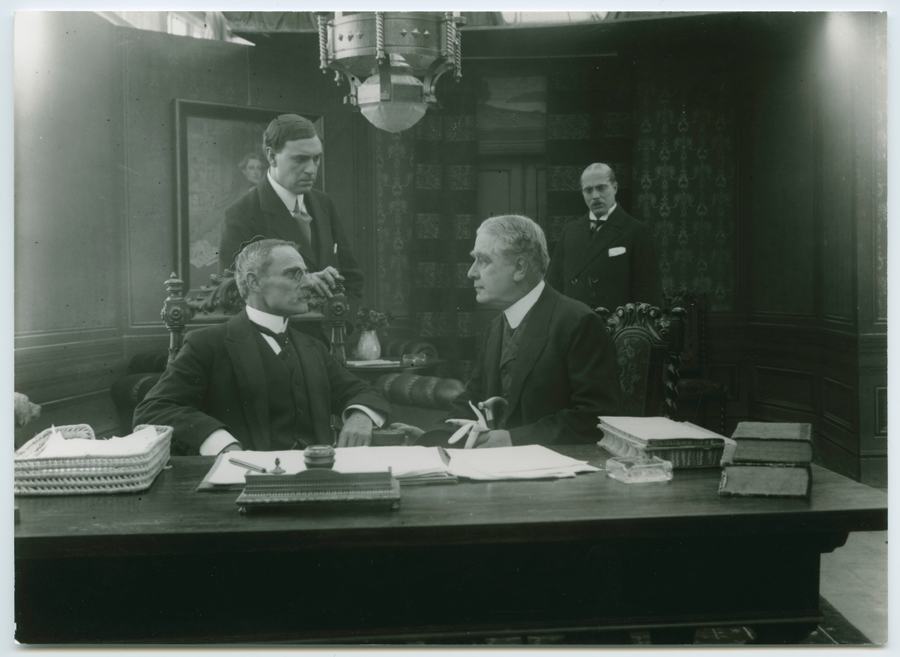
The true genius of "Politik och brott" lies in its exploration of the moral quagmire faced by its protagonists. Thompson's journey is not just about winning an election; it's about preserving his integrity, both personal and professional, in the face of immense pressure. His love for Ilka, while genuine, is a political liability, a potential scandal that could derail his entire career. The film likely forces him to confront agonizing choices: Will he sacrifice his love for his ambition, or will he risk everything for Ilka? This central conflict resonates deeply with the themes of duty versus personal desire, a moral dilemma that forms the bedrock of narratives such as The Fifth Commandment, where characters grapple with profound ethical choices. The tension is palpable: every secret rendezvous, every public interaction with Ilka, every political speech is charged with the potential for exposure. The writers, Elvestad and Magnussen, would have crafted a narrative that slowly ratchets up this pressure, leading to a climactic moment of reckoning. The film's strength would lie in its refusal to offer easy answers, instead immersing the audience in the complex, often contradictory, motivations that drive human action. The performance of Bertil Junggren as Thompson would have been key here, conveying the internal struggle between his hardened ambition and his tender affection, a balancing act that defines his character's arc.
While we cannot view "Politik och brott" through contemporary eyes, we can speculate on its cinematic artistry. Director Fritz Magnussen, working with the tools of the silent era, would have relied heavily on visual storytelling. Close-ups would have been crucial for conveying the emotional turmoil of Thompson and Ilka. The staging of political rallies and newspaper offices would have provided rich backdrops for the drama. Intertitles, far from being mere dialogue, would have served as powerful narrative devices, offering insights into characters' thoughts, political slogans, and the unfolding plot. The cast, including Bertil Junggren, Nicolai Johannsen, Albin Lavén, Alfred Lundberg, and Ella Stray, would have employed the expressive, often theatrical, acting style characteristic of the period, where gestures and exaggerated facial expressions carried the weight of emotion. This style, while different from modern naturalism, was incredibly effective in its time, allowing audiences to connect deeply with the characters' plights. The stark contrasts inherent in the narrative – light and shadow, public and private, ambition and love – would have lent themselves beautifully to the visual metaphors of silent film. The film's very atmosphere, whether one of impending doom or hopeful romance, would have been crafted through lighting, set design, and the pacing of the editing, drawing parallels to the intense, atmospheric storytelling often found in films like Obryv, where emotional landscapes are as vital as physical ones.
Beyond the immediate political and romantic entanglements, "Politik och brott" likely offered a nuanced commentary on the societal structures of its time. William Thompson's rise from adversity implicitly critiques a class system, suggesting that merit and hard work can overcome birthright. His love for Ilka, the daughter of an established figure, further blurs these lines, challenging societal norms and expectations regarding suitable partners. This narrative strand, focusing on overcoming humble beginnings and societal barriers, echoes the spirit of films like The Life of a Jackeroo, which often explored journeys of self-improvement and resilience in challenging environments. The potential for scandal and public outcry also highlights the rigid moral codes of the era, where personal indiscretions could have devastating public consequences. The very idea of 'brott' in the title could refer not just to a political misdeed but to a breach of social decorum, a transgression against the unwritten rules of polite society. The film could have explored how individuals, particularly women like Ilka, were often collateral damage in the games played by powerful men, their reputations and futures hanging precariously in the balance. The concept of sacrifice, whether of love for duty or vice versa, is central, connecting to universal themes of what one is willing to have and to hold onto, and what one is willing to let go of for a greater (or perceived greater) good.
The trajectory of "Politik och brott" undoubtedly builds towards a dramatic crescendo. Will Thompson's secret love be exposed, leading to a political downfall? Will Ilka choose her father or her lover, and what will be the repercussions of her choice? The film's title, with its reference to 'brott,' suggests a transgression that must be confronted, perhaps a revelation that shakes the foundations of both the political campaign and the personal lives involved. This moment of truth could manifest as a public scandal, a devastating betrayal, or a profound act of personal sacrifice. The narrative tension, expertly crafted by Sven Elvestad and Fritz Magnussen, would have prepared the audience for a decisive turning point, a moment of irreversible consequence. One can imagine a scene where Thompson faces a monumental decision, a literal or metaphorical leap of despair, where the stakes are absolute and the path forward fraught with peril. The resolution of this intricate web of ambition and affection would ultimately define the characters' legacies and the film's lasting message. Will Thompson uphold his image as The Honorable Algy, maintaining his integrity, or will he succumb to the pressures and temptations of power? The silent film's ability to create profound emotional impact through suggestion and visual metaphor would have made this climax particularly potent, leaving audiences to ponder the true cost of power and the resilience of the human heart.
"Politik och brott," even in its distilled synopsis, reveals itself as a remarkably prescient and complex narrative. It speaks to the enduring human fascination with power, the intoxicating allure of ambition, and the often-destructive force of forbidden love. The film, through the lens of early 20th-century Swedish cinema, explores themes that remain profoundly relevant today: the intersection of personal and public life, the ethics of journalism, the challenges of political leadership, and the eternal conflict between duty and desire. The craftsmanship of director Fritz Magnussen and writers Sven Elvestad and Fritz Magnussen, brought to life by a talented ensemble cast including Bertil Junggren and
IMDb —
1916
Community
Log in to comment.