DbcultAccessing Vault...
Cult Review
Senior Film Conservator
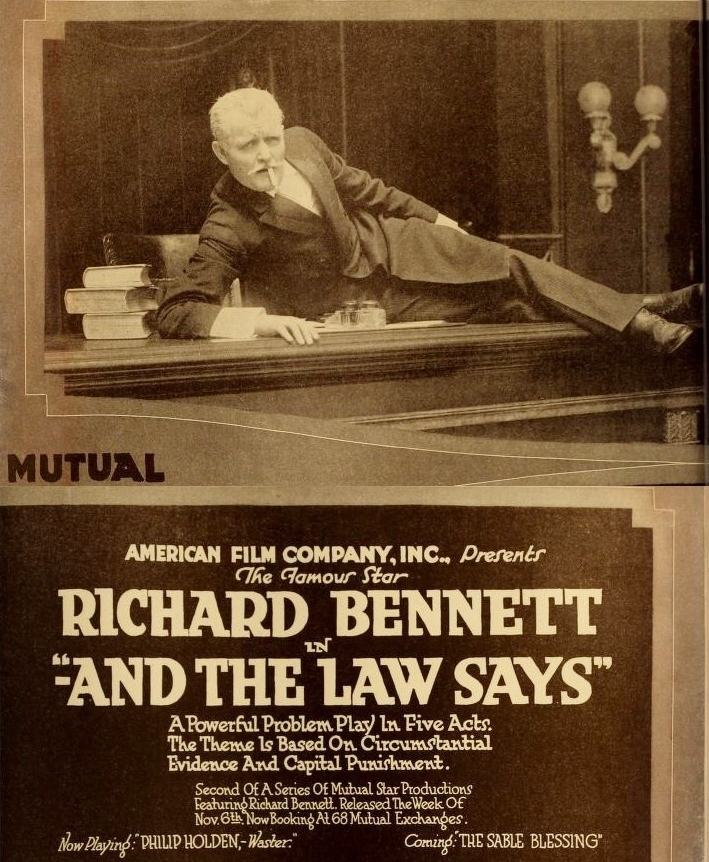
There are films that merely tell a story, and then there are those that etch themselves into the collective consciousness, not just for their narrative prowess but for the stark, uncomfortable truths they lay bare. 'And the Law Says' is undeniably of the latter ilk, a cinematic artifact that, despite its vintage, reverberates with an urgency that feels remarkably contemporary. It’s a profound meditation on justice, personal accountability, and the often-brutal intersections of the two, presented through a lens that is both melodramatic and incisively critical. Watching it is less an act of passive viewing and more an engagement with a moral conundrum that refuses easy answers.
The narrative thrust of 'And the Law Says' is predicated upon a monumental act of moral failing. We are introduced to Lawrence Kirby, portrayed with a compelling blend of youthful ambition and underlying opportunism, whose early life choices set in motion a devastating chain of events. His courtship of Dr. Cartmell's daughter, conducted under the veil of an assumed identity, is a testament to the era's fascination with secret lives and hidden pasts. This initial deception isn't merely a plot device; it's the foundational crack in Kirby's character, a foreshadowing of the profound ethical compromises that will define his trajectory. When the inevitable consequence of his dalliance—a pregnancy—manifests, Kirby's swift retreat from responsibility is a gut-wrenching moment. He flees, leaving behind not just a woman but the nascent life he helped create, a betrayal that echoes through the decades as a powerful indictment of paternal abandonment.
The film then executes a narrative leap, a temporal ellipsis that propels us years into the future. This structural choice is crucial, allowing the full weight of Kirby's past to accumulate, transforming him from a feckless youth into a formidable, if flawed, figure of authority. He reappears as Judge Kirby, a man now imbued with the power to dictate destinies, and, more chillingly, a staunch advocate for capital punishment. The irony is palpable, almost suffocating. A man who shirked his most fundamental personal duty now champions the ultimate societal judgment, a hypocrisy that forms the very bedrock of the film's thematic exploration. His transformation is not one of redemption, but rather a chilling ascent to a position of power, seemingly untouched by the moral decay of his youth.
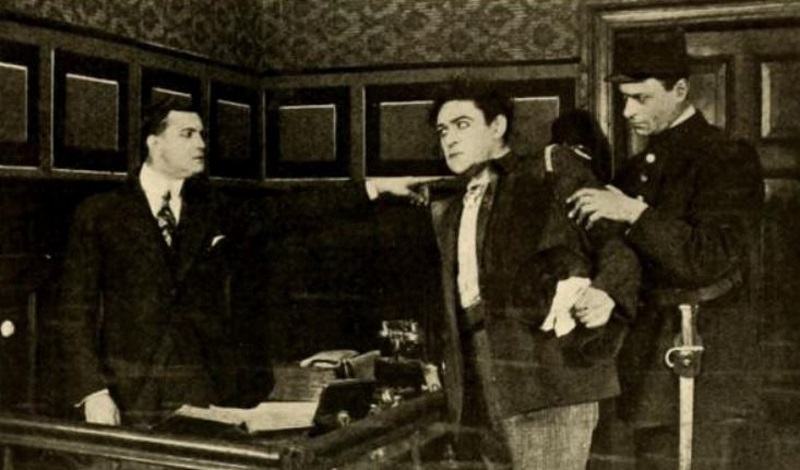
The dramatic core of 'And the Law Says' ignites when Judge Kirby unknowingly presides over the trial of his own innocent son, condemned by the cold, impartial logic of circumstantial evidence. This is where the film transcends mere melodrama, delving into the profound philosophical questions surrounding the fallibility of the justice system. The tension is exquisitely crafted, a slow-burn agony as the audience, privy to the truth, watches Kirby unknowingly seal his son's fate. It’s a narrative device that has been explored in various forms throughout cinematic history, from the grand tragedies of Shakespeare like Macbeth or Julius Caesar, where characters are ensnared by their own actions or destiny, but here it's rendered with a particularly domestic, yet no less devastating, intimacy. The film masterfully builds towards the inevitable revelation, allowing the audience to feel the suffocating weight of Kirby’s impending horror.
The moment of recognition, when the son's true identity is unveiled on the precipice of execution, is designed for maximum emotional impact. Richard Bennett, in what must have been a tour-de-force performance as Kirby, would have had to convey a seismic shift from detached authority to a maelstrom of paternal terror and regret. His frantic, belated plea for mercy, however, falls on deaf ears. The system, once his instrument, now operates with an impersonal, unyielding momentum, mirroring the very inflexibility he championed. This sequence serves as a powerful condemnation of capital punishment, not just on moral grounds but on the practical basis of its irreversible finality when confronted with potential error. The film suggests that the law, in its rigid adherence to process, can become blind to the very humanity it purports to protect.
Then comes the truly extraordinary, almost fantastical, climax: Dr. Cartmell, a character whose moral compass remains steadfast throughout, revives the electrocuted youth. This act, bordering on the miraculous, serves multiple functions. Firstly, it offers a sliver of emotional catharsis for the audience, a reprieve from the crushing tragedy. Secondly, and more importantly, it elevates the film from a mere domestic drama to a profound allegorical statement. Cartmell, a long-standing opponent of the death penalty, embodies the voice of enlightened compassion and scientific reason against the barbaric finality of state-sanctioned killing. His ability to restore life, even after the state has taken it, is a potent symbolic act, effectively nullifying the 'justice' meted out by the law and exposing its ultimate impotence in the face of true human value. It's a bold artistic choice, one that perhaps challenged the sensibilities of its time, much like the progressive social commentary found in films such as What 80 Million Women Want, which also dared to question prevailing norms.
The restoration of the son to his mother is not just a happy ending in the conventional sense; it's a profound statement about the enduring power of familial bonds and the potential for healing, even after unimaginable trauma. It leaves Kirby, the architect of his own misery, to grapple with the full, horrifying weight of his actions, stripped of his authority and confronted by the living embodiment of his past transgressions. The film’s ending isn't about forgiveness for Kirby, but about the survival of innocence and the triumph of a different kind of justice, one rooted in mercy and life, rather than retribution and death.
While detailed performance records for films of this vintage can be elusive, the narrative demands suggest that the cast would have been tasked with delivering emotionally charged, often grand, performances characteristic of early cinema. Adrienne Morrison, likely portraying the mother, would have needed to convey profound sorrow and eventual relief, her character a tragic figure caught in the crosscurrents of male hubris and judicial indifference. Allan Forrest, as the son, would have carried the heavy burden of unjust persecution, his innocence a stark contrast to the severity of his sentence. George Periolat and William A. Carroll, likely in supporting roles, would have contributed to the film's dramatic texture, perhaps as legal figures or townspeople, adding to the sense of community and judgment. And of course, Richard Bennett's portrayal of Kirby would have been central, requiring a nuanced depiction of ambition, moral decay, and ultimate despair. The shift in his character, from the callous student to the stern judge and finally to the broken father, is the emotional linchpin of the entire production.
The pacing, typical of early dramatic features, would likely have allowed for extended scenes of emotional intensity, building suspense through lingering shots and expressive acting rather than rapid-fire editing. This deliberate tempo would have amplified the audience's investment in the unfolding tragedy, particularly during the trial and execution sequences. The film's strength would have lain in its ability to sustain this emotional pressure, allowing the moral dilemmas to fully resonate. In this respect, it shares a certain dramatic weight with other character-driven moral explorations of the period, such as Gambier's Advocate, where legal and ethical quandaries drive the narrative forward.
'And the Law Says' is more than a historical curiosity; it's a potent piece of social commentary that grapples with themes that remain fiercely debated today. The question of capital punishment, its morality, and its potential for irreversible error, is central. The film's stance, subtly yet powerfully conveyed through Dr. Cartmell's character and the ultimate resurrection, leans heavily towards abolition. It forces viewers to confront the human cost of a system designed to be dispassionate. Moreover, the film delves into the corrosive nature of hypocrisy and the inescapable consequences of one's past actions. Kirby's journey is a grim reminder that even the highest offices cannot shield an individual from the specter of their earlier moral failings. This notion of an inescapable past is a recurring motif in cinema, seen in various forms from the personal struggles in The War Bride's Secret to the broader societal reflections in L'empreinte de la patrie, all exploring how history, personal or collective, shapes the present.
The film also subtly critiques the societal structures that allow a man of Kirby's character to ascend to such a position of power. His assumed name and subsequent abandonment suggest a system that, at times, prioritizes appearance and status over genuine integrity. It’s a timeless critique, one that resonates deeply in any era where public figures are scrutinized for their pasts. The role of Dr. Cartmell as the moral counterpoint is vital; he represents not just medical science but a higher ethical standard, a humanitarian perspective that challenges the cold, retributive logic of the law. His final act is not merely a plot twist, but a symbolic overturning of an unjust decree, asserting that life, and the chance for a different kind of justice, can prevail.
Comparatively, one might draw parallels to the enduring power of fate and consequence found in narratives like The Two Edged Sword, where moral choices inevitably lead to their own recompense. The film's exploration of fatherhood, responsibility, and the tragic consequences of abandonment also finds echoes in tales like Tom Brown's Schooldays, albeit in a far more dramatic and consequential vein. The raw emotionality and social critique also align it with films that sought to expose societal ills, such as The Heart of the Blue Ridge, which often explored themes of moral struggle within specific communities.
'And the Law Says' is a challenging film, not because of its technical complexity, but because of its unflinching gaze at human fallibility and the imperfections of justice. It’s a narrative that uses the heightened drama of its era to deliver a message that transcends time. The writers, though not explicitly named in the provided information, crafted a story that speaks volumes about the societal anxieties and moral debates of its period, and remarkably, continues to resonate today. The film serves as a powerful reminder that the law, while essential, is a human construct, susceptible to error, bias, and the very human failings it seeks to regulate. It champions the idea that mercy, compassion, and a deeper understanding of human circumstance might sometimes offer a more profound form of justice than rigid adherence to code. The concluding act, while perhaps stretching credulity, cements its place as a unique and audacious piece of cinematic art, a film that dares to imagine a world where the ultimate judgment can be undone, and where life, against all odds, finds a way to reclaim its rightful place. It stands as a testament to the power of cinema to provoke thought, to challenge assumptions, and to explore the deepest recesses of the human condition, much like the intense character studies found in films such as Alien Souls or the intricate moral dilemmas of Loyalty. It’s a film that demands discussion, long after the final frame fades to black.

IMDb —
1926
Community
Log in to comment.