DbcultAccessing Vault...
6.7/10
Senior Film Conservator
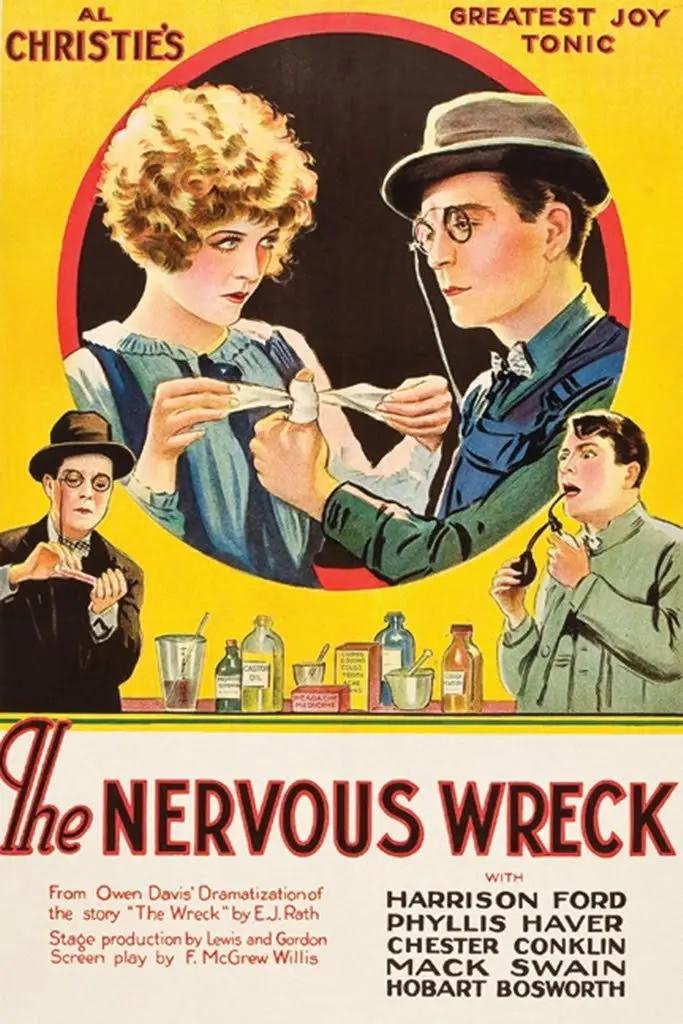
A definitive 6.7/10 rating for a film that redefined the boundaries of cult cinema. The Nervous Wreck remains a cornerstone of transgressive art.
Is The Nervous Wreck worth your time nearly a century after its release? Short answer: yes, but only if you have an appetite for the high-strung, sweat-inducing energy of a classic farce that refuses to let its characters—or its audience—breathe. This film is a definitive pick for silent cinema enthusiasts and those who find humor in the absurdity of human anxiety; it is not for those who demand logic, grounded performances, or a slow-burning plot.
1) This film works because Harrison Ford (the silent era star) delivers a masterclass in physical anxiety, turning a potentially annoying hypochondriac into a sympathetic, albeit chaotic, hero.
2) This film fails because the middle act, set primarily in a ranch kitchen, cycles through the same three comedic beats until the pacing begins to feel as exhausted as the protagonist.
3) You should watch it if you want to see the DNA of the modern 'road trip gone wrong' subgenre, back when a monkey wrench was a viable weapon of highway robbery.
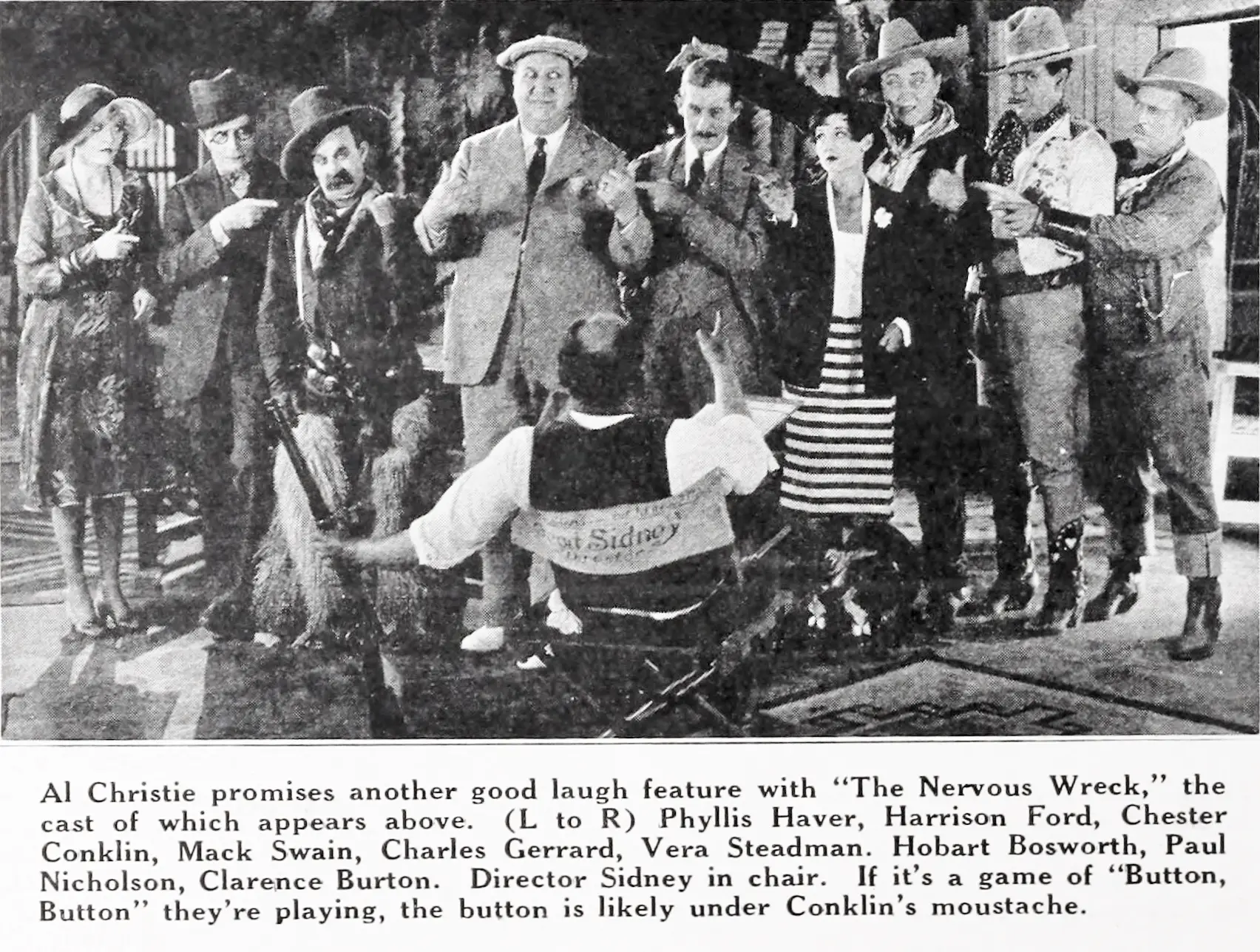
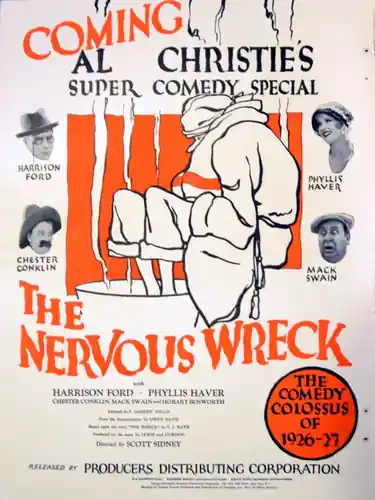
Long before the name Harrison Ford was synonymous with space smugglers and whip-cracking archeologists, a different man of the same name was carving out a niche in the silent era. In The Nervous Wreck, Ford plays Henry Williams with a twitchy, wide-eyed desperation that feels surprisingly modern. He doesn't just act sick; he vibrates with the internal conviction that his heart might stop at any moment. This isn't the slapstick of Chaplin or the stoicism of Keaton. It is something more jittery. It works. But it’s flawed.
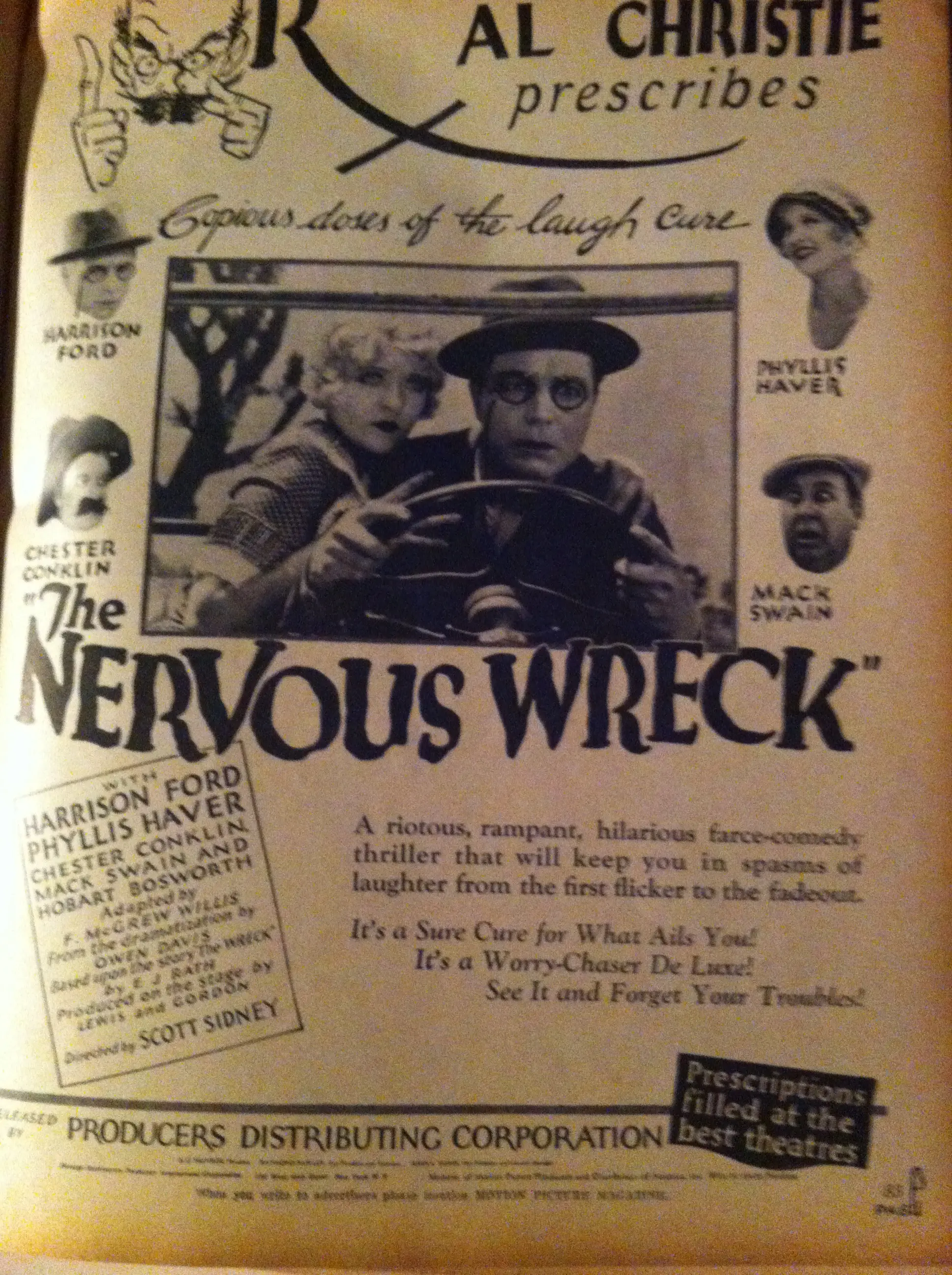
Consider the scene where Henry is first introduced at Jud Morgan’s ranch. While the other characters move with the rugged grace of the West, Ford moves like a man made of glass. Every gust of wind is a potential pneumonia; every loud noise a cardiac event. His performance anchors the film’s absurdity. When he eventually brandishes a monkey wrench to rob a passing motorist for gasoline, the comedy doesn't come from the threat of violence, but from the sheer, terrifying incongruity of a man who is afraid of his own shadow committing a felony. It is a bold choice for a lead, and Ford carries it with a manic commitment that rivals the best work in Percy.
Director Scott Sidney understands the geometry of comedy. The film is built on a series of escalating inconveniences that transform a simple shopping trip into a jurisdictional nightmare. The cinematography, handled with a straightforward clarity, allows the physical gags to land without the distraction of overly ambitious camera movements. However, the film hits a snag when the action shifts to the ranch where Henry and Sally are forced to work as domestic help.
The kitchen sequence is a microcosm of the film’s strengths and weaknesses. The sight of the 'nervous' Henry trying to manage a stack of dishes while avoiding the detection of the man he just robbed is pure tension. But the film lingers here too long.
By the third time Henry almost drops a plate, the tension dissipates into repetition. Unlike the tighter narrative found in The High Horse, The Nervous Wreck occasionally forgets that a farce needs to accelerate, not just spin its wheels. Still, the arrival of Jerome Underwood and his daughter Harriet provides the necessary spark to reignite the engine. The confrontation between the robber and the robbed, mediated by a jealous sheriff, is a classic configuration that Sidney handles with aplomb.
Yes, The Nervous Wreck is worth watching because it serves as a fascinating bridge between the pure slapstick of the early 1920s and the more sophisticated situational comedies of the late silent era. It offers a rare look at a leading man who wins not through strength or wit, but through the sheer, accidental momentum of his own panic. If you can forgive the stagnant middle section, the final chase and resolution offer a satisfying payoff for the investment of time.
The use of the Arizona setting is more than just a backdrop; it’s a character in itself. The vast, unforgiving openness of the desert contrasts sharply with Henry’s internal claustrophobia. While films like Miss Nobody used their settings for romantic longing, The Nervous Wreck uses the dust and the distance to heighten the stakes of the 'gasoline heist.' The lighting is harsh, the shadows are long, and the sense of isolation makes the arrival of the Sheriff Bob Wells feel genuinely threatening. It’s a rugged aesthetic that grounds the flighty comedy in a tangible, gritty reality.
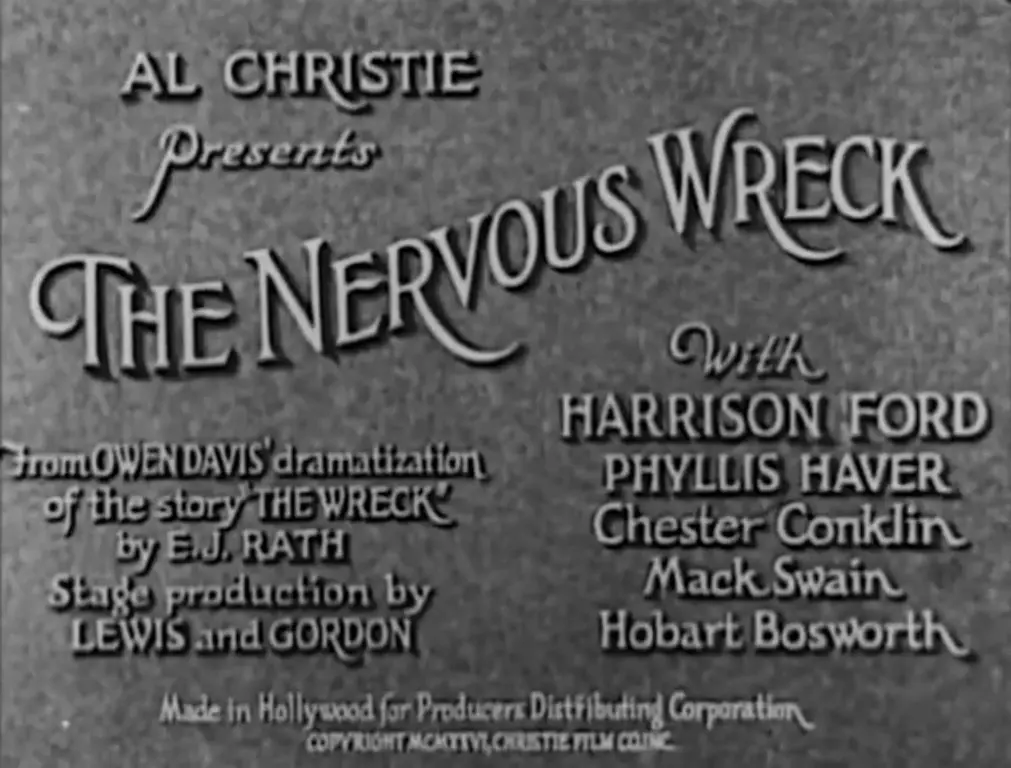
When compared to other films of the era, such as The Moonstone, which leaned into mystery, or The Perfect Flapper, which focused on social rebellion, The Nervous Wreck is uniquely obsessed with the male ego and its fragility. It reflects a post-war anxiety where the 'nervous' man was a recognizable social figure. Henry Williams isn't just a clown; he’s a manifestation of a society trying to find its footing in a world that feels increasingly fast and dangerous. The film’s ability to find humor in that fragility is its most enduring legacy.
One surprising aspect of the film is how it treats the 'victims' of Henry’s robbery. In a modern film, the Underwoods would be antagonists. Here, they are almost as absurd as Henry himself. The film suggests a world where everyone is a little bit broken, a little bit 'wrecked,' and the only difference between a hero and a villain is who happens to be holding the monkey wrench at the time. It is a cynical, yet oddly comforting, perspective on human nature.
The Nervous Wreck is a loud, sweaty, and occasionally brilliant piece of silent cinema. It captures a specific type of American energy—the frantic need to fix things that aren't necessarily broken—and wraps it in a package of high-desert hijinks. While it lacks the poetic grace of the era's undisputed masterpieces, it possesses a raw, infectious humor that many of its contemporaries lack. It’s a bumpy ride, but one that is well worth taking for anyone interested in the roots of the American comedy. Final Rating: A flawed but essential piece of the silent era puzzle.
IMDb —
1931
Community
Log in to comment.