DbcultAccessing Vault...
5.2/10
Senior Film Conservator
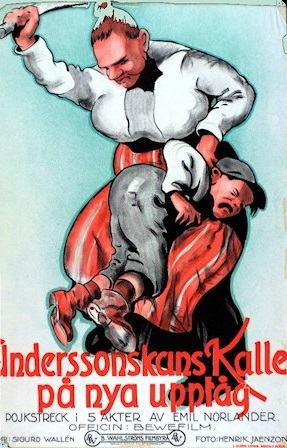
A definitive 5.2/10 rating for a film that redefined the boundaries of cult cinema. Anderssonskans Kalle på nya upptåg remains a cornerstone of transgressive art.
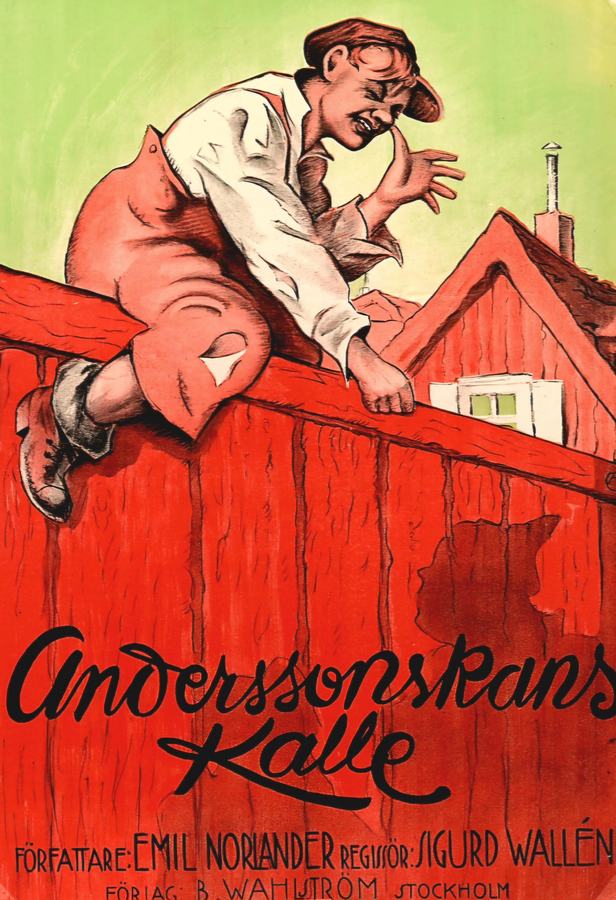
There's a certain magic to films that effortlessly bridge the gap between boisterous comedy and astute social observation, and Anderssonskans Kalle på nya upptåg, a delightful relic from a bygone era of Swedish cinema, accomplishes this with a charm that resonates even today. Penned by the insightful duo of Sam Ask and Emil Norlander, this cinematic journey takes its titular protagonist, Kalle, from the well-worn streets of his working-class Stockholm neighborhood into the gilded, often perplexing, corridors of high society. It's a narrative premise ripe with potential for both uproarious laughter and subtle critique, a promise the film largely delivers upon.
The film's initial canvas is a vibrant, bustling depiction of Stockholm's more humble districts, painted with broad, affectionate strokes. Here, Kalle, portrayed with an infectious blend of impishness and underlying good nature by Gösta Alexandersson, is a force of nature. His mischievous escapades, while occasionally irking the local adults, are largely seen as the inevitable byproduct of a spirited youth, a kind of necessary chaos that punctuates the daily grind. This early segment establishes Kalle not as a delinquent, but as a resourceful, quick-witted boy whose actions, though sometimes disruptive, stem from an innate curiosity and a boundless energy. The community, despite its grumbles, clearly holds a soft spot for him, a sentiment beautifully conveyed through the nuanced performances of actors like Hildur Skantze, whose 'Anderssonska' exudes a weary but enduring maternal affection, and Julia Cæsar, always a master of the expressive glance, who captures the local gossip with a knowing twinkle.
The pivotal moment, the adoption by Director Graham, acts as the narrative's fulcrum, a dramatic pivot that propels Kalle into an entirely different social stratum. This transition isn't merely a change of address; it's a profound cultural dislocation. The film excels in contrasting these two worlds. The working-class district is characterized by its spontaneity, its close-knit community, and its raw, unvarnished emotions. Life there is lived openly, loudly, and with an undeniable authenticity. In stark contrast, the high society Kalle enters is a realm of carefully constructed appearances, muted tones, and a labyrinthine set of unspoken rules. Director Graham, played with a commendable earnestness by Carl-Gunnar Wingård, genuinely believes he is offering Kalle a better life, a chance at refinement and opportunity. Yet, his benevolence, while well-intentioned, often blinds him to the inherent value and resilience of Kalle's original environment.
Kalle's initiation into this new world is a masterclass in comedic awkwardness. His natural instincts, honed by years of street smarts, clash spectacularly with the rigid etiquette expected of him. A simple act like eating becomes a minefield of social faux pas, and his attempts to navigate polite conversation are wonderfully disastrous. The film doesn't mock Kalle for his perceived lack of sophistication; rather, it uses his innocent transgressions to expose the often-absurd pretenses of the upper crust. The humor arises not from Kalle's ignorance, but from the stark contrast between genuine human behavior and the artificiality of social conventions. In this respect, the film shares a thematic resonance with other narratives exploring class disparity through the eyes of an outsider, though Anderssonskans Kalle på nya upptåg maintains a distinctly Swedish, often gentle, satirical edge.
The supporting cast in the high-society setting provides ample fodder for Kalle's unwitting disruptions. Mona Mårtenson, often known for her more dramatic roles, here brings a nuanced portrayal to a character who must grapple with Kalle's presence, perhaps initially with disdain, but gradually with a growing understanding or even fondness. Edvin Adolphson, a stalwart of Swedish cinema, adds another layer to this ensemble, embodying the kind of distinguished figure Kalle is expected to emulate, providing a straight man against Kalle's unpredictable antics. Their reactions, ranging from shocked indignation to subtle amusement, serve as a barometer for Kalle's impact on this staid environment.
What truly elevates Anderssonskans Kalle på nya upptåg beyond simple slapstick is its underlying commentary on identity and belonging. Kalle, despite the comforts and opportunities presented by his new life, struggles with the loss of his authentic self. His attempts to conform are often half-hearted, his spirit too wild to be easily caged. The film subtly asks: is a 'better' life truly better if it requires sacrificing one's core identity? This theme, while not overtly didactic, permeates Kalle's journey, adding a layer of poignancy to his comedic predicaments. It's a sentiment that echoes in other coming-of-age narratives where young protagonists grapple with their place in the world, though Kalle's particular brand of charming defiance gives it a unique flavor.
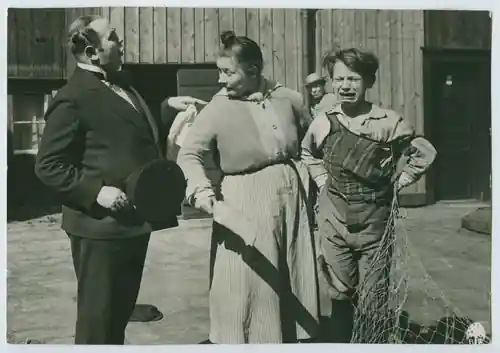
The screenplay by Ask and Norlander is a testament to their keen observational skills. They craft scenarios that feel organic, even when exaggerated for comedic effect. The dialogue, while perhaps a product of its time, retains a certain vivacity, capturing the distinct voices of both the working class and the elite. They resist the temptation to paint either world in monochrome, instead presenting shades of grey, acknowledging the virtues and flaws inherent in both. This nuanced approach prevents the film from devolving into a simplistic 'rich versus poor' narrative, opting instead for a more sophisticated exploration of cultural differences.
The direction, while perhaps not groundbreaking in its technical innovation, is effective in its storytelling. The pacing is deliberate, allowing the audience to savor Kalle's triumphs and tribulations. The camera work, though straightforward, captures the visual distinctions between the two social settings with clarity, from the cluttered warmth of Kalle's original home to the spacious, almost sterile elegance of Director Graham's residence. Details like costume design and set dressing further reinforce these visual cues, subtly guiding the viewer through Kalle's evolving perceptions.
The ensemble cast is truly the beating heart of this film. Beyond Alexandersson's central performance, which carries the narrative with an effortless grace, the supporting players imbue their roles with memorable characteristics. Dagmar Ebbesen, with her characteristic warmth and grounded presence, provides a comforting anchor, perhaps representing the common sense that often eludes the high society figures. Anna Diedrich and Albin Lindahl, in their respective roles, contribute to the tapestry of the working-class community, their interactions with Kalle feeling genuinely lived-in. Even smaller roles, like that of Hilda Castegren, add texture and authenticity, demonstrating the depth of talent available in Swedish cinema at the time.
The enduring appeal of Anderssonskans Kalle på nya upptåg lies in its ability to marry timeless themes with a specific cultural context. It's a film about social mobility, yes, but more profoundly, it's about the clash of values, the search for one's place, and the irrepressible spirit of youth. While the specifics of early 20th-century Stockholm might feel distant, the core human experiences depicted—the desire for acceptance, the struggle against conformity, the joy of genuine connection—remain universally relatable. It’s a narrative that, despite its period setting, speaks to the perennial question of what truly constitutes 'progress' or 'a better life'.
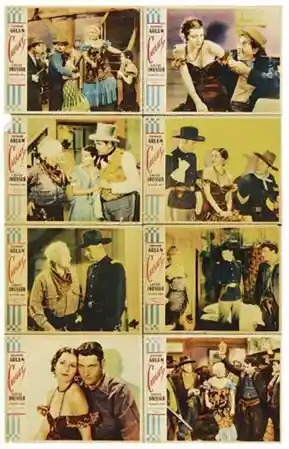
Comparing Kalle's journey to films like The Cowboy and the Lady, where a protagonist from a different background navigates high society, one can observe similar comedic beats arising from cultural misunderstandings. However, Anderssonskans Kalle på nya upptåg maintains a distinctly Scandinavian sensibility, often favoring subtle irony over overt farce, and a more profound exploration of class dynamics rather than just romantic entanglements. It avoids the broad caricatures that might be found in some contemporary comedies, opting instead for characters that, even in their comedic exaggerations, feel grounded in a recognizable reality.
The film also subtly critiques the very notion of 'progress' that adoption by the upper class is supposed to represent. Kalle's original environment, though lacking in material wealth, is rich in human connection, authenticity, and a pragmatic understanding of life. His new world, while offering material comforts, often feels emotionally sterile and laden with superficiality. This dichotomy is not presented with heavy-handed moralizing, but rather through Kalle's own observations and reactions, allowing the audience to draw their own conclusions about which world truly offers a richer existence. It's a testament to the writers' skill that this social critique is woven so seamlessly into a largely comedic framework.
In conclusion, Anderssonskans Kalle på nya upptåg is more than just a period piece; it’s a vibrant, insightful, and thoroughly entertaining exploration of social class, identity, and the irrepressible spirit of youth. Its humor remains fresh, its characters endearing, and its underlying messages about belonging and authenticity continue to resonate. For anyone interested in the rich tapestry of early Swedish cinema, or simply in a heartwarming tale with a sharp satirical edge, Kalle’s new adventures are an absolute delight, a timeless reminder that true character is not defined by one's social standing, but by the spirit one brings to every situation, no matter how unfamiliar. It stands as a charming counterpoint to films that might explore similar themes with more overt drama, like Der Eisenbahnkönig, 1. Teil - Mensch und Mammon, by offering a distinctly lighter, yet equally profound, touch. The film's legacy is secure, not just as a historical document, but as a compelling piece of storytelling that continues to captivate and amuse generations of viewers, cementing its place as a cherished gem in cinematic history.
IMDb 6.8
1931
Community
Log in to comment.