DbcultAccessing Vault...
3.9/10
Senior Film Conservator
A definitive 3.9/10 rating for a film that redefined the boundaries of cult cinema. Desperate Trails remains a cornerstone of transgressive art.
Courtney Ryley Cooper and Elliott J. Clawson’s screenplay arrives like a blood-stained telegram from the subconscious of the frontier, a place where every handshake hides a shiv and every sunset feels subpoenaed by the devil.
Shot on location in the blistering crucible of Arizona’s Superstition foothills, Desperate Trails harnesses the sun as a moral interrogator: shadows stretch like accusations, highlights flare into confessions. Cinematographer Allen G. Siegler (uncredited yet indelible) captures alkali dust hanging in the air like suspended verdicts, while iris shots puncture the frame—circular wounds that bleed story.
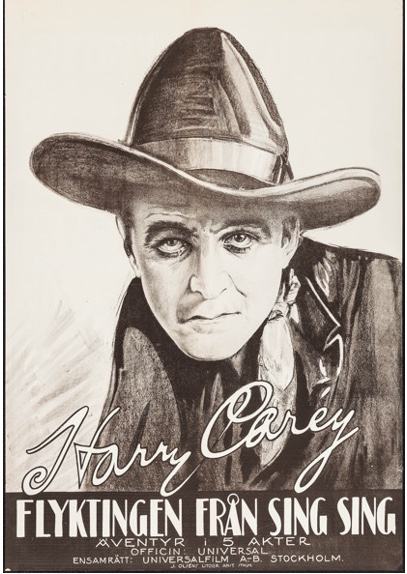
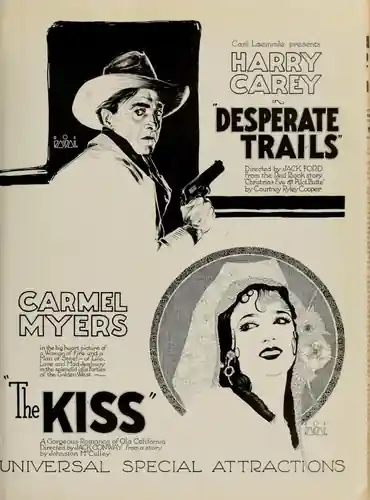
Harry Carey, that granite slab of silent-era masculinity, imbues Bart Carson with the stoic ache of a man who’s read the Book of Revelation in a brothel mirror. Opposite him, Barbara La Marr—nicknamed “the girl who’s too beautiful to live”—plays Lou as a velvet trap laced with arsenic. Every tilt of her feathered cloche hat slices the mise-en-scène; every close-up feels like a court exhibit.
Helen Field, Irene Rich, and a scene-stealing Harry Carey Jr. (barely seven yet already mastering the Carey family craft of eyebrow philosophy) populate the periphery like Greek chorus members drunk on corn liquor.
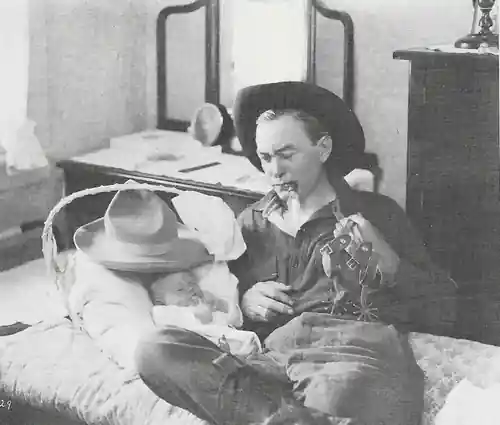
The film’s ethical strata shift like tectonic plates beneath a thin crust of civility. Bart’s willingness to imprison himself for a false sibling bond interrogates the frontier cult of honor; Walter’s desertion of his real family exposes Manifest Destiny as a cartography of broken promises. Meanwhile, Lou’s deception—equal parts survival instinct and romantic nihilism—renders gender performance as weaponized hospitality.
“A man ain’t punished for what he does,” a secondary convict mutters, “but for what the jury believes he wished he’d done.”
If A Fresh Start offers sunrise optimism and With Neatness and Dispatch prefers screwball briskness, then Desperate Trails stands nearer the acrid nihilism of The Black Night or the spiritual dismemberment of The Dawn Maker. Yet it lacks the redemptive technicolor baptism found in Burning Daylight, opting instead for a bruised twilight that smells of gunpowder and unvoiced prayers.
Though originally released with a live cue sheet, modern restorations often project it stark naked—no orchestration, no safety net—allowing the flicker of the shutter itself to become percussion. Cue the clatter of hooves on packed clay; the metallic rasp of a Colt being cocked; the wet gulp of Bart swallowing his own blood. Silence weaponizes ambience, turning every cough in the audience into diegetic thunder.
Unlike the prototypical damsel of Her Fighting Chance, Lou commands narrative agency; she’s both femme fatale and wounded child, weaponizing her desirability while nursing a hairline fracture in her soul. Irene Rich’s supporting role as Walter’s abandoned wife offers a spectral counterpoint—her face, filmed through dusty window glass, becomes a Pietà without consolation.
The 2022 4K restoration by the UCLA Film Archive harvests detail from a 35mm nitrate print discovered beneath a demolished Oklahoma opera house. Grain swarms like hornets; scratches remain, proudly, as historical stigmata. Tinting hews to the original amber-and-cyan palette, though one reel stubbornly bleaches to solarized lavender—an artifact of decomposition that curiously amplifies the feverish tone.
Watch Carey’s micro-gestures: the way his left thumb worries the seam of his denim pocket when Lou lies, or how his pupils dilate at the 68-minute mark—precisely when he recognizes the sheriff’s star is tin, not silver. These flickers, calibrated for the intimate proximity of silent-era close-ups, anticipate the Method by three decades.
Though eclipsed at the 1924 box office by more flapper-centric fare, Desperate Trails quietly sired the psychological western. Without its existential scar tissue, later masterpieces like Pursued or The Searchers would wear cleaner, less haunted skins.
This is not a tale that resolves; it detonates. Viewers demanding moral invoice best queue for Tea for Two. Those willing to inhale alkali dust and exhale ambiguity will find Desperate Trails etched behind their eyelids for weeks, a silver nitrate scar that twinges every sunset.
Rating: 9.2/10 — a sun-bleached skull of a film, beautiful in its dental records of damnation.
IMDb —
1920
Community
Log in to comment.