DbcultAccessing Vault...
Cult Review
Senior Film Conservator
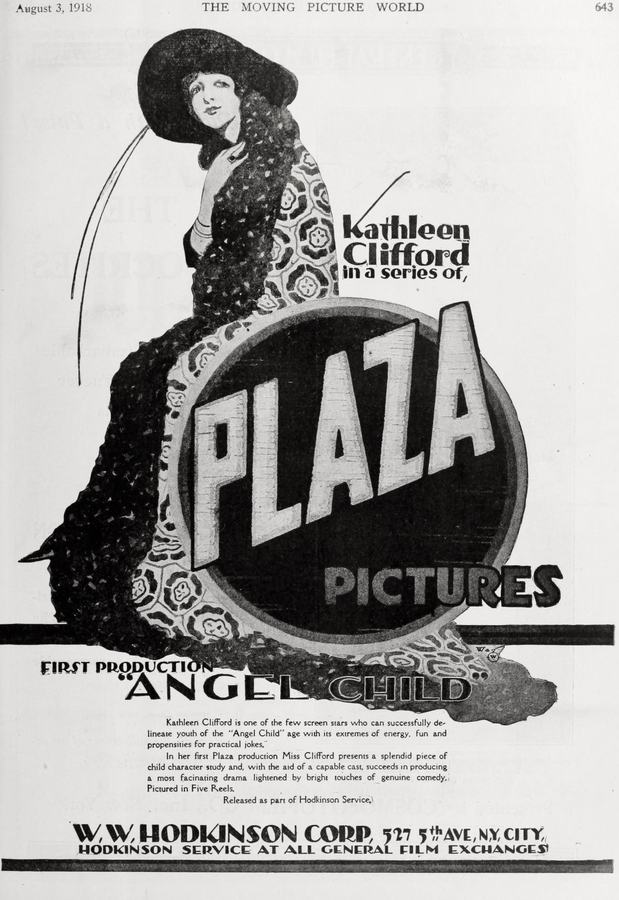
The year 1919 occupied a liminal space in the evolution of American cinema, a temporal bridge where the primitive techniques of the early decade began to fuse with a more sophisticated, character-driven narrative structure. In the midst of this transition, Angel Child emerged as a sparkling, if somewhat subversive, vehicle for the incomparable Kathleen Clifford. Often overshadowed by the more prolific stars of the era, Clifford brought a vaudevillian vitality to the screen that feels remarkably modern even a century later. To watch Angel Child is to witness the birth of the 'flapper' archetype, albeit one still dressed in the pinafores of a schoolgirl.
The film’s central conceit—the 'angel child' who is anything but—serves as a potent metaphor for the societal shifts of the post-WWI era. Glory Moore is not merely a 'mischievous girl'; she is a disruptor. Unlike the protagonists in Peggy, the Will O' the Wisp, whose rebellion is often tempered by a sense of pastoral innocence, Glory’s actions in Angel Child are characterized by a urbanite sharpness. Clifford, known for her male impersonation acts in vaudeville, brings a specific physicality to the role—a swagger and a lack of traditional 'feminine' hesitation that makes her pranks feel less like accidents and more like tactical strikes against boredom.
When compared to the thematic weight of films like Déchéance, which treats social transgression with a heavy-handed moralism, Angel Child is refreshingly light. It refuses to punish its protagonist for her spirit. Instead, it rewards her. This subversion of the 'moral lesson' is what elevates the film above the standard fare of the late 1910s. Glory is a force of nature that the world must learn to accommodate, rather than the other way around.
The plot pivots on a classic Hitchcockian MacGuffin—a letter containing evidence of corporate malfeasance. However, the brilliance of Harl McInroy’s script lies in the mundane nature of the document’s disappearance. By having Glory use the letter to wrap candy, the film creates a stark contrast between the high-stakes world of masculine commerce and the trivial, sensory world of childhood. This narrative device reminds one of the legal entanglements seen in The Law That Failed, yet it approaches the concept with a comedic levity that masks a deeper cynicism about the 'importance' of adult affairs.
The sequence where the letter is discarded and subsequently retrieved is a masterclass in silent-era blocking. We see the document move through different social strata, from the Moore household to the boarding school, and eventually into the hands of the antagonist's daughter. This journey of the letter serves as a tour of the class anxieties of 1919. It’s a theme explored with more gravitas in The Chattel, but in Angel Child, the movement of the paper is a catalyst for Glory’s personal growth and her eventual alliance with Richard Grant.
Neil Hardin’s portrayal of Richard Grant is essential to the film’s success. In many films of this period, such as The Moral Code, the male lead often acts as a corrective force, steering the 'wayward' woman back to the path of righteousness. Grant, however, is fascinated by Glory. He doesn't seek to tame her; he seeks to partner with her. Their collaboration to retrieve the letter from the businessman’s home is less a romantic courtship and more a caper. This dynamic prefigures the screwball comedies of the 1930s, where the male and female leads are intellectual equals engaged in a battle of wits and shared objectives.
The chemistry between Clifford and Hardin is palpable, even through the flickering grain of the surviving prints. Their relationship provides a grounded counterbalance to the more slapstick elements of the boarding school scenes. While the school sequences might remind viewers of the youthful energy in Peggy Does Her Darndest, the romance with Grant adds a layer of adult sophistication that ensures the film doesn't devolve into a mere juvenile comedy.
Directorially, the film utilizes the deep focus and interior lighting techniques that were becoming standard at the time. The Moore household is depicted with a cluttered, Victorian density that heightens the sense of Glory’s claustrophobia. In contrast, the boarding school and the outdoor scenes feel airy and expansive, reflecting Glory’s relative freedom. The use of intertitles is sparse but effective, allowing Clifford’s expressive face to do the heavy lifting of the narrative. This is a far cry from the theatrical stiffness found in some European imports of the era, such as ME, der Kaiser!, which often felt more like filmed stage plays than true cinema.
The 'heist' sequence in the businessman's home is particularly noteworthy for its tension and pacing. It utilizes shadows and architectural elements to create a sense of peril that contrasts sharply with the earlier comedic tone. This tonal shift is handled with a deftness that suggests a high level of directorial confidence, moving the audience from laughter to suspense without losing the internal logic of the characters. It lacks the sweeping epic scale of something like La capanna dello zio Tom, but it gains a focused, intimate intensity that is equally compelling.
Ultimately, Angel Child is a celebration of the 'unruly' woman. In an era where films like Mrs. Slacker were examining the roles of women through the lens of wartime duty and domestic responsibility, Angel Child offered a more hedonistic and individualistic perspective. Glory Moore’s decision to leave finishing school to marry Richard is not presented as a surrender to domesticity, but as an escape from a redundant educational system. She chooses a life of action and partnership over a life of curated 'refinement.'
The film’s conclusion, while traditional in its 'happily ever after' marriage, feels earned because of the agency Glory displays throughout. She is the one who solves the crisis, she is the one who retrieves the letter, and she is the one who decides her own future. In this regard, Angel Child is a much more progressive film than many of its contemporaries, including the somewhat more melodramatic The Light at Dusk or the socially rigid One Dollar Bid.
For modern viewers and film historians, Angel Child provides a valuable window into the psyche of 1919 America. It captures the moment when the 'New Woman' was beginning to take shape in the popular imagination—smart, capable, and unapologetically troublesome. It is a film that values wit over wisdom and action over etiquette. While it may not have the name recognition of a Griffith or a DeMille production, its charm and its sharp-eyed observation of social dynamics make it a vital piece of the silent cinema puzzle.
If you find yourself wandering through the archives of early 20th-century film, do not overlook this gem. It carries the same infectious energy found in Checkers or the rugged individualism of The Lady of the Dugout, but with a specific, polished wit that is uniquely its own. Angel Child is a testament to the fact that even in the early days of Hollywood, the most interesting characters were the ones who refused to play by the rules.
Final Thought: Kathleen Clifford's performance remains a masterclass in silent screen presence, proving that a look, a smirk, and a well-timed prank can say more than a thousand lines of dialogue.
IMDb 6.6
1924
Community
Log in to comment.