DbcultAccessing Vault...
6.3/10
Senior Film Conservator
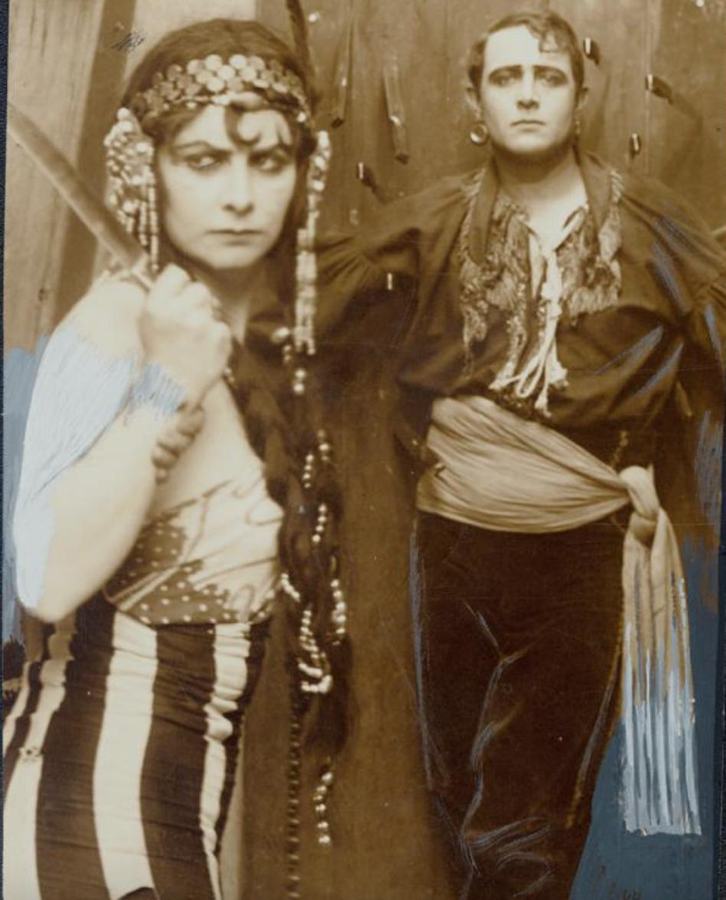
A definitive 6.3/10 rating for a film that redefined the boundaries of cult cinema. Zigeuneren Raphael remains a cornerstone of transgressive art.
Stepping back in time to the nascent days of cinematic storytelling, one encounters a fascinating tapestry of ambition, innovation, and often, profound simplicity. Among the many treasures unearthed from this era, the 1912 Danish production, 'Zigeuneren Raphael', or 'Raphael the Gypsy,' stands as a poignant reminder of how much could be conveyed with so little, and how deeply symbolic narratives were woven into the very fabric of early film. This isn't just a movie; it's a window into the cultural anxieties and social structures of a bygone age, meticulously crafted by writer Richard Lund and brought to life by a dedicated ensemble including Kaj Larsen, Valdemar Møller, Thorleif Lund, Waldemar Wennerwald, Zanny Petersen, Charles Løwaas, Else Weng, Emanuel Gregers, Elisabeth Larsen, Emilie Sannom, and Rasmus Ottesen.
The premise of Zigeuneren Raphael, on the surface, appears deceptively straightforward: a baron and his wife are celebrating the baptism of their firstborn, a momentous occasion steeped in tradition and aristocratic decorum. Yet, this very act of societal affirmation is dramatically interrupted by the arrival of a band of Romani people. Their presence, marked by their characteristic music and 'rumbling,' is not merely background noise; it's an invasive force, a disruptive counterpoint to the controlled elegance of the castle. Some of these 'gipsies' even venture inside, not as invited guests, but as supplicants, their begging a stark contrast to the bounty of the celebration. This single event, a collision of two disparate worlds, forms the narrative fulcrum upon which the entire film pivots. It's a moment pregnant with symbolic weight, challenging the very foundations of inherited status and societal boundaries.
What writer Richard Lund achieves here is a masterclass in narrative economy. In an era where intertitles carried much of the expository burden, the visual drama of this single encounter had to speak volumes. The contrast between the rigid, ceremonial world of the baron and the free-spirited, perhaps even chaotic, energy of the Romani people is immediately palpable. This isn't just a story about an interrupted party; it's an allegorical exploration of social stratification, the 'othering' of minority groups, and the potential for fate to intervene in the most unexpected ways. The very title, 'Raphael the Gypsy,' suggests that the initial encounter is not an isolated incident but a foundational event, shaping the identity of the child and, by extension, the trajectory of the narrative. One can almost feel the tension in the air as the sounds of the Romani's 'rumbling' penetrate the otherwise serene castle walls, a sonic representation of an encroaching, unfamiliar world.
In the absence of spoken dialogue, early cinema relied heavily on visual metaphors, theatrical acting, and carefully composed mise-en-scène. Zigeuneren Raphael, like many films of its time, would have employed these techniques to maximum effect. The baron's castle, with its presumed grandeur and stately architecture, would have served as a visual representation of established power and tradition. Conversely, the Romani, with their distinctive attire and lively demeanor, would have embodied a sense of wildness, freedom, and perhaps, perceived danger. The visual juxtaposition alone would have been a powerful narrative tool, signaling the inherent conflict.
The performances of the actors, including stalwarts like Thorleif Lund and Emilie Sannom, would have been characterized by the exaggerated gestures and facial expressions typical of the era. These were not subtle, naturalistic portrayals, but rather broad strokes designed to convey emotion and character arc to an audience unaccustomed to the nuances of filmic performance. Kaj Larsen, presumably in the titular role, would have had the formidable task of embodying the 'gypsy' identity, likely a complex portrayal that could range from romanticized freedom to societal marginalization, depending on the film's full narrative. Valdemar Møller, as the baron, would have personified the rigid aristocracy, his composure likely tested by the unexpected intrusion. The dynamics between these characters, expressed through their physical presence and reactions, would have been central to the film's emotional resonance.
At its core, Zigeuneren Raphael delves into themes that remain evergreen in human storytelling. The most prominent is undoubtedly the clash of social classes and cultures. The Romani, historically marginalized and often romanticized, represent an 'other' that challenges the established order. Their arrival at the baptism is not just a physical intrusion but a symbolic one, questioning the sanctity of inherited privilege and the purity of bloodlines. This thematic thread resonates with other films of the period that explored social disparities, such as Traffic in Souls, which starkly depicted the exploitation of the vulnerable, or The Straight Road, which examined the difficult choices faced by those on society's fringes. In Zigeuneren Raphael, the encounter is less about explicit exploitation and more about a fateful, almost mystical, intertwining of destinies.
Furthermore, the film likely grapples with the concept of identity. The title itself, 'Raphael the Gypsy,' hints at a narrative where the child born into aristocracy might, through some twist of fate or circumstance, find themselves drawn to or even become part of the Romani world. This exploration of inherited versus chosen identity, or the indelible mark left by a singular event, provides rich dramatic fodder. Is Raphael's fate sealed by the encounter at his baptism? Does the 'gypsy' spirit somehow infiltrate his noble lineage? Such questions invite audiences to ponder the nature of destiny and the fluidity of identity, a sophisticated contemplation for an early silent film. One could even draw a loose thematic parallel to films like Wildflower, which often explores characters caught between different worlds or societal expectations, though the cultural context differs significantly.
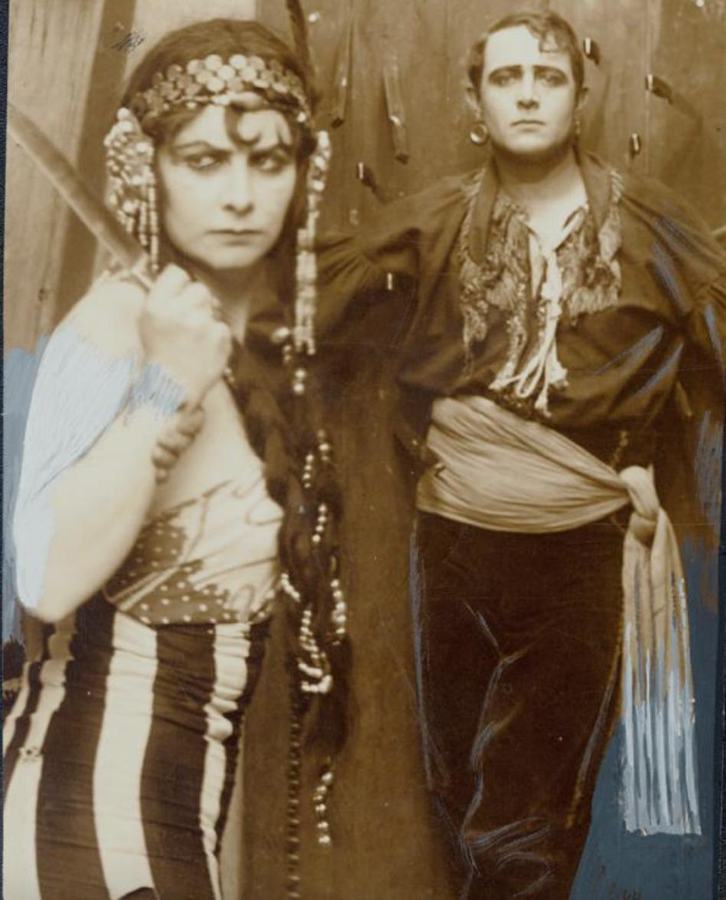
Zigeuneren Raphael emerged during a particularly vibrant period for Danish cinema. Nordisk Film, established in 1906, was a powerhouse, producing hundreds of films annually and exporting them worldwide. Danish films were renowned for their technical sophistication, dramatic depth, and often, their willingness to tackle controversial subjects or explore psychological nuances. While the plot of Zigeuneren Raphael might seem modest by today's standards, within the context of 1912, its thematic ambition and potential for visual spectacle would have been considerable. The film contributes to a legacy that saw Danish directors and actors achieve international acclaim, influencing cinematic trends across Europe and beyond.
The ability of these early filmmakers to craft compelling narratives without the aid of synchronous sound is a testament to their ingenuity. They understood the power of visual storytelling, of conveying emotion through gesture, and of building tension through careful composition and editing. The 'rumbling' of the Romani, though unseen in its auditory form, would have been suggested by their vibrant presence, their movement, and the reactions of the aristocratic characters. This indirect sensory experience was a hallmark of the era, demanding a different kind of engagement from the audience. The dramatic potential of such an intrusion, similar to the unsettling mystery in Fantômas: The False Magistrate or the moral ambiguity of The Crime and the Criminal, lies in the disruption of an established order, forcing characters and viewers alike to confront the unexpected.
A significant aspect of Zigeuneren Raphael lies in its portrayal of the Romani. In early 20th-century European culture, the 'gypsy' figure was often imbued with a complex mix of exoticism, suspicion, and romanticism. They represented freedom from societal norms, a connection to nature, and often, a touch of the mystical or even the dangerous. This film, even with its brief plot synopsis, hints at tapping into these cultural currents. The Romani are not just beggars; they are a force of nature, their arrival an almost elemental disruption. This fascination with the 'other' was a recurring motif in literature and art, reflecting broader societal anxieties and desires for escape from industrialization and rigid class structures.
The decision to make the central character, Raphael, a 'gypsy' in some capacity, whether by lineage or by destiny, elevates the narrative beyond a simple social drama. It becomes an exploration of heritage, belonging, and the inherent tension between different ways of life. Is the film attempting to critique prejudice, or is it merely using the Romani as a dramatic device? Without seeing the full picture, it's difficult to say definitively, but the very choice of subject matter is telling. It places the 'other' at the very heart of an aristocratic narrative, forcing a confrontation that would have resonated deeply with contemporary audiences. The narrative echoes the kind of dramatic tension found in stories where outsiders challenge established power, such as in The Indian Wars (albeit in a very different cultural context of frontier conflict) or even the subtle societal pressures in Mrs. Black Is Back, where social identity is paramount.
While many early silent films have been lost to time, those that survive, like Zigeuneren Raphael, offer invaluable insights into the evolution of cinema and the cultural landscape of the early 20th century. They remind us that the fundamental elements of storytelling – conflict, character, theme – are timeless, even if the methods of delivery change dramatically. The film's simple yet potent plot serves as a foundation for a rich exploration of societal anxieties, individual destiny, and the enduring power of human encounter.
The contributions of its cast, from Kaj Larsen to Zanny Petersen and Emanuel Gregers, were instrumental in translating Richard Lund's vision onto the screen. Their performances, however stylized by today's standards, were the emotional conduits for audiences over a century ago. The film, even in its summarized form, speaks to a daring spirit in early Danish cinema, a willingness to explore complex social dynamics through the burgeoning medium. It's a testament to the fact that even a seemingly small incident – a group of 'gipsies' arriving at a baptism – can ignite a narrative firestorm, leaving an indelible mark on the characters and, by extension, on the audience's imagination. This kind of potent, symbolic storytelling, where a single event can unravel or define a life, is a recurring motif in early cinema, much like the high-stakes scenarios found in The Man Who Could Not Lose or the intricate plots of The Rajah's Diamond Rose, though the immediate concerns of 'Raphael' are more grounded in social commentary.
In conclusion, Zigeuneren Raphael, despite its age and potentially fragmented availability, remains a compelling artifact. It challenges us to look beyond the surface, to appreciate the artistry in its simplicity, and to recognize the profound cultural and social commentaries embedded within its narrative. It's a film that, even a century later, continues to whisper tales of fate, identity, and the timeless collision of disparate worlds, proving that the earliest cinematic endeavors were anything but simplistic in their ambition. The narrative complexity hinted at within this brief synopsis is a hallmark of the era, where films often packed significant emotional and thematic punches into relatively short runtimes, much like the intricate plots seen in The Tangle or the unfolding drama of In the Bishop's Carriage. The film's ability to provoke thought and discussion from such a concise premise is precisely why these early works deserve continued attention and scholarly appreciation.
IMDb —
1924
Community
Log in to comment.