DbcultAccessing Vault...
6.9/10
Senior Film Conservator
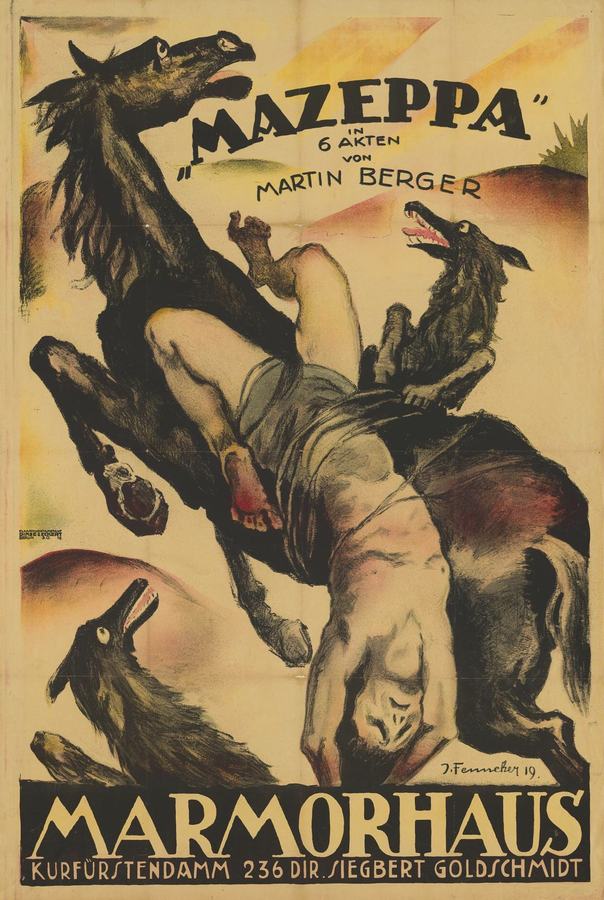
A definitive 6.9/10 rating for a film that redefined the boundaries of cult cinema. Mazeppa, der Volksheld der Ukraine remains a cornerstone of transgressive art.
Stepping back into the silent era, one often finds oneself awestruck by the sheer ambition and narrative grandeur that filmmakers of the time dared to pursue. Among these cinematic titans, 'Mazeppa, der Volksheld der Ukraine' stands as a compelling testament to the power of historical epic, even in its nascent form. This isn't merely a film; it's a sprawling canvas painted with the broad strokes of national identity, personal sacrifice, and the relentless march of history. Martin Berger, credited as the writer, crafted a narrative that, even without spoken dialogue, communicates volumes about the tumultuous spirit of 17th-century Eastern Europe and the enduring legend of Ivan Mazeppa. It's a film that demands to be viewed not just as a historical artifact, but as a vibrant, emotionally charged portrayal of a man who dared to dream of independence against impossible odds.
From its opening frames, 'Mazeppa, der Volksheld der Ukraine' establishes a tone of weighty historical significance. The film plunges us directly into the intricate political landscape of the Polish-Lithuanian Commonwealth and the burgeoning Russian Empire, setting the stage for Mazeppa's complex journey. We witness his early days, not as a static figure of legend, but as a dynamic individual, imbued with a fiery spirit and an astute mind for strategy. The visual storytelling, characteristic of the era, relies heavily on strong compositions, expressive acting, and intricate set designs to convey the opulence of court life and the rugged simplicity of Cossack existence. The film manages to encapsulate the essence of a 'folk hero' by presenting Mazeppa's humanity alongside his larger-than-life aspirations. He is not merely a name in a history book; he is a man driven by conviction, susceptible to passion, and ultimately, a tragic figure caught in the inexorable currents of geopolitical power plays. This nuanced portrayal is a significant achievement for a silent film, often constrained by the limitations of its medium, yet here, it transcends them with remarkable ease.
The narrative's brilliance lies in its ability to intertwine Mazeppa's personal saga with the broader sweep of Ukrainian history. His rise to Hetman of the Zaporizhian Host is depicted as a series of calculated risks and charismatic appeals, showcasing his leadership qualities. But it's the personal entanglements that truly humanize the epic. The film delicately handles his controversial relationship with Maria, the young wife of his benefactor, Kochubey. This forbidden romance, often a point of contention in historical accounts, is presented here with a tragic romanticism, highlighting the emotional turmoil it caused and its far-reaching political consequences. It adds a layer of Shakespearean drama to the historical epic, preventing it from becoming a dry historical recounting. The silent screen, with its emphasis on gesture and facial expression, becomes a powerful conduit for these intense emotions, allowing the audience to feel the weight of love, betrayal, and impending doom.
The performances in 'Mazeppa, der Volksheld der Ukraine' are, without question, a cornerstone of its enduring appeal. Lulu Lànyi, whose presence often graced the screens of this period, brings a captivating intensity to her role, imbuing her character with a quiet strength that speaks volumes without a single uttered word. Her expressive eyes and deliberate movements convey a depth of emotion that is truly remarkable. Toni Zimmerer, as Mazeppa himself, delivers a powerful, commanding performance. He embodies the Hetman's charisma and strategic acumen, but also his internal conflict and vulnerability. Zimmerer's portrayal is not one-dimensional; he shows us a leader burdened by the immense responsibility of his people's fate, a man whose resolve is tempered by the harsh realities of his world. His physical presence, often grand and imposing, perfectly captures the larger-than-life figure of Mazeppa, yet he manages to convey moments of profound introspection, a feat requiring immense skill in the silent medium.
Ernst Keppler, Otto Mannstaedt, and Rudolf Hofbauer contribute solid, often nuanced performances that flesh out the supporting cast, providing a rich tapestry of characters who orbit Mazeppa's world. Their interactions, conveyed through a sophisticated understanding of silent film acting, add layers of intrigue and personal stakes to the overarching historical drama. Bertold Reissig and Mi. Samoliows, though perhaps in lesser roles, still manage to leave distinct impressions, their characters serving as crucial cogs in the intricate political machinery. Alfred Beierle, Eva Speyer, and Aenderly Lebius, veterans of the German silent screen, bring a gravitas and experience that elevate every scene they inhabit, particularly in their depictions of courtly figures or rival factions. Their ability to convey complex motivations through subtle gestures and powerful expressions is a masterclass in silent film artistry. Werner Krauss, a name synonymous with German Expressionism and iconic roles like Dr. Caligari, here delivers a performance that, while perhaps less overtly theatrical than some of his more famous turns, is nonetheless profoundly effective, lending his character a menacing or manipulative edge that is crucial to the film's dramatic tension. His presence alone suggests a certain weight and potential for darkness that permeates the narrative. Max Gülstorff and Marie von Buelow also contribute significantly, their performances adding to the rich ensemble, each actor understanding the unique demands of silent storytelling to communicate character and plot progression.
The visual aesthetic of 'Mazeppa, der Volksheld der Ukraine' is truly captivating. The film's production design is meticulous, transporting the audience to the opulent courts of Europe and the rugged landscapes of Ukraine. The costumes are rich and historically accurate, adding to the immersive experience. Cinematography, while perhaps not as innovative as some contemporary works like F.W. Murnau's 'Nosferatu', is nonetheless expertly handled, utilizing dramatic lighting and thoughtful framing to enhance the narrative. There are moments of breathtaking scale, particularly in the depiction of battle sequences or grand assemblies, which must have been incredibly ambitious for the time. These scenes, though lacking the visceral sound of modern cinema, convey a tremendous sense of movement and conflict through their dynamic editing and carefully choreographed action.
Martin Berger's writing, even in its adaptation to the visual language of silent film, shines through. The narrative structure is robust, building tension steadily towards the inevitable clash with Peter the Great and the fateful Battle of Poltava. The intertitles, rather than merely stating facts, often employ poetic language, adding to the film's literary quality and emotional resonance. They serve not just as exposition but as a lyrical voice, guiding the audience through the complexities of Mazeppa's motivations and the political machinations surrounding him. This careful balance between visual storytelling and textual enhancement is a hallmark of superior silent filmmaking, allowing for both spectacle and introspection.
When considering 'Mazeppa, der Volksheld der Ukraine' within the broader context of silent cinema, its ambition becomes even more apparent. One might draw parallels to other grand historical dramas of the period, though few tackled such specific national hero narratives with this level of detail. In terms of sheer scope and the portrayal of a determined individual against overwhelming odds, one could perhaps compare its thematic resonance to films like Silent Strength, which similarly explores the stoicism and inner fortitude required to face adversity. However, 'Mazeppa' elevates this by embedding it within a rich historical and political tapestry.
The tragic romantic elements, particularly Mazeppa's entanglement with Maria, evoke the poignant melodrama found in films like Amor fatal, though 'Mazeppa' grounds its romance in a more consequential historical context, where personal passions can ignite national conflicts. The film's exploration of loyalty and betrayal, of choosing one's path amidst conflicting allegiances, resonates with the moral dilemmas presented in dramas such as A Gentleman's Agreement, albeit on a far grander, geopolitical scale. The intricate web of court intrigue and political maneuvering, where whispers can lead to exile or execution, finds a thematic cousin in the more intimate betrayals explored in films like Die Augen der Schwester, though 'Mazeppa' broadens the scope to encompass the fate of an entire people.
The film’s portrayal of a charismatic leader and the fervent loyalty he inspires among his Cossack followers is a powerful motif, reminiscent of the influence wielded by figures in narratives like The Man Who Could Not Lose, though Mazeppa’s ultimate fate offers a more complex, tragic reflection on heroism. While films like The Soul of Buddha might have dabbled in exotic locales and grand romantic gestures, 'Mazeppa' grounds its epic scope in tangible historical events, lending it a different kind of weight and authenticity. Even simpler narratives like When a Girl Loves, which focus on personal devotion, offer a stark contrast to the national devotion depicted in 'Mazeppa', highlighting the film's unique focus on collective identity. It’s a compelling juxtaposition that showcases the varied storytelling ambitions of the silent era, from personal sagas to sweeping historical epics. The film manages to avoid the comedic overtures of works like Tillie's Tomato Surprise or Brownie's Doggone Tricks, maintaining a consistently serious, often somber, tone appropriate for its subject matter.
The film's climax, depicting Mazeppa's alliance with Charles XII of Sweden and the subsequent Battle of Poltava, is rendered with a profound sense of impending doom. The visual storytelling here is at its most potent, conveying the desperate gamble and the crushing defeat without glorifying war. The aftermath, Mazeppa's exile and the dashed hopes for Ukrainian independence, is handled with a poignant melancholy. It avoids a simplistic heroic ending, opting instead for a more complex, realistic portrayal of historical outcomes. This commitment to portraying the bittersweet reality of a folk hero's journey, rather than a sanitized triumph, is what lends 'Mazeppa, der Volksheld der Ukraine' its lasting artistic merit. It's a tragedy, yes, but one that elevates its central figure to an enduring symbol of resistance and an unyielding spirit for self-determination. The film's final moments are imbued with a quiet dignity, cementing Mazeppa's place in the pantheon of national heroes, even in defeat.
In an era where cinema was still finding its voice, 'Mazeppa, der Volksheld der Ukraine' spoke volumes. It's a testament to the vision of Martin Berger and the dedicated cast and crew who brought this epic to life. It stands as a powerful reminder of the silent film's capacity for grand storytelling, emotional depth, and historical gravitas. For enthusiasts of silent cinema, European history, or simply compelling human drama, this film is an essential viewing experience. It invites us to reflect not just on the past, but on the timeless struggles for freedom, identity, and the price of ambition. Its legacy continues to echo, a powerful silent symphony of a nation's heart and a hero's enduring spirit.
The film's ability to maintain its narrative coherence and emotional impact across such a broad historical sweep, relying solely on visual cues and intertitles, is a testament to the sophisticated understanding of storytelling prevalent in the early 20th century. It does not preach, nor does it simplify; instead, it presents a multifaceted portrait of a complex historical figure and the tumultuous times he inhabited. The film serves as a crucial artifact, not only of cinematic history but also as a powerful cultural statement, reminding audiences of the persistent human quest for autonomy and dignity. Its relevance, particularly in contemporary discussions about national identity and sovereignty, remains strikingly potent. It’s a journey into the past that resonates deeply with the present, a mark of truly timeless art.
IMDb 7.5
1915
Community
Log in to comment.