DbcultAccessing Vault...
Cult Review
Senior Film Conservator
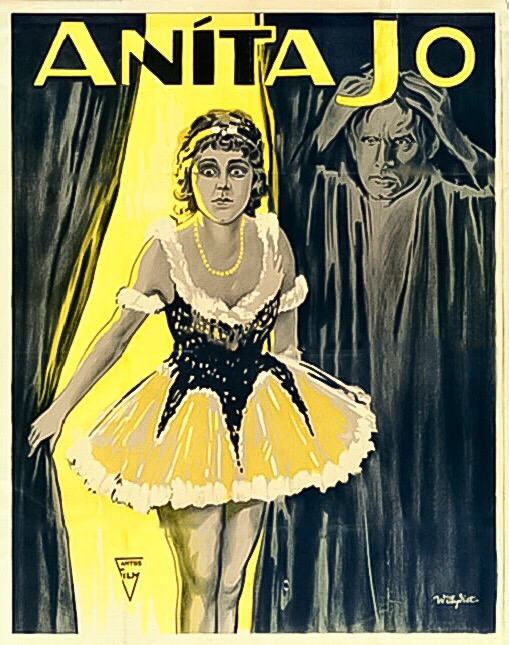
The sepia-toned world of early cinema, often dismissed by casual viewers as merely primitive, frequently harbored narratives of profound emotional resonance and visual sophistication. Dmitriy Bukhovetskiy’s screenplay for Anita Jo stands as a testament to this era's capacity for intricate storytelling, presenting a melodrama so potent it transcends its silent medium, speaking directly to the universal struggles of artistic integrity and personal autonomy. This is a film that, despite its potential obscurity today, deserves a re-evaluation, not just for its historical significance but for its enduring power to move and provoke. It’s a masterclass in how much can be conveyed through gesture, expression, and the careful orchestration of light and shadow, elements that, under the assumed directorial hand (as Bukhovetskiy is listed as writer, we infer the visual interpretation of his vision), coalesce into a truly compelling cinematic experience.
At its heart, Anita Jo is a ballet of conflicting desires, a tragic pas de deux between a young woman's fervent ambition and the suffocating grasp of a powerful man. Hanni Weisse, in the titular role, delivers a performance that is nothing short of breathtaking. Her Anita is not merely a dancer; she is the embodiment of movement itself, a kinetic force of nature whose spirit threatens to burst through the confines of her impoverished existence. Weisse's expressive eyes, capable of conveying both an almost childlike innocence and a fierce, unyielding determination, anchor the film's emotional core. Her physicality, even through the grainy lens of historical footage, suggests a dancer of extraordinary grace and power, making her struggle for artistic freedom all the more palpable. The film opens with her vibrant performances in humble settings, hinting at a prodigious talent waiting for its grand stage, yet simultaneously foreshadowing the moral compromises that often accompany such ascent.
The antagonist, Herr von Kroll, masterfully portrayed by Bernhard Goetzke, is a figure of chilling magnetism. Goetzke, known for his intense and often brooding characters, imbues von Kroll with a predatory charm that is utterly captivating. He is not a mustache-twirling villain in the simplistic sense, but a man driven by a complex cocktail of desire, control, and perhaps a twisted form of admiration. His initial patronage of Anita feels almost benevolent, a deus ex machina for her struggling career, but it quickly morphs into something far more insidious. Goetzke's subtle shifts in expression, from feigned benevolence to thinly veiled menace, are a testament to his acting prowess. He uses his imposing physical presence to convey authority and intimidation, a stark contrast to Anita's delicate yet resilient form. This dynamic tension between Weisse and Goetzke forms the very backbone of the narrative, a clash of wills that resonates with the timeless struggle between the artist and the patron, the free spirit and the possessive force.
The emerging romance between Anita and Stefan, played with earnest sincerity by Charles Willy Kayser, offers a fleeting glimpse of genuine happiness and creative partnership. Stefan, a struggling musician, represents the pure, untainted artistic ideal that Anita longs for. Their scenes together are tender and understated, offering a stark contrast to the opulent but emotionally sterile world von Kroll attempts to build around Anita. Kayser's portrayal conveys a quiet strength and unwavering devotion, making his character a vital counterpoint to Goetzke's overwhelming presence. The film skillfully uses parallel editing to juxtapose their blossoming love with von Kroll's increasingly possessive machinations, amplifying the stakes and heightening the sense of impending doom. This narrative strategy, while common in silent cinema, is executed here with a precision that speaks volumes about Bukhovetskiy’s understanding of dramatic pacing.
Lydia Potechina, as Anita's mother, adds another layer of emotional depth to the narrative. Her character embodies the quiet suffering and pragmatic resilience often found in the matriarchs of this era. Potechina's performance is a masterclass in restrained emotion, her weary glances and protective gestures conveying a lifetime of hardship and an unspoken fear for her daughter's future. Her presence serves as a constant reminder of Anita's roots and the sacrifices made, grounding the more melodramatic elements of the plot in a powerful sense of realism. Similarly, Elsa Wagner, in a smaller but significant role, provides a touch of gentle compassion, offering Anita a brief respite from the relentless pressures. These supporting performances are crucial, providing the emotional scaffolding upon which the central drama unfolds, ensuring that Anita's plight feels deeply personal and universally resonant.
Bukhovetskiy’s screenplay, even without a credited director, paints a vivid picture of the visual language inherent to silent film. The use of elaborate stage sets for Anita's performances and the stark, almost expressionistic lighting in von Kroll's mansion contribute significantly to the film's atmosphere. The contrast between the vibrant, fluid movements of Anita's dancing and the rigid, imposing architecture of von Kroll's world is a recurring visual motif, subtly reinforcing the central thematic conflict. One can easily imagine the cinematographer's skilled manipulation of light and shadow, particularly in the scenes where von Kroll corners Anita, casting long, menacing shadows that visually imprison her even before his words do. The intertitles, rather than simply advancing the plot, are crafted with a poetic sensibility, reflecting the heightened emotions and dramatic weight of the narrative, much like the evocative prose found in works such as Sündige Liebe, which also relied heavily on visual metaphors and emotionally charged intertitles to convey complex internal states.
The thematic resonance of Anita Jo is profound. It explores the perennial struggle for artistic authenticity in the face of commercial pressures and personal compromise. Anita's journey is a microcosm of the artist's dilemma: how much of oneself can be sacrificed for the sake of success, and at what point does patronage become possession? This theme is timeless, echoing through the ages, and is presented here with a raw honesty that is deeply affecting. The film also delves into class distinctions and the power imbalances inherent in society, where the wealthy can dictate the destinies of the less fortunate, a sentiment not dissimilar to the social critiques subtly woven into films like Teufelchen, where characters navigate treacherous social landscapes. The tragic love story, too, is handled with a delicate touch, avoiding overt sentimentality in favor of a more nuanced depiction of genuine affection pitted against overwhelming obstacles.
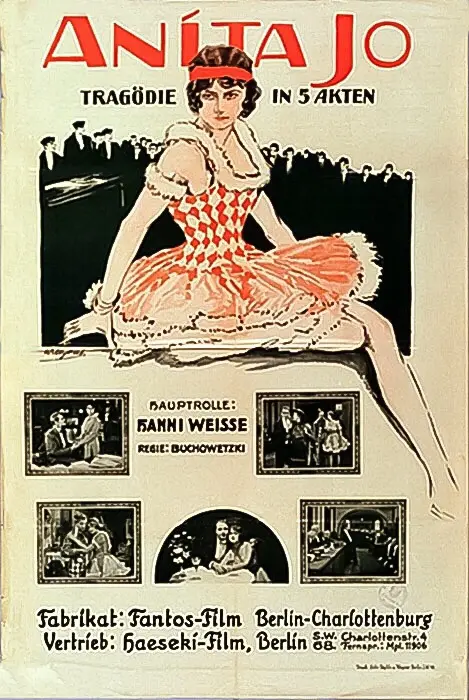
The film's climax, a masterfully orchestrated sequence, sees Anita performing on the grandest stage, her dance no longer just an expression of art but a desperate, public act of defiance. The tension is almost unbearable as the audience, both within the film and watching it, waits to see if she will succumb to von Kroll's will or find the strength to reclaim her agency. Weisse's performance in these moments is a tour de force, her every movement imbued with a fierce determination and a heartbreaking vulnerability. It’s a powerful testament to the unique communicative power of silent cinema, where the absence of dialogue forces the actor to convey everything through their body and face. This scene alone solidifies Anita Jo as a significant work, showcasing the pinnacle of silent film acting and dramatic construction.
Comparing Anita Jo to other films of its period reveals its particular strengths. While Wanted - A Film Actress might explore the nascent film industry's allure, Anita Jo delves deeper into the personal cost of artistic ambition, focusing less on the medium itself and more on the soul of the performer. The narrative’s focus on a woman’s struggle for independence against patriarchal control also brings to mind elements found in A Daughter of Uncle Sam, though Anita Jo frames this struggle within the specific, often brutal, context of artistic patronage. The emotional intensity and the tragic dimensions of love and loss are handled with a gravitas that rivals the best dramatic works of the era, perhaps even touching upon the melancholic beauty seen in A Maori Maid's Love, albeit in a dramatically different cultural context.
The denouement of Anita Jo, rather than offering a simple resolution, leaves the viewer with a lingering sense of the bittersweet. Without spoiling the precise outcome, it's fair to say that Bukhovetskiy’s screenplay understands that not all battles are won cleanly, and that freedom often comes at a profound personal cost. The film avoids easy answers, preferring to explore the complexities of human choice and the enduring echoes of sacrifice. This nuanced approach elevates it beyond mere melodrama, cementing its status as a contemplative work that invites deeper reflection on the nature of art, love, and human resilience. The final images, whether of triumph or poignant resignation, are designed to resonate long after the screen fades to black, a hallmark of truly effective silent storytelling.
The legacy of Anita Jo, if it were to be fully rediscovered, would undoubtedly place it among the more significant dramatic offerings of its time. It’s a film that speaks to the power of individual spirit against overwhelming odds, a narrative that feels both historically specific and remarkably contemporary in its exploration of exploitation and empowerment. The performances by Weisse and Goetzke are particularly memorable, creating characters that are richly drawn and deeply felt. Their interplay is a masterclass in silent screen acting, relying on nuanced gestures and powerful expressions to convey a torrent of unspoken emotions. For any serious student of silent cinema, or indeed anyone with an appreciation for powerful human drama, Anita Jo offers a compelling and emotionally charged experience, one that continues to illuminate the enduring artistry of an often-underestimated cinematic period.
The creative vision of Bukhovetskiy, even as a writer, clearly shaped a work that is visually stunning and emotionally gripping. His ability to craft a narrative that allows for such profound character development and thematic exploration within the constraints of silent film is remarkable. One can only imagine the impact it must have had on audiences of its day, much like the raw emotional force of Silnyi chelovek or the intricate character studies found in Schwert und Herd. The film's pacing, its deliberate build-up of tension, and its cathartic release are all indicative of a keen understanding of dramatic structure, ensuring that the audience remains fully invested in Anita's fate from the first frame to the last. The careful attention to detail, from the costumes that reflect the characters' social standing to the stage designs that mirror Anita's artistic journey, all contribute to a cohesive and immersive world.
Indeed, the sheer artistry involved in bringing a story like Anita Jo to life in the silent era cannot be overstated. It required not just talented actors, but an entire creative team working in concert to convey meaning without spoken words. The music, which would have been performed live, would have been an integral part of the experience, guiding the audience's emotions and emphasizing key dramatic moments. While we cannot experience that original auditory dimension, the visual narrative is so compelling that it transcends this absence, allowing the viewer to fill in the emotional blanks. This is a testament to the film's inherent strength, its ability to communicate directly to the heart through the universal language of human experience and visual storytelling. It’s a film that, much like the timeless tales of struggle and triumph, finds its echoes in narratives across the cinematic spectrum, from the dramatic stakes of The Field of Honor to the personal quests of In Search of Arcady.
Ultimately, Anita Jo is more than just a historical artifact; it is a vibrant, living piece of cinema that continues to speak volumes about the human condition. Its exploration of ambition, betrayal, love, and resilience remains as relevant today as it was a century ago. It reminds us that the power of storytelling lies not in technological sophistication, but in the ability to craft compelling characters and narratives that resonate deeply with our shared experiences. The film is a poignant reminder of the enduring power of silent cinema to captivate, to provoke thought, and to stir the deepest emotions within us. It’s a film that compels a re-discovery, a thorough analysis, and a renewed appreciation for the foundational artistry of the moving image.
The final act, in particular, showcases the film’s exceptional ability to merge spectacle with profound emotional depth. The stage, often a symbol of dreams realized, becomes a battleground for Anita’s soul. The grand scale of the theatrical setting, contrasted with the intimate agony of Anita’s internal struggle, creates a powerful dramatic irony. Every turn of her body, every extension of her arm, becomes a wordless declaration, a desperate plea for freedom that transcends the artificiality of performance. It is in these moments that Anita Jo truly soars, demonstrating that even without a spoken word, a film can achieve a level of emotional complexity and artistic grandeur that few modern productions can match. It stands as a powerful argument for the enduring magic of the silent screen, a world where gestures speak louder than words, and emotions are painted in shades of light and shadow.
IMDb 5.6
1929
Community
Log in to comment.