DbcultAccessing Vault...
6.3/10
Senior Film Conservator
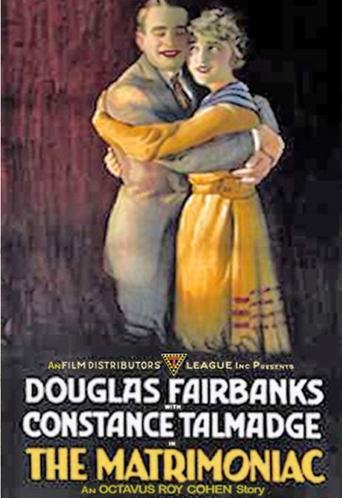
A definitive 6.3/10 rating for a film that redefined the boundaries of cult cinema. The Matrimaniac remains a cornerstone of transgressive art.
Step into a bygone era, specifically 1916, a pivotal year when cinema was still finding its voice, yet already roaring with an infectious energy that would define an entire generation. It was a time when the silver screen, still largely silent, spoke volumes through expressive performances, audacious stunts, and narratives that brimmed with the spirit of adventure. And at the very heart of this burgeoning art form stood Douglas Fairbanks, a name synonymous with athletic prowess, boundless charm, and an almost mischievous twinkle in his eye. Fairbanks wasn't just an actor; he was a phenomenon, a vibrant embodiment of American optimism and individualism, whose very presence promised escapism and exhilaration. His films were not merely entertainment; they were declarations of freedom, often pitting the spirited individual against the stodgy conventions of society.
"The Matrimaniac," a delightful romp from this era, perfectly encapsulates Fairbanks' unique appeal and the kinetic spirit of early silent comedies. It's a film that, despite its century-plus vintage, pulsates with a timeless zest, reminding us that the fundamental human desires – love, freedom, and a good laugh – remain eternally resonant. This isn't just a historical curiosity; it's a vibrant piece of cinematic artistry that, even today, can sweep you off your feet with its sheer audacity and relentless pace. It’s a testament to the ingenious storytelling and visual inventiveness that defined the golden age of silent film, proving that a lack of spoken dialogue in no way equates to a lack of narrative eloquence or emotional depth. Indeed, the film's reliance on physical comedy and exaggerated expressions often amplifies its humor, creating a universal language that transcends time.
At its core, "The Matrimaniac" is a quintessential romantic comedy, albeit one cranked up to a dizzying, delightful extreme. Our protagonist, Jimmy Conroy (played with inimitable élan by Fairbanks), is a man deeply, madly, and unequivocally in love with Marna (Constance Talmadge, whose vivacious performance perfectly complements Fairbanks'). Their love story, however, faces a formidable antagonist: Marna's stepfather, the wealthy and exceedingly proper Theodore Lewis (Wilbur Higby). Lewis embodies every stereotype of the disapproving patriarch, a man whose rigid adherence to social standing and financial propriety blinds him to the genuine affection between Jimmy and Marna. For Lewis, the ideal son-in-law is the utterly bland and predictably conformist Wally Henderson (Clyde E. Hopkins), a character whose very existence serves as a foil to Jimmy's vibrant individualism. This setup immediately establishes a classic cinematic conflict: the spirited young lovers versus the oppressive, antiquated forces of tradition.
The plot, penned by a team including the legendary Anita Loos, is a masterclass in escalating comedic tension. When Lewis's disapproval becomes an immovable obstacle, Jimmy and Marna resort to the time-honored tradition of elopement. This isn't a quiet, discreet affair; it's an elaborate, almost theatrical escape plan that sets the tone for the entire film. Jimmy, with a mischievous grin and an air of complete confidence, cuts the tires of Lewis's automobile – a small act of rebellion that speaks volumes – and prepares a rope ladder, an iconic visual symbol of forbidden romance. Marna, for her part, packs with a mixture of excitement and trepidation, fully embracing the adventure. It’s a moment pregnant with youthful exuberance and defiance, a clear statement that love, for these two, knows no bounds, nor does it yield to parental decree.
Alas, no elopement is without its hurdles, and theirs is quickly complicated by the meddling Wally Henderson. Wally, ever the sycophant, spies their audacious escape and, with a self-important flourish, informs Lewis. This betrayal ignites the film's central chase sequence, a relentless pursuit that forms the backbone of the narrative. Lewis, incensed and determined to prevent the union, hustles Wally onto a train, armed with injunctions to serve on the underage Marna, thus preventing the ceremony. The race against time is on, and the stakes are higher than ever. Jimmy, with the marriage license clutched in his hand, finds himself in a comedic predicament: he has the legal document, but no time to actually get married before boarding the very same train that will carry his pursuers.
Aboard the train, the comedic tension escalates. Wally, embodying sanctimonious authority, attempts to lecture Jimmy and Marna on the virtues of parental deference, only to be unceremoniously shoved aside by a determined Jimmy. It’s a small but telling moment, reinforcing Jimmy’s rebellious spirit and his refusal to be cowed by conventional wisdom. The narrative then throws another delightful curveball: a ten-minute stop at a desolate way station. This brief respite becomes a frantic window of opportunity for Jimmy. With characteristic impulsiveness, he dashes off the train, his eyes set on securing a clergyman. He bursts into the home of the Rev. Tobias Tubbs (played by Fred Warren), finding the good reverend mid-bath. The image of Jimmy hustling a bewildered, bathrobe-clad Tubbs towards the departing train is pure comedic gold, a perfect blend of slapstick and frantic urgency.
But the universe, or perhaps the screenwriters, conspires against our hero. Just as they reach the platform, the train pulls out, and Wally, ever present, prevents them from boarding. This setback, however, only fuels Jimmy's ingenuity. What follows is an absurd, cross-country odyssey, a testament to Jimmy's unwavering determination and Fairbanks' physical comedy genius. With a liberal use of money and I.O.U.'s, Jimmy procures a "variegated costume" for the flustered Tubbs – a truly ridiculous ensemble that adds another layer of visual humor to the proceedings. He then forces the poor clergyman along by any means necessary: a handcar, the back of a mule, on foot, and even precariously clinging to the bumpers of a train. This sequence is a masterclass in escalating absurdity, each mode of transport more outlandish than the last, showcasing the sheer lengths to which Jimmy will go for love.
The relentless pursuit culminates in a thrilling confrontation. Jimmy, with Tubbs in tow, manages to flag down the limited carrying Lewis. In a moment of audacious physical comedy, Jimmy is thrown off the train but, with a desperate grip, pulls Tubbs up with him onto the observation platform. Just when it seems they might finally succeed, Lewis, ever the cunning adversary, feigns friendliness, only to conspire with the conductor for their arrest, charging them with the serious offense of stopping a limited express. This moment of false camaraderie quickly gives way to outright villainy, highlighting Lewis's ruthless determination. Meanwhile, back at the hotel, Wally, seizing the opportunity, maliciously convinces a heartbroken Marna that Jimmy has deserted her. Her tearful acceptance and subsequent retreat with Wally to await her stepfather’s arrival adds a layer of genuine pathos to the unfolding farce, making us truly root for Jimmy’s success.
Jimmy and Tubbs are indeed arrested upon disembarking, but our hero is not one to remain captive for long. With his characteristic agility and quick thinking, Jimmy stages a daring escape, leaving the bewildered Tubbs locked up. Lewis, meanwhile, wastes no time in serving the injunctions and confronting Marna. The scene between them underscores the power dynamics at play, with Marna's vulnerability starkly contrasted against her stepfather's unwavering resolve. Jimmy, ever resourceful, orchestrates a hairbreadth escape from Lewis and the officers at the hotel, narrowly avoiding capture as he attempts to reach Marna. This sequence is a classic Fairbanks moment, full of near misses and acrobatic feats that leave the audience breathless.
With direct contact proving impossible, Jimmy resorts to a telephone, arranging a desperate, audacious plan: Marna is to go to the city jail, where Jimmy will attempt a daring break-in, and the incarcerated Tubbs will officiate their wedding from his cell. It’s a plan so outlandish it could only work in a silent comedy. Marna, demonstrating her own burgeoning courage, changes clothing with a sympathetic hotel maid, eluding her guard and making her way to the jail. The stage is set for a truly unique and thrilling climax. However, Jimmy is sighted trying to break in, triggering a heart-breaking chase that unfolds across rooftops, up and down the walls of buildings, and over apparently insurmountable obstacles. This is where Fairbanks truly shines, his athletic prowess transforming the urban landscape into an elaborate obstacle course. The chase is a ballet of agility, risk, and comedic desperation, but ultimately, Marna, discouraged by the seeming impossibility of it all, is sent back to the hotel room, adding another layer of despair to their plight.
The search for Jimmy continues, relentless and widespread. Our hero, ever the innovator, takes refuge in the most improbable of places: high above the city streets, on the telegraph wires. Walking past several poles with astonishing balance, he comes to one where a lineman is working. In a moment of pure inspiration, and after a quick explanation of his predicament, the lineman, perhaps charmed by Jimmy's audacity, agrees to help. What follows is one of the most inventive and memorable wedding ceremonies in cinematic history. The lineman creates a three-cornered telephone connection, linking Tubbs in jail, Marna in her hotel room, and Jimmy precariously perched on the telegraph pole. It’s a moment of sheer genius, a testament to the power of improvisation and the triumph of love over logistical nightmares.
As the frustrated pursuers howl threats and indignities below, oblivious to the sacred event unfolding above their heads, the unique wedding ceremony commences. Vows are exchanged over crackling telephone lines, a testament to the indomitable spirit of Jimmy and Marna. The scene is a perfect blend of tension, humor, and heartfelt romance. Just as the ceremony approaches its culmination, Lewis, with a sudden, dawning realization of Jimmy's audacious maneuver, dashes for the jail. He arrives, breathless and enraged, precisely as the final vows are completed, sealing Jimmy and Marna's union forever. It's a perfectly timed comedic punchline, a moment of ultimate triumph snatched from the jaws of defeat.
The narrative concludes with a satisfying flourish. We see Jimmy, back in his office, diligently settling the myriad I.O.U.'s he amassed during his frantic quest – a humorous nod to the financial chaos his romantic escapades wrought. When he is finally alone, he approaches a large vault, opening it to reveal Marna, his lawfully wedded wife, who steps out into his waiting arms. It's a whimsical, almost magical ending, symbolizing not only their successful union but also Jimmy's newfound domestic bliss, albeit one still tinged with his characteristic flair for the dramatic. The vault, traditionally a symbol of wealth and security, here becomes a playful sanctuary for their unconventional love.
What truly elevates "The Matrimaniac" beyond a mere screwball comedy is the magnetic presence of Douglas Fairbanks. His performance as Jimmy Conroy is a masterclass in physical comedy and charismatic acting. Fairbanks wasn't just handsome; he was an athlete, a dancer, and a natural showman. His stunts, often performed without doubles, are breathtaking in their daring and precision. Whether he's scaling walls, leaping across rooftops, or balancing on telegraph wires, Fairbanks imbues every movement with an effortless grace and an infectious sense of fun. He makes the impossible seem plausible, the dangerous seem exhilarating. His boundless energy is the engine that drives the film, transforming a simple elopement plot into an epic adventure.
Fairbanks' appeal transcended mere physicality. He possessed an innate ability to connect with the audience, conveying a wide range of emotions – from romantic longing to mischievous defiance – with just a glance or a grin. He was the embodiment of the American dream, a self-made man who championed individualism and defied convention. In many ways, his character, Jimmy, is a precursor to the swashbuckling heroes he would later perfect in films like The Rebel or The Governor's Lady, displaying that same daring spirit and unwavering determination. His characters, including Jimmy, resonated deeply with audiences yearning for freedom and adventure in a rapidly changing world. The subtle nuances of his performance, particularly in conveying both desperation and unwavering optimism, are remarkable for the silent era, demonstrating a depth that belied the often broad comedic strokes.
Beyond Fairbanks' star power, "The Matrimaniac" shines as an example of the ingenuity of early silent film. The direction, likely a collaborative effort given the era, maintains a brisk pace, never allowing the narrative to flag. The editing is sharp, creating a sense of urgency and comedic timing that still feels fresh today. And, of course, the writing by J.U. Giesy, Anita Loos, John Emerson, and Octavus Roy Cohen is exceptional. Loos, in particular, was a pioneering female screenwriter known for her witty, often subversive narratives, and her influence is palpable in the film's sharp humor and its playful critique of societal norms. The film's ability to sustain such a convoluted, yet utterly coherent, plot through purely visual means is a testament to their collective genius.
"The Matrimaniac" also offers a fascinating glimpse into the social mores of its time. The theme of elopement, of young lovers defying parental authority, was a popular trope, reflecting a burgeoning sense of individualism and a challenge to Victorian-era strictures. The film champions youthful rebellion and the idea that true love should overcome all obstacles, no matter how absurd or dangerous. The sheer inventiveness required to tell such a detailed story without dialogue forced filmmakers to develop a unique visual language, relying on elaborate sight gags, expressive intertitles, and the undeniable charisma of their stars. This creative constraint often led to a higher degree of visual storytelling than many later sound films, making works like Springtime or The Old Curiosity Shop (if they were comedies, for example) less reliant on dialogue and more on the action itself.
The film's enduring appeal lies in its infectious joy and its unwavering belief in the power of love and laughter. It's a reminder that even in the most chaotic circumstances, ingenuity, determination, and a healthy dose of humor can win the day. "The Matrimaniac" isn't just a historical artifact; it's a vibrant, exhilarating piece of cinema that continues to charm and entertain audiences, proving that true comedic genius, much like true love, transcends the boundaries of time and technology. If you're looking for a delightful escape into the golden age of silent film, a journey filled with daring stunts, uproarious laughter, and a heartwarming romance, then "The Matrimaniac" is an absolute must-watch. It’s a film that leaves you with a smile on your face and a renewed appreciation for the sheer audacity and artistry of early cinema, solidifying its place not just in history, but in the hearts of those who discover its timeless magic.
IMDb 6
1920
Community
Log in to comment.