DbcultAccessing Vault...
Cult Review
Senior Film Conservator
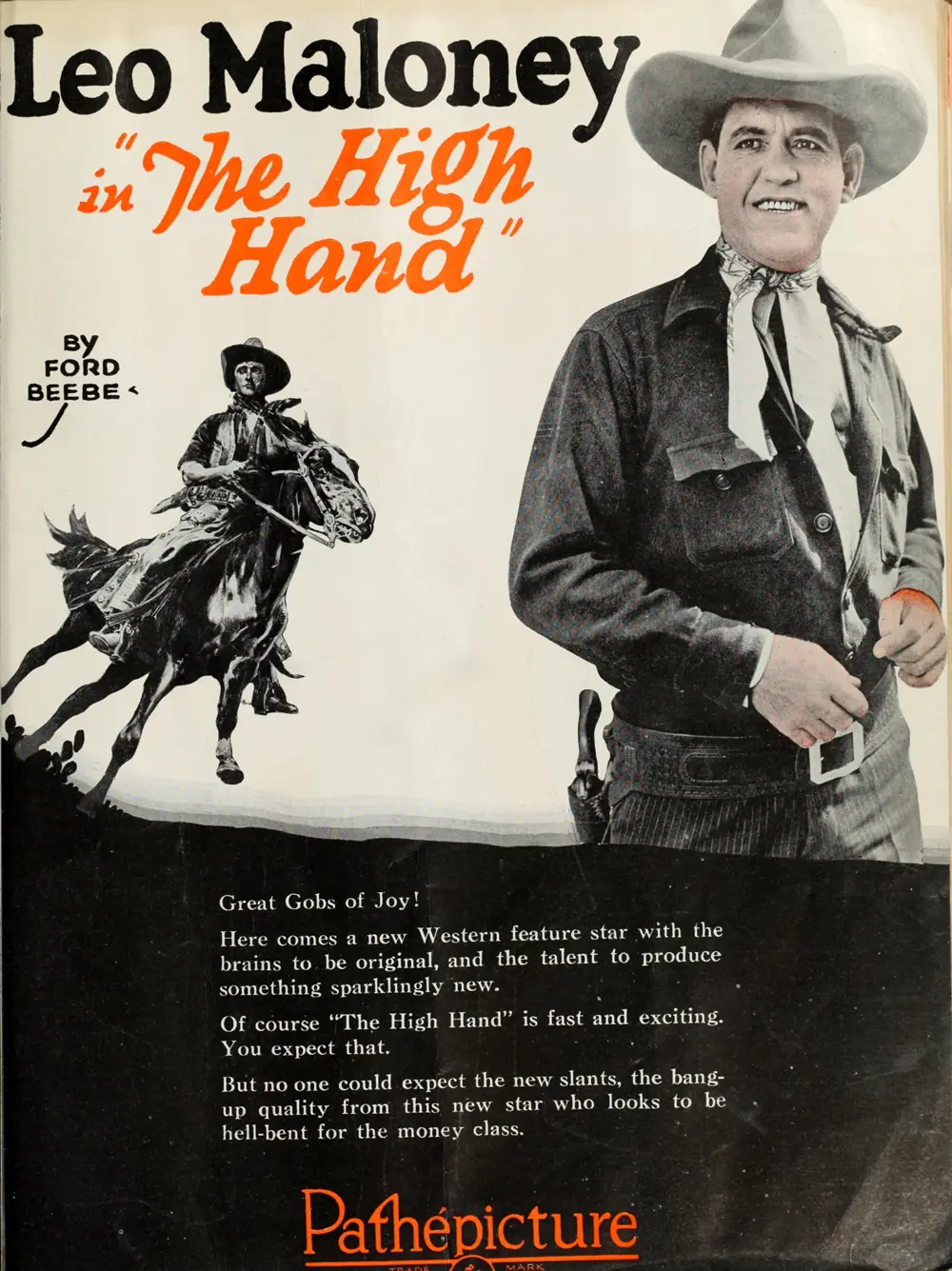
Is The High Hand (1926) a film worth seeking out in the modern age? Short answer: Yes, but only if you appreciate the raw, unvarnished skeleton of the American Western before it was polished by Hollywood's Golden Age.
This film is for the silent cinema enthusiast and the historian of the genre who wants to see the proto-vigilante tropes in their infancy. It is decidedly not for the casual viewer who requires fast-paced editing or the comfort of a synchronized soundtrack. This is a film of shadows, dust, and deliberate moral complexity.
1) This film works because it introduces a sophisticated 'Robin Hood' mechanic that elevates it above the standard 'white hat vs. black hat' dynamics of its contemporary peers.
2) This film fails because the middle act relies too heavily on repetitive raid sequences that lose their narrative tension after the third iteration.
3) You should watch it if you want to see the early work of Ford Beebe and understand how the vigilante 'masked hero' archetype began to take shape in the mid-1920s.
The High Hand, directed by Paul Hurst, is a fascinating artifact from 1926. It stars Leo D. Maloney as the 'Collector,' a character who feels like a spiritual ancestor to later icons like Zorro or even Batman. While many Westerns of the time, such as The Vanishing American, were exploring grander social themes or tragic racial dynamics, The High Hand keeps its boots firmly in the muck of local corruption. The central hook—a cowboy who steals from the bad guys only to give the money to the law—is a stroke of narrative genius for the era.
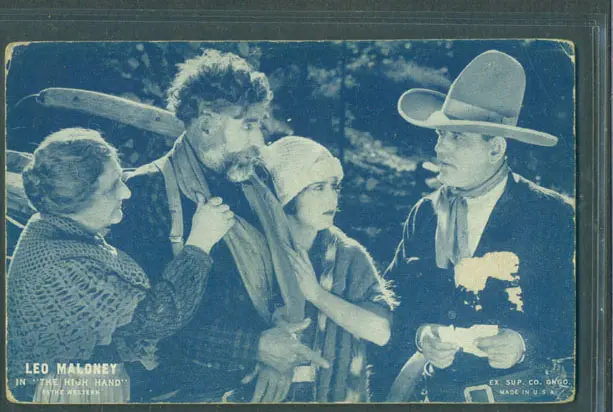
Maloney’s performance is remarkably restrained. In an era often defined by over-the-top pantomime, he brings a grounded, almost weary physicality to the role. When he discovers the charred remains of the cattleman's home, he doesn't explode in a fit of theatrical grief. Instead, he observes. He calculates. This stillness makes his eventual 'raids' feel more like tactical strikes than random outbursts of violence. It is a performance that anticipates the stoicism of Gary Cooper or Clint Eastwood.
The writing by Ford Beebe is equally sharp. Beebe, who would later become a legend in the world of serials, displays an early knack for the 'reveal.' The way the film slowly peels back the layers of the town's 'leading citizens' to show the rot beneath is genuinely satisfying. It’s a theme we see echoed in films like The Call of the Cumberlands, but here it feels more like a heist movie than a family feud.
Technically, The High Hand is a product of its time, but that doesn't mean it lacks artistry. The cinematography makes excellent use of natural light, particularly in the outdoor sequences. There is a starkness to the landscape that mirrors the cattleman's desperation. One specific scene—the burning of the ranch house—is shot with a haunting clarity. You can almost feel the heat and the loss. It isn't just a plot point; it’s a visceral visual reset for the story.
However, the pacing is where the film shows its age. By 1926, audiences were becoming more sophisticated, but many directors still struggled with the 'sagging middle.' The High Hand falls into this trap. After the initial thrill of the Collector’s first few thefts, the cycle becomes predictable. We see a raid, we see the money sent to the sheriff, and we see the villains fume. It works. But it’s flawed. A tighter edit could have turned this 60-minute feature into a 45-minute masterpiece of tension.
If you are a student of film history, the answer is a resounding yes. The High Hand serves as a bridge between the simplistic morality plays of the 1910s and the more complex, cynical Westerns that would follow the introduction of sound. It shares some DNA with Bring Him In in its focus on the outsider coming to restore order, but it adds a layer of financial subversion that is quite unique.
For the modern viewer, the film provides a glimpse into the socio-economic anxieties of the 1920s. The idea of 'leading citizens' being the secret villains was a potent one during a decade of rapid industrialization and shifting social norms. It’s a film about the little guy using the system’s own tools—money and law—against those who exploit it. In that sense, it feels surprisingly contemporary.
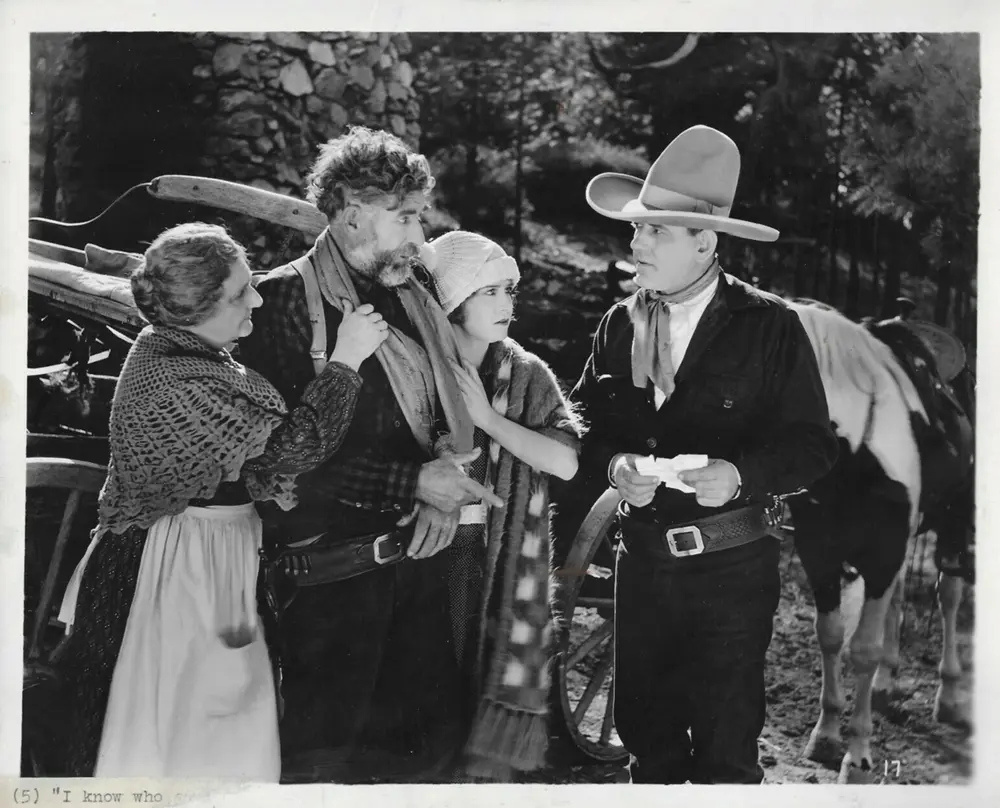
The film’s greatest strength is its central conceit. The idea of a 'Collector' who acts as a shadow-accountant for the law is a brilliant twist on the vigilante trope. It adds a layer of intellectual satisfaction to the action. Furthermore, the location shooting is rugged and authentic, avoiding the sterile 'backlot' feel of many later Westerns. Comparing this to something like The Dixie Flyer, you can see a much more grounded approach to the Western environment.
The romance subplot feels tacked on. Florence Lee does what she can with the role of the rancher's daughter, but her character exists primarily as a reward for the hero rather than a person with her own agency. This was standard for 1926, but it remains a glaring weakness for a film that is otherwise so clever. Additionally, the final reveal of the villains, while satisfying, happens a bit too quickly, leaving little room for a truly cathartic confrontation.
The High Hand is a silent Western about a cowboy who becomes a vigilante thief to save a ruined rancher. He steals money back from outlaws and sends it to the sheriff to prove the outlaws' guilt. The story focuses on justice, corruption in high places, and the clever use of 'outlawry' to serve the law. It concludes with the exposure of corrupt town leaders and a marriage between the hero and the rancher's daughter.
Paul Hurst’s direction is functional, but he has a keen eye for framing the individual against the vastness of the prairie. He understands that the 'Collector' needs to feel like a ghost—someone who is part of the landscape but never fully seen by his enemies until it’s too late. This directorial choice reinforces the film’s themes of hidden truth and systemic rot.
The supporting cast, including Murdock MacQuarrie and Whitehorse, provide solid, if stereotypical, performances. They represent the 'old guard' of Western archetypes, which serves as an effective foil to Maloney’s more modern-feeling protagonist. There is a palpable sense of the transition occurring in cinema during this time; you can see the old world of Faith meeting the more cynical, structured storytelling of the late silent era.
"The High Hand doesn't just ask us to cheer for the man with the fastest gun; it asks us to respect the man with the best plan."
One surprising observation is how the film handles the concept of 'reparation.' It isn't enough for the villains to be killed or jailed; they must also be financially ruined. This focus on economic justice is something rarely seen in such a direct way in early Westerns. It makes the film feel like a precursor to the 'social justice' Westerns of the 1940s and 50s. It’s a bold choice that gives the film a unique identity in a crowded market.
The High Hand (1926) is a sturdy, intelligent Western that deserves more than its current status as a footnote in film history. While it suffers from some of the structural weaknesses inherent in mid-20s B-movies, its central character and moral complexity are ahead of their time. It’s a film that values brains over brawn, strategy over simple violence. Leo D. Maloney gives us a hero who is as much a bookkeeper as he is a gunslinger, and that alone makes it worth a look. It isn't a masterpiece, but it is a highly effective piece of genre filmmaking that still carries a punch. If you can handle the silent format, you'll find a story that is surprisingly relevant to our own era of institutional mistrust and systemic corruption.
IMDb 4.7
1933
Community
Log in to comment.