DbcultAccessing Vault...
Cult Review
Senior Film Conservator
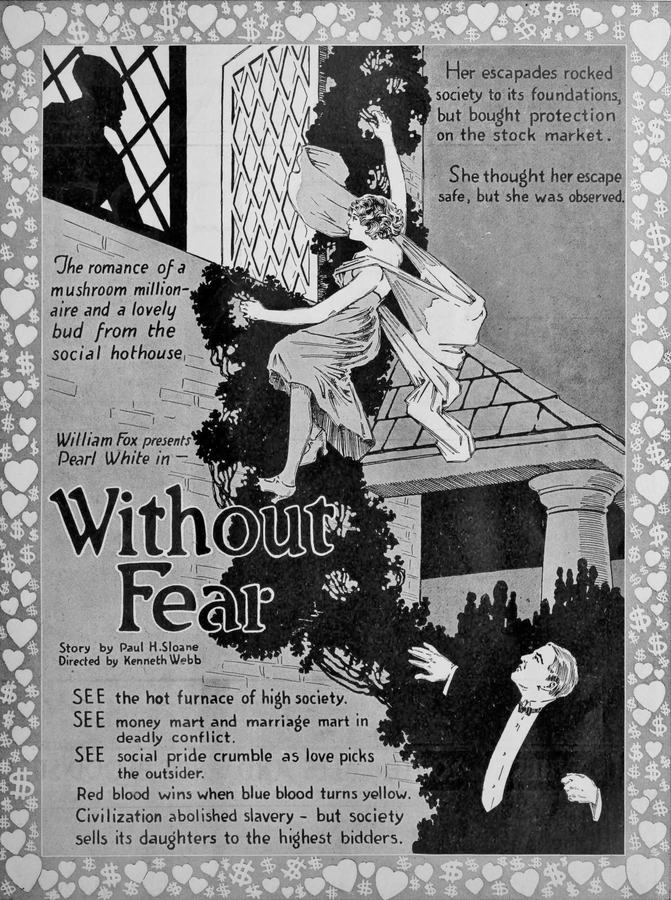
The Architecture of Defiance
Cinema in the early 1920s was often a mirror reflecting the seismic shifts of a post-war society struggling to reconcile ancestral privilege with the burgeoning power of industrial meritocracy. Paul Sloane’s Without Fear stands as a poignant, albeit frequently overlooked, monument to this transition. The film does not merely present a romance; it dissects the very marrow of social stratification. Ruth Hamilton, portrayed with a hauntingly modern sensibility by Annie Bos, is not the typical damsel of the silent screen. She is a woman of agency, possessed of a cognitive dissonance that allows her to inhabit the world of the elite while simultaneously despising its performative sycophancy. Her rejection of William Barton is not merely a refusal of a suitor, but an indictment of a stagnant class system that values the preservation of wealth over the vitality of the human spirit.
The cinematography, though limited by the technical constraints of its time, utilizes the shoreline as a liminal space where the rigid structures of the city and the estate dissolve. When Ruth meets John Martin, the 'nouveau riche' interloper, the visual contrast is striking. Martin represents the raw, unrefined energy of the future—a man who has built his empire from the ether of ambition, much like the characters we see in Quicksand. His isolation from the aristocratic circles is not presented as a failure of character, but as a badge of authenticity. The clandestine nature of their meetings adds a layer of tension that transcends the typical melodramatic tropes of the era, suggesting that the most profound human connections are often those that exist outside the peripheral vision of societal surveillance.
The Intersection of Greed and Honor
As the narrative progresses, the focus shifts from the personal to the political—or rather, the politics of the domestic sphere. The arrival of Ruth’s father at Martin’s doorstep, seeking financial salvation, is a masterclass in dramatic irony. It exposes the fragility of the Hamilton lineage; their supposed superiority is revealed to be a veneer supported by crumbling capital. The moment Barton observes Ruth’s presence at Martin’s home, the film pivots into a critique of the 'scandal' as a tool of patriarchal control. Unlike the thematic explorations of infidelity found in Jealousy, the conflict here is rooted in the commodification of the female body as a bargaining chip for debt erasure.
Hamilton’s insistence that Martin marry Ruth is perhaps the most egregious display of aristocratic hypocrisy in the film. He attempts to cloak his greed in the guise of 'protecting his daughter’s honor,' a sentiment that Ruth rightfully identifies as a secondary betrayal. Her refusal to be 'compromised' by her father’s machinations is a revolutionary act of self-ownership. It echoes the spirited independence seen in Through the Back Door, yet it carries a darker, more cynical weight. Sloane’s direction ensures that we feel the claustrophobia of Ruth’s position—caught between a father who views her as an asset and a society that views her as a fallen woman.
Performative Brilliance and Silent Nuance
Annie Bos, often celebrated for her work in European cinema, brings a sophisticated restraint to the role of Ruth. In a period where over-expressive pantomime was the norm, Bos utilizes her eyes and subtle postural shifts to convey a deep internal monologue. Her chemistry with Robert Elliott (John Martin) is palpable, grounded in a shared sense of being outsiders looking in. Elliott plays Martin with a rugged vulnerability that avoids the caricature of the 'commoner' often found in films like Oh, You Kid. He is a man who understands the price of everything and the value of nothing, until he meets Ruth.
The inclusion of Pearl White, the legendary 'Queen of the Serials,' adds a layer of meta-textual intrigue to the production. While her role here is less centered on the high-octane stunts that made her a household name, her screen presence remains undeniable. She provides a grounded counterpoint to the high-stakes melodrama, anchoring the film in a reality that feels lived-in and tangible. The supporting cast, including Macey Harlam and Marie Burke, flesh out a world that feels vast and populated, avoiding the stage-bound feel of many early silent dramas. The production design, particularly the contrast between the opulent, cold Hamilton estate and the more vibrant, albeit 'unrefined' spaces occupied by Martin, serves as a visual shorthand for the film’s central conflict.
A Comparative Analysis of Morality
When we examine Without Fear alongside its contemporaries, its thematic depth becomes even more apparent. While The Four Feathers explores honor through the lens of military courage, Without Fear internalizes that struggle, placing it within the heart of a woman fighting for the right to choose her own destiny. There is an emotional honesty here that is sometimes lacking in the more spectacle-driven narratives of the time, such as The Pearl of the Antilles. The film’s exploration of the 'nouveau riche' experience also provides a fascinating precursor to later cinematic critiques of the American Dream, suggesting that the acquisition of wealth is only the beginning of a much more difficult journey toward social acceptance.
The film also touches upon the concept of 'the outing'—the idea that the upper class can find redemption by briefly interacting with the poor. However, Sloane subverts this by showing that it is through these interactions that Ruth finds the strength to leave her class behind. It is not an act of charity, but an act of liberation. This stands in stark contrast to the more traditional moralizing found in Pride and the Devil, where the boundaries of class are often reinforced rather than challenged. Even the more lighthearted fare of the era, such as The Shimmy Gym, feels distant from the heavy psychological weight that Sloane manages to imbue into Ruth’s journey.
Technical Flourishes and Paul Sloane’s Vision
Paul Sloane’s direction is characterized by a deliberate pacing that allows the emotional beats of the story to resonate. He is not afraid of silence—both literal and metaphorical. The scenes where Ruth and John simply exist in each other’s presence, away from the prying eyes of Barton and her father, are some of the most effective in the film. The use of natural light in the beach sequences creates a sense of ephemeral beauty that contrasts sharply with the harsh, directed lighting of the Hamilton interiors. This visual dichotomy reinforces the film’s central theme: that the world of the aristocracy is a world of shadows and artifice, while the world of the 'fearless' is one of clarity and light.
The writing by Paul Sloane is equally commendable. The intertitles are not merely functional; they are often poetic, capturing the internal turmoil of the characters with a brevity that belies their complexity. The dialogue, though silent, feels sharp and purposeful. There is no wasted motion in the script. Every character, from the smallest bit part to the leads, serves a specific function in the larger machinery of the plot. This level of narrative discipline is something we see in other high-quality productions of the time, such as An Alpine Tragedy, yet Without Fear manages to feel uniquely intimate.
The Final Act: Love as a Radical Choice
The resolution of Without Fear is particularly satisfying because it avoids the easy out of a 'happily ever after' based on social reconciliation. Ruth’s eventual consent to marry John is not a capitulation to her father’s demands, but a conscious choice made after she discovers the sincerity of John’s affection. It is a marriage of equals, born out of a mutual recognition of their shared humanity. In a world that seeks to categorize and contain, their union is a radical act of defiance. It suggests that love, when stripped of its societal obligations, is the only force capable of bridging the chasm between the old world and the new.
As we look back on Without Fear from a modern perspective, its relevance remains undiminished. The themes of class mobility, female autonomy, and the corrosive nature of inherited privilege continue to resonate in our contemporary discourse. The film serves as a reminder that the struggles of the past are often the same struggles we face today, merely dressed in different costumes. It is a testament to the power of silent cinema to communicate complex ideas through the universal language of emotion and visual storytelling. Whether compared to the grand adventures of Ship Ahoy or the domestic dramas of A Pair of Sexes, Without Fear holds its own as a work of significant artistic and social merit.
Final Verdict
Without Fear is a triumph of silent era storytelling. It eschews the easy comforts of convention to deliver a narrative that is as challenging as it is beautiful. Annie Bos delivers a career-defining performance, and Paul Sloane proves himself to be a director of immense sensitivity and vision. For anyone interested in the history of cinema or the eternal struggle for individual identity in an over-structured world, this film is essential viewing. It is a bold, uncompromising look at what it means to live—and love—without fear. While other films like Gar el Hama V or Yamata might offer different cultural perspectives, the core human truth in Sloane’s work remains a universal beacon. Do not let this gem slip into the shadows of history; it deserves a prominent place in the pantheon of early 20th-century art.

IMDb 6.1
1925
Community
Log in to comment.