DbcultAccessing Vault...
4.2/10
Senior Film Conservator
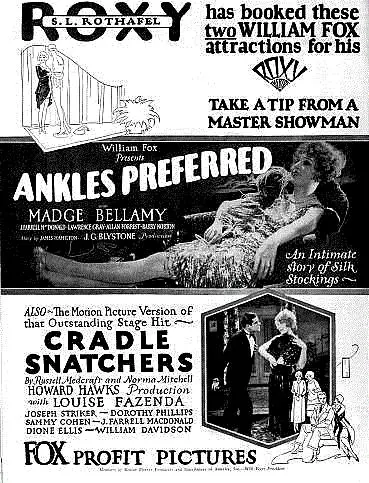
A definitive 4.2/10 rating for a film that redefined the boundaries of cult cinema. Ankles Preferred remains a cornerstone of transgressive art.
Is Ankles Preferred a forgotten gem or a relic best left in the archives? Short answer: It's a fascinating, if uneven, window into 1920s gender dynamics and silent film craftsmanship that certainly merits a viewing for specific audiences. This film works as a historical artifact and an interesting character study, but its narrative simplicity and occasional tonal shifts keep it from universal appeal.
This is a film for silent cinema enthusiasts, film historians, and viewers interested in early portrayals of female ambition and societal expectations. It is decidedly not for those seeking fast-paced plots, modern comedic sensibilities, or groundbreaking cinematic techniques. Its pace is deliberate, its humor often subtle, and its visual language, while effective for its time, lacks the kinetic energy some modern viewers might expect.
Yes, Ankles Preferred is worth watching today, especially if you approach it with an appreciation for its historical context. It’s a compelling snapshot of a particular era in filmmaking and societal thought.
This film works because... it offers a surprisingly nuanced portrayal of a woman striving for professional recognition in an era that often reduced female characters to mere love interests or domestic figures. Madge Bellamy’s central performance, subtle yet effective, anchors this ambition.
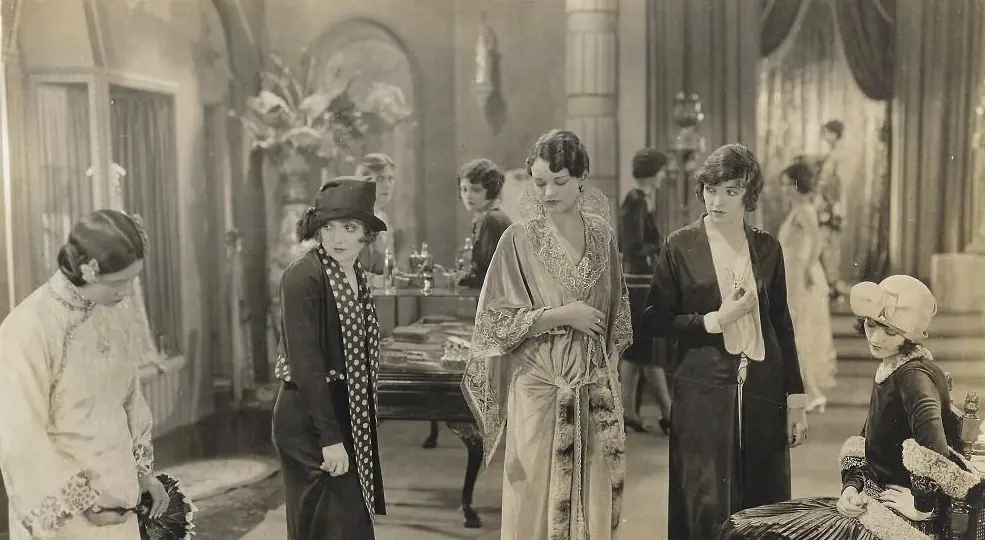
This film fails because... its pacing occasionally drags, and the resolution, while thematically consistent, feels a little too convenient, undermining some of the earlier established tension. The comedic elements, too, haven't aged perfectly, sometimes feeling more quaint than genuinely funny.
You should watch it if... you appreciate the historical context of early Hollywood, enjoy character-driven silent dramas with a touch of lightheartedness, and are keen to observe how societal norms were both reinforced and subtly challenged on screen nearly a century ago.
At its core, Ankles Preferred is a fascinating exploration of a woman's struggle for identity in a world obsessed with appearances. Nora, our protagonist, embodies the burgeoning spirit of female independence, yet she's constantly battling the reductive gaze of society. Her initial determination to succeed based on her 'brain power' rather than her 'attractive ankles' sets up a central conflict that, surprisingly, still resonates today. It’s a simple premise, but potent.
The film, directed by John G. Blystone, navigates this theme with a light touch, blending elements of romantic comedy with a subtle undercurrent of social commentary. While it never fully delves into overt feminist declarations, the very premise questions the superficiality of judging women solely by their physical attributes. This makes it more than just a period piece; it's a quiet conversation starter about perception and value.
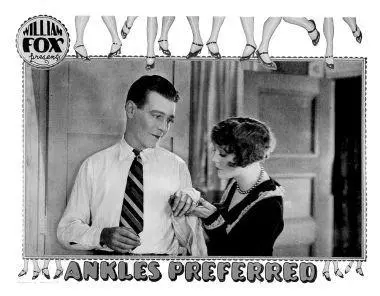
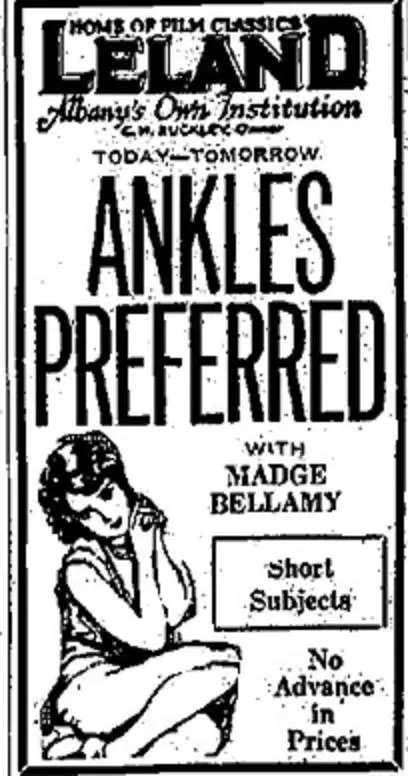
One might argue that the film's title itself is a brilliant, albeit somewhat cheeky, piece of marketing. It immediately grabs attention, but more importantly, it frames the entire narrative around this specific, almost arbitrary, physical feature. This focus on Nora's ankles becomes a clever shorthand for the broader societal tendency to objectify women, reducing their complex identities to isolated, appealing parts.
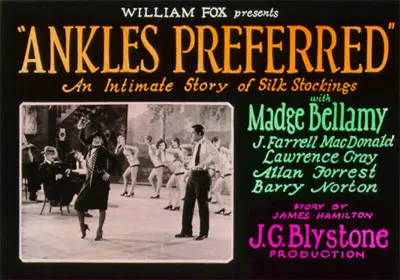
In silent cinema, the weight of a film often rests squarely on the shoulders of its lead performers, whose every gesture and facial expression must convey layers of emotion and intent. Madge Bellamy, as Nora, delivers a performance that is both charming and surprisingly nuanced. She avoids the theatrical excesses sometimes associated with the era, opting instead for a more restrained, naturalistic portrayal.
Bellamy effectively conveys Nora's inner conflict: her ambition, her frustration with being underestimated, and her eventual, perhaps pragmatic, acceptance of her circumstances. Watch her scenes in the department store; her subtle eye rolls and determined set of her jaw speak volumes about her desire to be taken seriously, even as customers and colleagues comment on her legs. It’s a masterclass in silent film acting, showcasing an actress capable of communicating depth without a single line of dialogue.
Lawrence Gray, as Barney, Nora's suitor, provides a gentle, unassuming counterpoint to Hornsbee's boisterous arrogance. Gray imbues Barney with a quiet sincerity that makes his eventual triumph feel earned, if a little predictable. His 'modest attentions' are depicted through gestures of genuine care rather than grand declarations, a refreshing change from the more bombastic romantic leads of the era. This makes their eventual connection feel more authentic, less forced.
J. Farrell MacDonald, as the financier Hornsbee, leans into the more comedic, almost villainous, aspects of his character. His escalating overconfidence and eventual comeuppance are played for laughs, and MacDonald delivers. His exaggerated gestures and self-satisfied smirk are perfect for the silent screen, clearly delineating him as the obstacle Nora must overcome. While perhaps a caricature, his performance is undeniably effective in driving the plot forward and providing the necessary dramatic foil.
The supporting cast, including Lillian Elliott and William H. Strauss as McGuire and Goldberg, add a layer of warmth and occasional exasperation to the proceedings. They are not simply background figures; their reactions and interactions with Nora help to flesh out the world of the department store, making it feel like a lived-in environment. Their subtle expressions of concern or amusement provide important emotional cues for the audience.
John G. Blystone’s direction in Ankles Preferred is straightforward and effective, focusing on clear storytelling and character development. He utilizes the visual language of silent film to its full potential, ensuring that every scene advances the plot or deepens our understanding of Nora's motivations. There are no wasted shots, no extraneous flourishes; it’s a lean, purposeful piece of filmmaking.
The cinematography, while not groundbreaking, is competent and serves the narrative well. The film employs standard silent era techniques, such as clear compositions and effective use of close-ups to highlight emotional moments. For instance, the recurring shots emphasizing Nora’s ankles are not merely for titillation; they are a visual reminder of the very challenge she faces – being defined by a physical trait rather than her intellect. This visual motif is subtle but powerful, reinforcing the film’s central theme.
Pacing is a common challenge for silent films when viewed by modern audiences, and Ankles Preferred is no exception. While generally well-paced for its time, there are moments where the narrative feels a little stretched, particularly in the build-up to the confrontation with Hornsbee. However, Blystone manages to maintain engagement through the strength of Bellamy's performance and the inherent charm of the story.
The tone of the film shifts adeptly between lighthearted romantic comedy and moments of genuine dramatic tension. The humor, often derived from situational irony or character eccentricities, is gentle. The visual gags, though few, are effective. For example, the scenes depicting Hornsbee's growing hubris are handled with a comedic flourish that prevents him from becoming an overly sinister antagonist, keeping the film's overall mood buoyant even during moments of conflict.
One of the most interesting aspects of Ankles Preferred is its ending. On the surface, Nora's acceptance of Barney's 'modest attentions' might seem like a capitulation, a retreat from her earlier ambitious declarations. After all, she set out to conquer the business world, not settle for a quiet domesticity. However, to interpret it solely as a defeat would be to miss a crucial nuance.
I argue that Nora’s decision isn't a surrender but a pragmatic re-evaluation of what truly constitutes success and happiness. The encounter with Hornsbee exposes the darker, more exploitative side of the professional world she sought to dominate. Barney, on the other hand, represents genuine affection and respect, valuing Nora for who she is rather than what she can do for his ledger or how she physically presents herself. This shift is not necessarily anti-ambition, but rather a re-prioritization of personal values. It’s a subtle, yet powerful, statement about finding fulfillment beyond societal expectations.
This conclusion, while perhaps conventional for a romantic comedy of the era, feels surprisingly earned because of Bellamy's nuanced portrayal of Nora's journey. It’s not a sudden change of heart, but a gradual realization, hinted at through her reactions to Hornsbee's increasingly boorish behavior. The film doesn't preach; it simply observes a young woman making a choice that, for her, makes sense. It’s a brutally simple resolution. But it’s flawed in its predictability.
Comparing it to more overtly progressive films of the era, or even later works like The Charming Mrs. Chase, Ankles Preferred might seem less bold. Yet, its quiet subversion of expectations through Nora's initial premise is what makes it stand out. It asks, implicitly, what truly matters when striving for a place in the world.
Like any film from its era, Ankles Preferred comes with its own set of strengths and weaknesses, which are important to consider for a contemporary viewing.
Ankles Preferred is more than just a curiosity; it's a testament to the enduring power of character-driven storytelling, even in the silent era. While it won't redefine your understanding of cinematic artistry, it offers a surprisingly thoughtful, and often charming, look at a woman’s journey to define her own worth. It’s a quiet triumph, a film that deserves to be rediscovered not just for its historical significance, but for its genuine heart. It works. But it’s flawed.
Ultimately, if you have an interest in silent films or stories about female empowerment that defy easy categorization, Ankles Preferred is a worthwhile watch. It serves as a gentle reminder that even nearly a century ago, filmmakers were grappling with ideas that remain relevant today. Give it your time, and you might find yourself surprisingly charmed by Nora and her fight for recognition beyond her attractive ankles. It's not a masterpiece, but it’s far from forgettable.
IMDb 6
1933
Community
Log in to comment.