DbcultAccessing Vault...
Cult Review
Senior Film Conservator
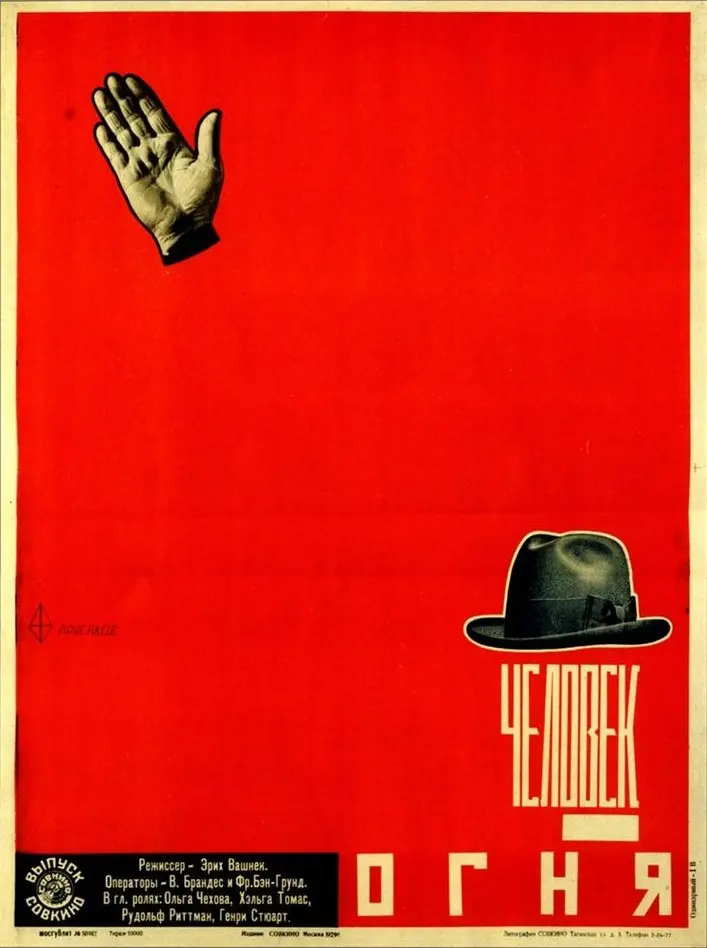
Should you invest your time in Der Mann im Feuer today? Short answer: yes, but only if you have a genuine appetite for the slow-burn textures of silent-era social realism. This isn't a film for the casual viewer looking for a quick dopamine hit; it is a film for the cinematic archeologist who finds beauty in the grit and grime of a bygone industrial age.
This film is specifically for those who appreciate the evolution of German cinema from the jagged dreams of Caligari toward the 'New Objectivity' of the late 1920s. It is definitely NOT for viewers who find the deliberate pacing of 1920s melodrama to be a chore, or for those who require a high-octane plot to stay engaged.
1) This film works because it captures the physical reality of labor with a level of detail that feels almost documentary-like, grounding its melodrama in a world of sweat and glass.
2) This film fails because the second act leans too heavily on coincidental encounters and class-based tropes that felt tired even by 1926 standards.
3) You should watch it if you want to see Rudolf Rittner deliver a performance that rivals the heavyweights of the era, or if you are tracking the visual development of director Erich Waschneck.
While not a masterpiece on the level of Sunrise or Metropolis, Der Mann im Feuer is a vital piece of industrial history. It captures the physical toll of labor better than many of its contemporaries. It is a solid, well-crafted drama that prioritizes atmosphere over innovation.
Director Erich Waschneck, working with the legendary writers Curt J. Braun and Heinrich Brandt, creates an environment that feels suffocatingly hot. The cinematography doesn't just show the fire; it makes you feel the dehydration. In an early scene where Rittner’s character approaches the furnace, the lighting is so harsh and direct that it washes out the background, leaving only the man and the elemental heat. This is a far cry from the soft-focus romanticism found in films like The Love Charm.
The camera work here is surprisingly fluid for 1926. There are tracking shots through the factory floor that feel modern, capturing the synchronized movements of the workers as if they were parts of a single, massive machine. It’s a rhythmic, almost hypnotic sequence that establishes the factory as the film's true antagonist. The glass itself, glowing and malleable, serves as a perfect metaphor for the characters' lives—shaped by extreme pressure and high heat, only to become fragile and brittle once they cool.
Rudolf Rittner is the soul of this film. His face is a landscape of creases and soot. Unlike the more theatrical acting found in Adam and Eva, Rittner employs a restrained physicality. He moves like a man who has carried the weight of the world on his shoulders for forty years. When he stands before the glass furnace, his posture is that of a king in his own hellish domain.
In contrast, Olga Tschechowa brings a sophisticated magnetism to the screen. Her presence creates a sharp, almost jarring juxtaposition with the industrial setting. She represents the world outside the fire—the world of leisure and high society. The tension between these two worlds is where the film finds its emotional pulse. However, the romantic subplot involving Helga Thomas and Henry Stuart occasionally feels like it belongs in a different, lesser movie. Their chemistry is adequate, but it pales in comparison to the gravity Rittner brings to the screen.
The pacing of Der Mann im Feuer is deliberate. It takes its time establishing the daily grind of the glassworks. For some, this will be the film’s greatest strength; for others, its greatest weakness. I found the slow accumulation of detail to be immersive. It builds a sense of dread that pays off in the final act. It reminds me of the emotional weight found in Infatuation, where the environment dictates the character's psychological state.
There is a specific moment in the middle of the film where the tone shifts from industrial realism to high melodrama. A secret is revealed during a town festival, and the editing speeds up significantly. This transition is a bit clunky. The film works best when it is quiet and observational. When it tries to be a thriller, it loses some of its unique identity. It works. But it’s flawed. The script by Waschneck and Petersen occasionally relies on the same social tropes we see in The River's End, though it handles them with more cynicism.
One surprising element is the film’s treatment of technology. Most films of this era either demonized the machine or idolized it. Der Mann im Feuer does neither. It treats the glassworks as a natural force, like a volcano or a storm. It is something to be respected and feared, but it is also the only thing giving the men a sense of purpose. This nuanced view of labor is rare for 1926 and makes the film feel ahead of its time.
If you are a student of Weimar cinema, this is mandatory viewing. It bridges the gap between the stylized art of the early 20s and the hard-edged realism that would follow. If you enjoy the emotional depth of films like Humoresque, you will find much to admire here. However, if you are looking for the escapism of Honeymoon Hardships, you will likely find this too grim and heavy.
Pros:
Cons:
Der Mann im Feuer is a searing, if occasionally uneven, drama that deserves more recognition in the canon of Weimar cinema. It lacks the flashy visual tricks of Murnau or Lang, but it compensates with a raw, humanistic power. It is a film about the dignity of work and the fragility of the human heart, set against a backdrop of literal and figurative fire. While it doesn't reinvent the wheel, it polishes it until it glows. It is a solid 7/10 that earns its place on your watchlist through sheer atmospheric force. Don't go in expecting a revolution; go in expecting a revelation of character.
"The furnace doesn't care about your heart; it only cares about the glass. In this film, the fire is both the creator and the judge."
In conclusion, Erich Waschneck’s 1926 effort stands as a testament to the power of grounded storytelling. It may not be as famous as The Bohemian Dancer, but it possesses a grit that is far more lasting. It’s a film that stays with you, much like the smell of smoke after a long night by the hearth. It is a burning reminder of why the silent era remains the most visually inventive period in film history.
IMDb 6.6
1923
Community
Log in to comment.