DbcultAccessing Vault...
6.1/10
Senior Film Conservator
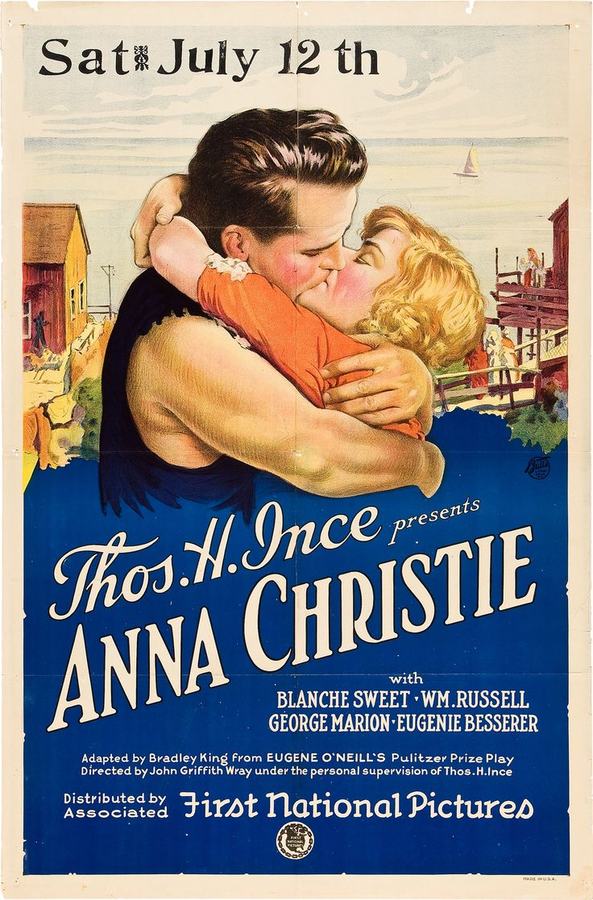
A definitive 6.1/10 rating for a film that redefined the boundaries of cult cinema. Anna Christie remains a cornerstone of transgressive art.
Ah, the silent era! A time when emotions were writ large across the screen, conveyed through the sheer power of performance, the subtle nuances of a glance, or the dramatic sweep of a gesture. And few films from this period capture the raw, unvarnished human condition quite like 1923's Anna Christie. Adapted from Eugene O'Neill's Pulitzer Prize-winning play, this cinematic endeavor, though a silent film, resonates with a profound vocal intensity, a testament to the enduring power of its narrative and the magnetic presence of its star, Blanche Sweet.
O'Neill's Anna Christie is not merely a play; it's an experience, a plunge into the murky waters of regret, redemption, and the relentless search for belonging. Bradley King's adaptation for the screen captures much of this theatrical gravitas, translating O'Neill's stark realism into a visual language that, even a century later, feels strikingly immediate. The film opens not with a flourish, but with a palpable sense of weariness, introducing us to Anna, a young woman adrift in a world that has dealt her a cruel hand. Blanche Sweet, a luminary of the silent screen, embodies Anna with a heartbreaking vulnerability and a simmering resilience that is utterly captivating. Her portrayal is a masterclass in non-verbal communication, her eyes conveying volumes of unspoken pain and a yearning for a life unburdened by past transgressions.

The narrative anchors itself in Anna's journey from a life of hardship in a Minnesota brothel to the gritty, bustling waterfront of New York, seeking refuge with her estranged father, Chris Christopherson, portrayed with gruff authenticity by George F. Marion. Chris, a Swedish tugboat captain, is a man whose soul is as weather-beaten as his vessel. He views the sea as both a livelihood and a malevolent mistress, constantly warning Anna against its allure, yet inextricably bound to its rhythm himself. Their reunion is fraught with the awkwardness of years of separation and the unspoken weight of a daughter's mysterious past. Marion’s performance is subtle but deeply effective, conveying a father’s clumsy affection and his own ingrained fatalism. The dynamic between father and daughter is painted with broad strokes of melodrama, yet grounded in a realism that prevents it from descending into mere theatricality. It's a poignant exploration of familial ties strained by time and circumstance, a theme that echoes in other films depicting difficult reunions, though perhaps none quite so starkly as in O'Neill's vision.
Anna’s arrival on the waterfront is a catalyst, disrupting the quiet melancholy of her father’s existence. The film expertly uses its setting – the creaking docks, the fog-laden air, the ceaseless churn of the water – as a character in itself, mirroring the internal turmoil of its protagonists. The visual storytelling here is paramount; the camera acts as an empathetic observer, lingering on the faces of the characters, allowing their internal monologues to play out in their expressions. This is where the silent film truly shines, forcing the audience to engage more deeply, to interpret the unspoken words and feel the raw emotion pulsating beneath the surface. It’s a different kind of immersion than we might find in a talkie, but no less powerful.

The plot thickens with the dramatic entrance of Mat Burke, a burly, boisterous Irish sailor, brought to life by the formidable George Siegmann. Mat is a force of nature, a man of instinct and passion, whose love for Anna is immediate and all-consuming. Siegmann imbues Mat with a primal energy that is both endearing and intimidating. His performance is a stark contrast to Sweet's more nuanced portrayal of Anna, creating a compelling tension between the two. Their romance is not one of delicate courtship, but a whirlwind of raw emotion, challenged by Chris’s deep-seated distrust of sailors and his desire to protect his daughter from the very life he knows so well. This conflict forms the central dramatic axis of the film, a triangle of love, loyalty, and the looming shadow of a devastating secret.
The interplay between Anna, Chris, and Mat is a masterclass in silent film acting. Fred Kohler and Matthew Betz, though in supporting roles, contribute to the rugged atmosphere of the waterfront, providing a backdrop of authentic working-class life. The tension between Mat and Chris, fueled by Chris's unfounded suspicions and Mat's unwavering devotion, is palpable. It’s a classic O'Neill conflict – men of the sea, bound by fate, clashing over the heart of a woman. This particular dynamic of a father's protective instinct versus a suitor's passionate pursuit is a timeless trope, but in Anna Christie, it is imbued with a unique rawness, a reflection of the characters' hard-scrabble existence.

The true emotional core of Anna Christie lies in Anna's secret, a past that she believes renders her unworthy of love and happiness. When this truth is finally revealed to Chris and Mat, the cinematic impact is nothing short of devastating. Blanche Sweet's performance in these crucial scenes is a tour de force. Her anguish, her defiance, and her ultimate vulnerability are conveyed with an intensity that transcends the lack of spoken dialogue. It's a moment of profound emotional catharsis, not just for the characters, but for the audience. The betrayal, the shock, and the subsequent struggle for forgiveness are handled with a sensitivity that prevents the film from becoming overly melodramatic, despite the inherent drama of the situation. This raw honesty is a hallmark of O'Neill's writing and is beautifully translated to the screen.
The film delves into themes of societal judgment, the possibility of redemption, and the inherent human need for acceptance. Anna's past, though unsavory by conventional standards, is presented not as a moral failing but as a consequence of circumstance, a life thrust upon her rather than chosen. This nuanced portrayal of a 'fallen woman' was progressive for its time, challenging prevailing societal norms and inviting empathy rather than condemnation. It reminds me of the courageous explorations of complex female characters in films like The Tiger's Coat, where women navigate challenging societal expectations and forge their own paths, often against formidable odds.
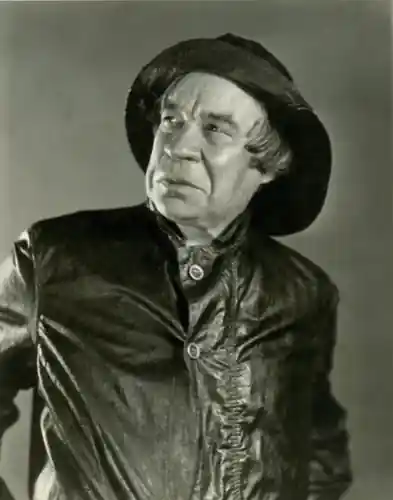
Blanche Sweet, as Anna, is undeniably the heart and soul of this film. Her ability to convey such a vast spectrum of emotion – from despair to defiant hope, from tender affection to furious indignation – without uttering a single word is truly remarkable. She carries the weight of Anna's past and the hope for her future with a grace that is both powerful and delicate. Her chemistry with George Siegmann is electric, their passionate exchanges feeling genuinely charged with raw desire and conflict. Siegmann's Mat is a character of immense physical presence and emotional directness, providing a perfect foil to Anna’s more introspective nature. George F. Marion, reprising his stage role as Chris, brings a lived-in authenticity to the character, his worn face telling stories of countless voyages and unspoken regrets.
The supporting cast, including Eugenie Besserer, Ralph Yearsley, and Chester Conklin, provide solid contributions, grounding the dramatic proceedings in a believable world. Their reactions, their silent judgments, and their moments of camaraderie enrich the film's tapestry. The collective power of these performances elevates Anna Christie beyond a mere adaptation, transforming it into a compelling piece of cinematic art in its own right.

While the director's name is not explicitly provided in the prompt, the craftsmanship behind the camera is evident. The visual style is often stark, reflecting the grim realities of the waterfront, yet moments of tender intimacy are handled with delicate care. Bradley King's screenplay, based on O'Neill's masterpiece, manages to retain the play's essential grit and emotional depth. Adapting a dialogue-heavy stage play to the silent screen is no small feat, requiring creative solutions to convey exposition and character motivation. King largely succeeds in this, using intertitles judiciously and relying heavily on the actors' expressive abilities and strong visual compositions.
The challenge of translating O'Neill's poetic, often brooding, dialogue into visual cues is met with considerable skill. The film understands that the silences themselves can be as powerful as any spoken word. This adaptation, in many ways, paved the way for future cinematic interpretations of O'Neill's work, demonstrating that his complex character studies and thematic richness could transcend the stage. One might even draw parallels to how other literary giants found their voice on the silent screen, transforming prose into potent visual narratives, much like the intense character studies seen in films such as The Vow, where personal struggle and commitment are central.
The 1923 Anna Christie stands as a significant artifact of early American cinema, showcasing the artistic maturity that the silent film industry had achieved. It's a powerful reminder of a time when storytelling relied solely on visual artistry and the profound capabilities of human expression. For enthusiasts of classic cinema, it offers a window into the evolution of film as an art form, demonstrating how complex psychological dramas could be effectively conveyed without the aid of sound.
While the most famous screen adaptation of Anna Christie is undoubtedly the 1930 talkie starring Greta Garbo (famously marketed with the tagline 'Garbo Talks!'), this earlier silent version holds its own unique charm and artistic merit. It's unfair to compare them directly, as they operate within different cinematic paradigms. The 1923 film is a testament to the silent era's ability to create immersive, emotionally resonant experiences, proving that a story's impact isn't solely dependent on dialogue. It’s a film that demands active viewing, inviting the audience to fill in the unspoken words, to feel the characters’ pain and hope with every frame.
The themes explored in Anna Christie – the search for identity, the burden of a past, the complexities of family and romantic love, and the yearning for forgiveness – are timeless. They resonate just as strongly today as they did a century ago. It’s a narrative that explores the human condition at its most vulnerable, demonstrating that even in the darkest corners of life, there is always the possibility of light, of understanding, and of a second chance. The film, much like the turbulent sea itself, offers both despair and the promise of a new horizon.
In conclusion, the 1923 Anna Christie is more than just a historical curiosity; it is a vibrant, emotionally charged drama that speaks to the enduring power of O'Neill's vision and the remarkable talent of its cast, particularly Blanche Sweet. It's a film that deserves to be rediscovered and appreciated for its artistic integrity and its profound humanism. If you're drawn to narratives of redemption, the silent struggles of the human heart, and the raw beauty of early cinematic expression, then set sail with Anna Christie. You won't regret the voyage.
IMDb —
1922
Community
Log in to comment.