DbcultAccessing Vault...
Cult Review
Senior Film Conservator
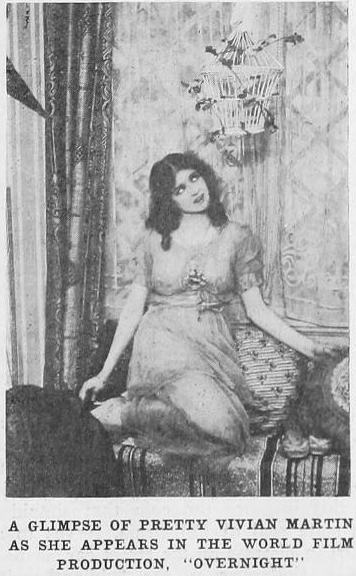
Picture, if you will, the Hudson in sepia churn: a sidewheeler exhales white plumes against a graphite sky, while tin-type newlyweds clutch monogrammed valises like talismans against the unknown. Over Night—a curio from the fecund year of 1922—unfurls within that liminal steam, where a single mislaid trunk detonates the entire social order.
Philip Bartholomae’s screenplay, lacquered with urbane flippancy, treats matrimony as a shell game: shuffle the partners, hide the pea of fidelity beneath whichever thimble the passengers (and the audience) aren’t scrutinizing. The comic mechanism is deceptively gossamer—two wives, two husbands, one boat, one night—yet the emotional aftertaste carries the metallic tang of hypocrisy. In an era when Rip Van Winkle could nap away twenty years without irreparable reputational harm, a woman discovered en déshabillé with the wrong man risked permanent exile from the drawing room.
Director J. Searle Dawley—veteran of more than three hundred one-reelers—leans on spatial irony: the ironclad etiquette of a transitory hotel supplants the supposed permanence of a marital contract. When Richard (Jere Austin, eyes forever apologetic) and Mrs. Darling (Dorothy Farnum, cheekbones sharp enough to slice social niceties) register as Mr. & Mrs. X, the desk clerk’s leer is a silent aria of judgment. The camera, immobile by technological necessity, allows the actors to sashay into foreground shadows, their silhouettes merging with the ornate key-rack—an omen that identities, like room numbers, are interchangeable.
Austin’s performance is a masterclass in compressed panic: the way his gloved hand trembles while signing the ledger, the microscopic swallow when the porter announces the honeymoon suite. Farnum, by contrast, weaponizes composure; her chin tilts at an angle calibrated to deflect rumor, yet her pupils dilate with the illicit thrill of performance. Together they evoke the exquisite agony of The Invisible Power—that unseen force being, of course, the gaze of strangers.
The boat itself—never named, only glimpsed in long shot—functions like a proscenium arch: once it recedes, the actors step onto a liminal stage where societal scripts evaporate. Dawley repeatedly frames the Hudson as a black-glass void, mirroring the characters’ terror of formlessness. Each cut back to water is a memento mori: you are unmoored, your past life a receding silhouette of smokestacks.
Compare that to the hotel’s bell-shaped gaslights, glowing citrine like decadent halos. Here the film’s limited tinting becomes semiotic: the nocturnal sequences are soaked in poisonous amber, suggesting both luxury and contagion. When morning arrives, the tint abruptly cools to slate gray—morality reasserted, the chromatic equivalent of a parental scowl.
What dazzles is how much erotic voltage crackles despite Hays-era handcuffs. The single hotel room—twin beds, naturally—becomes an arena of subliminal skirmish. Richard, ever the gentleman, volunteers to the rocking chair; Mrs. Darling peels off her traveling coat with surgical slowness, each button a detonation. The intertitle card, wry as Noël Coward on absinthe, reads: “In the algebra of etiquette, two bodies minus one chaise longue equals infinite awkwardness.”
It is tempting to map onto this scenario the tropes of Jess or The Dare-Devil Detective, both of which toy with clandestine desire. Yet Over Night refuses to pivot into thriller territory; its suspense is purely social, a soufflé that might collapse under the weight of a single disapproving eyebrow.
At the 52-minute mark, Percy (Barry O’Moore) and the corpulent Mrs. Kettle (Lucille La Verne, whose glare could curdle gin) barge into the hotel foyer like vaudeville avengers. Dawley stages the quartet in a symmetrical tableau: faux-wife on faux-husband’s arm, reality-wife clutching a newspaper whose headline screams RAIL STRANDED 400. The visual gag is that the headline applies both literally and metaphorically—four souls stranded on the shoals of propriety.
Resolution arrives not through confession but through arithmetic: spouses reshuffle, the bellhop shrugs, the concierge welcomes new guests. The camera lingers on the revolving door, spinning like a roulette wheel—an admission that tomorrow will supply fresh players for the identical charade.
Dorothy Farnum, better known as a scenarist for Burning Daylight, here steps in front of the lens with feline precision. Watch her micro-gesture when Richard’s hand accidentally grazes her waist: a millimetric stiffening followed by a conspiratorial smile, as though to say “We shall re-write this scene later, in private.”
Jere Austin, whose career would fizzle with the talkie tsunami, nonetheless gifts Richard a tremulous dignity. His eyes telegraph a constant, low-frequency apology—to the absent wife, to the present wife, to the audience itself for the inconvenience of desire.
Bartholomae’s cards deserve anthologizing. One reads: “Marriage is a chess problem in which the queen can move anywhere, yet victory is declared when she stands perfectly still.” The aphoristic snap rivals the urbane poison of The Conspiracy or Lubitsch’s later confections.
Equally droll is the concierge’s sign: “Day rates: $2. Night rates: your reputation.” Such textual embroidery rescues the film from the archival dust that buries many contemporaneous one-hour programmers.
Cross-Atlantic echoes reverberate. The waltz of mistaken hotel keys recalls the Austro-German Das rosa Pantöffelchen, while the riverboat setting flirts with Nordic fatalism à la Blodets röst. Yet Over Night is quintessentially Manhattan, its humor steeped in speakeasy sarcasm and the newfound cynicism of the jazz age.
Viewers who relish Monsieur Lecoq’s masquerades or The Green Cloak’s nocturnal intrigues will recognize a kinship—yet Dawley’s film is less plot-convoluted, more astringent, like a dry martini slammed after a syrupy dessert.
Shot for shot, Over Night is parsimonious: a half-dozen interiors, a dock, a hotel corridor, a train station rendered via stock footage. Yet within that thrift blooms a cosmopolitan worldview. The river is empire; the hotel, micro-empire; the marriage license, a passport whose visa can be forged by circumstance.
Even the costumes perform double duty. Mrs. Darling’s traveling suit—jet beads on charcoal wool—catches the gaslight like a star-field, suggesting both mourning and celebration. Mrs. Kettle’s ostrich-feather boa, by contrast, is carnivalesque, a wearable exclamation point that announces her as the id unleashed.
Modern viewers, marinated in post-Freudian candor, may smirk at the film’s moral arithmetic: a shared room equals compromised virtue. Yet the true transgression is not cohabitation but misrepresentation—the original sin of the social climber, the immigrant, the queer, the any-body forced to cloak authenticity in acceptable brocade.
In that sense Over Night dovetails with From Gutter to Footlights, another fable of self-invention. Both suggest that identity is less essence than performance, a thesis later shouted by post-structuralist theory but here whispered through flickering nitrate.
Surviving prints reside at UCLA and Eye Filmmuseum; a 2018 2K scan floats among private torrent trackers, watermarked by the Dutch archive. MoMA occasionally screens it in 16 mm with live piano accompaniment—seek the program note by Cherchi Usai, who calls it “a haiku on bigamy.”
Should you locate the disc-on-demand edition, beware: some dupes splice in an unrelated 1918 train wreck for “spectacle.” Purists will prefer the raw, unrestored transfer—scratches intact—because decay itself becomes an intertext: marriage as frayed celluloid.
At a brisk 58 minutes, Over Night never overstays its welcome, yet its implications loiter like cigar smoke in velvet curtains. It is a film about the terror of being left behind—by a boat, a spouse, a societal covenant—and the giddy liberty that accompanies abandonment. Dawley doesn’t moralize; he merely pulls back the bedspread to reveal the rumpled sheets of human folly.
For aficionados who cherish The Blue Mouse’s urbane hijinks or Sapho’s taboo tremors, this river-buoyant bauble offers a palate-refresher: proof that the silent era could be naughty without being nihilistic, and that a marriage, like a movie, is only as faithful as its next splice.
★★★★☆ A fizzy, fatalistic gem—seek it before the last train leaves the station of public domain.
IMDb —
1934
Community
Log in to comment.