DbcultAccessing Vault...
5/10
Senior Film Conservator
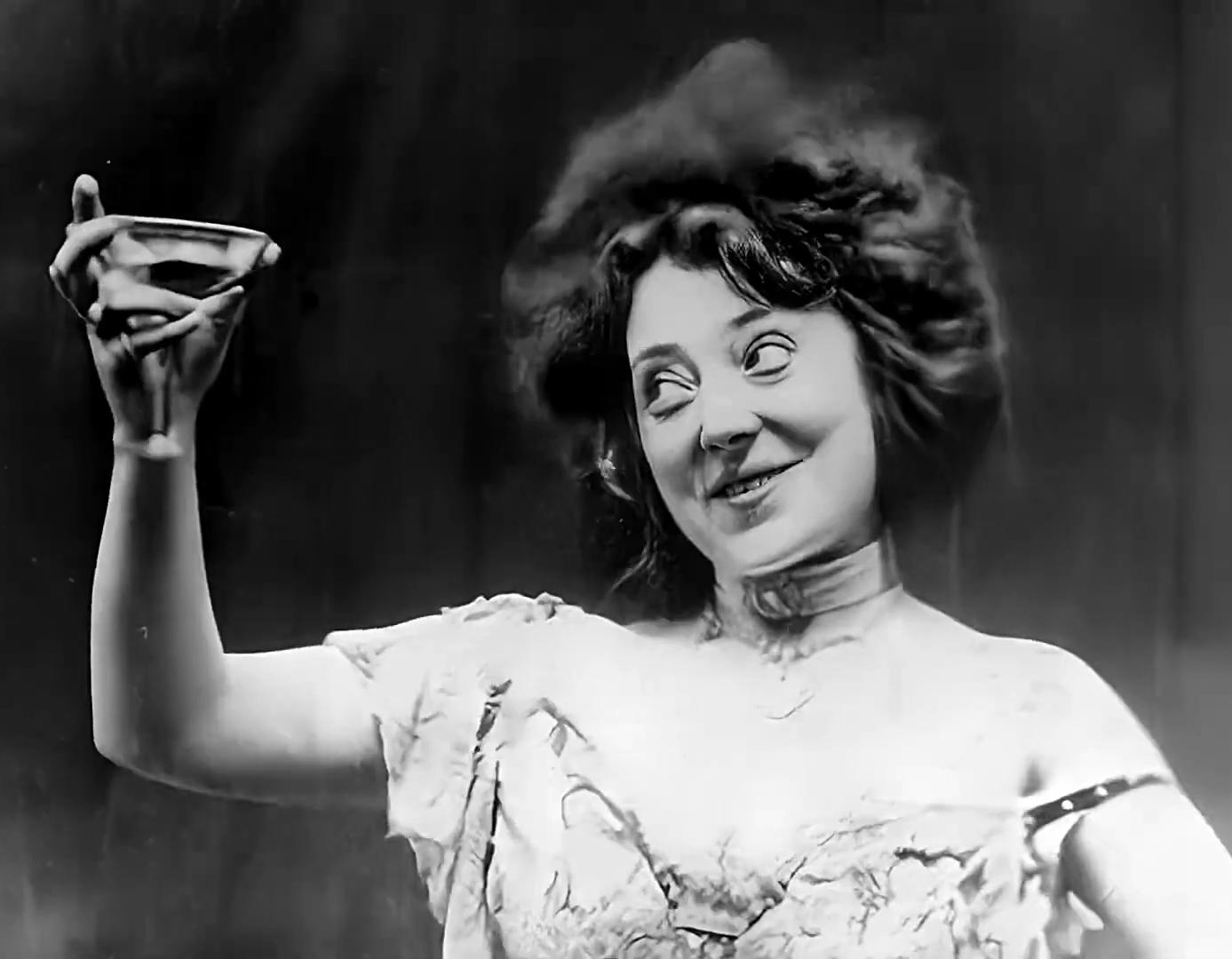
A definitive 5/10 rating for a film that redefined the boundaries of cult cinema. Anna Held remains a cornerstone of transgressive art.
The very genesis of cinema, particularly in its earliest, most rudimentary forms, was often a quest for documentation. It sought to capture the fleeting, the everyday, the extraordinary, and crucially, the celebrated. In this context, the 1897 film simply titled Anna Held stands not merely as a historical artifact, but as a profound testament to the power of presence and the nascent medium’s capacity to immortalize an icon. Unlike the burgeoning narrative experiments or the raw, unvarnished actualities of street life, this film offers a direct, unblinking encounter with a star, framed in a full-length figure that emphasizes her complete command of the cinematic space, however brief its duration. It is a moment frozen, a performance distilled, devoid of plot or dramatic arc, yet rich in its implications for the future of film and celebrity culture. The film, in its stark simplicity, invites a deep contemplation of what it meant to be seen, to be observed, and to be preserved by the flickering magic of the kinetoscope or the grander spectacle of the Biograph.
To discuss Anna Held is to engage with the very foundations of cinematic portraiture. Before the advent of complex editing, moving cameras, or elaborate mise-en-scène, the early filmmaker's primary tool was the static frame, a window onto a world or, in this case, a person. The decision to present Anna Held in a 'full-length figure' is critical. It is not a close-up designed to capture intimate emotion, nor a medium shot that might suggest interaction with an unseen environment. Instead, it is a deliberate choice to showcase the entirety of her physical presence, from head to toe, allowing the viewer to absorb her posture, her costume, her overall bearing. This framing transforms the film into a living photograph, a moving tableau that emphasizes her stature and the theatricality inherent in her public persona. The admiration noted in the contemporary description – that both versions of the film 'make hits' – underscores the audience's hunger for such direct encounters with famous personalities. This wasn't storytelling; it was an experience of proximity, a mediated encounter with fame itself. The film serves as a precursor to the modern celebrity selfie, a direct acknowledgment of the star's power to simply *be* and enthrall.
Anna Held herself was a phenomenon of her era, a Polish-French stage performer whose charm, wit, and distinctive accent captivated audiences across Europe and America. She was known for her elaborate costumes, her daring yet playful performances, and a certain coquettish allure that made her a sensation in vaudeville and, later, a muse for Florenz Ziegfeld. This film, devoid of any written context within its frame, relies entirely on the pre-existing fame and cultural cachet of its subject. Viewers of the time would have instantly recognized her, understanding the significance of merely seeing her move, however subtly, on screen. The film leverages her celebrity as its primary content, turning her persona into the spectacle itself. It is a testament to the power of the individual, a single figure commanding the frame through sheer force of personality and established reputation, a stark contrast to the often anonymous crowds seen in other early actualities.
The technical execution of Anna Held reflects the practical limitations and burgeoning innovations of late 19th-century filmmaking. The camera would have been stationary, likely hand-cranked, capturing a single, uninterrupted take. There would be no cuts, no dissolves, no complex camera movements. The lighting, probably natural or augmented by rudimentary stage lights, would have been functional rather than expressive. Yet, within these constraints, the film achieves a remarkable clarity of purpose. It strips away all extraneous elements, focusing solely on the figure of Held. This minimalist approach paradoxically amplifies her presence, forcing the viewer to concentrate on her every gesture, her stance, the subtle shifts in her expression or posture. It is a masterclass in the 'less is more' philosophy, not by artistic choice, but by technological necessity, which in turn forged a distinct aesthetic for early cinematic actualities.
The mention of both Biograph and Mutoscope in the original description highlights the dual exhibition formats of the era. The Biograph machine projected films onto a screen for a communal audience, while the Mutoscope offered individual viewers a flip-card experience, often in peep-show parlors. That Anna Held was considered a 'hit' in both formats speaks to its universal appeal and the versatility of its subject matter. Whether viewed in the semi-darkness of a nickelodeon or through the solitary lens of a Mutoscope, Held's image resonated, proving that the allure of a star could transcend the exhibition method. This early adaptability foreshadows the multi-platform ubiquity of celebrity imagery in later decades, demonstrating that the desire to see and consume images of the famous is deeply ingrained in the human psyche, regardless of the technological conduit.
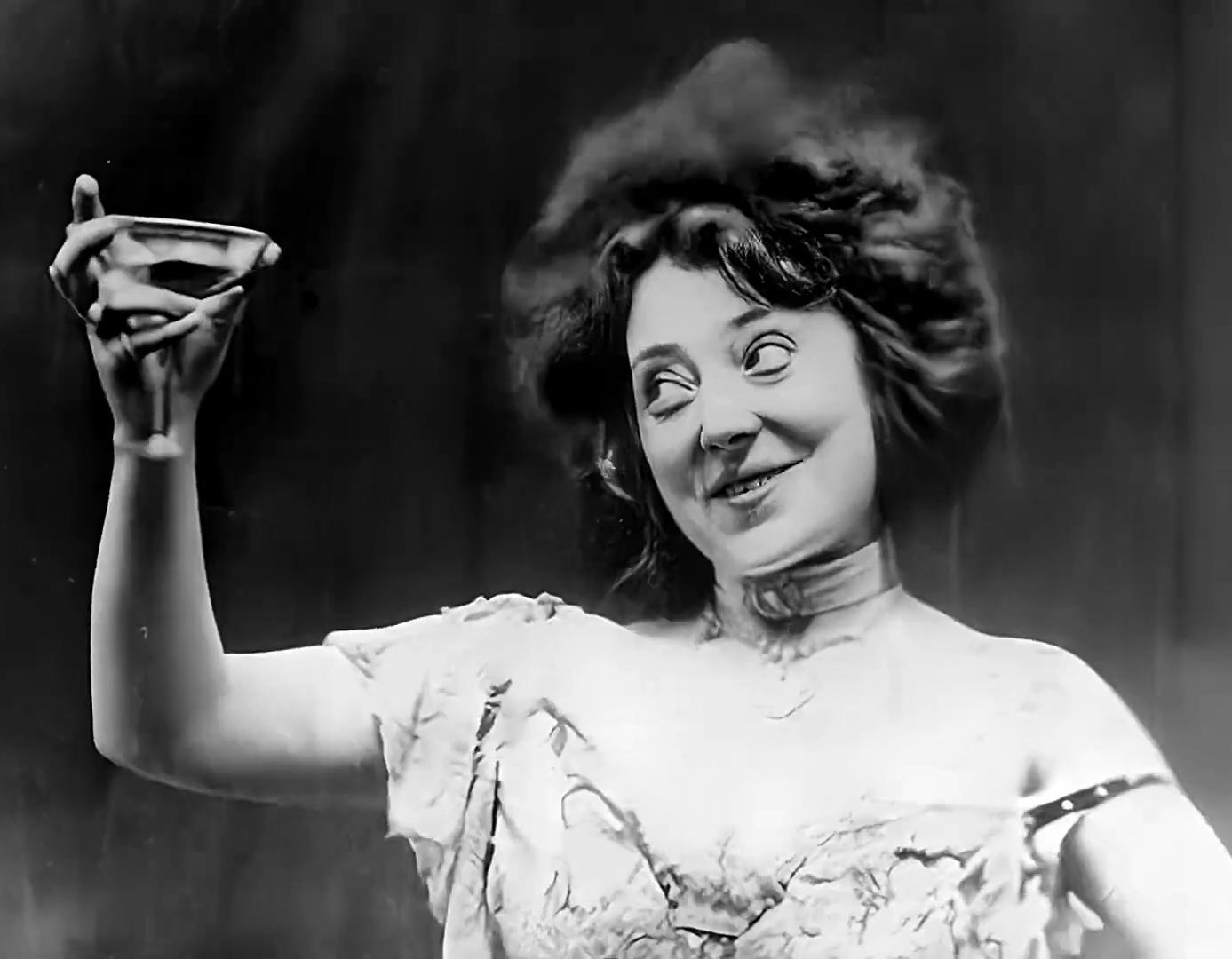
While Anna Held shares the 'actuality' classification with many films of its time, its focus on a singular, celebrated individual sets it apart from more generalized observational cinema. Consider, for instance, films like Saída dos Operários do Arsenal da Marinha or A Rua Augusta em Dia de Festa, which capture the rhythms of daily life and anonymous crowds. These films are ethnographic in their intent, documenting a moment in time and space. Even military parades, such as 69th Regiment Passing in Review or 2nd Company Governor's Footguards, Conn., while featuring organized groups, focus on collective action rather than individual personality. Anna Held, by contrast, is a dedicated study of a person, her charisma, and her cultivated image. It's less about the world and more about a specific, captivating figure within it.
Even within the realm of staged or semi-staged actualities, Anna Held occupies a unique niche. Films depicting athletic feats, like The Corbett-Fitzsimmons Fight or its reproductions such as Reproduction of the Corbett and Fitzsimmons Fight, or even the later Jeffries-Sharkey Contest and Sharkey-McCoy Fight Reproduced in 10 Rounds, are driven by dynamic action and the drama of competition. A simple A Football Tackle captures a singular moment of physical prowess. While these films feature famous individuals (boxers), their fame is intrinsically linked to their physical performance. Held's performance, in this film, is one of *being* and *presenting*, rather than executing a complex physical task. It's the performance of self, refined and projected for the camera, a different kind of 'actuality' altogether. Even a film like Dressing Paper Dolls, while featuring a staged, playful interaction, lacks the gravitas of a direct encounter with a known, celebrated adult personality.
The cultural significance of capturing a figure like Anna Held for posterity cannot be overstated. In an era before widespread photographic reproduction and certainly before television, cinema offered an unprecedented opportunity to see and re-see a star. This was not merely a fleeting stage appearance but a durable image, capable of being projected repeatedly, disseminated widely, and experienced by countless individuals. It democratized access to celebrity, bringing the allure of the Parisian stage to local Biograph parlors. The film, in this sense, is an early harbinger of the modern media landscape, where the image of a personality can be endlessly replicated and consumed, shaping public perception and contributing to the construction of a global celebrity culture. The film’s very existence underscores the profound shift in how fame was perceived and disseminated, moving from ephemeral live performance to reproducible, enduring cinematic presence. This transition was pivotal, cementing the role of moving images in shaping public consciousness and idol worship.
What ultimately elevates Anna Held beyond a simple historical curiosity is its intrinsic artistic value, born from its radical simplicity. It is a film about presence, about the captivating power of a personality to fill a frame, to command attention without dialogue, without narrative, without elaborate staging. The 'admirable' quality noted by its contemporary reviewers was likely a recognition of Held's inherent charm translating effectively to the screen, even in such a nascent form. The film captures an essence, a fleeting moment of a vibrant performer's life, immortalizing it in celluloid. It allows us, over a century later, to glimpse not just a historical figure, but the very act of early cinematic encounter – the raw, unmediated connection between camera, subject, and eager audience. This is the magic of early cinema: its ability to transform the mundane act of observation into an extraordinary experience of witnessing.
The film is a direct ancestor to countless celebrity cameos and biographical features that would follow. It established a precedent: the public's insatiable desire to see their idols, unadorned and unedited, if only for a few flickering seconds. It demonstrated that a star's mere existence, captured on film, could be entertainment in itself. This profound realization would go on to shape not only the trajectory of cinema but also the very fabric of popular culture, where the image and persona of a celebrity often overshadow their actual artistic output. Anna Held serves as a foundational text in this lineage, a stark and elegant reminder of cinema's earliest engagement with the cult of personality. It is a film that, despite its brevity and simplicity, speaks volumes about the enduring allure of fame and the transformative power of the moving image. Its legacy is not in a complex plot or groundbreaking technique, but in its pure, unadulterated presentation of a captivating individual, a full-length figure etched into the annals of film history, forever embodying the nascent medium's capacity for enchantment.
The enduring appeal of such early actualities lies precisely in their unvarnished authenticity. While later films would strive for illusion and intricate storytelling, productions like Anna Held offered a direct window into a slice of reality, albeit one carefully curated. The 'hit' status in both Biograph and Mutoscope circuits suggests a broad appeal, transcending the novelty of the technology itself. It was the subject, Anna Held, and the simple act of her being captured, that resonated. This resonance is what allows the film to transcend its technological primitivism and stand as a cultural touchstone. It reminds us that at its core, cinema has always been about seeing, about bearing witness, and about the profound human connection forged through shared visual experience. The film, therefore, is not just a document of a performer; it is a document of an era's fascination, a mirror reflecting the desires of its audience for a tangible connection to the luminaries of their time. The clarity of the 'full length figure' ensures that every detail, from the cut of her gown to the subtle tilt of her head, becomes part of the public record, an indelible mark on the canvas of early cinematic history. This early foray into celebrity capture laid the groundwork for how we consume and perceive fame today, making Anna Held an indispensable piece of cinematic heritage.
IMDb —
1916
Community
Log in to comment.