DbcultAccessing Vault...
5.2/10
Senior Film Conservator
A definitive 5.2/10 rating for a film that redefined the boundaries of cult cinema. Tess of the D'Urbervilles remains a cornerstone of transgressive art.
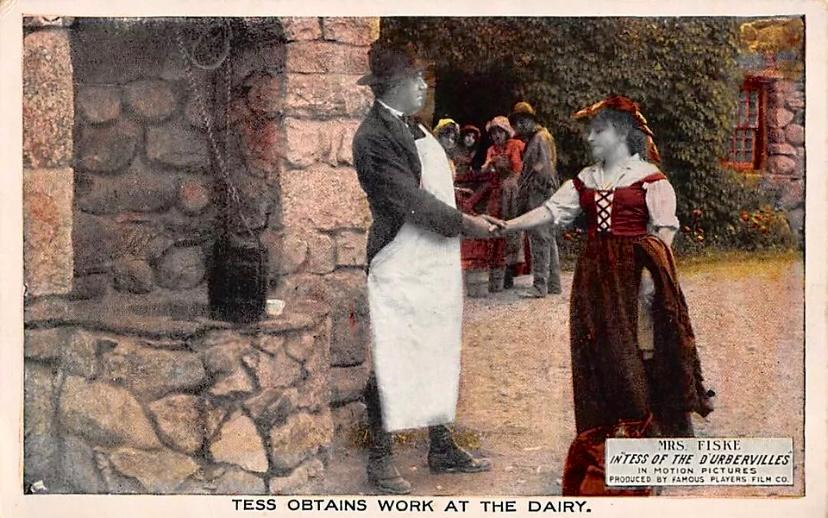
The 1913 screen incarnation of Thomas Hardy’s Tess of the D’Urbervilles arrives like a half-remembered fever dream: flickering, hand-tinted, and perilously close to oblivion. Few prints survived the nitrate bonfires of the last century, yet what shreds remain—a scant four reels at MoMA, a single decomposing negative in a Tuscan cellar—pulse with the raw voltage of Victorian melancholia. Director J. Searle Dawley, lured away from Edison’s laboratories, transplants Hardy’s Wessex to a cardboard England where painted backdrops quiver in studio breezes and candlelight pools like molten topaz. The result is neither slavish illustration nor modernist reinvention, but a chiaroscuro conversation between morality and celluloid.
Dawley’s camera, hand-cranked at fourteen frames per instinct rather than regulation sixteen, stretches dusk into taffy-time; shadows yawn across milking parlours, and moonlight drips viscous silver over Tess’s cheekbones. Cinematographer H. Lyman Broening—whose later career would dissolve into Poverty Row westerns—achieves here an amber luminosity that rivals Strohmeyer’s glacier vistas in Glacier National Park (1913). When Alec pursues Tess through the Chase, the undergrowth is merely muslin flats dappled with ink, yet the shallow depth traps her silhouette like a moth in a paperweight. The effect is proto-expressionist, a decade before Caligari twisted streets into knife-blades.
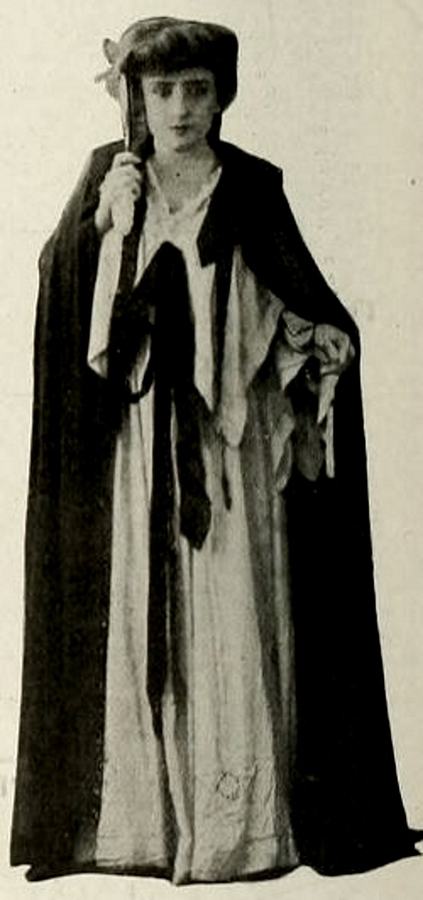
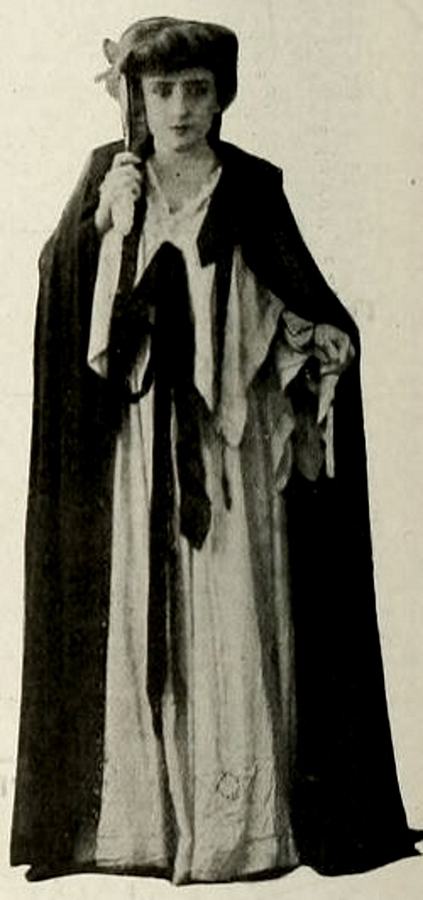
Stage legend Minnie Maddern Fiske, at fifty-one, stepping into the milk-fed skin of a nineteen-year-old farmgirl sounds like stunt-casting on the order of Sarah Bernhardt playing Hamlet. Yet Fiske strips away theatrical armature; her Tess moves with the stunned gait of someone perpetually waking inside a worse dream. Watch the moment she baptises her dying child: no melodramatic clutch, just a tremor in the jawline and a whisper that seems to scrape against the lens itself. The performance anticipates Maria Falconetti’s later ecstasy of agony, though Fiske must convey entire symphonies with a half-turn of a shoulder because intertitles—sparse, haiku-brief—refuse to explicate her psyche.
Raymond Bond eschews moustache-twirling villainy; his Alec lounges in crimson smoking jackets like a man who has read Baudelaire by candle and misunderstood every stanza. The seduction sequence is staged in a single long take: Bond circles Fiske, the camera pirouetting with him, until the actress’s back grazes the velvet settee. The absence of a cut turns the viewer into reluctant accomplice; we cannot blink away complicity. Later, when Alec reappears as sham-repentant preacher, Bond lets the silk glove of piety slip just enough to reveal the iron hand of appetite—an ambiguity that foreshadows the ambivalent clerics in From the Manger to the Cross (1912).
David Torrence’s Angel Clare ought to embody Edenic purity; instead he registers as a porcelain prig whose moral vertebrae ossify the instant he hears Tess’s confession. Torrence, a Scotsman with the profile of a Pre-Raphaelite knight, plays the part with such unbending rectitude that modern audiences hiss not at Alec but at Angel—a delicious irony the production could scarcely have predicted. In the pivotal wedding-night scene, Dawley overlays a double exposure: Angel’s face dissolves into the effigy of a marble saint, literalising the idolatry that will doom their union. Compare this to the more literal iconography of The Life and Passion of Christ (1903) and you grasp how far American silents had travelled in a decade.
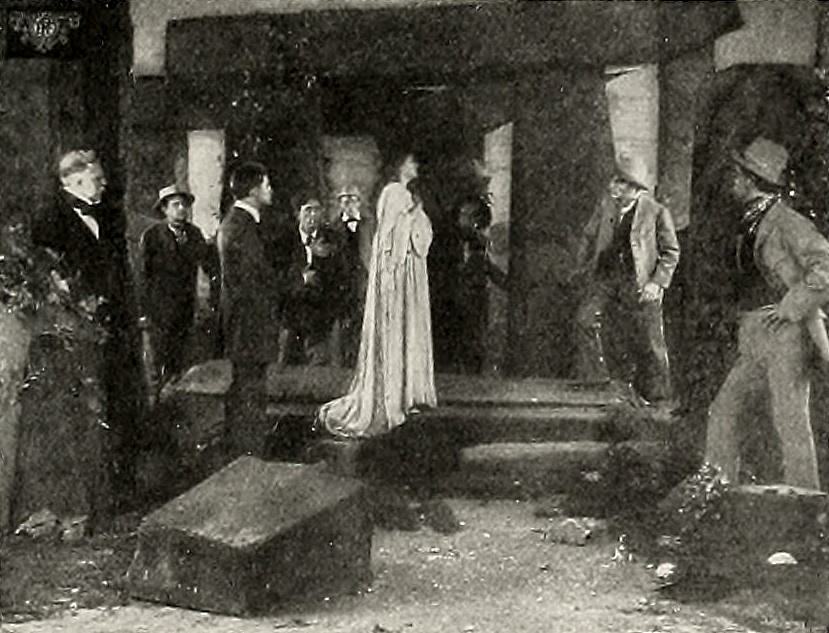
Hardy’s topography—Blackmoor Vale, Flintcomb-Ash, Stonehenge—collapses into a Brooklyn soundstage where papier-mâché tors tilt like broken crinolines. Yet the compression works; myth does not require acreage, only resonance. When Tess finally lies upon the altar stones, Dawley’s set decorators scatter iron filings across the floorboards; as magnetic lights pass beneath, the stones appear to breathe, swallowing heroine and history alike. The cosmic indifference that Hardy took six hundred pages to evoke is distilled into ten seconds of flickering gravel.
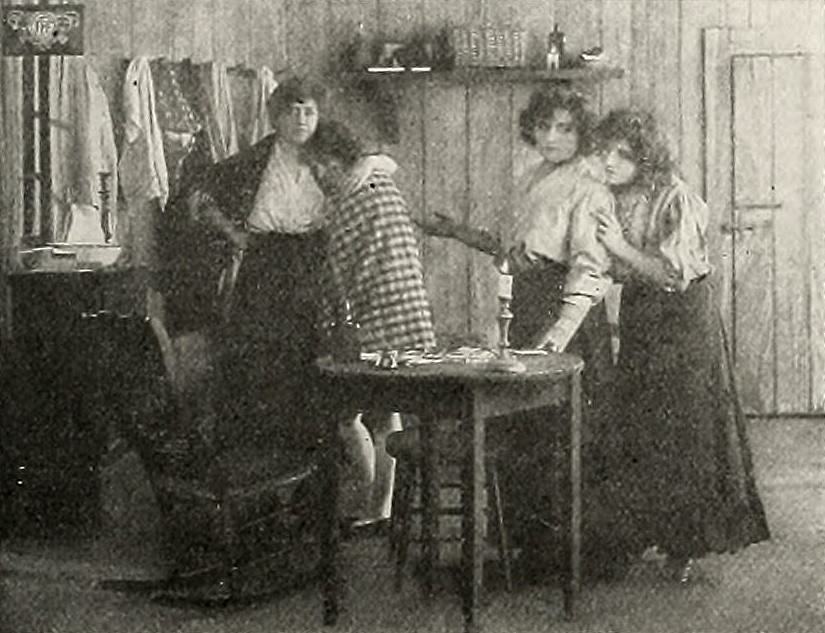
Adapting a doorstop novel into four reels necessitates amputations, yet Dawley’s excisions form a kind of negative sculpture. The child Sorrow appears only as a bundled silhouette, his death announced by a single intertitle: “The little sleeper never woke.” Such ellipses force the viewer to inhabit the caesuras of female trauma—what is unsaid corrodes more than what is shown. Censorship boards in Chicago demanded the removal of the baptism scene, objecting to the on-screen administration of sacraments by a laygirl; the surviving cut jumps from birth to burial, a jarring ellipsis that inadvertently intensifies the sense of systemic erasure.
Original exhibition notes suggest a live accompaniment of Parry’s English Suite interpolated with folk airs like Linden Lea, performed by a quartet perched beside the screen. Modern restorations at Pordenone paired the visuals with a newly commissioned score for psaltery and glass harmonica; the result uncorks a spectral sobriety, each note trembling like whey beneath rennet. Try watching without sound and the film calcifies into moving daguerreotype; add the right melody and it hemorrhages sorrow.
Where Oliver Twist (1912) sentimentalises its orphan’s peril, Tess refuses comfort; where The Redemption of White Hawk (1911) offers last-minute absolution, Hardy’s heroine is flayed by destiny long before the noose tightens. Dawley’s film belongs to that brave coterie of early silents—alongside Les Misérables (1912) and The Count of Monte Cristo (1912)—that trust audiences to stomach moral complexity without a spoonful of saccharine.
The final reel vanished in the 1965 MGM vault fire, so cinephiles piece together narrative from glass-slide lobby photos and a lone trade-paper synopsis: “Tess, exhausted yet defiant, welcomes the dawn upon the sacrificial stones.” Even truncated, the film casts a long umbra. Lars von Trier lifted the Stonehenge silhouette for Breaking the Waves; Jane Campion studied Fiske’s close-ups while prepping The Piano. When Roman Polanski’s lush 1979 talkie adaptation premiered, critics who had caught Dawley’s relic at archival screenings noted that the silent version, for all its technical crudity, felt closer to Hardy’s pitiless cosmos.
If your idea of silent cinema begins and ends with The Cabinet of Dr. Caligari, Dawley’s Tess will feel like exhuming a half-finished sketch. Yet those willing to meet the film on its own anaerobic terms will discover an artifact that bruises as much as it beguiles. Streaming via MoMA’s virtual gallery (password: wessex) the unrestored 2K scan flickers, scratches pulse like varicose veins, and the amber tinting wavers between apricot and dried blood. Embrace the damage; it is the bruise that proves the fruit was once alive.
A fractured lantern-slide of Victorian despair, luminous in its wounds, essential for anyone tracing how early cinema learned to bleed in colour.
Runtime: approx. 52 min (surviving). Format: 35mm, 1.33:1, tinted. Availability: Museum of Modern Art digital locker; select archival festivals. Parental guidance: implied sexual violence, infant mortality, judicial hanging—though all conveyed obliquely by 1913 standards.
IMDb 6.2
1914
Community
Log in to comment.