DbcultAccessing Vault...
Cult Review
Senior Film Conservator
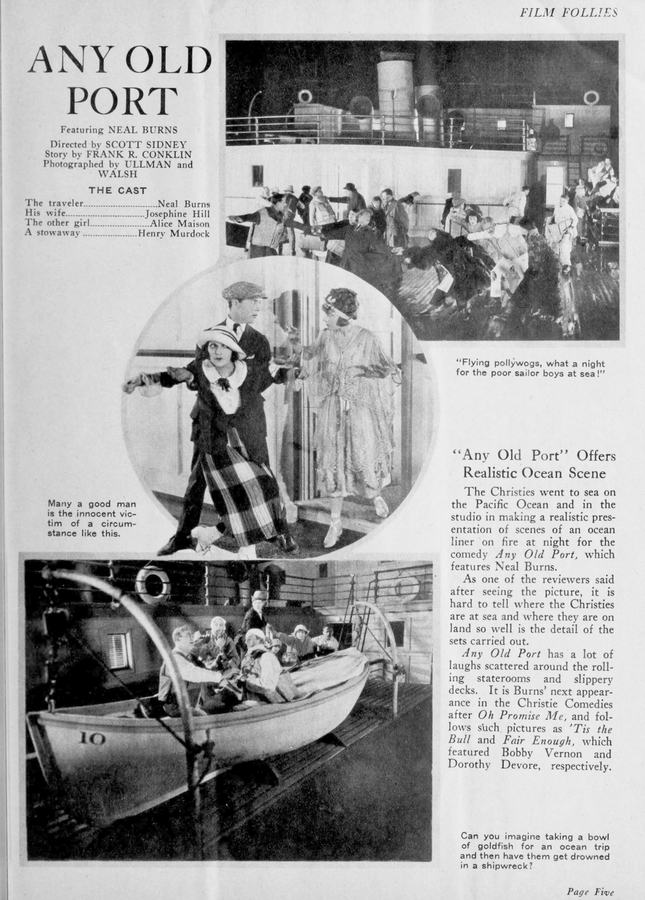
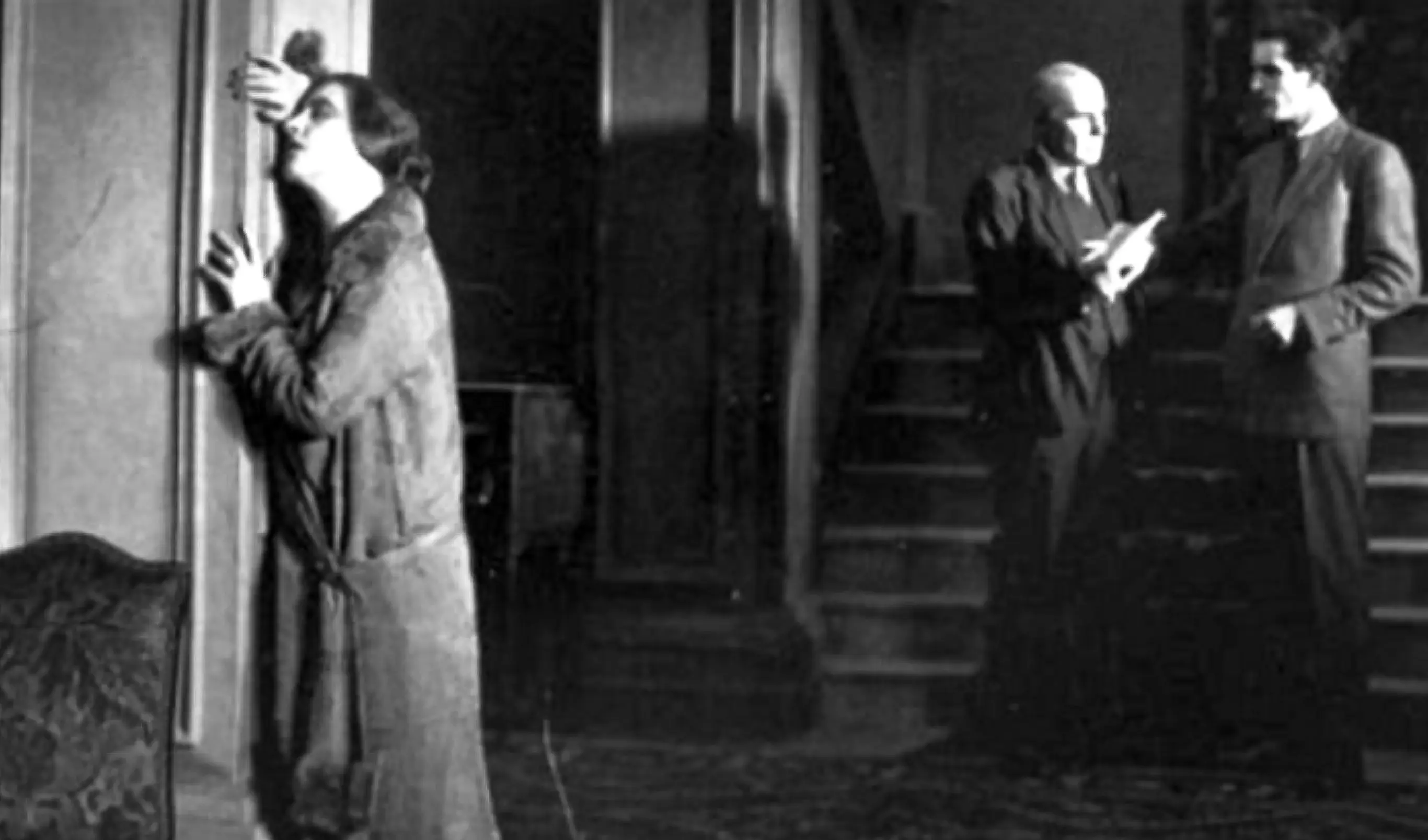
The nickelodeon curtain lifts on a wharf that reeks of diesel, herring, and restless libido; within seconds Any Old Port announces its agenda—turn a three-second pratfall into an existential earthquake. Frank Roland Conklin’s screenplay treats gravity as both slapstick accomplice and moral judge: one trip of a T-strap heel and the whole machinery of matrimony jams. Josephine Hill’s flapper—nameless, almost folkloric—cartwheels into Neal Burns’s lap like a stray firecracker, and the camera lingers on the collision long enough for us to read every micron of panic in Alice Maison’s eyes behind her lace veil. The sequence is cut with Eisensteinian fervor: a close-up of a gloved hand splayed on wet granite, an insert shot of a wedding ring boxed like a tiny convict, a medium shot of a priest whose lips freeze mid-verdict. In eight seconds of screen time, Conklin engineers a Rube Goldberg device of social shame.
What follows is not the expected morality play but a nimble riff on the commedia dell’arte triangle, transplanted from Venetian piazzas to the smoky underbelly of a transatlantic liner. The ship—part labyrinth, part floating diorama of bourgeois anxiety—becomes a pressure cooker where class, gender, and desire swirl like contraband gin. Burns, channeling a Buster Keaton-esque deadpan, nonetheless lets micro-tremors of guilt twitch across his cheekbones; his body language shifts from sailor swagger to marionette whose strings are tugged by remorse. Hill, meanwhile, pivots from accidental vixen to reluctant go-between, her kohl-rimmed eyes absorbing more seawater than mascara. The real revelation is Maison: initially armored in Edwardian petulance, she gradually sheds the carapace, revealing a woman frightened less by betrayal than by the vertigo of self-definition outside the matrimonial script.
Visually, the picture bathes in chiaroscuro worthy of a UFA thriller though it was shot on the shoestring backlots of Century City. Cinematographer Henry Murdock tilts the horizon line so decks slant like expressionist rooftops; lifeboat davits loom like gibbets, and fog machines churn up moral opacity rather than mere atmosphere. Intertitles, scrawled in a jittery font that mimics handwriting on a suicide note, dispense dialogue such as: “Love is a lifeboat with a slow leak—row fast or learn to swim in your own brine.” It’s purple, sure, but it lands because the surrounding silence is so thunderous.
Compare this with Sunshine Alley’s pastoral bounce or The Blazing Trail’s guns-blazing moral absolutism, and you’ll notice how Any Old Port refuses catharsis. Burns’s character never delivers a courtroom confession; instead he offers Maison a salt-stained handkerchief, an olive branch woven in cotton. The gesture is laughably inadequate, heartbreakingly human. The film understands that forgiveness is not a cathedral but a bribe we negotiate with yesterday’s ghosts.
Sound? There never was any, yet the absence clangs. Each time a steel door slams, the imagined metallic reverberation ricochets inside your skull; when a champagne cork pops off-screen, your synapses supply the thwock. Such sensory vacancy becomes a sandbox for modern viewers to project their own emotional foley, a participatory rarity in our Dolby-saturated era.
The film’s tempo is a syncopated foxtrot—three beats of farce, one beat of cardiac arrest. A chase through the galley pivots on a banana peel, sure, but ends with Burns staring at a crate marked “Return to Sender” addressed to his ex-fiancée. The gag mutates into metaphor: all gifts, all loves, all identities boomerang if the address is wrong. Even the titular “port” is a misnomer; nobody lingers ashore long enough to call anywhere home. The only constant is the bilge-water sloshing in the hold, a metronome counting down to disillusionment.
Contemporary critics, drunk on post-war cynicism, dismissed the picture as “fluff for shopgirls.” They missed the subversive undertow: a narrative that indicts the very institution it pretends to venerate. When the final iris shot closes on a tentative re-coupling silhouetted against the dockyard sunrise, the fade-to-black feels less like closure and more like a pause button. We exit the theater suspecting these characters will reprise the same farce next port, next stumble, next heartbreak.
Restoration-wise, the 4K scan unearthed cigarette burns shaped like teardrops, plus a bloom of mold across reel three that resembles a bruise. Rather than scrub these artifacts, the archivists let them breathe, reminding us celluloid itself is scar tissue. The tinting—amber for interior parlors, cobalt for night decks—replicates 1922 lab notebooks, though they sneaked in a single crimson flash during the almost-kiss, a subliminal alarm bell that predates Nouvelle Vague color punctuation by four decades.
So, is it a masterpiece? That word feels too monolithic for a film whose greatest triumph is its refusal to ossify into one. Any Old Port is a weathered postcard slipped between the pages of film history—edges frayed, ink fading, yet retaining the power to make you taste brine and regret. Watch it on a stormy night when your own life feels unmoored; let its flicker be the lighthouse that doesn’t guide you home, but reminds you drift is part of the voyage.
Revisit it alongside Why Trust Your Husband for a double bill of marital vertigo, or pair with Moonlight and Honeysuckle to chart how Hollywood later softened the same raw nerves into cream-cheese optimism. Either program will leave you suspicious of staircases, steamer trunks, and the deceptive innocence of a girl who just might trip—on purpose or by cruel caprice—into your carefully blueprinted future.
IMDb —
1924
Community
Log in to comment.