DbcultAccessing Vault...
Cult Review
Senior Film Conservator
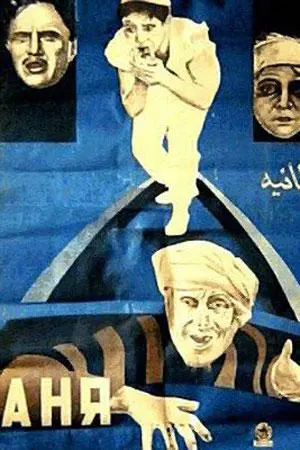
"Anya" is a film worth watching today, though not for the reasons often ascribed to early cinema. It’s a stark, often frustrating experience that offers a raw, unvarnished look at a specific historical moment, stripped of the romanticism often layered onto such artifacts. This film is for viewers genuinely interested in the mechanics of early Soviet storytelling and the development of acting styles, particularly those who appreciate historical context over narrative polish. If you prefer modern pacing, clear character arcs, or high-definition escapism, you will likely find "Anya" a difficult watch.
This film works because it stands as a remarkably direct, if primitive, record of ideological filmmaking from a specific era. Its lack of subtlety is, paradoxically, its strength; the messages are clear, the stakes immediate. Nonna Timchenko’s central performance, while often broad by contemporary standards, carries an undeniable sincerity that anchors the film even when the narrative drifts. There’s a raw energy in her portrayal of a woman caught in societal upheaval, a physical presence that transcends some of the more didactic dialogue.
This film fails because its dramatic structure is rudimentary. Character motivations often feel less like internal drives and more like plot devices designed to advance a pre-ordained ideological point. The pacing can be punishingly slow, with long stretches dedicated to visual exposition that modern audiences will find tedious. Emotional complexity is largely absent, replaced by a series of predictable conflicts and resolutions that serve the state's narrative above all else.
You should watch it if you are a film historian, a student of Soviet culture, or someone with a deep appreciation for the foundational elements of cinema, willing to look past technical and narrative limitations for historical insight. You should also watch it if you're curious about the origins of propaganda in film. If you're seeking nuanced character studies, swift plotting, or a purely entertaining experience, you should look elsewhere.
Directed by Olga Preobrazhenskaya and Ivan Pravov, "Anya" exhibits the raw, unfussy aesthetic common to much of early Soviet filmmaking. The camera work is functional, rarely striving for artistic flourish, instead focusing on clear composition and the practical conveyance of action. Shots often hold for extended periods, allowing the viewer to absorb the details of a collective farm or a village assembly, a style that feels more like observational documentary than sophisticated drama. This directness, while occasionally monotonous, offers a unique window into the visual rhetoric of the time. The framing often emphasizes the collective over the individual, even when Anya herself is the focus, subtly reinforcing the broader ideological message.
The film’s visual style, while sparse, is not without its moments of stark power. There are sequences depicting the vastness of the Russian landscape, or the strenuous labor of the villagers, that possess a certain stark power. These aren't polished, romanticized shots; they are gritty, almost journalistic, capturing the physical toll of the era. The editing is mostly straightforward, favoring continuity over experimental cuts, which keeps the narrative clear, if somewhat pedestrian. This lack of overt stylistic ambition makes it less exciting for a contemporary audience, but more honest in its reflection of the period's cinematic goals.
One surprising aspect is the film's willingness to show hardship without immediate, easy resolution. While the ultimate message is clear – progress through collectivism – the journey there is depicted with a certain amount of grim realism. The struggles of the peasants, the resistance to new ideas, the weariness on their faces – these elements are not glossed over. This makes the eventual triumph, however manufactured it feels, slightly more earned within the film's own terms. It’s a blunt instrument, but it hits its intended marks.
Nonna Timchenko, as Anya, carries the film on her shoulders, often quite literally. Her performance is characterized by an earnest intensity, a physical commitment to the role that radiates from the screen. She doesn't deliver a nuanced, internal performance; rather, her acting is external, expressed through broad gestures, determined strides, and facial expressions that convey resolve or anguish with little ambiguity. This style, while perhaps jarring to modern sensibilities, was effective for the period, ensuring that the character's emotional state and ideological alignment were always legible, even to audiences unfamiliar with complex psychological portrayals. Her Anya is less a person, more a symbol of the struggling, yet ultimately resilient, Soviet woman.
Mikhail Zharov, a familiar face in Soviet cinema, brings a certain gravitas to his role, though his character is largely a stock figure of authority or guidance. He delivers his lines with a booming conviction that leaves no room for doubt about his character’s purpose. Leonid Yurenev and Yuldash Agzamov, along with Naum Rogozhin, fill out the supporting cast with similar, broadly drawn performances. Their characters function more as archetypes – the skeptical elder, the enthusiastic young worker, the villainous saboteur – than fully fleshed-out individuals. This isn’t a criticism of their talent, but rather a reflection of the era's storytelling priorities, where individual psychology often took a backseat to collective representation and clear moral binaries.
There’s a stiffness to many of the interactions, a theatricality that keeps the audience at a distance. Dialogue often feels like speeches rather than natural conversation, particularly when expounding on socialist principles. This makes it difficult to connect with the characters on a purely emotional level. The film prioritizes didactic clarity over authentic human interaction. It's a choice, certainly, but one that limits its appeal beyond a historical curiosity. I found myself admiring the commitment, but rarely feeling genuine empathy.
The pacing of "Anya" is deliberate, almost ponderous. The narrative unfolds at a measured, unhurried rate, allowing ample time for scenes to play out without much urgency. This can be challenging for contemporary viewers accustomed to faster cuts and more dynamic storytelling. Sequences of agricultural labor, meetings, or communal meals are extended, sometimes to the point of tedium. While this approach might have served to immerse contemporary audiences in the daily life of the collective, it often feels like narrative padding today.
The plot, such as it is, follows a predictable trajectory: initial resistance to new ideas, the introduction of a
IMDb —
1917
Community
Log in to comment.