DbcultAccessing Vault...
Cult Review
Senior Film Conservator
The silent era was never merely a period of technical gestation; it was a theater of grandiloquent ambition where the boundaries of morality and visual storytelling were constantly being renegotiated. La Salome (1910), a production that predates the more widely recognized biblical epics, stands as a testament to this era's fascination with the carnal and the divine. While contemporary audiences might look toward the expansive vistas of Glacier National Park for naturalistic awe, the viewers of 1910 were seeking the claustrophobic tension of Judean palaces and the spiritual weight of prophecy. This film is not just a retelling of a Gospel narrative; it is a psychological study of power’s erosion under the weight of illicit desire.
From the outset, the film establishes Herodias as the central pivot of the tragedy. Unlike the more reverent depictions found in Life and Passion of Christ, La Salome positions the female protagonist as a predatory force of political and sexual agency. Her betrayal of Philip is presented not as a mere whim, but as a calculated ascent to the tetrarchy. The 'Prison of Bronze' serves as a recurring motif—a dark, unyielding space that swallows both the innocent and the holy. It is here that the film achieves its most striking visual language. The shadows cast by the bronze bars are not just aesthetic choices; they represent the spiritual imprisonment of Herod himself, who, despite his crown, is a slave to his wife's machinations and his own burgeoning conscience.
The pacing of the assassination of Philip is remarkably modern. The use of a 'negro servant' as the instrument of death highlights the racialized hierarchies often present in early 20th-century cinema, but narratively, it underscores the distance Herodias places between herself and her crimes. She is the shadow-puppeteer, a role that Adriana Costamagna inhabits with a chilling, statuesque intensity. Her performance contrasts sharply with the more emotive styles seen in Les Misérables or the theatricality of Hamlet. She is a creature of stillness and sharp glances, representing the antediluvian evil that the Baptist seeks to purge.
The portrayal of John the Baptist in this 1910 iteration is one of unyielding rigidity. In an era where religious films like From the Manger to the Cross were beginning to humanize biblical figures, La Salome keeps the Baptist at a distance. He is a force of nature, an echo from the wilderness that cannot be silenced by stone or bronze. His spurning of Salome’s affection is the film’s most critical psychological juncture. Here, the script deviates from pure theology into the realm of the 'femme fatale' archetype that would later dominate film noir.
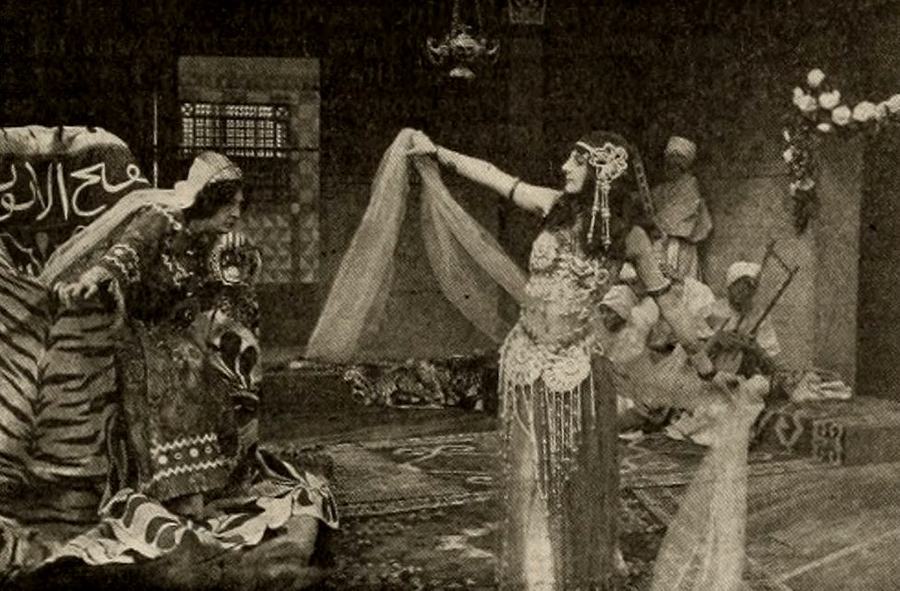
Salome’s visit to the Prison of Bronze is a masterclass in silent tension. The contrast between her silk-clad youth and the Baptist’s ragged holiness creates a visual dissonance that drives the narrative toward its bloody conclusion. When she attempts to lure him into her power, we see the first flickers of the 'spurned woman' trope, yet it is handled with a gravity that avoids melodrama. Her transition from desire to hate is not a sudden snap but a slow curdling, visible in the darkening of her expressions and the shift in her physical posture. It is a performance that rivals the depth found in Anna Karenina, albeit condensed into the frantic energy of a short-feature format.
Herod is portrayed as a man of profound weakness, a stark contrast to the martial strength seen in films like Pyotr Velikiy or the heroic struggles in The Independence of Romania. His obsession with seeing Salome dance is the film's primary engine of doom. This voyeurism is framed as a sickness, a 'pangs of conscience' that he attempts to drown in wine and spectacle. When the Roman judges arrive, the feast becomes a microcosm of imperial decadence. The set design, while limited by the era's technology, manages to convey a sense of claustrophobic opulence.
The negotiation for the dance is where the film’s editing shines. The intercutting between Herod’s pleading, Herodias’s serpentine whispering, and Salome’s cold calculation creates a rhythmic tension. Herodias is the 'evil serpent' mentioned in the plot, and her influence over Salome is depicted as a parasitic contagion. She doesn't just suggest the head of the Baptist; she infects her daughter with the necessity of the act. This dynamic is far more complex than the simple villainy found in The Black Chancellor. It is a domestic tragedy played out on a geopolitical stage.
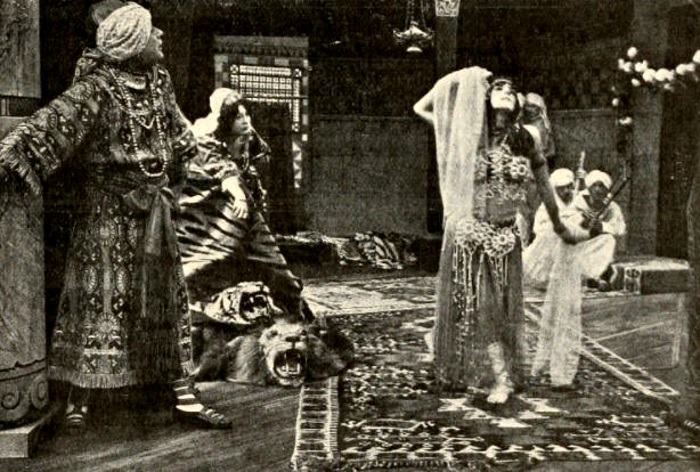
The dance itself is the film's centerpiece, yet it is notable for what it leaves to the imagination. Unlike the later, more flamboyant versions of the 'Dance of the Seven Veils' in films like Cleopatra (1912), the 1910 *La Salome* focuses on the 'witchery' of the movement and its effect on the spectators. We see the Roman guests shrinking in a mixture of lust and horror. The dance is not an entertainment; it is a ritual of sacrifice. When the head is finally brought on a charger, the film pivots into a proto-horror aesthetic. The sight of the severed head is the moment the 'Prison of Bronze' finally breaks Herod. The 'terror to the heart' he feels is the realization that his power is illusory, and his soul is forfeit.
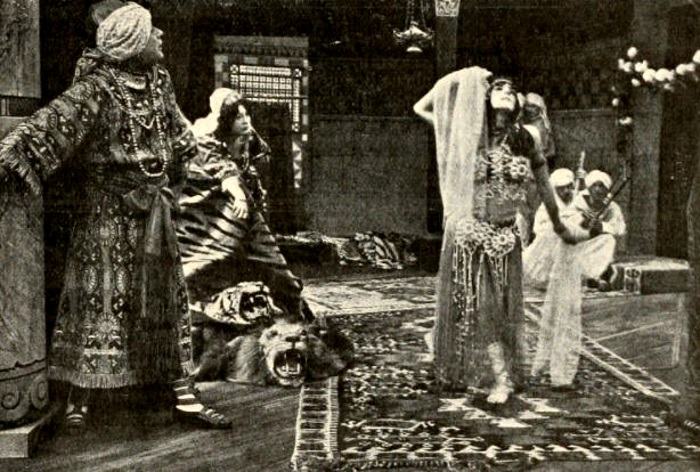
The ending is swift and brutal. Herod’s attempt to 'repair the evil' by ordering Salome’s death is a futile gesture of a man trying to wash blood with blood. It lacks the redemptive arc of The Redemption of White Hawk or the moral clarity of Pilgrim's Progress. Instead, it leaves the audience in a state of moral vertigo. The soldiers seizing Salome is a grim bookend to the film’s earlier themes of imprisonment. Everyone is trapped—John in the bronze, Herod in his guilt, and Salome in the lethal legacy of her mother.
When compared to other contemporary works, La Salome is surprisingly sophisticated in its psychological layering. While The Life of Moses was concerned with the grand sweep of history, and The Corbett-Fitzsimmons Fight focused on the visceral reality of the body, *La Salome* attempts to bridge the gap between the physical and the metaphysical. It shares the tragic DNA of The Life and Death of King Richard III, particularly in the way it depicts the corruption of the state through personal vice.
The film also serves as an interesting counterpoint to the more 'wholesome' religious narratives of the time, such as Life of Christ. Here, the holy is spurned, mocked, and eventually destroyed, leaving the villains to descend into madness rather than finding salvation. This dark streak is what makes the 1910 version so compelling. It doesn't offer the easy comforts of The Prodigal Son; it offers a mirror to the sybaritic excesses of the Edwardian era, thinly veiled in biblical robes.
The cinematography, though stationary by modern standards, utilizes the depth of the frame effectively. The way characters move from the foreground of the palace to the background shadows of the prison creates a sense of spatial continuity that was still being perfected in 1910. One can see the seeds of the visual language that would later define epics like 1812 or the intricate staging of Dante's Inferno. The costuming, too, deserves mention—it is lavish without being garish, using textures that would have popped even on the orthochromatic film stock of the day.
In the pantheon of early cinema, La Salome is a dark jewel. It eschews the simple morality of Oliver Twist for something far more ambiguous and haunting. It is a film about the failure of conscience, the toxicity of maternal influence, and the terrifying power of a single request. For the modern cinephile, it remains a vital piece of history—a moment when the screen first learned how to dance with the devil.
IMDb 4.4
1922
Community
Log in to comment.