DbcultAccessing Vault...
Cult Review
Senior Film Conservator
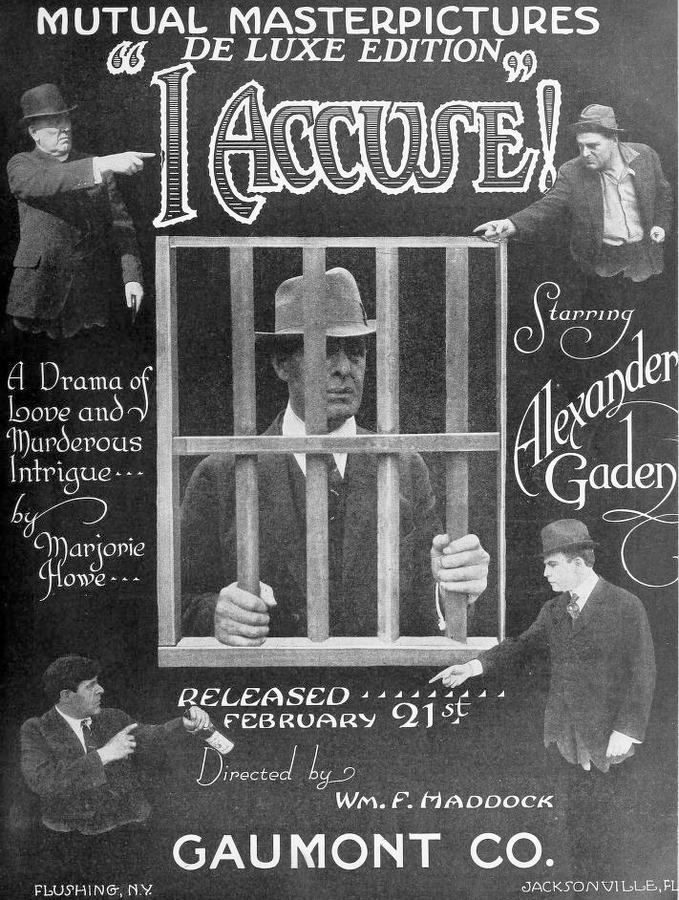
Stepping back into the nascent days of cinematic storytelling, one encounters films that, despite their technological limitations, wrestled with themes as profound and intricate as any modern drama. I Accuse, a compelling silent feature from 1916, stands as a testament to this enduring power, a narrative tapestry woven with threads of love, jealousy, moral quandary, and the relentless pursuit of truth. It's a film that demands our attention, not merely as a historical artifact, but as a vibrant, emotionally charged exploration of human fallibility and the often-tortuous path to justice. Directed with a keen eye for dramatic tension and featuring a cast that, through expressive pantomime, conveys a spectrum of complex emotions, this picture transcends its era, offering a timeless meditation on the fragility of reputation and the devastating ripple effects of vengeful ambition.
The film opens in a seemingly idyllic village, a setting often favored by early cinema to amplify the shock of corruption. Here, we meet Robert Gray, portrayed with earnest conviction by Sidney Mason, a brilliant young lawyer whose recent elevation to the bench promises a future of prestige and public service. His heart, however, belongs unequivocally to Eloise Landman (Helen Marten), the radiant daughter of Reverend Morgan Landman (William J. Butler), the village's beloved spiritual guide. Their romance, blossoming under the gentle gaze of the community, appears destined for a joyous union. Yet, beneath this veneer of pastoral tranquility, currents of discord already stir. Reverend Landman, for all his piety and public adoration, harbors a fatal flaw: an ungovernable temper. This character detail is crucial, providing the initial, seemingly innocuous spark that ignites a devastating conflagration. When he impulsively discharges his coachman for a trivial offense, he unwittingly sets in motion a series of events that will unravel his life and reputation. It's a stark reminder that even the most revered figures are susceptible to human frailties, and that a moment's lapse in judgment can have catastrophic, unforeseen consequences.
Enter James Harrison (Alexander Gaden), a character steeped in envy and resentment. Unknown to most, his father, Abel Harrison, holds a mortgage on the Reverend's home, a detail that underscores the precariousness of the Landman family's financial standing and provides a tangible motive for James's later machinations. James, too, harbors affections for Eloise, affections that are decidedly unreciprocated. His proposal to her is met with a firm refusal, a rejection that stings his pride and fuels a simmering jealousy towards Judge Gray. His taunt, "He has never asked for your love," is a desperate, venomous attempt to undermine Eloise’s affections, revealing the depth of his bitterness. This scene, rendered through the exaggerated yet effective gestures of silent film, perfectly encapsulates the emotional raw nerve that James represents. The Reverend, stumbling upon this confrontation, witnesses James's cruel words and, in a fit of his characteristic rage, canes him. This act, while perhaps understandable in defense of his daughter’s honor, provides James with the perfect, tangible grievance he needs to begin his elaborate scheme of revenge. It’s a classic dramatic setup, where a series of seemingly minor provocations coalesce into a major crisis, much like the intricate plot twists seen in earlier literary works and contemporary stage plays that influenced cinema.
Emboldened by his burgeoning career and the deepening affection with Eloise, Judge Gray finally proposes, and she accepts. Their impending marriage promises a balm to the earlier tensions, a beacon of hope in the brewing storm. However, this happiness is brutally interrupted by James Harrison. With chilling precision, James approaches Judge Gray, not with congratulations, but with a demand for the arrest of Reverend Landman on a charge of murder. He claims the Reverend murdered his brother, Luke Harrison (Albert Macklin), the "good-for-nothing" sibling whom James had strategically placed in the Reverend's employ as the new coachman. The evidence James produces is seemingly conclusive, a meticulously constructed fabrication designed to ensnare the unsuspecting clergyman. This moment is a masterclass in silent film suspense, as the audience, privy to James's manipulative nature, watches in horror as Judge Gray, a man of unwavering integrity, is forced by the letter of the law to issue a warrant against his future father-in-law. The moral quandary faced by Judge Gray is profound: personal loyalty versus professional duty. It's a theme that resonates deeply, exploring the painful conflict when the scales of justice demand a sacrifice of the heart.
The trial itself becomes the film's emotional crucible. With James Harrison orchestrating a parade of seemingly credible witnesses, the prosecution's case against Reverend Landman appears insurmountable. The Reverend's known temper, previously a minor character flaw, now becomes a damning piece of circumstantial evidence. Despite the inherent biases and the audience's knowledge of the manipulation, the legal process, as depicted, grinds forward with a chilling inevitability. Judge Gray, agonizingly, is compelled to rule on the evidence presented, culminating in the devastating verdict of manslaughter and a lengthy prison term for the Reverend. This sequence is a powerful commentary on the fallibility of judicial systems, particularly when influenced by malicious intent and the deceptive appearance of truth. It highlights how easily a person's character can be twisted against them, and how difficult it is to discern genuine innocence from cleverly manufactured guilt. The performances here, particularly from Mason as the tormented judge and Butler as the bewildered, condemned clergyman, are incredibly poignant, conveying the profound injustice without a single spoken word.
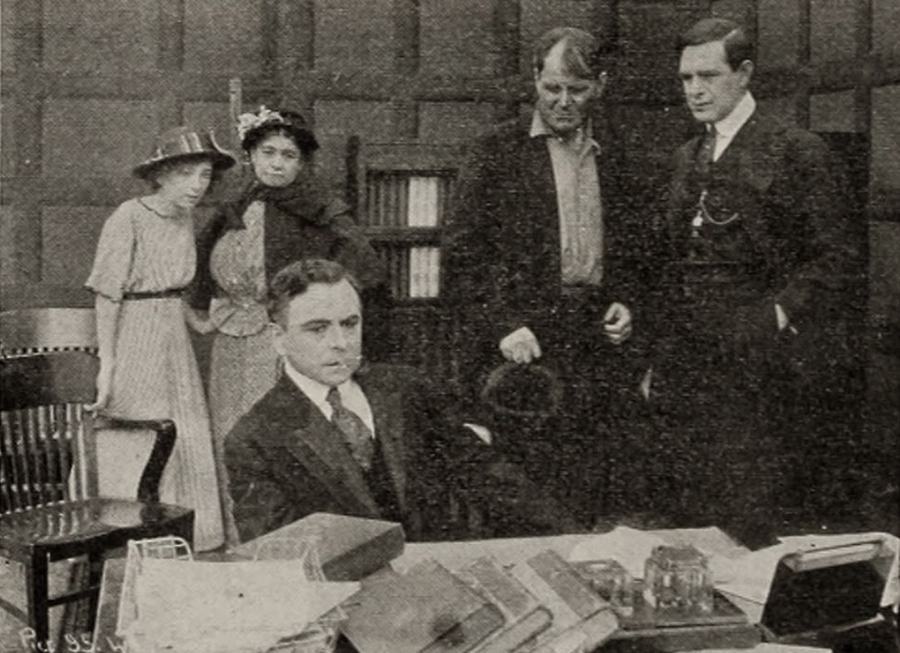
In the wake of this devastating verdict, Eloise (Helen Marten) makes a heartbreaking decision. To protect Judge Gray’s career, which would undoubtedly be tarnished by his association with a convicted murderer, she refuses to marry him until her father is vindicated. It is a noble, yet agonizing, sacrifice, placing her personal happiness on hold for the sake of justice and her beloved's professional standing. This act of selflessness underscores her unwavering moral compass and her deep love for both her father and Robert. Meanwhile, James Harrison, not content with merely imprisoning the Reverend, escalates his campaign of cruelty. He exploits the mortgage held by his father, turning Eloise and her brother Harold (Jack Macklin) out of their home. This eviction, a stark visual representation of their sudden destitution, further solidifies James’s villainy, painting him as a man utterly consumed by his thirst for revenge and power. Judge Gray, attempting to alleviate Eloise’s suffering, seeks a loan but is cruelly thwarted by the father of Alice Ward (Mary Davis), a woman whose romantic overtures he had previously, and coldly, rebuffed. This subplot introduces an element of poetic justice, or rather, injustice, as Gray's past actions, however innocent, return to haunt him, blocking his attempt to provide aid. It’s a bitter twist, demonstrating how interconnected lives can be and how seemingly minor slights can have far-reaching consequences.
Five years elapse, a period that sees the characters grappling with the long-term repercussions of the initial tragedy. This temporal jump, a common narrative device, effectively conveys the enduring pain and the slow erosion of hope. James Harrison, now a church warden, finds himself haunted by the specter of the Reverend. His conscience, though long suppressed, begins to crack under the weight of his deception. The film brilliantly portrays his psychological torment through visual cues: his agitated demeanor, his fearful glances, and a particularly powerful scene where, imagining the Reverend in his old pulpit, he drops the collection plates and collapses unconscious. This descent into mental and physical affliction serves as a form of karmic retribution, a slow, agonizing punishment for his past cruelty. It's a compelling exploration of guilt, suggesting that even the most hardened hearts cannot escape the torment of their own misdeeds. Such nuanced psychological portrayals, though wordless, were a hallmark of ambitious silent films, relying on the actors' physicality and the director's visual storytelling.
Just as James's torment reaches its peak, a new twist emerges from the shadows. Luke Harrison, the "murdered" brother, is discharged from prison, where he had been serving a term for a minor offense. His return is not one of penitence, but of opportunism. Indebted to an "evil man," Luke is desperate for money. He seeks out his brother, James, concealing his identity from everyone else, a secretive reunion fraught with tension. When James refuses his demands, Luke, ever the schemer, concocts a new deception. He trashes his room, leaving bloodstains everywhere, meticulously manufacturing evidence of a probable murder – his own. This act, a cynical echo of James's earlier frame-up, is a truly audacious plot twist. It highlights Luke's inherent amorality and his willingness to exploit any situation for personal gain. The irony is palpable: the very tactic James used to imprison the Reverend is now turned against him by his own brother.
The discovery of Luke’s staged "murder" throws the community into renewed chaos. The old servants, loyal and observant, take their suspicions to Judge Gray. Once again, Gray is thrust into the role of investigator and arbiter, but this time, with a heightened sense of urgency and perhaps a deeper intuition, having already witnessed the devastating consequences of a rush to judgment. He orders the arrest of James Harrison, setting the stage for another dramatic trial. The jury, however, fails to agree, a deadlock that speaks to the complexity of the manufactured evidence and perhaps the lingering doubts within the community. This legal stalemate forces a more direct, almost detective-like approach to uncovering the truth. The old servants, sensing something amiss and haunted by strange noises emanating from the Harrison home, implore Judge Gray to investigate further. This human element, the steadfast loyalty of the household staff, provides a crucial turning point, underscoring the importance of observation and trust in a world of deception.
The climax arrives with breathtaking speed and dramatic flourish. Following the servants’ lead, Judge Gray, accompanied by Harold Landman, returns to the Harrison home. In a moment of intense revelation, Gray discovers Luke Harrison hiding in a closet. The shock of Luke's reappearance, alive and undeniably real, shatters the entire edifice of James's carefully constructed lies. "It is Luke Harrison," cries the judge to Harold, "Then your father and James Harrison are innocent men!" This line, though delivered without sound, carries immense weight, signifying the immediate vindication of Reverend Landman. The appearance of the presumed victim automatically brings about the release of the Reverend, a moment of profound emotional catharsis for both the characters and the audience. Luke's subsequent testimony, forced by his discovery, then unravels the full extent of James’s initial deception, leading to James Harrison's conviction for his malicious frame-up.
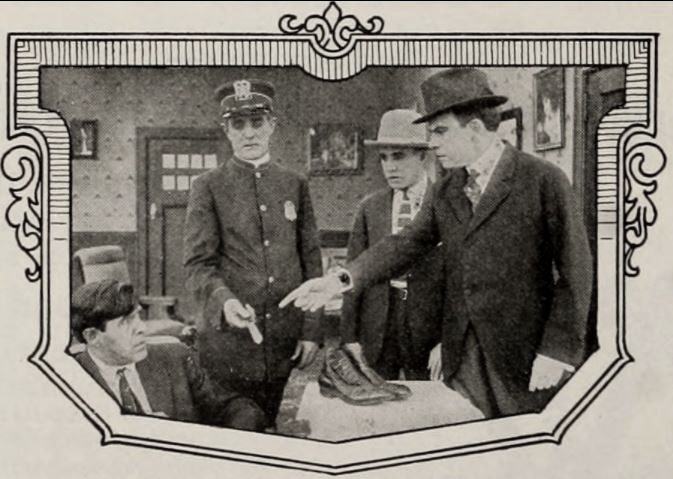
The resolution is one of profound restoration. Reverend Landman is not only released from prison but is also triumphantly reinstated in his position in the church and, more importantly, in the hearts of his parishioners. His reputation, once sullied, is now fully restored, his earlier temper forgiven in light of the immense injustice he suffered. Eloise and Judge Gray, their love having endured the crucible of separation and hardship, are finally married by the Reverend a few days later. It's a conclusion that, while perhaps a touch idealistic, provides a satisfying sense of closure and poetic justice. The film, in its entirety, serves as a powerful parable: a cautionary tale about the dangers of unchecked ambition and revenge, and an affirmation of the eventual triumph of truth and the enduring power of love and forgiveness.
I Accuse, penned by Marjorie Howe and George DuBois Proctor, demonstrates a sophisticated understanding of dramatic structure for its time. The intricate plotting, with its multiple layers of deception and revelation, keeps the audience engaged, constantly shifting their understanding of events. The use of intertitles, while a necessity of the silent era, is handled effectively, providing crucial exposition without bogging down the visual narrative. The performances, particularly from Sidney Mason as the morally conflicted Judge Gray and Alexander Gaden as the increasingly deranged James Harrison, are exemplary. Their ability to convey complex internal states through gesture, facial expression, and body language is a testament to the unique artistry of silent film acting. Helen Marten's Eloise, steadfast and dignified, provides the emotional anchor, her quiet suffering and unwavering resolve grounding the more melodramatic elements of the plot.
Comparing I Accuse to other films of the period reveals its strengths. While it shares thematic elements with contemporary legal dramas or morality plays, its particular blend of personal vendetta, judicial dilemma, and surprising twists sets it apart. Films like The Blindness of Virtue might explore social mores, and Don Juan delves into romantic tragedy, but I Accuse carves out its niche by focusing on the devastating consequences of a single, malicious act and the arduous journey towards rectifying a profound injustice. The film's pacing, building tension gradually through the legal proceedings and then accelerating into the final revelations, is remarkably effective. The visual language, though perhaps less overtly experimental than some European contemporaries, is clear and purposeful, guiding the audience through the labyrinthine plot with precision. The use of close-ups to emphasize emotional states and wide shots to establish the community setting are well-executed, demonstrating a growing mastery of cinematic grammar.
The film's exploration of justice is particularly poignant. It critiques the ease with which appearances can be manipulated to condemn the innocent, and champions the relentless pursuit of truth, even when the system seems to fail. The character arc of Judge Gray is central to this, as he evolves from a detached arbiter of law to a determined investigator, driven by personal conviction. The ultimate vindication of Reverend Landman and the exposure of James Harrison's treachery offer a satisfying, if hard-won, affirmation of moral order. While the narrative might feel somewhat melodramatic to modern sensibilities, it is precisely this heightened emotionality that allowed silent films to communicate complex themes without dialogue. The film's enduring message about the corrupting influence of jealousy and the redemptive power of truth remains as relevant today as it was over a century ago. I Accuse is more than just a relic; it's a vibrant piece of cinematic history that still speaks volumes about the human condition.
In conclusion, I Accuse stands as a powerful example of early American cinema's capacity for complex storytelling and profound emotional resonance. Its intricate plot, compelling performances by the likes of Sidney Mason, William J. Butler, Helen Marten, and Alexander Gaden, and its timeless themes of justice, betrayal, and redemption ensure its place as a significant work. It serves as a reminder that the foundational elements of compelling narrative – character, conflict, and resolution – have been at the heart of filmmaking since its earliest days. For enthusiasts of silent cinema, legal dramas, or simply well-crafted stories, I Accuse offers a rewarding and thought-provoking experience, demonstrating that sometimes, the loudest statements are made without a single word.

IMDb 6.7
1936
Community
Log in to comment.